Giving the unknown a clearer outline
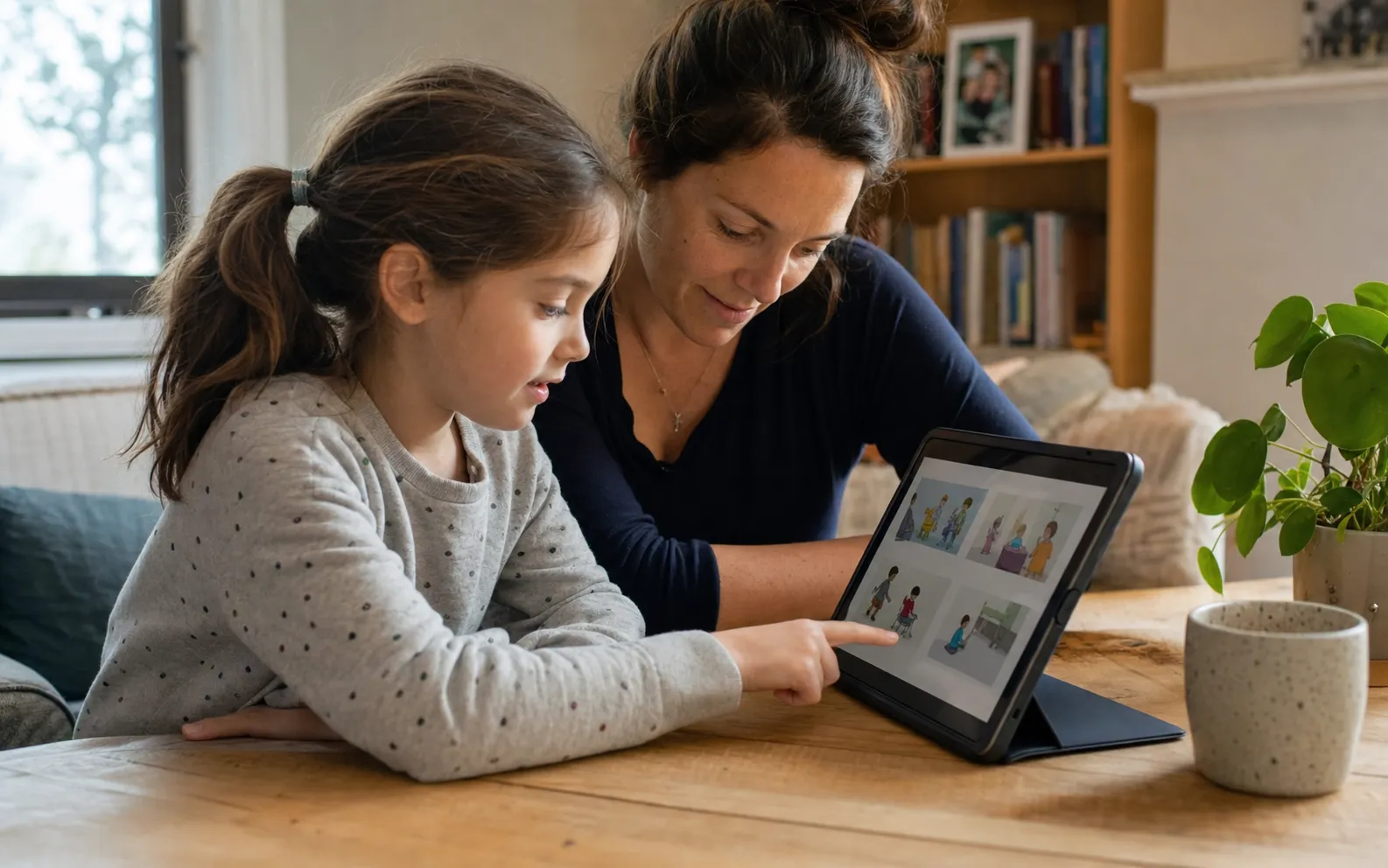
When a child is worried about an upcoming situation, unanswered questions can take up a lot of space: who will be there, what the room will be like, how long it will last and what happens if they need to leave. A personalised story can separate what is known from what is still uncertain, so the child has a clearer picture to think about and discuss.
The words matter here. A story can say that an appointment will probably begin in the waiting room, or that a party may be noisy, without pretending every part is guaranteed. It can offer concrete information about the route, people and timing while leaving space for questions. Knowing which details are fixed and which may change can be more grounding than a vague promise that the day will be easy.
Making support and choice visible
The story can name realistic options: staying near a trusted adult, bringing something familiar, asking a question, using a quiet space or taking a break. It should not promise that nothing will feel difficult, or ask a child to hide their worry. Honest information and genuine choices can be more useful than reassurance that everything will be fine.
It can also make the child's existing ways of coping visible. Perhaps they like to look at a plan twice, hold a familiar object, listen to music on the journey or communicate with a card. The story should only include support adults have agreed they can provide. That makes it reliable: the child is not being told that a choice exists only to find it is unavailable when they need it.
One part of a wider response to anxiety
A personalised story is not a treatment for anxiety. It can support one practical conversation before one particular event, alongside the approaches already helping the child. If anxiety is persistent, worsening or affecting school, home life or friendships, a parent or carer should seek appropriate professional support.
Its strength is that it can be used calmly, before pressure builds, and revisited in the child's own time. After an event, a family may decide to update one uncertain detail, remove something that was not relevant or add what helped. That process can help adults listen more closely to the child's experience. It does not replace support for anxiety, but it can make one upcoming situation easier to talk about with honesty and care.
Coming soon for iPhone and iPad
Be among the first to try a more personal way to prepare.
Join the waiting list for launch news and early access to a tool that helps shape a story around your child’s own questions, communication, sensory experiences and available support.
Join the waiting list