Making the hidden communication in a situation visible
Everyday activities often depend on information that is spoken quickly, implied or shared between several people. A personalised narrative can slow that down. It can explain who may speak, what a new word or gesture might mean, when there is time to respond and how a child can let someone know they need help.
A new setting may involve greetings, instructions, questions or choices that arrive quickly. The child may be more comfortable when they know that they do not have to answer straight away, and that an adult can repeat, write down or show information in another form. A story can describe those moments before they happen, making the interaction easier to follow without assuming one particular way of communicating.
Starting from the child's own way of communicating
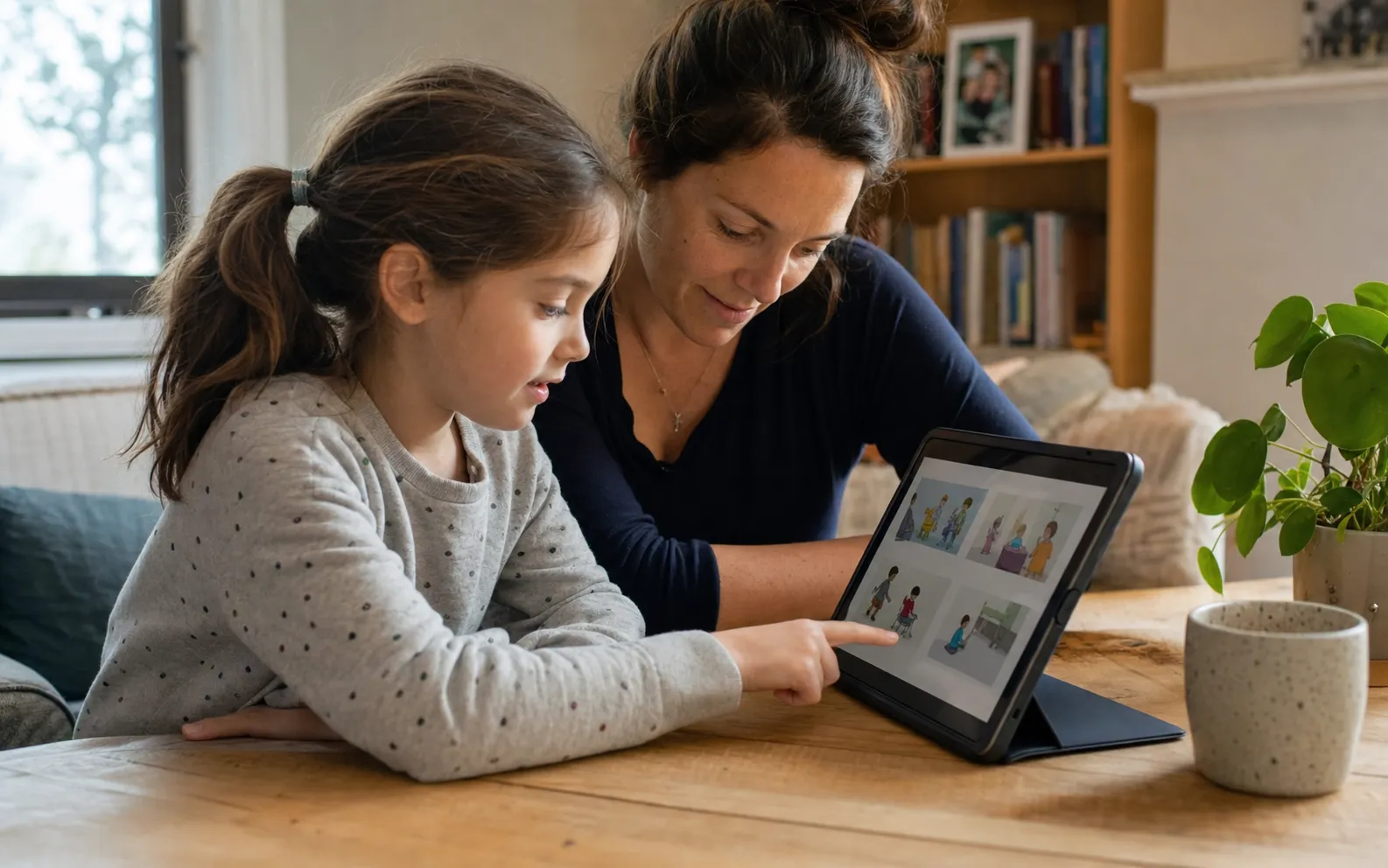
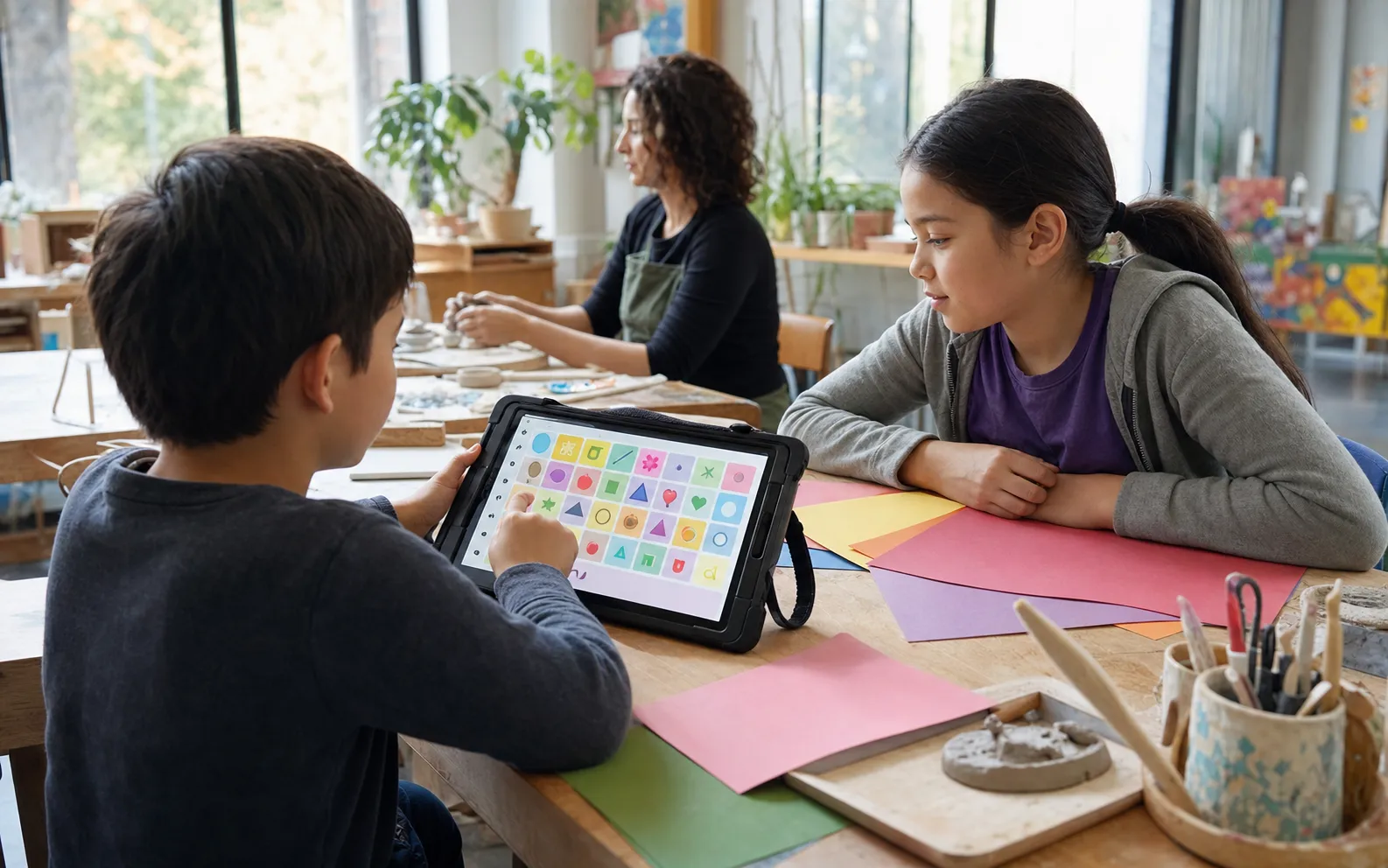
The story can use the child's familiar words, pictures, signs, gestures, written language or communication device. It should not assume that speech is the only way to take part. It can also help adults prepare to offer choices, wait for processing time and respond to the child's communication attempts in the way that works for them.
A child might want to practise finding a page on their device, choose a picture that means 'break', bring a communication card or agree on a gesture with a trusted adult. The story can show this as an ordinary part of the situation, not as an exception. It can be just as helpful for the adults reading it, because it reminds them to speak to the child directly, provide enough time and notice communication that may be quieter or less conventional.
A shared reference point
A story can give the child, family, school and other trusted adults a common way to talk about one upcoming interaction. It is not a communication assessment or therapy, but it can make a situation less opaque and help everyone plan for the child's participation with more care.
Used this way, it can reduce the chance that the child has to explain their needs afresh in every new place. The child and their family can decide which details are helpful to share and which remain private. After the event, the story can be revised in the child's preferred format, keeping it useful for the next conversation, appointment or group activity without turning it into a record of what the child was expected to do.
Coming soon for iPhone and iPad
Be among the first to try a more personal way to prepare.
Join the waiting list for launch news and early access to a tool that helps shape a story around your child’s own questions, communication, sensory experiences and available support.
Join the waiting list