Showing the shape of the day
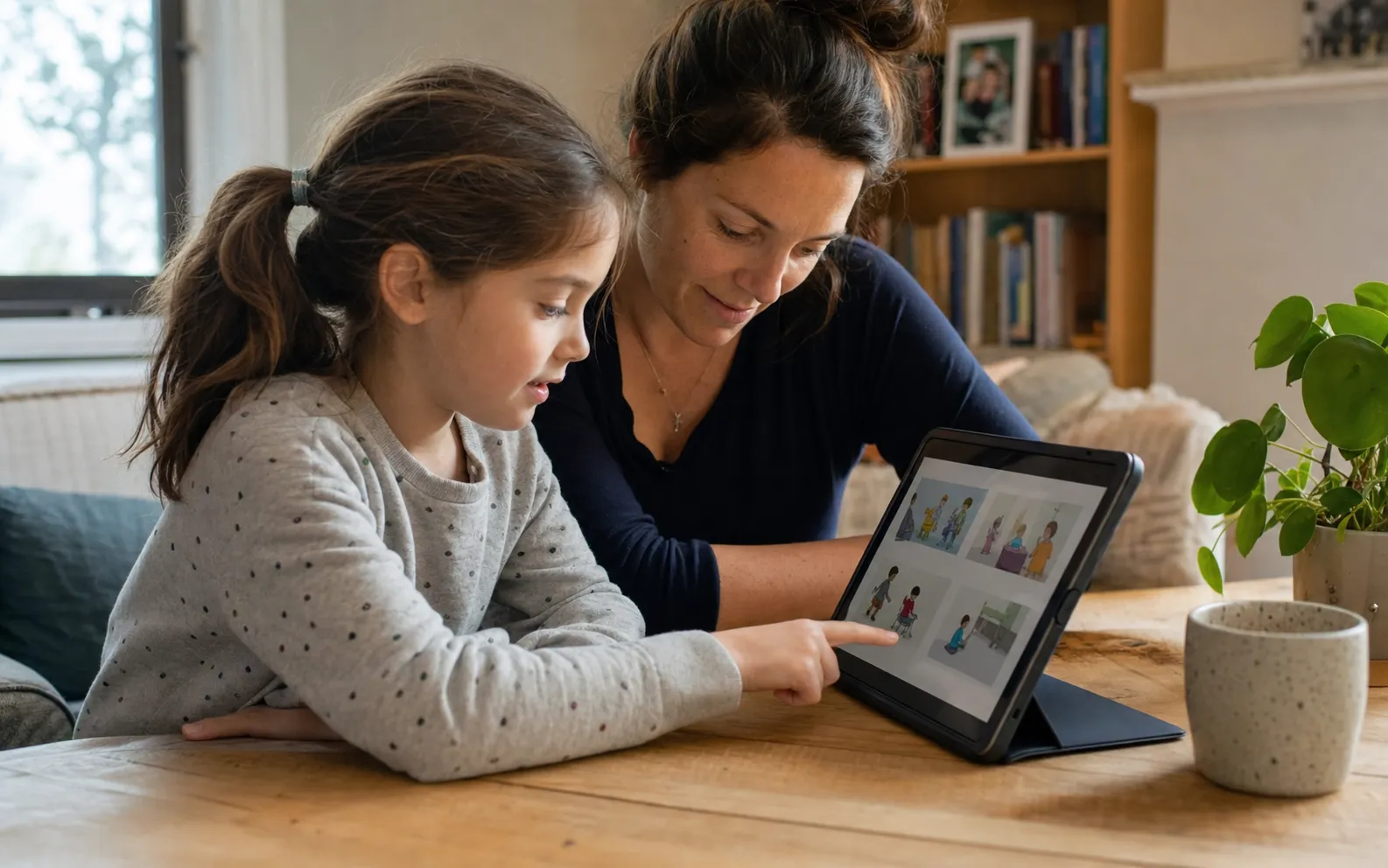
Familiar patterns can help a child understand what comes next. When an activity is new, a personalised story can show its likely beginning, middle and end in a form the child can revisit. It can include the practical details that make a plan feel real: where it happens, who is involved, what to bring and what comes afterwards.
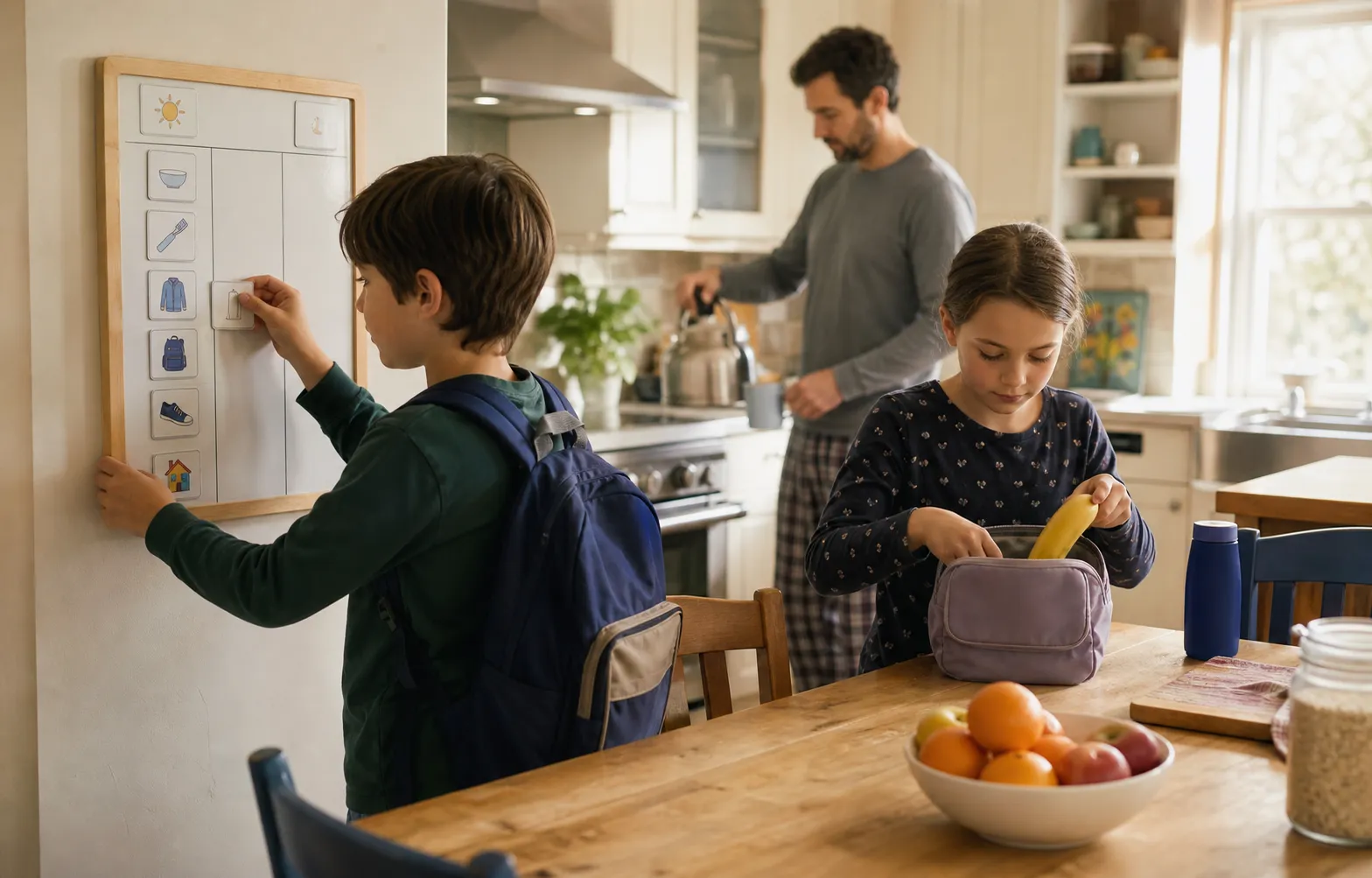
The story does not need to map every minute. Often a few dependable anchors are more useful: breakfast happens before leaving, the usual person collects the child afterwards, or a favourite activity still happens in the evening. Showing those anchors alongside the unfamiliar part can make a new outing or appointment easier to place within the child's wider day.
Keeping familiar anchors in view
Preparation is often most useful when it names both the new and the familiar. A story can point out what will stay the same around an outing or appointment, and what may happen in a different order. This can help a child use the routines that already support them while making room for something new.
This approach respects the fact that routines can carry practical and emotional meaning. The child may want to pack in a particular order, take the usual route for part of the journey or know where a familiar item will be. Including those details does not make the plan rigid. It gives the child a recognisable starting point from which to understand the new part of the day.
Predictability without pretending everything is fixed
Plans sometimes change. A personalised story can say what is likely, be honest about what may vary and include who will share the next step if it does. It is not a tool for making a child 'more flexible'; it is a way to respect the value of predictability while preparing together for a real situation.
For example, it can explain that the class may use a different room, that there could be a short delay, or that a trusted adult will update the child if a plan moves. Clear conditional language is often kinder than an overconfident timetable. The story can then be updated after the event, using what the child found useful, so predictability becomes something built with them rather than imposed on them.
Coming soon for iPhone and iPad
Be among the first to try a more personal way to prepare.
Join the waiting list for launch news and early access to a tool that helps shape a story around your child’s own questions, communication, sensory experiences and available support.
Join the waiting list