
A simple social story structure
A social story usually works best when it answers a few practical questions: Where will this happen? Who may be there? What is likely to happen? What might the child notice? What choices and support are genuinely available? It can have a beginning, middle and end without prescribing one “correct” response.
Before writing, gather details from the child and from someone who knows the setting. The most useful information is often specific: which entrance to use, whether a hand dryer is loud, where a trusted adult will wait, or how the child can ask to pause.
Choose one specific situation
Start with one event, routine or change. A story about a dentist visit is easier to follow than a story about every kind of healthcare appointment.
Describe what will happen
Put the likely sequence in order: where the child will go, who may be there, what may happen first and how the situation is likely to end.
Use clear and literal language
Prefer short, concrete sentences. Explain unfamiliar words and avoid idioms that could make the situation less clear.
“I will be good while the dentist fixes my teeth.”
“The dentist may ask me to open my mouth. I can ask what will happen next. We can agree on a signal if I need a pause.”
Explain possible feelings or sensory experiences
Name sounds, lighting, smells, touch, crowds or waiting when they matter. Leave room for the child to feel differently from the example.
Describe appropriate options and actions
Include genuine choices: asking a question, using a preferred communication method, watching first, taking a break or staying near a trusted adult.
Avoid threats, promises and guarantees
Do not promise that an event will be easy, painless or exactly on time. Use words such as may, might and usually when a detail is uncertain.
“The room will be quiet.”
“The room may be busy or noisy. I can wear my headphones if I want to.”
Personalize the story
Use the child's name, familiar words, real people and accurate details about the place. Include only personal information that is useful.
Read the story before the event
Choose a calm time and let the child decide how much to read. A story can be revisited, but it should not become a test or demand.
Update the story when needed
After the event, ask what was accurate, what was missing and what support helped. Revise the next version around the child's experience.
Social story planning checklist
- One clearly defined situation
- A likely sequence in plain language
- Relevant people, places and sensory details
- Honest wording for uncertainty
- Real choices, communication options and support
- No threats, rewards, forced emotions or false reassurance
- A plan to review the story with the child
Using a social story generator thoughtfully
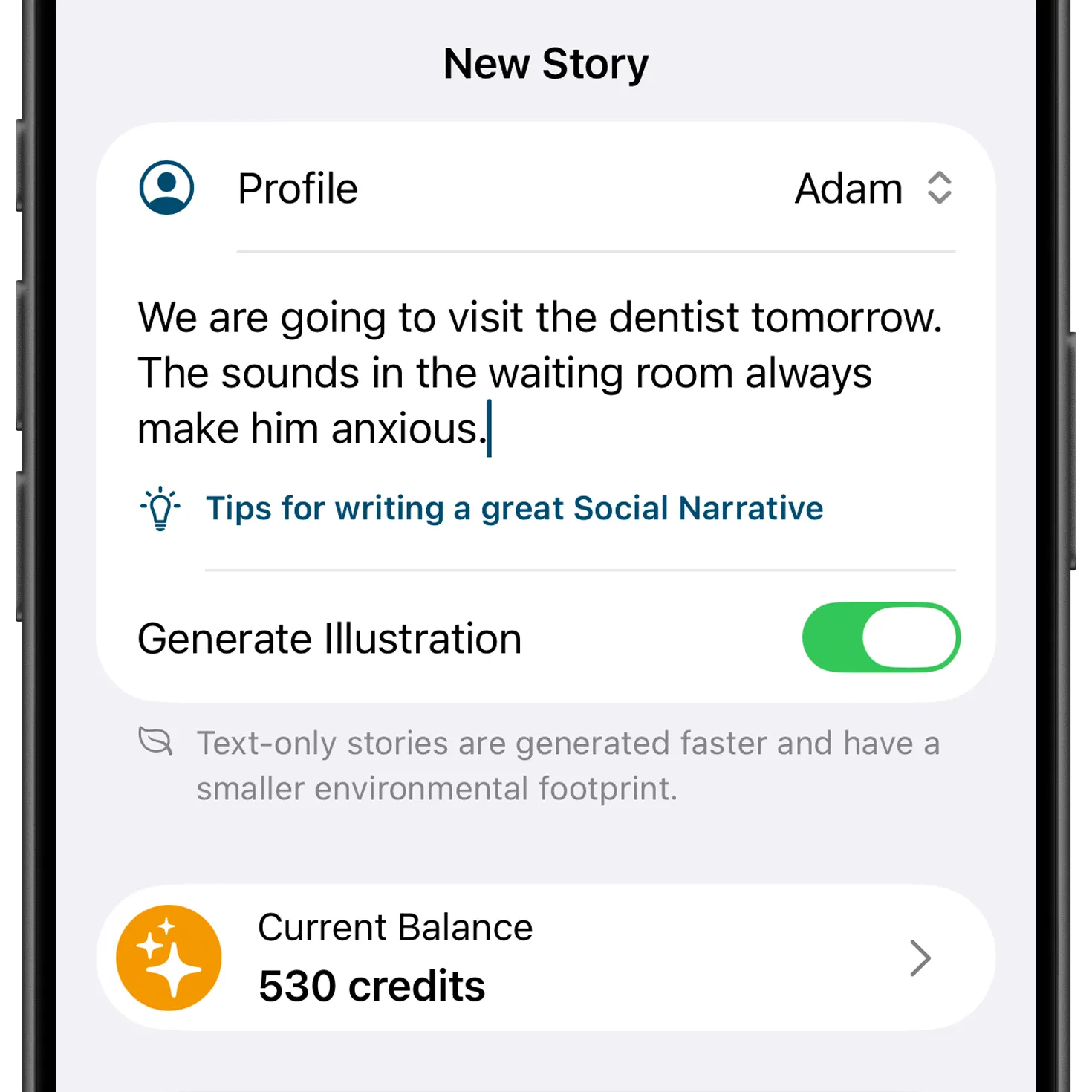
A generator can help create a first draft and organize details, but it does not know the child or setting. Social Narratives creates personalised illustrated drafts from the situation you describe. A parent, carer, educator or relevant professional should review every story, correct inaccurate assumptions and confirm that any support it mentions will really be available.
You can see how this guidance applies in the social story examples library or read more about what a social story is and its limitations.
Sources and further reading
- Social stories: examples and writing resources — Sheffield Children’s NHS Foundation Trust
- Social Stories for Children With Disabilities — ASHA Evidence Maps
