
Social stories at a glance
Parents, carers, educators, speech and language professionals and other support professionals may use personalised narratives with autistic children and with other children who benefit from clear preparation. They can explore appointments, school, personal care, social events, journeys, sensory environments, waiting and changes in routine.
A useful story describes the real setting and likely sequence, introduces relevant people and sensory details, and makes honest choices or communication options visible. It should use literal language, avoid false promises and be reviewed with the child. See the step-by-step writing guide and browse social story examples for everyday situations.
A story about a situation that matters to this child
A social story can begin with something that is coming up in everyday life: a first school day, a haircut, a hospital appointment, a birthday party, a new journey or a change to the usual plan. The situation may look straightforward to the adults involved, while still containing unfamiliar people, places, sounds, expectations or unanswered questions for a child.
Rather than offering a generic script, a good story gives the child a clearer picture of their own experience. It can explain where the situation takes place, who might be there, what may happen first and what might change. Just as importantly, it can include what the child can ask, choose, notice or do if they need support. The aim is shared understanding, not a perfect performance.
It makes the unspoken parts easier to see
Many situations carry information that is obvious only once it is happening. A waiting room may be bright and busy. A new class may have an unfamiliar routine. At a party, people may sing, offer food or move quickly between games. A story can slow these details down and put them into calm, plain language before the child is in the middle of the experience.
This can be especially helpful when a child is thinking about sensory details, communication, uncertainty, transitions or social expectations. It is not about deciding which details should matter. It is about recognising the details that already matter to that particular child and making them easier to discuss with trusted adults.
Personalisation is the point
Two children can be preparing for the same event and need very different information. One may want to know the order of a journey. Another may want to see a photo of the person they will meet, find out whether they can use their communication device, or understand how a noisy room may feel. A personalised story makes room for these differences instead of assuming one response fits everyone.
The story can be shaped around the child's familiar words, preferred communication, interests, routines and sources of comfort. It should include only choices and support that are genuinely available. Families can revisit it before an event, add what the child noticed afterwards, and make the next version more useful. That ongoing conversation is as valuable as the finished pages.
It describes before it directs
Social Narratives is designed to help children understand context, not to train them to hide discomfort or behave in a prescribed way. A story may say that a room could be loud, that a clinician might ask a question or that a plan may change. It can also say that the child can watch first, use a preferred way of communicating, ask for more information, take a break or stay close to someone they trust when those options are available.
This distinction matters. A child does not need to enjoy every part of a situation for the story to have been useful. Sometimes a story helps a family decide that more support, more information, a different timing or a different plan is needed. It can support preparation and conversation; it is not therapy, a behaviour programme or a substitute for professional advice.
How to use a social story
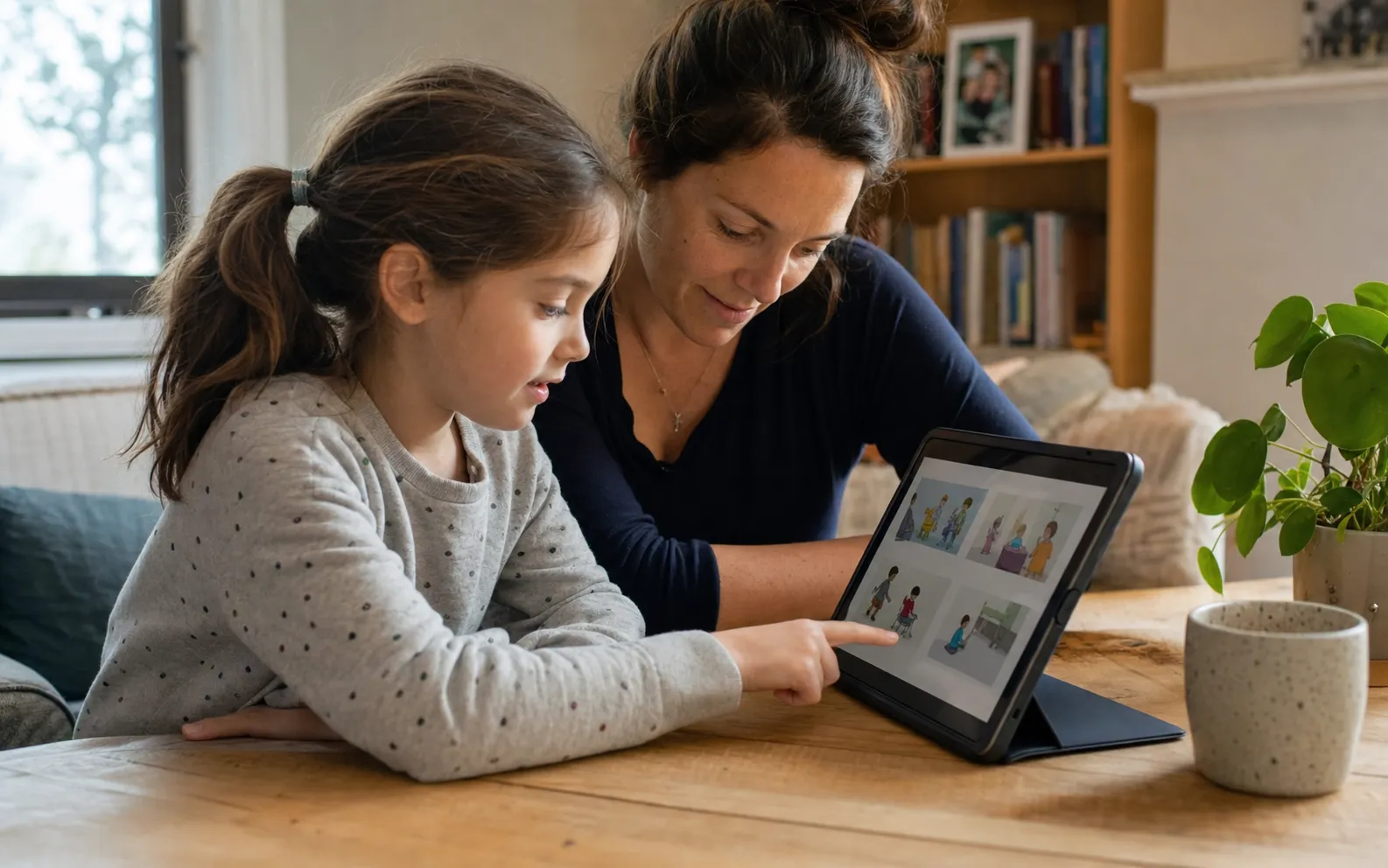
Read the story at a calm time before the event, at a pace that works for the child. Invite questions and let the child point out anything that seems wrong or missing. Some children want to revisit a story several times; others prefer one short look. After the event, update the story with what the child actually noticed and what support was useful.
What a social story cannot do
A story cannot guarantee how an event will unfold, remove every difficult feeling or replace changes to an inaccessible environment. It does not diagnose or treat autism, ADHD, anxiety or sensory differences, and it is not a substitute for medical, therapeutic or educational advice. If the plan or available support changes, the story should change too.
How Social Narratives differs from a generic AI story generator
Generic writing tools can produce prose from a prompt, but may not guide the user toward the practical details that make preparation trustworthy. Social Narratives is designed specifically around one upcoming situation, optional child details and an illustrated reading experience. The result is still a draft: an adult who knows the child and setting must review it, remove assumptions and confirm that every promised option is real.
For topic-specific preparation, explore the social story guide library, including a dentist social story guide, a first day of school social story and a haircut social story guide.
