
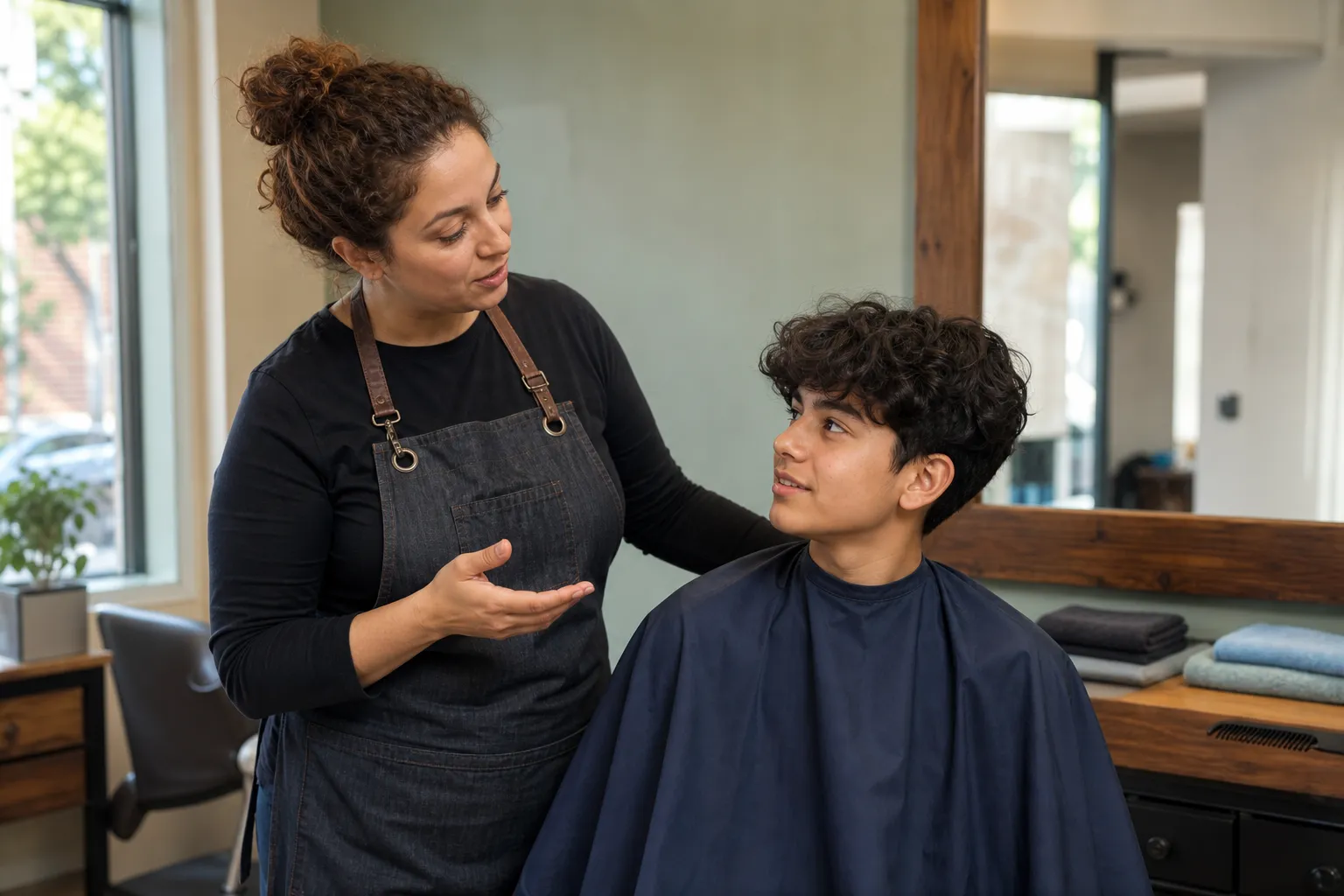
A haircut can ask a person to do several hard things at once: enter an unfamiliar or busy place, sit near someone they may not know, hear tools close to their head, and communicate while their hair and face are being touched. For some children, teens, and adults, the difficult part is not the haircut itself. It may be the uncertainty, the sensory experiences, the social expectations, or the feeling that leaving is not straightforward. A personalized social story for haircut can give a family a calm way to name what may happen, identify choices that are genuinely available, and prepare together without suggesting that the person must enjoy the experience or react in a particular way. This Everyday life guide uses affirming language and focuses on possible experiences associated with autism, anxiety, and communication differences. It is informational rather than medical advice: every person’s preferences, access needs, and responses are individual.
Why a haircut can feel like a big event
Haircuts are often treated as an ordinary routine, but they involve many rapid changes in sensation and interaction. A person may be asked to wait, wear a cape or towel, sit in a particular position, turn their head, make small talk, tolerate scissors or clippers near their ears, and cope with hair falling on their skin. The salon, barbershop, home, or school setting may also include bright lights, mirrors, unfamiliar smells, music, conversations, dryers, and other people moving nearby. Even a familiar hairdresser can bring a different experience from one appointment to the next.
For an autistic person, sensory experiences can be especially relevant, though sensory preferences vary widely among autistic people and also occur in people who are not autistic. Loose hair on the neck, the pressure or texture of a cape, water spray, buzzing clippers, a dryer’s air movement, or the sound of scissors may be neutral, unpleasant, painful, interesting, or tolerable only briefly. A person may have a strong preference for a particular order of steps, a predictable amount of time, or a specific way their hair is handled. These responses are information about their experience, not misbehavior or a failure to cooperate.
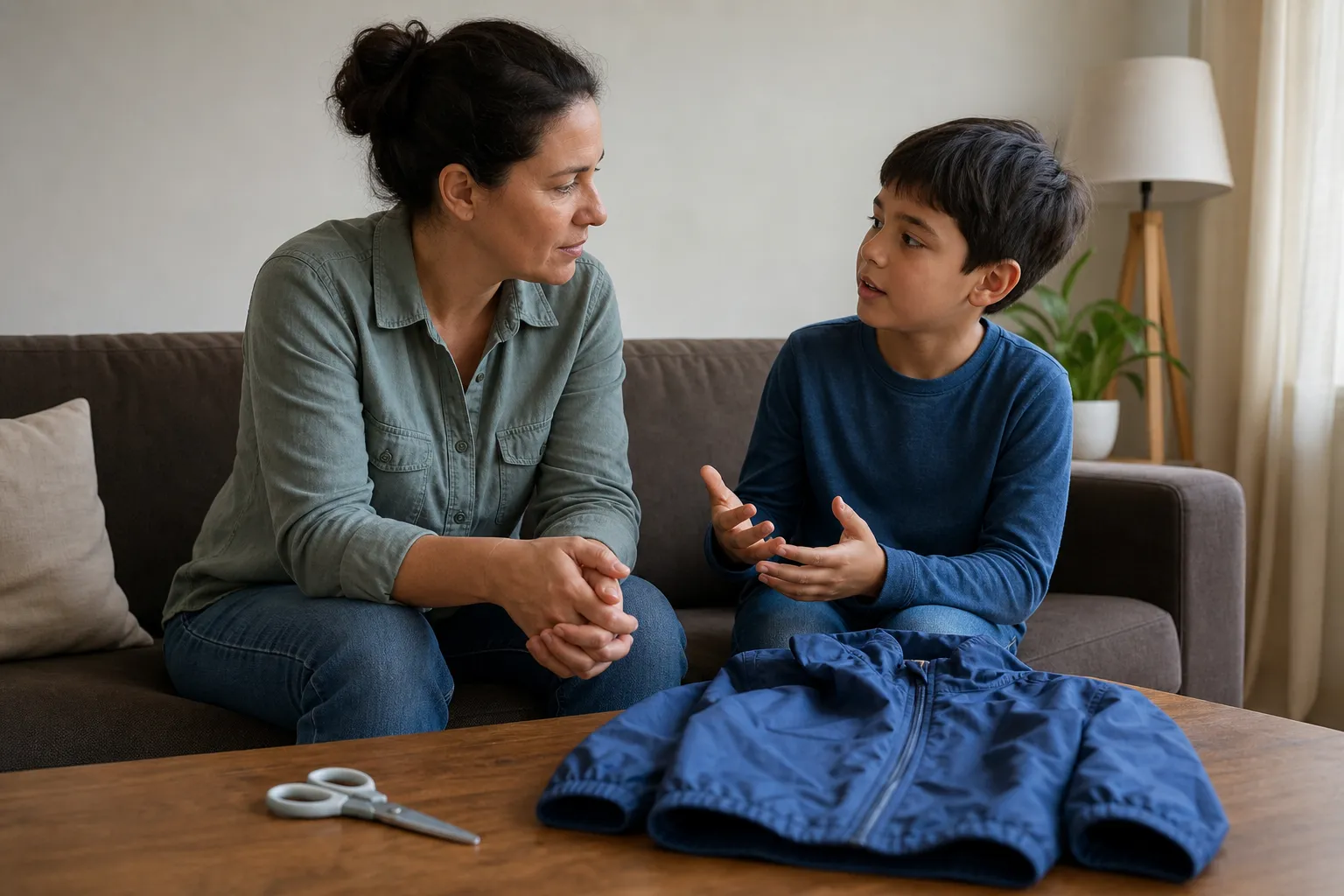
[Anxiety] can add another layer. A person may worry before the appointment, ask the same questions repeatedly, become quiet, need more reassurance, or want to leave once they arrive. Anxiety in children can show up through behavior, body sensations, sleep changes, irritability, avoidance, or trouble concentrating; it does not always look like a person saying they feel worried. Temperament also differs: some children take time to warm up to new people or settings, while others adapt quickly. Neither pattern tells anyone exactly how a haircut will go on a particular day. A useful haircut social story makes room for uncertainty rather than promising that everything will be easy. It can say what is likely, what may be different, and what choices the family knows are possible.
What a personalized social story for haircut can do
A social story for haircut is a short, individualized explanation of an upcoming situation. It is not a script for making someone comply, and it should not describe distress as wrong. Its purpose can be to reduce avoidable surprises and create shared language before a visit. The person and their family can decide whether it is useful to talk, listen, look at photographs of the actual setting, act out a small part of the routine, or simply discuss a few key details. The format matters less than whether the information is accurate, respectful, and meaningful to that individual.
Personalization is essential. A generic autism haircut social story may mention a cape, clippers, shampoo, or a busy salon, but none of those details should be included as though they will definitely happen. Some appointments take place at home; some involve scissors only; some include washing; some do not. Some people see the same hairdresser each time, and others will meet someone new. Begin with facts the family can verify: where the haircut is expected to happen, who may be there, how travel may work, and which steps are likely. It is honest to include uncertainty, such as a possible wait or the chance that another customer may be using a dryer.
The story can also recognize autonomy. A person may want a shorter haircut, a trim, a particular style, or no change to their hair at that time. They may prefer to know when touch is about to happen, ask what a tool does, choose whether to talk, or communicate a need for a pause. The family should describe only choices that are actually available in that setting. If the appointment cannot be extended, if washing is not offered, or if a certain service requires a particular step, the social story should not imply otherwise. Accurate expectations build more trust than reassuring language that later proves untrue.
Including sensory experiences without minimizing them
A hairdresser social story can name sensory details plainly and neutrally. Rather than saying a cape is comfortable or that clippers are not loud, it can explain that a cape may touch the neck and that clippers may make a buzzing sound. This allows the person to connect words with their own body and preferences. If hair on skin is a known concern, the story can acknowledge that tiny cut hairs may land on the face, neck, hands, or clothes. If water, combing, or head positioning is relevant, those details can be described in the same matter-of-fact way.
Families can use previous experiences as evidence. Consider what the person has communicated directly, shown through behavior, or tolerated differently across settings. Was waiting more difficult than cutting? Was the sound the main issue, or was it the surprise of the first sound? Did a familiar location change the experience? Did the person prefer to watch what was happening, look away from mirrors, or have information provided before each step? There is no need to assign a reason when the reason is unclear. A social story can simply state a preference or possibility without interpreting it.
Concrete options may be worth discussing when they are genuinely possible. Depending on the person and setting, a family might ask about a quieter appointment time, a home visit, meeting the hairdresser briefly before a full appointment, using scissors rather than clippers, leaving the cape off, taking a break, or stopping after a small amount is cut. These are possibilities, not universal recommendations, and availability differs by provider. A person may also decide that a haircut is not manageable that day. If that is a real option, it can be named honestly; if it is not, the family can be clear about what would happen instead of presenting an unavailable choice.
Addressing anxiety and uncertainty before the appointment
For a person who is anxious about haircuts, vague reassurance can sometimes leave the hardest questions unanswered. A more helpful social story may identify the beginning, middle, and end of the appointment: arriving, checking in or greeting someone, waiting if needed, sitting or standing for the haircut, paying or saying goodbye, and leaving. The story does not have to include every possible detail. It should focus on the parts that the individual is most likely to wonder about, such as who will touch their hair, whether tools will make noise, or how they will know the appointment is ending.
It can be useful to distinguish certainty from possibility. For example, the family may know the appointment is at a particular place and that a named adult will attend. They may not know whether there will be a wait, whether the hairdresser will be running late, or whether a dryer will be used nearby. Naming this difference can make the story more credible. It also gives carers and educators a chance to discuss what the person wants others to know if a plan changes. No social story can guarantee a calm response or prevent anxiety, and a difficult appointment does not mean the story was used incorrectly.
Use language that respects a person’s emotional experience. Instead of framing nerves as something to defeat, the story can say that people can have different feelings about a haircut and that feelings can change during the visit. It can include familiar ways the person already communicates discomfort, uncertainty, or a wish to pause. Example wording: “I can tell my grown-up or the hairdresser when I need a break.” That sentence is only appropriate if the relevant adult and hairdresser have agreed that a break can happen. If spoken words are not the person’s preferred communication, the wording and plan should reflect their actual communication method.
Communication differences and shared planning
[Communication disorders] and other communication differences can affect how easily a person understands spoken instructions, processes conversation in a noisy place, finds words under pressure, or makes their needs understood. This does not mean the person lacks preferences or understanding. A haircut social story autism resource should avoid assuming that speech is the only meaningful communication. Families may draw on the person’s established methods, including speech, gestures, signs, writing, pointing, eye gaze, body movement, augmentative and alternative communication, or support from someone who knows them well.
A story can reduce communication demands by making likely phrases and decisions familiar in advance, but it should not require the person to use a particular phrase. The family may want to tell the hairdresser ahead of time how the person communicates yes, no, discomfort, or a request to stop. They can also explain whether the person benefits from extra processing time, direct wording, advance notice before touch, or fewer questions. These are individual access considerations, not traits that can be assumed from autism or any communication-related diagnosis.
It may help to plan who will speak to the provider about practical details and who will stay focused on the person getting the haircut. A carer’s role can include checking that information is understood rather than answering over the person. An educator supporting a school-based haircut discussion can similarly avoid treating the activity as a test of social skills. The goal is a clear, dignified exchange in which the person has as much involvement and control as circumstances allow. If a communication breakdown happens, that is a cue to slow down, clarify, or reconsider the plan, not evidence that the person is being difficult.
Writing, reviewing, and updating the story together
Start with the person’s own priorities whenever possible. They may care most about the noise, how short their hair will be, seeing the hairdresser, waiting, being photographed afterward, or simply getting home. A parent, carer, or educator can gather practical facts and then write in a voice that fits the person’s age, communication style, and experience. First-person wording may feel direct for some people, while others may prefer their name or a more conversational approach. Keep sentences specific and avoid claims such as “I will be fine,” “I will sit still,” or “I will like my haircut.”
A focused social story for haircut might cover the reason for the visit, the location, the people involved, the likely sensations, the available choices, how to signal needs, and what happens when the haircut ends. It can be read or discussed more than once if the person wants that, then changed after the visit. Some people prefer a very short explanation; others want detailed information. The right amount is the amount that supports understanding without adding unwanted focus or anxiety.
Afterward, review the experience without judging it as success or failure. Ask what matched the description, what was unexpected, what felt okay, and what the person would want changed next time. Their answer may be spoken, shown, written, or observed over time. Update the story with what was learned, including a decision to choose a different setting, provider, haircut style, or timing in the future. This makes the resource a record of growing self-knowledge rather than a fixed demand to tolerate the same experience again. For broader, non-diagnostic context about child anxiety, communication, and individual temperament, families may consult resources from the Centers for Disease Control and Prevention, the American Speech-Language-Hearing Association, and the American Academy of Pediatrics.
Frequently asked questions
What should an autism haircut social story include?
Include only details that are likely and meaningful for that person: where the haircut will happen, who may be present, expected sounds or touch, possible waiting, the person’s communication methods, and choices that the family has confirmed are available. Avoid promising that it will not hurt, will be quick, or will feel good. Autism does not predict one person’s haircut needs, so previous experience and the person’s own input are more useful than a generic checklist.
Can a social story help if a child becomes distressed during haircuts?
It may help the child and supporting adults prepare for known parts of the experience and agree on how needs can be communicated. It cannot guarantee that distress will not occur, and it should not be used to pressure a child to remain in a situation that is overwhelming. A review after the appointment can help identify what information, choices, setting features, or communication arrangements may need to change next time.
How is a hairdresser social story different from simply explaining the appointment?
A social story is a personalized explanation built around the individual’s likely questions, sensory experiences, communication preferences, and real options. A brief explanation may be enough for some people. Others may benefit from revisiting a predictable sequence and using language that distinguishes what is known from what may happen. Neither approach should assume that a person must enjoy the haircut or respond in a particular way.
Keep exploring
Related social stories
These guides cover situations with similar routines, sensory details or preparation needs.


Learn more about writing a social story
Read what a social story is, follow the step-by-step writing guide, or browse more social story examples.
Sources
- Anxiety and depression in children — Centers for Disease Control and Prevention
- Communication disorders — American Speech-Language-Hearing Association
- Understanding your child's temperament — American Academy of Pediatrics
