
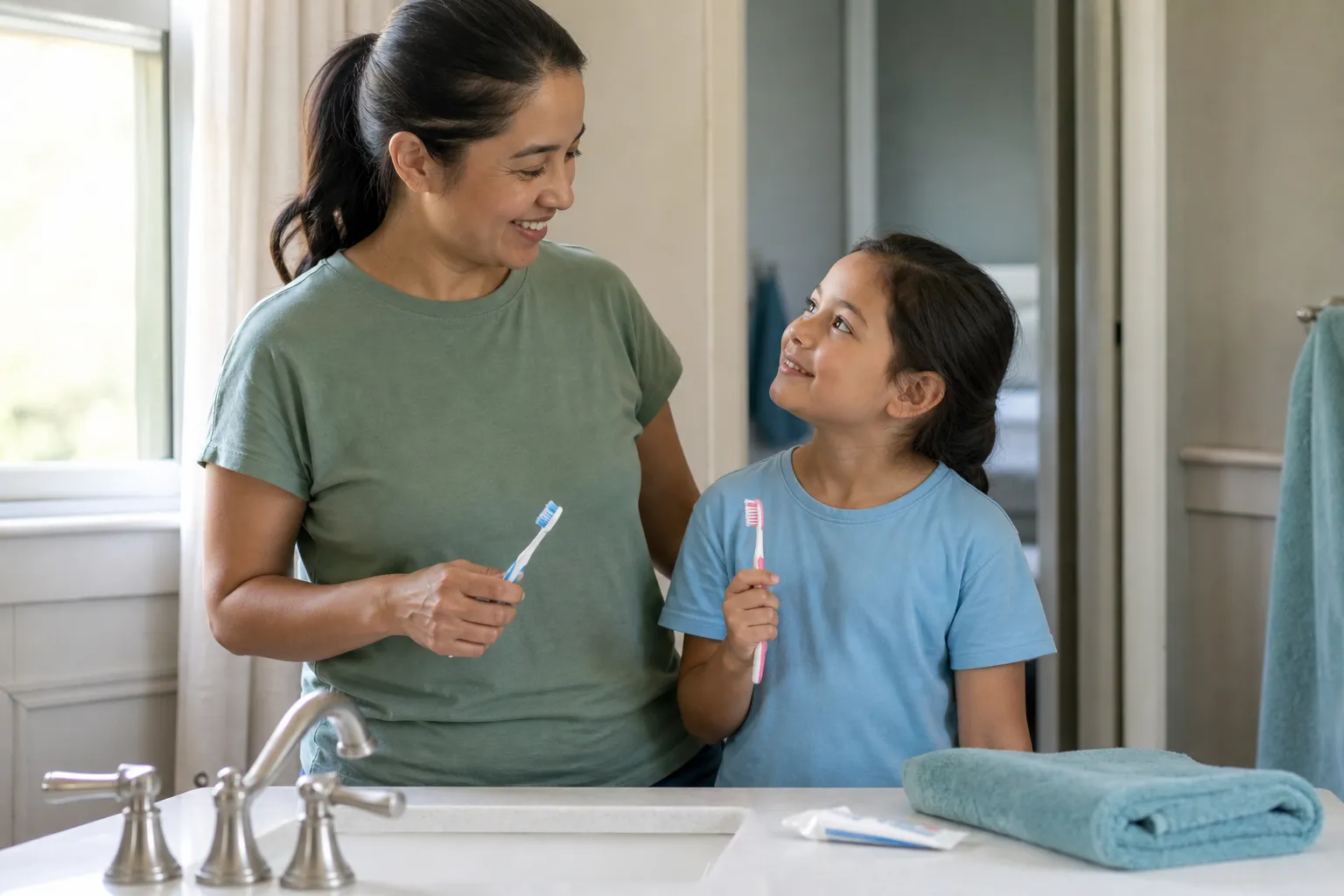
Tooth brushing is often described as a tiny everyday task, yet it can contain many events at once: stopping an activity, entering the bathroom, coping with water and taste, allowing someone near the face, and moving on to the next part of the day. For some autistic children and young people, that combination can make brushing teeth feel much bigger than the few minutes it takes. A personalised brushing teeth social story can give a family a calm way to name what may happen, what choices are genuinely available, and how everyone can prepare together. It is not a script for making a person behave a certain way. Instead, it can make an often-unpredictable routine more understandable while respecting the individual’s communication, sensory experiences, and pace.
Why tooth brushing can be a high-demand moment
A brushing teeth social story for autism starts with an important reframe: difficulty with brushing is not necessarily about refusal, laziness, or a lack of understanding. Brushing can involve several demands that arrive at the same time. There may be a transition away from play, rest, food, school preparation, or a preferred activity. The bathroom may have bright lights, echoes, fan noise, strong smells, cold surfaces, or interruptions from other people. The task itself can include foam, a strong flavor, water near the mouth, a vibrating or scratchy feeling, and expectations about how long the activity should last.
Autism is a neurodevelopmental difference, and autistic people have varied communication styles, sensory profiles, interests, support needs, and ways of responding to routines. It does not mean that every autistic person dislikes tooth brushing or has the same reason for finding it difficult. One child may enjoy the predictability of brushing but dislike mint flavor. Another may be comfortable with the sensations but find the switch from a favorite activity unexpectedly hard. A young person may want privacy and control over a routine that adults have previously directed. A useful story leaves room for these individual realities rather than assigning a reason based on a diagnosis.
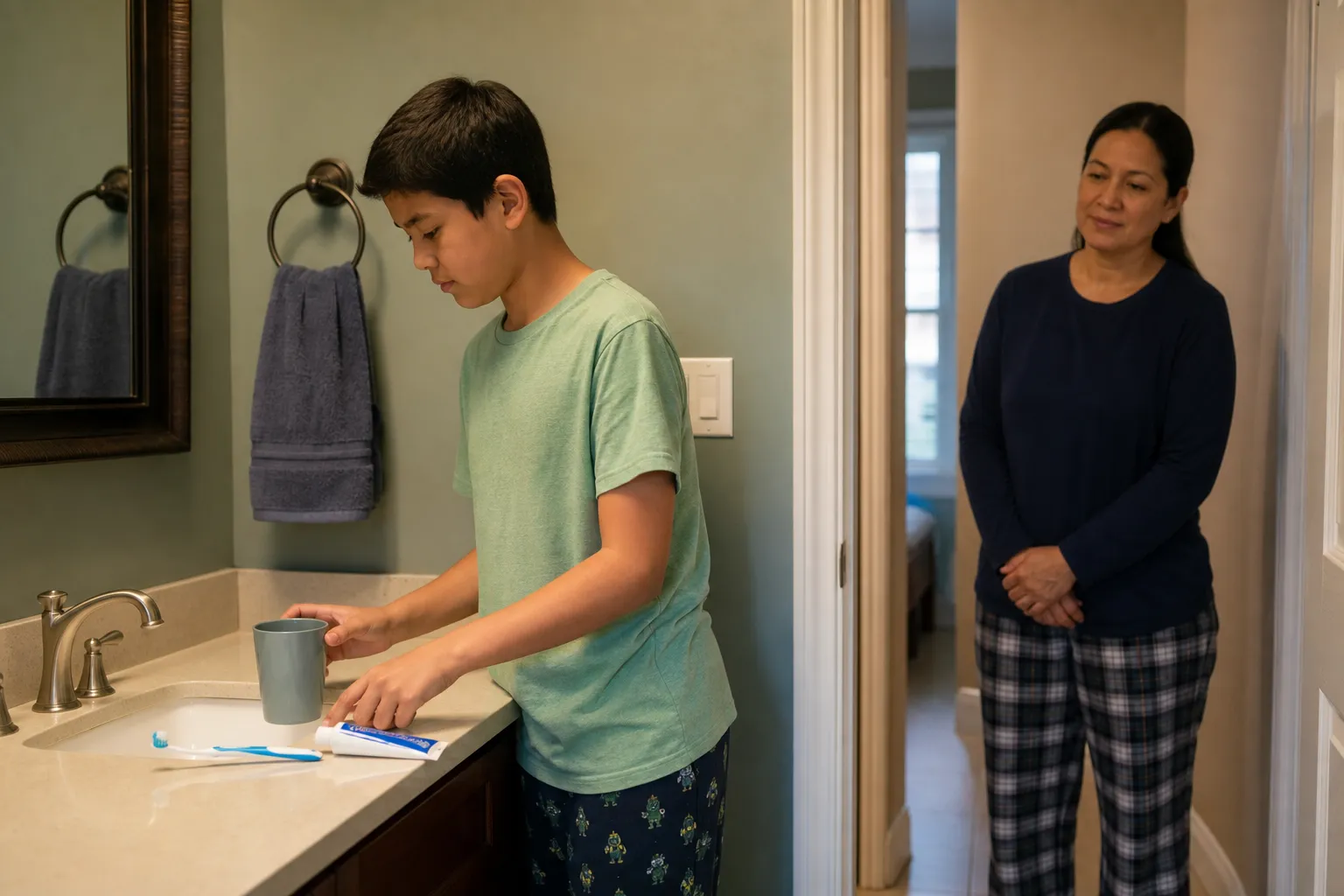
The goal is not to make tooth brushing emotionally neutral at all times. Everyday routines can still be unpleasant, tiring, or inconvenient. The more realistic goal is to reduce avoidable uncertainty, communicate clearly, and make space for the person’s experience. A story can also help adults notice patterns: whether a particular time of day, sensation, transition, or interaction seems to make the routine harder. That observation is information for the family, not evidence that anyone has failed.
Sensory experiences may shape what feels manageable
Sensory experiences can be especially relevant because brushing happens in and around the mouth, an area where sensations can feel intense. Possible experiences include disliking the smell or taste of toothpaste, the feeling of bristles, drooling or foam, water temperature, splashing, the sound of running water, the bathroom mirror, or the texture of a towel. Some people may seek firm pressure, while others may prefer very light contact; these are possibilities, not rules. A person’s response may also vary from one day to another because tiredness, stress, illness, hunger, noise, or a busy day can change how manageable sensations feel.
A personalised tooth brushing social story can name sensory facts without minimizing them. It can say that a flavor may feel strong, that water may be cold or noisy, or that having something in the mouth can feel uncomfortable. It can then describe only choices that are actually honest in that household. Depending on the person and family, genuine possibilities might include choosing between available toothpaste flavors, deciding whether the tap is running at a particular moment, using a preferred bathroom when one is available, taking a short pause, or communicating that a sensation feels too intense. A choice should never appear in the story if it will not be honored in practice.
The story can also explain what adults will do in plain, respectful terms. For example, it may state that an adult will ask before helping, listen to a request for a pause, or say what will happen next. This is not a promise that every sensory discomfort will disappear. It is an honest description of how the family intends to communicate. When adults acknowledge discomfort rather than arguing that it is insignificant, they can make collaboration more likely and help the child or young person feel taken seriously.
Routines and predictability can make the sequence clearer
Brushing frequently occurs at transition-heavy times, such as before leaving home or before sleep. Those periods can already include competing needs, time pressure, fatigue, hunger, and changes to usual plans. For someone who relies on predictability, uncertainty about when brushing will happen, who will be nearby, or what comes afterward may add to the difficulty. Family routines can offer stability and connection, while still needing flexibility for real life. The American Academy of Pediatrics discussion of family routines notes their potential role in helping children know what to expect; it does not mean that one rigid routine suits every family or every child.
A brushing teeth social story can set out the family’s usual sequence in a short, concrete order. It may cover when brushing generally happens, where it happens, what materials are usually there, who may be present, and what normally follows. Include variability when it is likely. If one caregiver sometimes does the bedtime routine and another caregiver does it on different days, say so. If brushing may happen later after an evening event, acknowledge that. A story that pretends routines never change can create more uncertainty when ordinary changes occur.
It can help to separate the predictable parts from the flexible parts. The predictable part may be that brushing happens as part of getting ready for bed. Flexible parts may include which adult is nearby, whether the bathroom door is open or closed when that is safe and appropriate, which of two available flavors is used, or whether the person begins independently and asks for help later. These details should reflect the family’s real arrangements, not an idealized routine. The American Academy of Pediatrics resource on temperament is also a useful reminder that children can differ in adaptability, intensity, and responses to novelty; these differences are not moral qualities and do not need to be corrected by a story.
What a personalised social story can include
A social story works best when it is about one person’s actual situation rather than a generic lesson about “good” brushing. Before drafting, family members can talk through what typically happens on an easier day and on a harder day. Consider the setting, timing, sensory details, communication preferences, privacy, adult involvement, and the next activity. If the child or young person communicates through speech, gestures, typing, signs, behavior, or another approach, the story can reflect how they may show that they are ready, uncertain, uncomfortable, or in need of a pause.
Use first-person language only if the person is comfortable with it and it fits their understanding. Some people may prefer their name, “you,” or a neutral description instead. Keep sentences direct and specific. Avoid vague assurances such as “Brushing is easy” or “I will like brushing my teeth.” Those statements may not be true and can make a person feel unseen. Also avoid making the story a list of demands, rewards, consequences, or threats. Its function is preparation and shared understanding, not pressure.
It is reasonable for a story to include a brief explanation that teeth need regular care and that a dental professional may give individual guidance about oral health. Keep this factual and avoid using health fears to force compliance. For an individual with ongoing pain, bleeding, a sudden change in eating or brushing tolerance, or a concern about oral health, a parent or carer can consider contacting an appropriate dental professional. A social story does not diagnose the cause of distress and does not replace dental or other professional advice.
Writing honestly: language, choices, and adult roles
Start with what is observable. Describe the ordinary beginning of the routine, the actions that usually occur, and the end point. Name emotions and body signals as possibilities: someone might feel ready, hurried, annoyed, worried, tired, or uncomfortable. This gives the person language for their experience without predicting it. One short example sentence, for a story tailored to a child who uses these words, could be: “Sometimes the toothpaste taste feels very strong to me.” This is an example only, not a complete social story.
Then describe response options with care. “I can ask for a pause” is appropriate only when a pause is truly possible and adults know how they will respond. Likewise, a story may mention choosing an available option, brushing independently, having an adult nearby, or asking for help only if these are real possibilities for that individual. If health, safety, age, or the person’s current skills mean adult assistance is needed, the story can state that fact respectfully and explain how adults will communicate. It should not imply that independence is the only successful outcome.
Adults can agree in advance on language that is brief, consistent, and non-shaming. They may decide how to let the person know brushing is coming, how to respond to communication about discomfort, and how to handle a change in routine without blame. The focus is cooperation, not winning a confrontation. A second short example sentence could be: “When plans change, my grown-up can tell me what is different.” Again, this is only an example sentence for a personalised story. Review the wording with the child or young person whenever possible, because their corrections may reveal what the routine actually feels like to them.
Using the story as a family conversation, then revising it
A social story can be shared at a low-pressure time, rather than introduced only in the middle of a difficult brushing attempt. A family might read or discuss it before the usual brushing time, after a calm moment, or when planning an upcoming change such as travel, a sleepover, a new home, or a different morning schedule. The purpose is familiarity and dialogue. Some people may want to revisit the wording often; others may prefer it only when a change is expected. Interest in the story itself can vary, and declining to engage with it is useful feedback rather than defiance.
After trying the routine, adults can reflect on practical questions: Which part felt clear? What felt inaccurate? Was a promised choice actually available? Did an unexpected noise, rush, or adult instruction change the experience? Did the person communicate something important in a way adults initially missed? Updating the story based on these answers demonstrates that the person’s perspective has an effect. It also prevents the story from becoming stale when family life changes.
Progress does not have to mean that brushing becomes effortless, perfectly timed, or identical every day. It may mean the person has clearer information, more trusted language for communicating discomfort, or a routine that involves less uncertainty. Some days will still be harder. A respectful personalised story supports preparation, but it cannot remove every sensory challenge or replace patient relationship-building. Treat it as a living family document: specific, truthful, and open to revision as the child or young person grows and their needs, preferences, and routines change.
Frequently asked questions
What is a brushing teeth social story for an autistic child?
It is a short, personalised explanation of what usually happens during tooth brushing for one child or young person. It can describe the setting, sequence, possible sensory experiences, real choices, and how adults will communicate. It should be factual and respectful, rather than a behavior contract or a promise that brushing will feel pleasant.
Should a tooth brushing social story say that brushing will not hurt or feel uncomfortable?
Only if that statement is accurate for the individual, and broad reassurance is often not helpful. Some sensations may feel uncomfortable or intense. It is usually more honest to name possible sensations, explain what will happen, and include genuine options or communication methods that the family can support.
Can the same brushing teeth social story work for every autistic person?
No. Autism is highly individual, and tooth brushing routines differ across homes, ages, sensory experiences, and support needs. A reusable structure can be helpful, but the final story should use the person’s own circumstances, words, preferences, and realistic family arrangements.
Keep exploring
Related social stories
These guides cover situations with similar routines, sensory details or preparation needs.

Learn more about writing a social story
Read what a social story is, follow the step-by-step writing guide, or browse more social story examples.
Sources
- Autism spectrum disorder — Centers for Disease Control and Prevention
- The importance of family routines — American Academy of Pediatrics
- Understanding your child's temperament — American Academy of Pediatrics
