
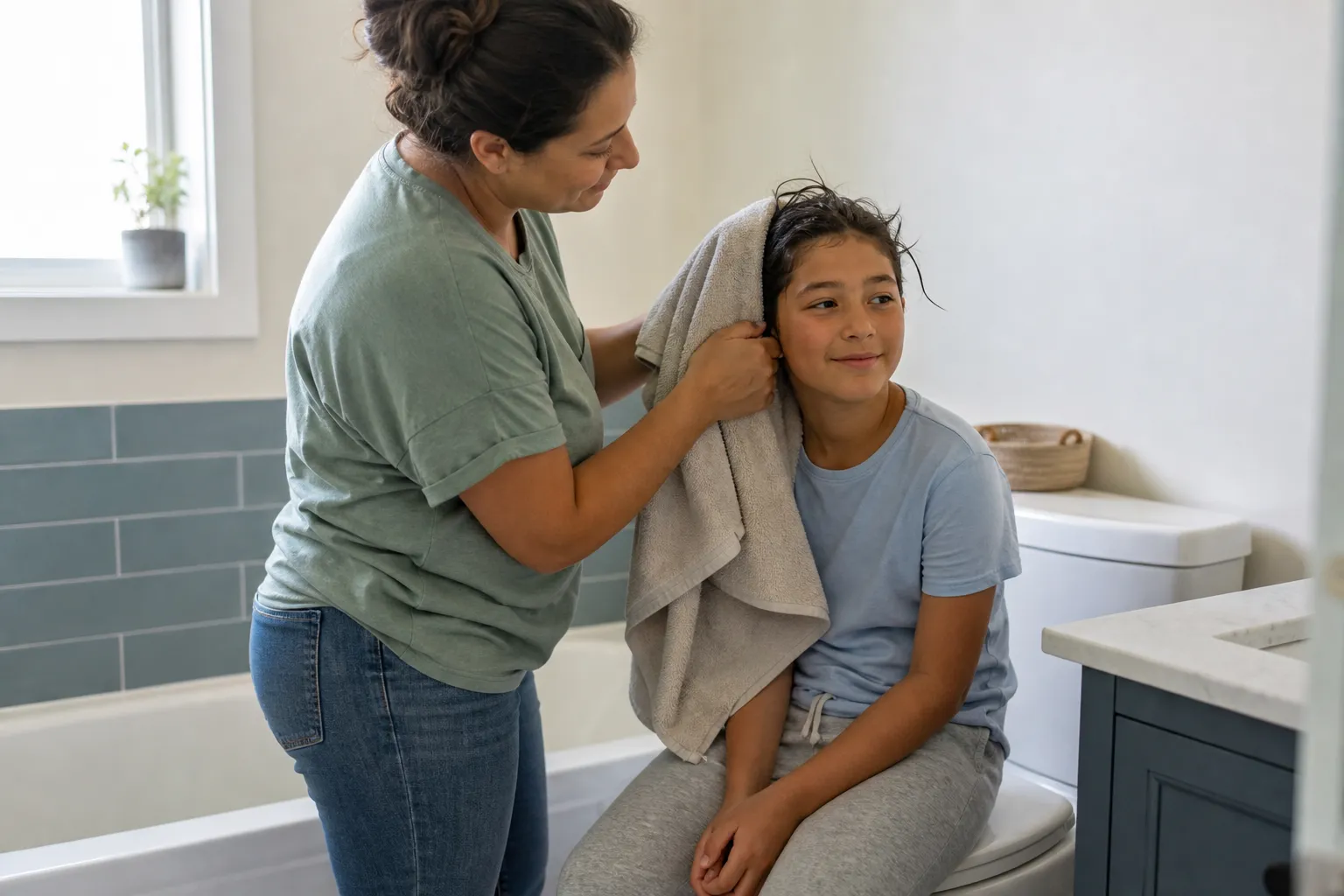
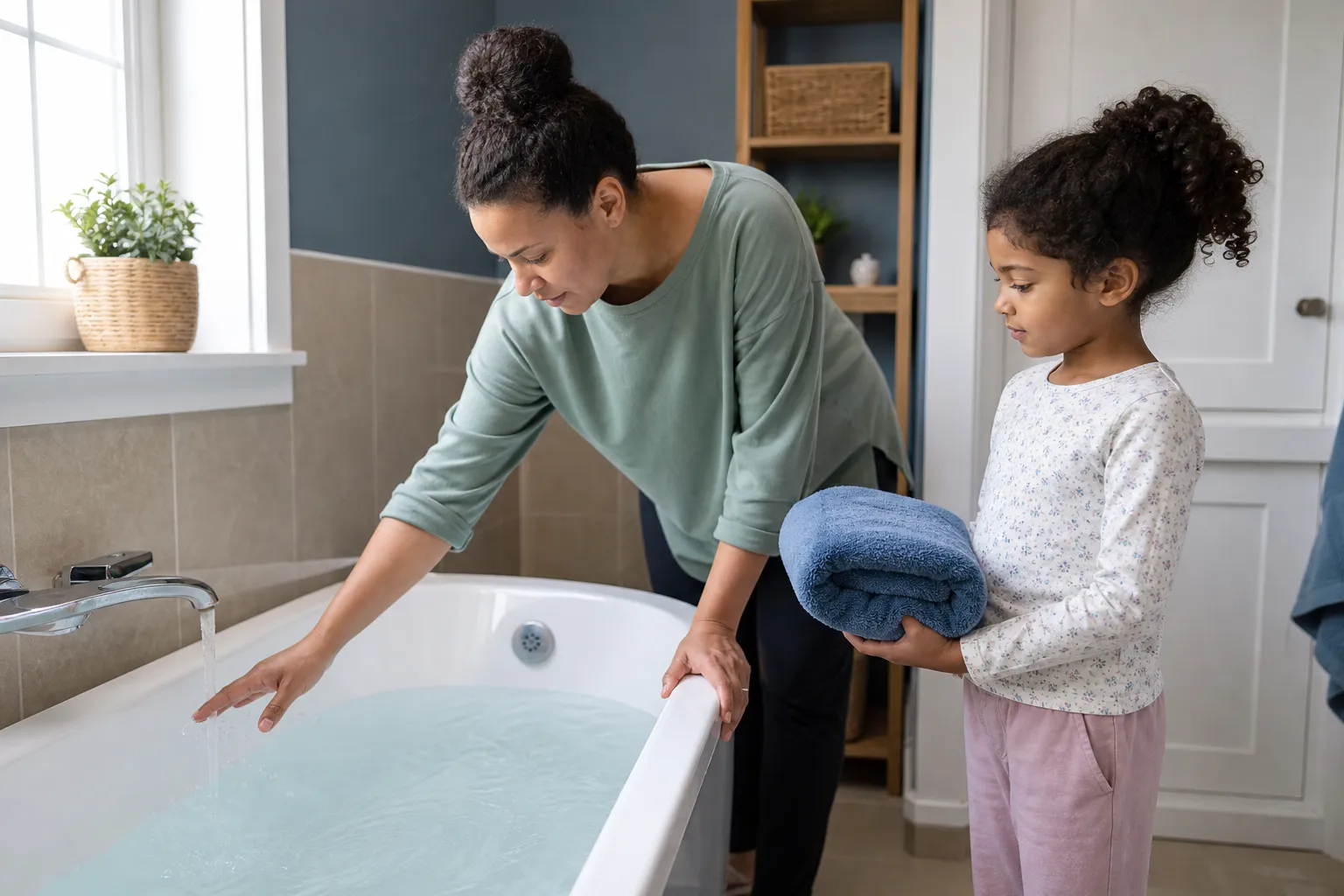
Hair washing is a short routine that can contain many separate demands: entering a bathroom, changing temperature, getting wet, leaning back or forward, hearing running water, managing slippery products, and waiting for the process to end. For some children, none of these steps is especially difficult; for others, one small part can make the whole experience feel unpredictable or overwhelming. A personalized washing hair social story can make room for the child’s own perspective and help the adults around them prepare together, without assuming that hair washing must look the same in every family.
Why a washing hair social story can be useful
A washing hair social story is a brief, individualized explanation of what may happen before, during, and after hair washing. It is not a script that a child has to follow perfectly, and it is not a promise that they will enjoy the experience. Its purpose is to reduce avoidable uncertainty by putting familiar words around a routine that can otherwise move quickly.
The most helpful version is based on one child’s real situation. A child may wash their hair in a bath, shower, sink, or another usual setting. They may have short or long hair, need help from an adult, prefer privacy, or sometimes choose to do parts independently. The story can describe what is generally true in that household while leaving space for changes: water temperature may be checked, an adult may help with rinsing, or the routine may pause if possible.
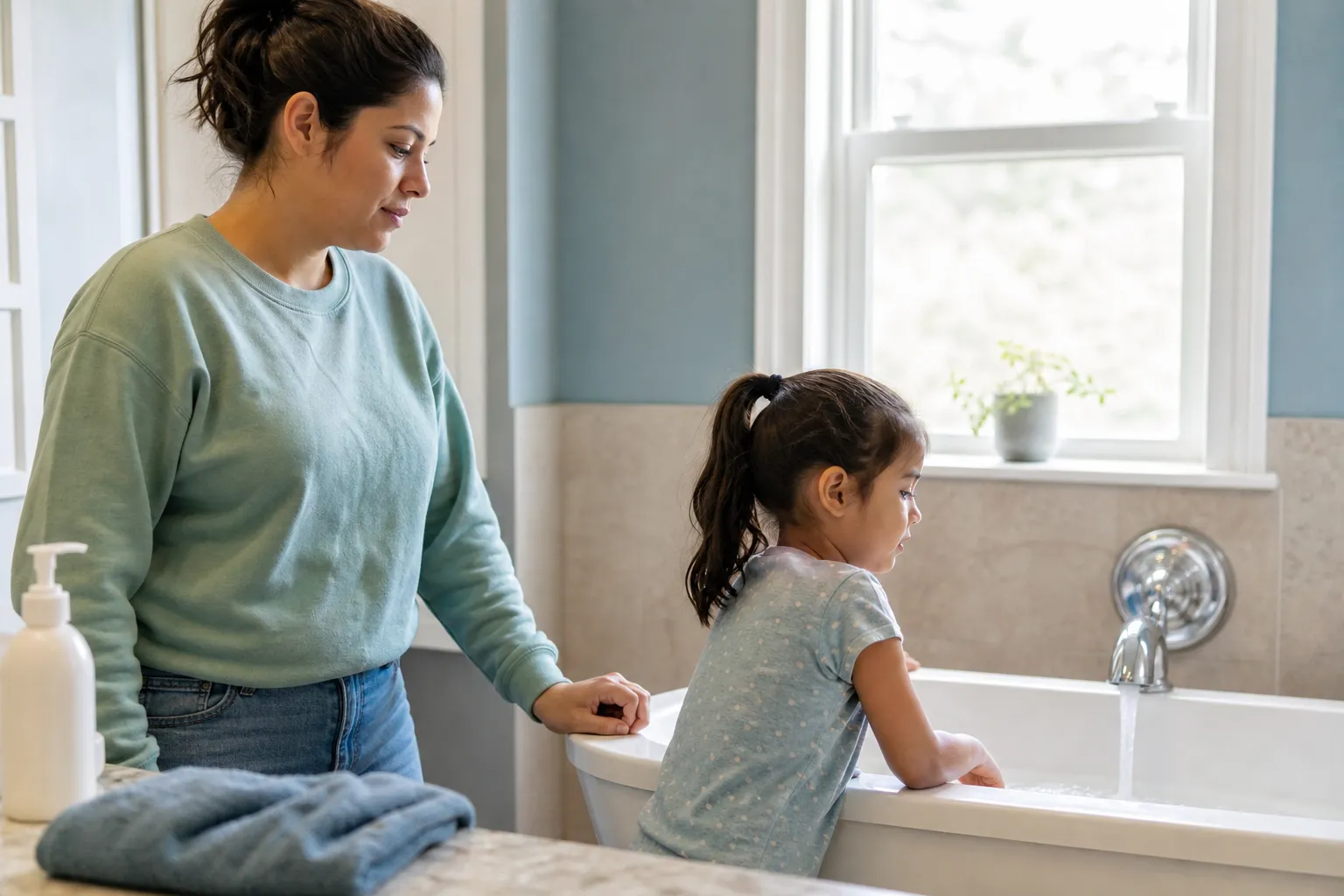
This approach can be particularly useful for some children with autism, whose experiences of routines, communication, change, or sensory input may differ from those of other children. Autism is a broad neurodevelopmental spectrum, not a single set of preferences or abilities. A child does not need an autism label for a hair washing social story to be worthwhile, and an autistic child is not automatically distressed by hair washing. The relevant question is what this individual child notices, expects, and finds manageable. The Centers for Disease Control and Prevention describes autism spectrum disorder as involving differences in social communication and restricted or repetitive behaviors or interests, with wide variation among individuals.
Notice the specific parts that feel hard, easy, or important
Instead of treating “washing hair” as one task, it can help to gently notice its separate components. The child may be comfortable with shampoo but dislike water near their face. They may enjoy the smell of a product yet find the sound of a shower loud. They may manage the washing itself but become upset when an expected sequence changes, such as when a usual adult is unavailable or there is less time than expected.
Sensory experiences can be relevant because hair washing combines touch, sound, smell, movement, temperature, and visual input. Possible experiences include disliking dripping water, the pressure of fingers on the scalp, foam near the ears, scented products, bright bathroom lighting, or the sudden sound of water starting. Other children may seek parts of the sensation, such as warm water or firm scalp pressure. These are individual responses, not behavior to judge or correct.
A child’s temperament can also shape how they approach a routine. Some children take time to warm up to unfamiliar sensations, while others are more flexible about changes. The American Academy of Pediatrics notes that temperament describes characteristic ways children may respond to the world; it is not a measure of whether a child is being difficult. Observing patterns can help adults describe the routine fairly: “The water on my forehead can feel surprising” is more useful than saying a child is “fussy about baths.”
Include anxiety without turning the story into reassurance that cannot be kept
For some children, anxiety may be part of hair-wash days. Worry can arise from remembering an uncomfortable previous experience, not knowing exactly when water will reach the face, feeling rushed, or fearing that they cannot communicate a need to pause. Anxiety can also appear as avoidance, irritability, repeated questions, shutting down, or a strong wish to control each step. Those responses can be meaningful communication about the child’s sense of safety or uncertainty.
A personalized story can name uncertainty honestly. Rather than promising that hair washing will be fun, painless, quick, or easy, it can say what adults will try to do and what may vary. It can describe that a child may have feelings before or during the routine, and that an adult can listen when the child communicates discomfort. This keeps the story credible. It also avoids making the child responsible for being calm.
The Centers for Disease Control and Prevention notes that children can experience anxiety and that caregivers may notice changes in behavior, mood, sleep, or participation. This guide cannot determine whether a child has anxiety or explain the cause of distress. If worries are persistent, growing, or affecting daily life beyond hair washing, a parent or carer may wish to discuss their observations with an appropriate qualified professional. A social story can support communication and preparation, but it is not a diagnostic or treatment tool.
Build the story around the child’s actual routine and choices
Gather details before writing. Adults can consider what happens first, who is usually present, where the child stands or sits, which parts are predictable, and what happens after the hair is rinsed. It can be useful to ask the child directly in the communication style that works for them, or to observe without making assumptions. Their priorities may be different from an adult’s: protecting their eyes, knowing who will help, avoiding surprise water, or understanding when the routine is finished may matter more than the name of the shampoo.
Concrete choices should only appear when they are real options in that family or setting. Depending on the situation, a child might be able to choose whether to wash hair in a bath or shower, whether to lean forward or back, which familiar towel to use, who helps if help is needed, or whether to wash hair now or after another routine. Some families may not have all of these choices because of time, facilities, hair type, health needs, or safeguarding requirements. A story should never offer a choice that adults cannot honor.
Keep language direct and respectful. Use the child’s preferred name and words for body parts, feelings, and personal care. Explain adult actions rather than presenting them as mysterious: an adult may wet the hair, apply shampoo, rinse it, and help dry it. If a step can feel unpleasant, the story can acknowledge that plainly. Example wording: “Sometimes water touches my face, and I can tell my grown-up if I need a moment.” This is an example sentence, not a complete social story.
Prepare together, then learn from each attempt
Reading or discussing a hair washing social story can happen at a neutral time, rather than only when everyone is already under pressure. A parent, carer, or educator can invite the child to correct details: perhaps the water sound is not a problem, but the towel texture is; perhaps they want the story to say that they can ask what is happening next. Respecting corrections makes the story more accurate and signals that the child’s experience matters.
Adults can also agree on clear, realistic communication. A child may communicate with speech, gestures, movement, signs, or another established method. The important point is not a particular signal or tool, but that the adults understand what the child is expressing and respond consistently where they can. If pausing is possible, the story can say so. If a particular part must happen for a practical reason, the story can state that honestly while identifying what support from adults is available.
After a hair wash, adults can reflect with the child on what matched the description and what did not. There is no need to frame the event as success versus failure. Useful observations may include whether the child wanted more warning before water began, whether a different order felt more predictable, or whether the routine was difficult for reasons unrelated to sensory input. Update the story when circumstances change, such as a new bathroom, a different caregiver, a haircut, or increased independence. A personalized story stays useful by remaining truthful.
Use respectful goals: understanding, participation, and dignity
The goal of a washing hair social story is not compliance at any cost. It can help a child understand a personal-care routine, communicate preferences, and participate in ways that are realistic for them. For one child, participation may mean listening to an explanation and coming into the bathroom; for another, it may mean doing several steps independently. These differences do not make one child more capable or cooperative than another.
Adults can avoid language that labels sensory distress or anxiety as misbehavior. Saying that a child is “refusing” may miss important context, especially if they are overwhelmed, worried, tired, in pain, or coping with an unexpected change. At the same time, children benefit from honest information about routines that need to happen. A balanced story respects bodily dignity, names practical expectations, and avoids threats, shame, or exaggerated reassurance.
If hair washing repeatedly leads to intense distress, conflict, or concern about the child’s wellbeing, it may help to document what is happening before, during, and after the routine and seek individualized guidance from an appropriate professional. Families do not need to solve every difficulty alone. The child’s comfort, communication, and dignity are valuable information, not obstacles to the routine.
Frequently asked questions
What should a washing hair social story include?
Include the child’s usual setting, the likely order of events, who may be present, sensations they may notice, realistic choices they have, and what happens when hair washing is finished. Use simple, accurate wording. Include only details that apply to the child, and revise the story when the routine changes.
Is an autism washing hair social story different from any other hair washing social story?
It can be, but it does not have to be. For some autistic children, it may be especially helpful to explain sensory input, changes in sequence, communication, or expectations in detail. The content should be based on the individual child rather than on assumptions about autism. A child without autism may benefit from the same kind of clear preparation.
What if the child still finds hair washing difficult after using a social story?
That does not mean the child has failed or that the story was useless. The story may reveal that a detail was missing, a choice was not workable, or the routine is genuinely difficult on that day. Review what happened together where possible, update the wording honestly, and consider seeking individualized professional guidance if distress is persistent or significantly affects wellbeing.
Keep exploring
Related social stories
These guides cover situations with similar routines, sensory details or preparation needs.
Learn more about writing a social story
Read what a social story is, follow the step-by-step writing guide, or browse more social story examples.
Sources
- Autism spectrum disorder — Centers for Disease Control and Prevention
- Anxiety and depression in children — Centers for Disease Control and Prevention
- Understanding your child's temperament — American Academy of Pediatrics
