
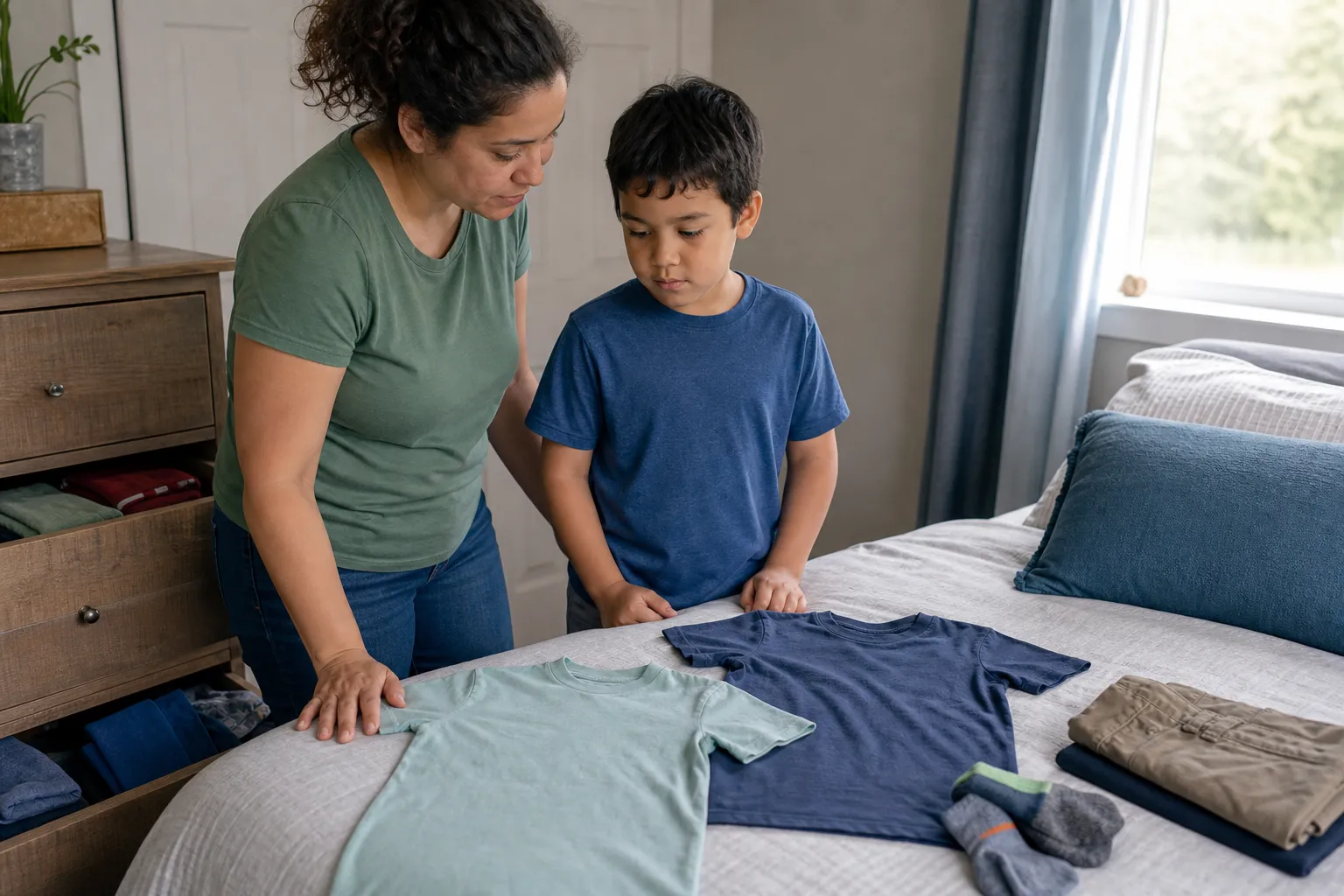
Getting dressed can look like a small part of the morning from the outside, yet it often contains many separate decisions and sensations: waking up, shifting away from a preferred activity, choosing clothes, feeling fabric on skin, managing fastenings, responding to weather, and leaving on time. A getting dressed social story can make those parts more visible without treating a child’s preferences or needs as something to correct. Instead, it can help a family name what usually happens, what may feel hard, what choices are genuinely available, and how adults will respond. This guide is for parents, carers, and educators who want to prepare together in a respectful, practical way.
Why getting dressed can need its own social story
A dressing social story is a short, personalised explanation of an everyday situation. For a child, the goal is not to insist that clothing must happen in one “right” way. The goal is to reduce uncertainty by describing a familiar routine in plain, concrete language. It can acknowledge that getting dressed matters for different reasons on different days—comfort at home, warmth outside, a school expectation, a family outing, or changing out of wet clothes—while leaving room for the child’s experience and voice.
A useful getting dressed social story focuses on the actual situation rather than an idealised version of it. Some families have time to choose clothes the night before; others decide in the morning. Some children dress independently, while others may want company, reminders, or practical help with particular steps. Some days go smoothly, and other days do not. Including only what is usually true makes the story more trustworthy. A story that promises a calm, quick morning every time can feel less useful when real life is variable.
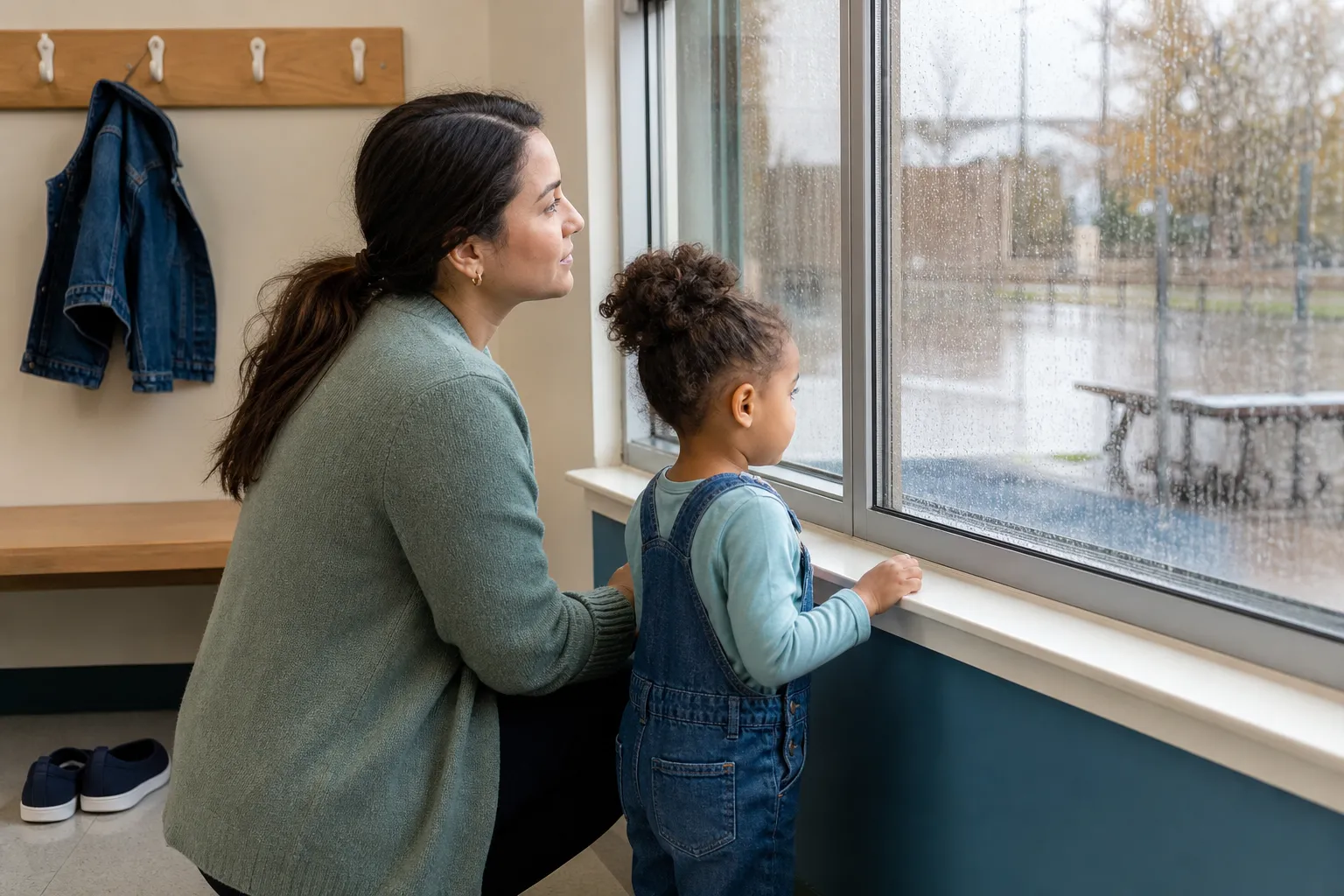
For children with autism, getting dressed may involve differences in sensory experiences, a strong need for clarity around routines, or both. These are possible experiences rather than features of every autistic child. The Centers for Disease Control and Prevention describes autism spectrum disorder as a developmental disability that can involve differences in social communication and interaction and restricted or repetitive behaviors or interests; sensory responses can also differ from person to person. A child’s clothing preferences, resistance, or need for extra time do not by themselves explain why they feel that way or establish any diagnosis. The most helpful starting point is curiosity about that individual child’s pattern and communication.
Notice the real demands within the routine
“Get dressed” is often a broad adult instruction covering many smaller actions. A child may need to stop what they are doing, go to another room, locate clothes, decide between options, remove sleepwear, put garments on in an order, orient a shirt or socks, use buttons or zips, check whether clothes feel acceptable, and transition to the next activity. The number and order of these actions can change with seasons, laundry, school days, activities, and weather. A personalised social story can separate the routine into the parts that matter to the child without turning it into a test of performance.
Sensory experiences may be especially relevant. A waistband, seam, sock texture, tag, shoe pressure, fabric temperature, damp hair against a collar, or the feeling of a garment being pulled over the head may be neutral, pleasant, uncomfortable, or overwhelming depending on the person and the day. Noise, light, room temperature, and time pressure can also shape how clothing feels. It is more accurate to write about the child’s known experience—such as preferring a certain fabric feel or needing time to notice how a shirt feels—than to assume all children with autism dislike tags, socks, or particular materials.
Routines and predictability can matter because dressing is often tied to a fast-moving transition. A child may be more comfortable when they know when dressing happens, where it happens, which parts are expected, and what happens afterwards. They may also find a change harder, such as needing a coat because the weather is colder or wearing different clothes for an event. A story can name that change honestly: some mornings clothes may be different, and an adult can explain why. It should not imply that the child must enjoy every unexpected change.
Build the story around the child’s own morning or evening
Before drafting, families can observe and discuss the routine at a calm time. Consider what the child already does, what they communicate through words, gestures, actions, or behavior, and where the routine tends to slow down. It may help to ask concrete, low-pressure questions: Which clothes feel okay today? Do you like choosing before breakfast or after breakfast? Would you rather dress in your room or another private place? Is there one part that feels confusing, uncomfortable, or too fast? A child does not have to answer verbally for adults to learn from repeated observations and respectful offers of choice.
Keep the scope narrow. One story might be about getting dressed for a typical home day. Another might address changing from pajamas before school, choosing clothes for colder weather, or getting ready for an outing. Combining every possible clothing situation into one account can make it vague or demanding. The child may benefit more from a short explanation of one recurring situation than from a long list of rules.
Use first-person or third-person language according to what feels natural to the child. State facts that are reliably true, describe the reason for a step only when it is known, and include authentic choices. Genuine possibilities might include choosing between two available tops, asking which clothes are clean, taking a moment before deciding, telling an adult that something feels uncomfortable, or accepting help with a fastening when help is available. Do not write choices that adults will not actually honor. Likewise, do not promise that a preferred garment will always be clean, suitable for the weather, or possible in every setting.
Use language that respects comfort, consent, and changing needs
A getting dressed social story works best when it does not frame the child’s body or sensory responses as a problem. Language such as “Sometimes clothes feel uncomfortable to me” is more respectful and useful than language that labels the child as difficult, fussy, defiant, or careless. It also leaves space for variation. A garment that was comfortable yesterday may not feel comfortable today, and a child may need time to communicate that difference.
Adults can describe their role plainly. They might say that they can listen, answer a question, find another available option, explain an expectation, or help with a part of dressing when the child wants or needs help. In settings where an adult must make a non-negotiable decision—for example, needing clothing for warmth or following a stated school requirement—the story can be honest about that boundary while also describing what support or choices may still be possible. Honesty is more regulating than reassurance that later proves untrue.
Avoid using the story as a consequence, a demand script, or evidence that the child has agreed to a routine under all circumstances. Reading or discussing it does not remove the need to respond to present discomfort, changing weather, illness, fatigue, or unexpected events. The child can revisit the story, revise it, disagree with wording, or outgrow it. A social story is a shared preparation resource, not a contract. Example wording might be: “I can tell someone when my shirt does not feel comfortable.”
Prepare for routine changes without pretending they are easy
Family routines can support a sense of connection and predictability, but routines are not identical in every household. The American Academy of Pediatrics notes the value of family routines while recognizing that they can be shaped by each family’s circumstances. For dressing, consistency might mean that the same broad sequence usually happens, such as getting dressed before leaving, rather than requiring the same garment, exact time, or level of independence every day. A personalised story can describe the stable parts and acknowledge the flexible parts.
Changes are often easier to understand when they have a clear, concrete reason. A story might explain that rain can mean choosing clothes that stay dry more easily, that a special activity can have particular clothing expectations, or that a favorite item may be in the wash. The explanation does not need to argue the child out of disappointment. It can simply recognize it: a change can be hard, and adults can talk about what is available today. If the child likes to know plans early, the family may choose to discuss likely changes in advance when that is practical; this is a possibility, not a requirement.
Temperament may also affect how a child approaches transitions, novelty, decision-making, and pace. The American Academy of Pediatrics’ discussion of temperament emphasizes that children differ in characteristic ways of reacting to the world. This is useful context for avoiding comparisons between siblings or classmates. A slow, careful approach to dressing may be a child’s way of processing sensations and change, not a lack of effort. The story can reflect the child’s pace without making a claim about what all children, autistic children, or children with a particular temperament will need.
Review, revise, and use the story as a family conversation
A social story is most useful when it stays connected to real experience. After trying the routine, adults and children can notice what matched the story and what did not. Perhaps the child wanted more detail about socks but less detail about choosing a top. Perhaps the story assumed mornings, while the child would rather set out clothes at another time. Perhaps a change in weather made the wording outdated. Revisions show that the child’s communication matters and that the family can adapt the explanation together.
Look for outcomes broader than speed or compliance. A story may be helpful if the child better understands what is planned, has a clearer way to communicate discomfort, experiences fewer surprises, or feels more included in decisions. It may also reveal that the main difficulty is not clothing itself but an unclear transition or rushed timing. There is no expectation that a social story will remove distress, sensory discomfort, or all conflict. It is one way to share information and make room for collaborative problem-solving.
If a family wants further context, the CDC’s information on autism spectrum disorder can support accurate, non-diagnostic understanding of autism. The American Academy of Pediatrics resources on family routines and temperament can help adults think about predictability and individual differences without assuming a single approach fits everyone. For the child, the most important expertise remains their lived experience: what they show, say, choose, avoid, enjoy, and communicate about getting dressed. A concise example sentence could be: “On some days, I may need extra time to get dressed.”
Frequently asked questions
What should a getting dressed social story include?
Include the specific dressing situation, the usual sequence, any reliable reason for dressing, the child’s likely choices, how they can communicate comfort or discomfort, and what adults may do to help. Keep it based on what is actually available in your home or setting. A separate story may be clearer for school mornings, weather changes, or special events.
Is an autism getting dressed social story only for autistic children?
No. A personalised social story can be useful for any child who benefits from clear, concrete preparation. It can be especially relevant when autism, sensory experiences, or a preference for predictable routines shape the dressing routine. Avoid assuming that all autistic children have the same clothing needs or that a story will work in the same way for everyone.
Can a social story make a child wear clothes that feel uncomfortable?
No. A social story should not be used to override discomfort or force agreement. It can help a child and adults name expectations, available options, and ways to communicate. If clothes feel difficult, the story can acknowledge that experience and describe how an adult can listen or discuss what is possible in that situation.
Keep exploring
Related social stories
These guides cover situations with similar routines, sensory details or preparation needs.


Learn more about writing a social story
Read what a social story is, follow the step-by-step writing guide, or browse more social story examples.
Sources
- Autism spectrum disorder — Centers for Disease Control and Prevention
- The importance of family routines — American Academy of Pediatrics
- Understanding your child's temperament — American Academy of Pediatrics
