
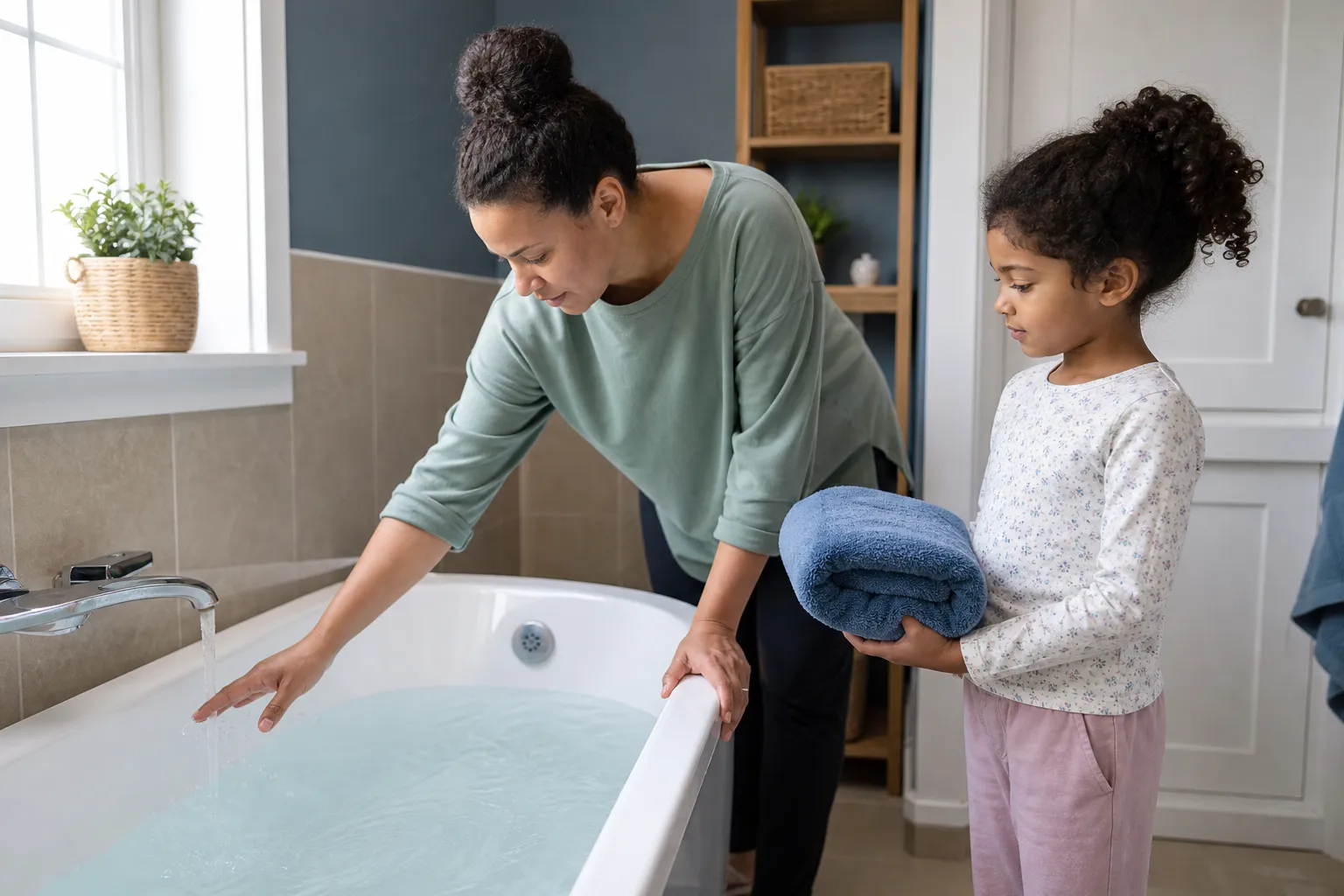
A bath is not one single event. It can be a chain of small transitions: stopping an activity, entering the bathroom, changing clothes, meeting the temperature of the room and water, being washed, drying off, and moving on to the next part of the day. For some children, that chain feels ordinary or enjoyable. For others, especially autistic children or children with strong sensory preferences, one or more links in the chain may take extra energy. A personalized bath time social story can put familiar words around the sequence, acknowledge what may happen, and make room for honest choices without suggesting that there is one “right” way to feel about bathing.
Why bath time can feel bigger than it looks
Bathing is an everyday life activity, but it asks a child to manage many changes in a short period. The bathroom may be warmer or cooler than another room, sound different because of fans or running water, and have bright lights, echoes, wet surfaces, unfamiliar smells, or a strong sense of being rushed. Getting undressed and wet can also be a significant body-based change. None of these responses mean a child is being difficult. They may be communicating discomfort, uncertainty, a need for more time, or a preference for a different approach.
For some autistic children, bath time may be especially demanding because predictability, sensory experiences, and transitions can interact. Autism is a neurodevelopmental difference with wide individual variation; autistic people do not all have the same bathing experiences, preferences, communication styles, or support needs. A child may enjoy deep water but dislike water on their face, prefer a shower to a bath, or feel settled by a familiar order while still objecting to one particular step. Another child may love splashing on some days and avoid it on others.
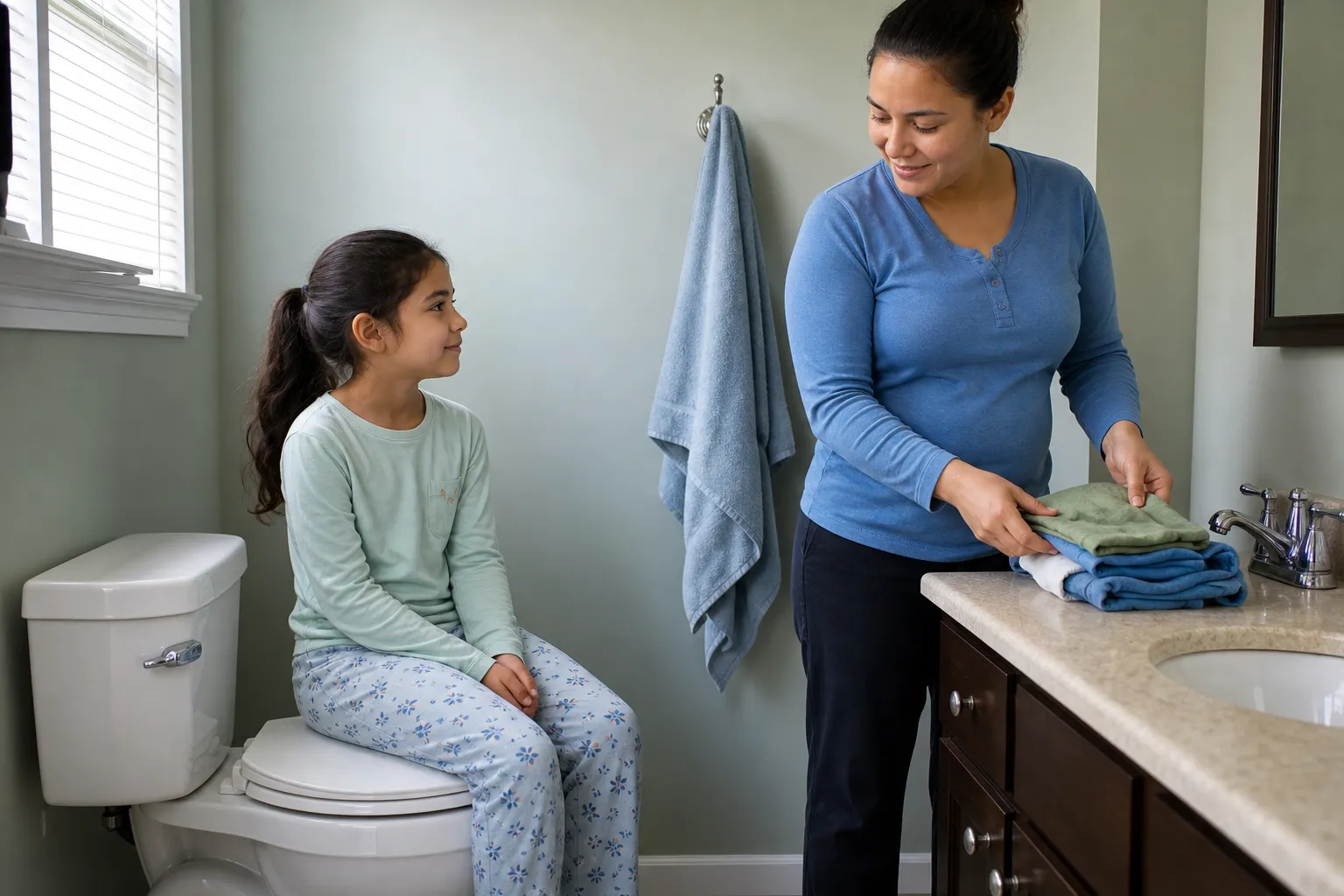
Temperament can matter too. The American Academy of Pediatrics notes that children differ in traits such as adaptability, intensity, and sensitivity. This is useful context, not a label or explanation for every reaction. A child’s response can also shift with tiredness, hunger, illness, a busy day, a changed schedule, or the specific adult involved. Looking for patterns over time may help families describe the situation more accurately and build a bath time social story that reflects the child’s real life.
Sensory experiences that may shape taking a bath
Sensory experiences are personal. Water temperature that seems comfortable to one person may feel surprisingly cold, hot, prickly, or unpredictable to another. Some children may notice the first splash, droplets running down their skin, bubbles, soap residue, the feel of a washcloth, or hair being wet more strongly. Others may seek certain sensations, such as soaking, splashing, or wrapping up in a towel. A child can have mixed preferences rather than fitting a simple “sensory seeking” or “sensory avoiding” description.
Sound may also matter. A faucet, drain, extractor fan, toilet flush, or water hitting the tub can sound louder in a small tiled room. Smells from shampoo, soap, cleaning products, or bath products may be pleasant, neutral, or overwhelming. Visual details such as reflected light on water, a bright overhead bulb, or a cluttered counter may catch a child’s attention. Wet feet on a hard floor and the texture of towels or pajamas are additional parts of the experience that adults can easily overlook.
A taking a bath social story can name only the sensory details that are genuinely relevant to the child. It can describe what they are likely to hear, see, touch, or smell in plain, accurate language. It can also state what the family may do when the child has a preference, such as checking water together, choosing between two familiar bath products when those are actually available, or communicating that a sensation is uncomfortable. The purpose is not to persuade a child that an unpleasant feeling is pleasant. It is to reduce surprises and clarify what is possible.
Predictable routines can reduce uncertainty, without demanding rigidity
Many families find that a recognizable sequence makes everyday tasks easier to anticipate. The American Academy of Pediatrics describes family routines as meaningful opportunities for connection and predictability. A routine does not have to be identical every time to be useful. It may simply include a usual time of day, a familiar adult, a consistent order for a few steps, or a clear transition from bath to pajamas and bedtime.
For an autistic child, unexpected changes can sometimes make an already demanding bath harder. The bath may happen later than usual, a different caregiver may be present, the usual soap may be unavailable, or the plan may change from a bath to another form of washing. A personalized social story can explain that some parts are usually the same and that occasional changes can happen. It should not promise outcomes that adults cannot reliably provide, such as a perfectly quiet bathroom, exactly the same water level every time, or a bath ending at a precise minute.
Useful preparation is collaborative when possible. A parent, carer, or educator can notice what the child already knows, what information seems missing, and which choices are real. Some families may discuss whether the child prefers to know the plan earlier in the day or closer to bath time. Others may find that a simple, familiar verbal preview is enough. The best level of detail is individual: too little information can create uncertainty, while too much can make the event feel larger. A social story can be revised as routines, language, and preferences change.
What a personalized bath time social story can include
A bath time social story is most useful when it describes one child’s actual setting and likely experience rather than an idealized version of bath time. It can begin with the reason bathing is part of the household routine, then move through the ordinary sequence: going to the bathroom, preparing the water, washing, getting dry, dressing, and returning to another activity or bedtime routine. Concrete wording is generally clearer than vague reassurance. Name the people who may be there, the bathroom the child uses, and the parts of the process that are usually consistent.
Include information rather than commands. For example, the story can state what adults may do and what the child may notice, while leaving space for feelings and communication. One short example sentence is: “The water may feel different from the air.” Another is: “I can tell an adult if I need a pause.” These are examples of simple wording, not a complete social story or a script that every child should use.
Honest choices can be included when they are truly available in that household or setting. Possibilities might include choosing whether to use a familiar soap or another available soap, deciding whether a towel or robe is preferred after bathing, having one of two trusted adults help, or choosing whether hair washing happens during that bath when the family can safely offer that option. If a choice is not available, it is better not to imply that it is. A story can instead explain the limit calmly and accurately, including what will happen next and how the child can communicate discomfort or ask a question.
Writing in a respectful, realistic voice
Use the child’s own language, communication method, and point of view where appropriate. Some children may understand first-person wording; others may find a third-person description clearer. Avoid framing sensory discomfort, refusal, crying, leaving the room, or needing time as bad behavior. These actions can have many meanings. Adults can remain curious about what is happening rather than assuming the child is seeking attention or trying to control the situation.
A respectful story does not require forced positivity. It may say that some bath steps are liked, some are not liked, and feelings can change. It can describe that adults are there to help keep bathing safe and to listen. If bathing involves safety boundaries, state them plainly without threats or shame. For instance, a child may need an adult nearby because water can be unsafe; the exact wording should match the child’s understanding and the household’s circumstances.
It is also reasonable for a story to reflect a family’s cultural practices, privacy expectations, or practical realities. Children may bathe at different times, bathe at home or elsewhere, share a bathroom, or have varying levels of independence. Personalization means avoiding assumptions about gender, body language, spoken language, family structure, or the exact washing routine. The story should support understanding and participation, not measure compliance.
Using the story as part of family preparation
A social story is not a guarantee that bath time will be easy, and it is not a treatment for autism or sensory differences. Its value is in shared preparation: it gives a family a way to talk about an event before emotions are high, align on predictable language, and identify parts of the routine that may need clarification. Some children may want to revisit the story often, while others may only need it when a routine is new or changing. A child may also show that the story is not useful in its current form; that feedback can guide revision.
After several bath times, adults can consider what the story captured well and what it missed. Perhaps the transition into the bathroom is harder than the washing itself, hair care is the main concern, or the child’s preference depends on the day. Update only from observation and conversation, not from assumptions about autism. If a child communicates distress that is intense, new, persistent, or connected to possible pain, a parent or carer may consider discussing those observations with an appropriate qualified health professional. This guide cannot assess a child or provide medical advice.
The most durable bath time social story is usually brief enough to be understandable, accurate enough to be trusted, and flexible enough to reflect change. It recognizes that taking a bath can be an ordinary household task and still be a complex sensory and transition experience. Families do not need to eliminate every challenge to prepare thoughtfully together. Clear information, real choices, and respect for the child’s perspective are meaningful foundations.
Frequently asked questions
How is an autism taking a bath social story different from a general bath story?
A general story may describe a typical bath routine. An autism taking a bath social story is personalized around the individual child’s communication, sensory experiences, familiar people, actual bathroom, and predictable sequence. It should not assume that all autistic children dislike water, need the same details, or benefit from the same choices.
Should a bath time social story say that the child will enjoy the bath?
Only if that is consistently true and useful for that child. It is usually more honest to describe what may happen and acknowledge that feelings can vary. A story can explain that a child may communicate a preference, question, or need for a pause without claiming that every step will feel good.
Can a taking a bath social story include hair washing?
Yes, if hair washing is part of the child’s usual bath routine or a specific transition the family is preparing for. It can be clearer to address it directly because wet hair, water near the face, product scent, and the sequence of washing may each matter. Keep the wording specific to what normally happens and to choices that are genuinely available.
Keep exploring
Related social stories
These guides cover situations with similar routines, sensory details or preparation needs.

Learn more about writing a social story
Read what a social story is, follow the step-by-step writing guide, or browse more social story examples.
Sources
- Autism spectrum disorder — Centers for Disease Control and Prevention
- The importance of family routines — American Academy of Pediatrics
- Understanding your child's temperament — American Academy of Pediatrics
