
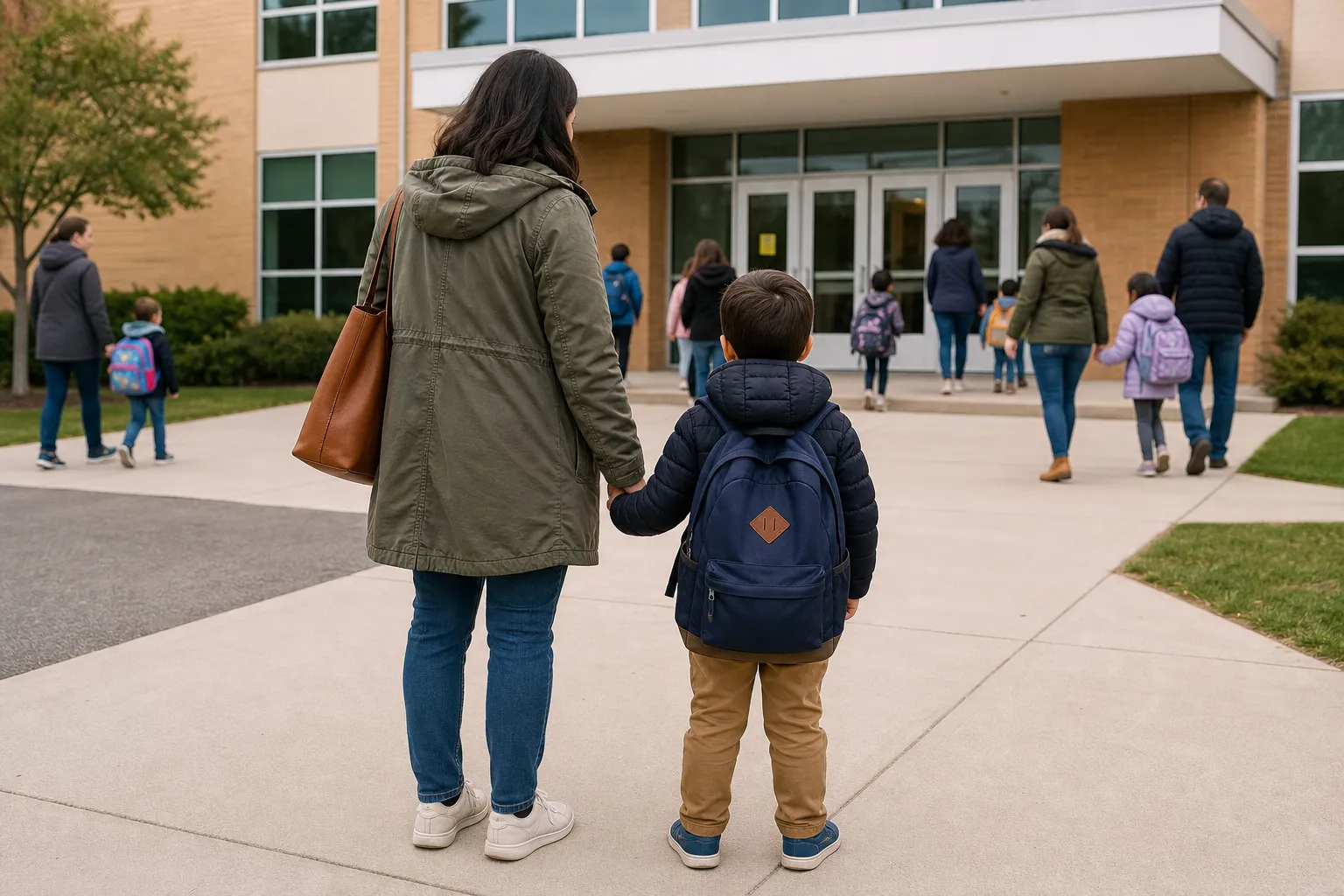
Starting school is often described as one big milestone, but a child may experience it as many separate new situations: leaving home, arriving at a building, meeting adults, entering a classroom, separating from a familiar person, navigating transitions, and coming home with a full day behind them. A personalised social story can make those moments more knowable without promising that the day will feel easy or follow one fixed script. For families searching for an autism going to school social story, the most useful version is usually specific to the child, truthful about uncertainty, and made together over time rather than treated as a test to pass before day one.
Starting school is a transition, not a single event
The first day of school social story is often imagined as a way to explain one morning. In practice, starting school can involve a longer transition: visits before the term begins, new conversations at home, changes in bedtime or morning routines, a first drop-off, the first full day, and the first few weeks of unfamiliar expectations. A child may be comfortable with one part and find another part uncertain. For example, they may enjoy meeting a teacher but feel uneasy about saying goodbye at the gate, or feel ready for the classroom while finding the pace of the morning hard to predict.
A personalised social story can narrow a broad and potentially overwhelming change into small, relevant pieces of information. It can describe what is known, such as the route to school or the name a child uses for their teacher, while leaving room for what is not yet known. It does not need to persuade a child to be excited, calm, sociable, or independent. Its purpose is to support shared understanding and give the child a clearer picture of possible events, choices, and ways adults may respond.
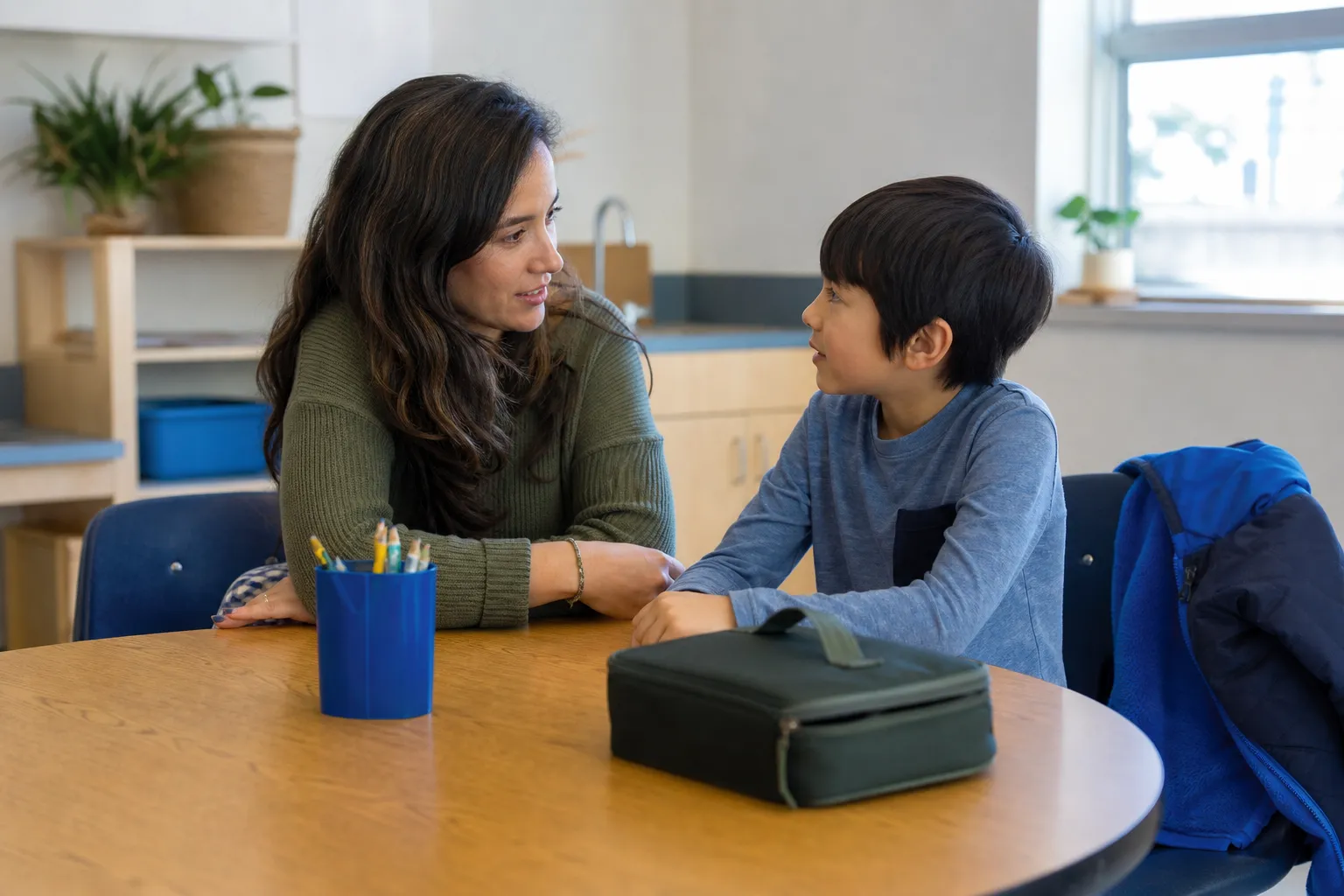
This approach is especially important for an autism starting school social story. Autism spectrum disorder (autism) is a neurodevelopmental difference with varied experiences and support needs; no single school-transition profile fits all autistic children. Some children may want detailed information well ahead of time. Others may prefer short, repeated discussions close to the event. Some may not want to discuss school much at all until they have had direct experience of it. A story can be adjusted to the child’s communication style, interests, language, and tolerance for detail rather than assuming that more information is always better.
Possible challenges connected to autism, anxiety, routines, and communication differences
A new school social story can acknowledge challenges without presenting them as flaws or inevitable outcomes. For some autistic children, a change in familiar routines may require extra time to process. The order of events can matter: who wakes them, when they leave, where they enter, and what happens after arrival. A plan may also change because of weather, staffing, traffic, or school events. Honest preparation can include the possibility that some details will be different on some days, alongside information about which adults can help explain a change.
Anxiety can be part of a school transition for autistic and non-autistic children alike. It may show up as repeated questions, avoidance, irritability, trouble settling, a strong need for certainty, physical discomfort, quietness, or many other individual responses. These signs do not automatically identify anxiety, and they can have different meanings for different children. The Centers for Disease Control and Prevention notes that children’s emotional and mental-health experiences deserve attention and discussion with appropriate professionals when families have concerns. A social story is not a diagnostic or therapeutic intervention, but it can offer a low-pressure way to name worries, make uncertainty visible, and help adults learn what information a child wants.
Communication differences can also shape how a child understands and participates in preparation. A child may use spoken language, sign, gestures, movement, writing, an augmentative communication system, or a combination of approaches. They may understand more than they say in the moment, need more processing time, communicate most clearly with familiar people, or communicate refusal and discomfort indirectly. The American Speech-Language-Hearing Association describes communication disorders as varied, affecting speech, language, hearing, or social communication in different ways. Families and educators can focus on the child’s own reliable ways of communicating rather than judging readiness by how much they talk about school. A going to school social story autism resource should make room for the child’s communication, not demand a particular response to it.
Gather the details that will make the story genuinely personal
Before writing, it can help to separate confirmed information from assumptions. Confirmed details might include the school’s name, the usual arrival point, the adults a child is likely to meet, the expected start time, the usual collection arrangement, and whether there is a pre-start visit. Assumptions might include exactly where the child will sit, which children they will talk with, how they will feel, or whether every day will run the same way. Keeping those categories separate helps the story remain trustworthy.
A parent, carer, and educator can build a shared picture by considering the child’s perspective. What parts of the day has the child asked about? What events have led to repeated questions? Which familiar routines feel important to retain before or after school? Are there words, names, or phrases the child prefers? What does the child do when they need more time, do not understand, want a break from a conversation, or want an adult’s attention? These questions are invitations to notice, not a checklist that every family must complete.
Information can be collected gradually. A family might talk through the journey one day and the arrival another day. An educator might clarify what is likely to happen during the first week while being candid about elements that are still being arranged. If the child is able and interested, they can choose details to include, correct wording that does not sound like them, or say which parts they do not want discussed yet. Their participation can make the social story more respectful, but participation does not have to look like answering direct questions or contributing spoken sentences.
Write a social story that informs rather than controls
A useful going to school social story is brief enough to revisit and detailed enough to answer the child’s actual questions. It can follow the likely sequence of a school day: getting ready, travelling, arriving, entering, meeting people, taking part in the day, leaving, and returning home. It can also focus on just one demanding point, such as the goodbye, the classroom door, or the collection routine. There is no need to include every possible school activity in one account.
Use concrete, respectful language and distinguish usual events from possible events. “Usually” can describe a typical routine; “sometimes” can introduce variation; and “I can” or “I may” can describe a child’s own possible actions without making them obligations. Avoid guarantees such as saying everyone will be friendly, the child will enjoy the day, or nothing will change. Avoid language that treats compliance, eye contact, quietness, or making friends as the measure of a successful first day.
The story can identify adults by name or role and explain what they may do. It can say that an adult may answer a question, repeat information, help explain a change, or help the child communicate. It can also include the possibility that the child may feel many different things, including interest, worry, tiredness, or no strong feeling at all. Example sentence: “I may have questions when I arrive at school.” Example sentence: “An adult can help me learn what happens next.” These are examples of short, non-demanding sentences, not a complete social story or a script the child must repeat.
Use the story as a conversation that can change
Reading or discussing a social story before school can be one way for adults to learn from the child, rather than a rehearsal intended to produce a perfect first day. A child may comment, point, look away, change the subject, ask the same question repeatedly, or say nothing. Each response may offer information about whether the story is too detailed, too vague, too early, or focused on the wrong part of the transition. A child may also need time before showing what they understood.
Families may choose to return to the story at predictable times, such as before a visit or before bed, while other families may find occasional conversations less demanding. The useful pace is individual. If a child begins to seem more unsettled during discussion, adults can pause and revisit only when appropriate. The aim is not to make the child tolerate endless talk about school; it is to keep information available in a way that respects their capacity and communication preferences.
After the first few days, revise details that no longer match reality. Perhaps the arrival route changed, an adult became especially important, or a transition took longer than expected. Updating the social story shows that adults take the child’s experience seriously and that plans can be corrected. It can also prevent a child from feeling misled when a general description did not capture a real-life detail. A story is allowed to be unfinished before school begins and to evolve as the new routine becomes more familiar.
Coordinate gently across home and school during the first weeks
The transition is often easier to understand when home and school share relevant, consent-based information. A parent or carer might tell an educator which names, words, or routines help the child make sense of a new setting. An educator might explain the broad shape of the school day and flag a known change in advance where possible. This is not about expecting either side to predict every challenge. It is about reducing avoidable surprises and making sure the child is not asked to explain everything alone.
Pay attention to the whole pattern rather than treating one difficult morning or one quiet afternoon as a final verdict on how school is going. A child may need a period of adjustment, may communicate differently at home than at school, or may find some days easier than others. Adults can remain curious about patterns in routines, anxiety, and communication without assuming that a child’s behavior has only one cause. If concerns about anxiety, communication, or wellbeing are persistent or significant, families can consider discussing them with the child’s healthcare or communication professionals; this guide cannot assess an individual child.
A successful first-week story is not one that makes school look simple. It is one that helps a child and their adults share accurate expectations, recognize uncertainty, and keep adapting. For a child going to school for the first time, being understood may matter more than appearing immediately settled. That principle can guide every revision of a new school social story.
Frequently asked questions
What should an autism going to school social story include?
Include only details that are relevant and reasonably confirmed: the journey or arrival, familiar adults, the likely order of key events, collection arrangements, and what may happen if plans change. It can also recognize that feelings and communication needs may vary. Avoid promising exact outcomes or requiring the child to behave, feel, or communicate in a particular way.
When should we start using a first day of school social story?
There is no universal timeline. Some children may appreciate short discussions well before school starts, while others may find too much advance focus uncomfortable. Starting with the parts the child is already asking about, then revising as information becomes available, can be more useful than following a fixed schedule.
Can a social story help if a child is anxious about a new school?
It may help some children and families by making parts of the transition more predictable and opening a conversation about uncertainty. It cannot guarantee reduced anxiety or replace individualized professional support when that is needed. Keep the language honest, allow the child’s response to guide the pace, and update the information when circumstances change.
Keep exploring
Related social stories
These guides cover situations with similar routines, sensory details or preparation needs.

Learn more about writing a social story
Read what a social story is, follow the step-by-step writing guide, or browse more social story examples.
Sources
- Autism spectrum disorder — Centers for Disease Control and Prevention
- Anxiety and depression in children — Centers for Disease Control and Prevention
- Communication disorders — American Speech-Language-Hearing Association
