

A new teacher can change the feel of an entire school day, even when the classroom, classmates, and timetable mostly stay the same. For some children, the most significant part is not learning a new name; it is wondering how this adult speaks, explains work, responds to questions, or handles unexpected moments. A personalized new teacher social story gives families, carers, and educators a calm way to make the change more knowable. It is not a script for how a child must behave, and it cannot guarantee that the transition will feel easy. Instead, it can describe accurate information, acknowledge uncertainty honestly, and leave room for the child’s own reactions and preferences.
Why a teacher change can feel bigger than it looks
A teacher change is a relationship change within a familiar setting. A child may already know where to sit, when lunch happens, and which classmates are nearby, yet still experience the day differently with a new adult leading it. The teacher may use different words, pacing, voice volume, classroom routines, or ways of inviting participation. Even positive changes can require energy to notice, interpret, and adjust to.
For children navigating autism, predictability may be especially valuable, though no single response belongs to all autistic children. One child may be excited to meet someone new, another may ask many detailed questions, and another may seem unconcerned before finding the first day tiring. Some children may want precise facts, such as who will be present at morning arrival or whether the usual seat is still available. Others may prefer only a short overview at first.
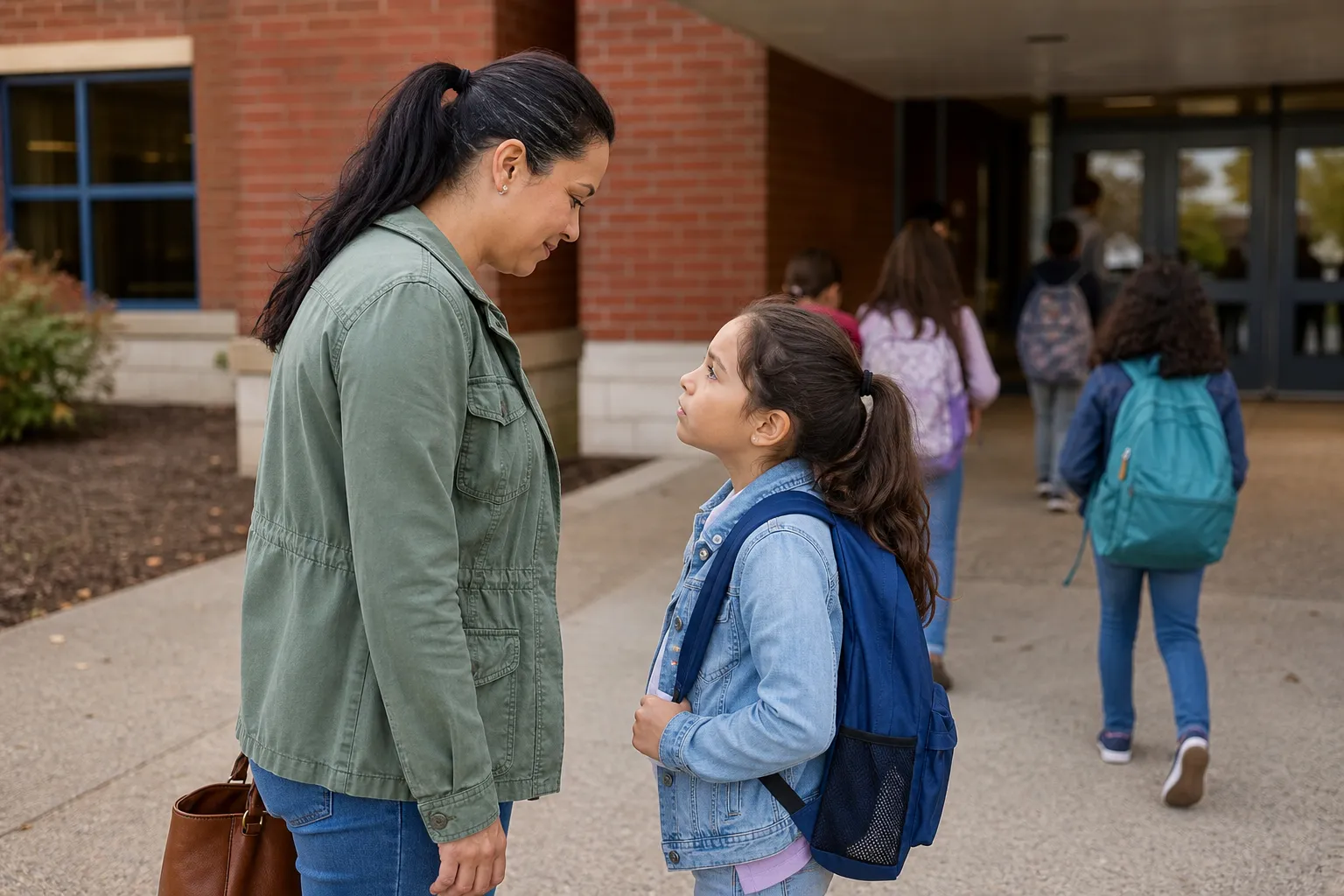
Anxiety can also make an uncertain change feel more immediate or alarming. A child might imagine difficult outcomes, seek repeated reassurance, have trouble settling before school, or avoid talking about the change. These experiences can have many meanings and do not establish a diagnosis. The Centers for Disease Control and Prevention notes that worries and fears are a normal part of childhood, while persistent or interfering concerns may warrant discussion with an appropriate health professional. Families and schools can focus first on clear, respectful information rather than assuming why a child is finding the transition hard.
What a personalized new teacher social story is for
A new teacher social story is a brief, individualized explanation of an upcoming or current school change. Its purpose is to help a child understand what is known, what may be different, and what choices or sources of support may be available. It should be grounded in the child’s real school, rather than built around a generic promise that everything will be fine. Accuracy is often more reassuring than forced positivity.
The content can name the new teacher, explain when the change begins, and distinguish stable parts of the day from parts that may change. For example, a family might include whether the classroom location remains the same, whether the child will still see familiar classmates, and whether the teacher is new only for a day, a few weeks, or the rest of the term. If details are not confirmed, the story can say that an adult is still finding out rather than presenting a guess as fact.
A social story can also make room for mixed feelings. A child may feel curious, disappointed, worried, pleased, or several of these at different times. It need not tell the child that a feeling is wrong, demand eye contact, insist on conversation, or frame adjustment as obedience. Its value comes from shared understanding: the child can hear what adults know and have a chance to add what matters to them.
Choosing details that are useful, concrete, and honest
Start with the immediate transition rather than trying to explain every possible school situation. Useful details may include the teacher’s name and role, the first day or date of the change, where the child will go on arrival, who is likely to be in the room, and what will happen at the first part of the day. Include only details that are likely to be accurate. If a seating plan, classroom job, or lesson sequence has not been decided, it is better to say that it may be decided later than to create a certainty that disappears.
Concrete choices can be described as possibilities when they are genuinely available. Depending on the school and child, the child may be able to meet the teacher briefly before the change, see the classroom when it is quiet, ask a trusted adult to share a question, say hello in their own way, or spend a few minutes in a familiar nearby space at the start of the day. These are not requirements, and they may not be possible in every school. A child may also choose not to ask questions or not to meet in advance.
Keep adult intentions realistic. A new teacher may be learning names, routines, and information about many pupils. They may not know every preference immediately. At the same time, an educator can often learn what helps a particular child communicate, participate, and recover from a demanding moment. A story can explain that learning each other’s routines may take time, without suggesting that the child alone must do all the adapting.
Writing with neurodiversity-affirming language
Neurodiversity-affirming writing treats differences in communication, sensory experience, movement, attention, and social interaction as human variation rather than as behavior to erase. In a teacher-change context, this means describing what may happen without making the child’s natural responses into a problem. A child may communicate through speech, gesture, writing, silence, movement, or another preferred method. They may need time before responding to an unfamiliar adult. These possibilities can be stated respectfully and without predicting them for every child.
Avoid broad claims such as saying that autistic children dislike change or that a child will quickly feel comfortable. Such wording can miss the individual child’s strengths, interests, and prior experiences. It can also turn a helpful explanation into a standard the child feels pressured to meet. More useful language recognizes that a change in teacher can be easy in some moments and difficult in others, and that the child’s experience may shift across the week.
The story can name what the child already does well in transitions. Perhaps they have met new adults before, noticed when plans change, found ways to communicate a question, or returned to a familiar activity after a difficult start. These observations should be specific and true, not generic praise. They remind the child and adults that transition support is collaborative, not a test of resilience.
Using the story together at home and school
Families can introduce a new teacher social story at a low-pressure time, not only at the school gate or during visible distress. Reading, listening, talking, or simply looking over the information together may each suit different children. The child can decide how much to engage. Some may revisit the information many times; others may want it once and then move on. Repetition can be a way of checking predictability, not necessarily a sign that the child has failed to understand.
After sharing it, adults can listen for practical questions and preferences: What part of the day feels most uncertain? What information would make tomorrow clearer? Is there something the new teacher should know about communication, routines, or ways of offering choices? A child may not answer directly. Their comments, changes in play, requests for details, or wish to change the subject can all offer information without needing interpretation beyond what is observed.
Family routines can provide a steady backdrop when school changes. The American Academy of Pediatrics describes routines as a way families can build connection and predictability. That does not mean a family must create an elaborate plan or keep every routine unchanged. A familiar breakfast, departure sequence, check-in, or quiet evening activity may be helpful if it fits the family. The goal is not to eliminate all uncertainty; it is to make the transition less lonely and more understandable.
Reviewing the story as the relationship develops
A teacher change social story should be revisited when facts change. The first version may focus on the first morning, while a later update can reflect what the child has actually learned: which parts remained familiar, what the teacher’s routine is like, and what questions have been answered. Updating the information shows the child that adults will correct details rather than expecting them to cope with surprises silently.
Check whether the story remains respectful and useful. If it has become a list of demands, a reassurance statement that no longer feels believable, or an account of worries that the child does not want revisited, it may need simplifying or changing. The child’s feedback can be direct, indirect, verbal, or nonverbal. A carer and educator can compare observations while avoiding assumptions about motivation or diagnosis.
If anxiety is significantly affecting attendance, sleep, daily participation, or wellbeing, a social story is not a substitute for individualized professional support. A family can consider speaking with an appropriate healthcare professional or school contact who knows the child’s context. The story may still be one part of preparation, but it should not be presented as treatment or as a guarantee that distress will stop. Its practical role is to support communication around a real change.
Frequently asked questions
What should a new teacher social story include?
Include only accurate, child-relevant information: who the new teacher is, when the change starts, what parts of the day are likely to stay the same, what may differ, and what choices may be available. It can also acknowledge that the child may have different feelings at different times. Leave out promises that the teacher or school cannot reliably keep.
Is an autism new teacher social story only for autistic children?
No. A personalized story can be useful for any child who wants clearer information about a teacher change. For some autistic children, concrete detail and advance notice may be particularly helpful; for others, a shorter explanation may be preferred. Personalizing it to the individual child matters more than applying assumptions based on a label.
Can a teacher change social story help with anxiety?
It may help reduce uncertainty by clarifying what is known and by opening a conversation about questions or preferences. It does not diagnose, treat, or prevent anxiety, and it cannot guarantee a child will feel calm. When worry is persistent or interferes with everyday life, families may wish to seek individualized guidance from an appropriate professional.
Keep exploring
Related social stories
These guides cover situations with similar routines, sensory details or preparation needs.



Learn more about writing a social story
Read what a social story is, follow the step-by-step writing guide, or browse more social story examples.
Sources
- Autism spectrum disorder — Centers for Disease Control and Prevention
- Anxiety and depression in children — Centers for Disease Control and Prevention
- The importance of family routines — American Academy of Pediatrics
