
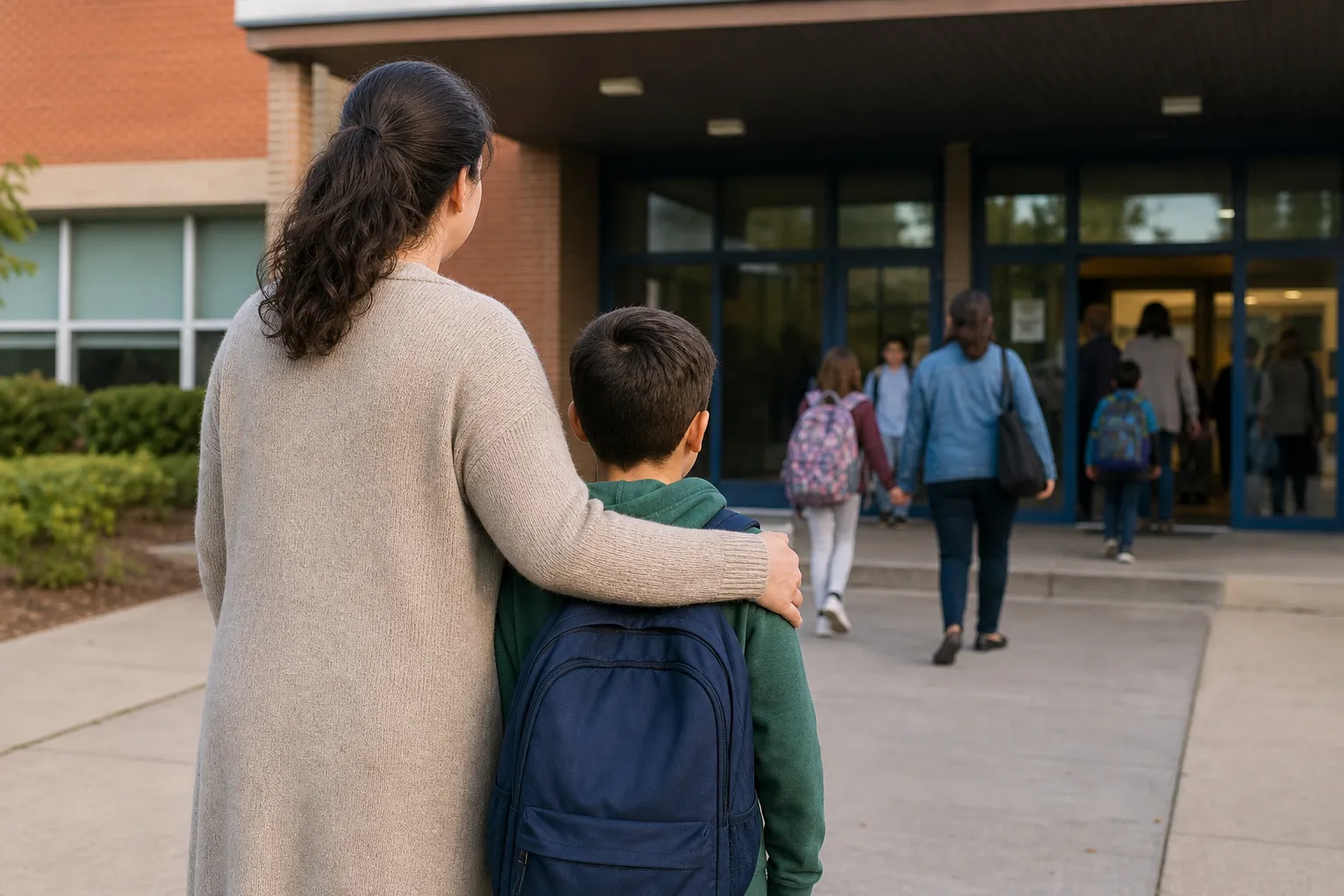
A school change is not one event. It is a chain of small unknowns: a different route in the morning, unfamiliar voices at reception, new rules for lunch, a changed place to wait at pickup, and people who do not yet know a child’s preferences. A social story for changing schools can give a family a calm way to name those unknowns without pretending that every part will feel easy or go exactly as planned. This guide is for parents, carers, and educators who want to prepare together while keeping the child’s own experience, communication style, and choices at the center.
Why changing schools can feel bigger than a change of building
Changing schools may happen for many reasons, including a family move, a planned progression, a placement change, or a need for a different learning environment. Whatever the reason, the transition can involve losses as well as possibilities. A child may be leaving familiar classmates, trusted adults, a known route, or routines they had worked hard to understand. They may also be curious about new subjects, spaces, or friendships. These feelings can exist at the same time, and neither excitement nor worry needs to cancel the other out.
For some children, uncertainty is the hardest part. They may want to know what the entrance looks like, who will greet them, whether they will have a desk, what happens if they arrive late, or how dismissal works. Other children may not ask questions directly but may show their uncertainty through repeated questions, increased need for predictability, quietness, irritability, sleep changes, or reluctance to discuss the move. These responses are possibilities, not a checklist or a way to judge how a child is coping.
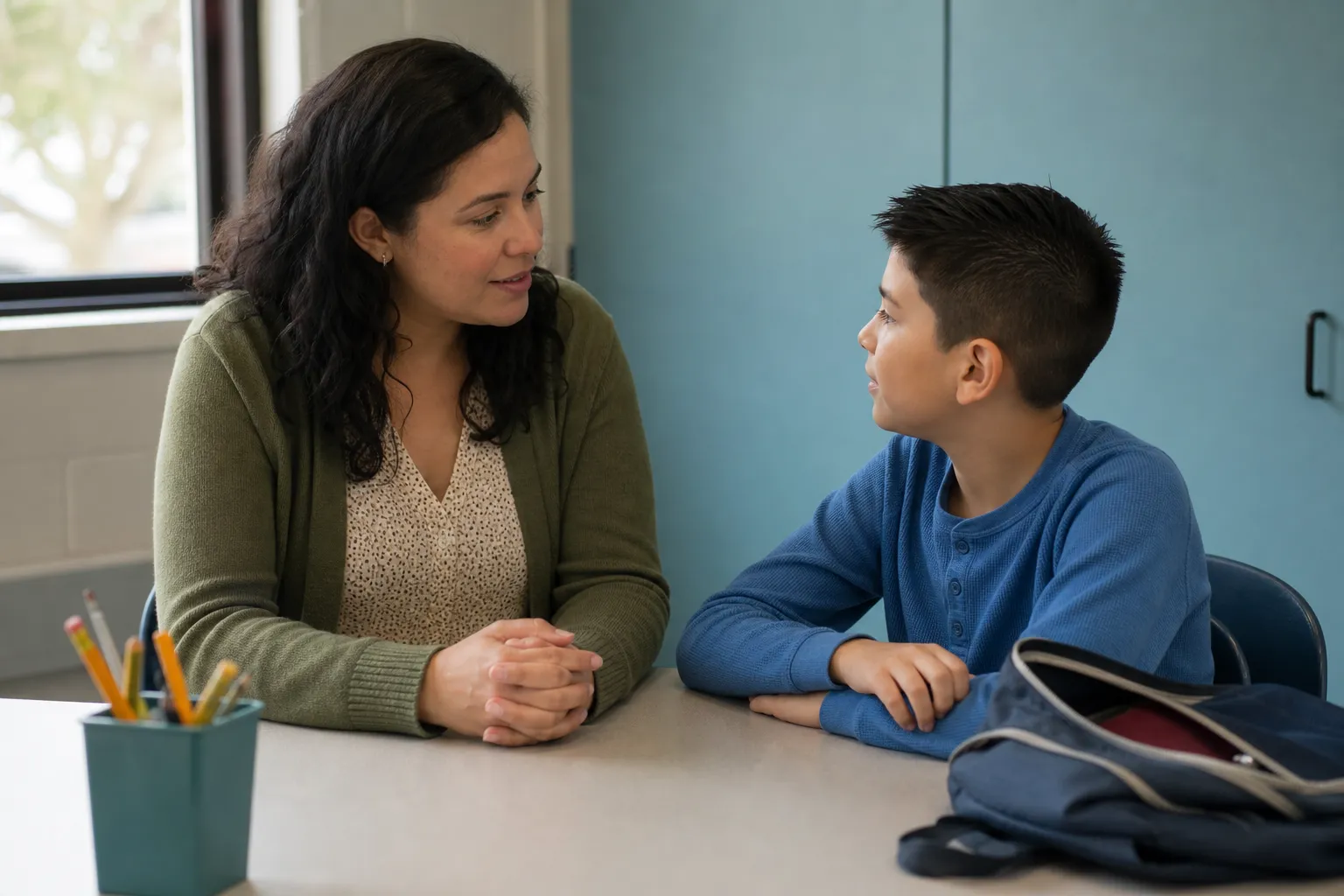
A personalised social story can turn a large, vague change into smaller, concrete parts. It is not a promise that the new school will be perfect, that worries will disappear, or that the child must feel positive. Instead, it can explain what is known, distinguish it from what is not known yet, and acknowledge that adults will also be learning how best to support the child in a new setting. That honest approach can make the story more credible and useful.
Autism, routines, and predictability during a school move
Autism is a neurodevelopmental difference with wide variation from person to person. An autistic child may find a school transition especially demanding when it changes familiar sensory environments, social expectations, language used by adults, travel arrangements, or the sequence of the day. Another autistic child may be primarily interested in the new school and have few concerns. It is more helpful to start with the individual child’s previous transition experiences and stated preferences than to assume that autism determines a single response.
Routines and predictability can be meaningful because they reduce the amount a child has to work out in the moment. A new school may alter many routines at once: getting dressed, leaving home, entering the building, finding a classroom, storing belongings, asking for help, using the restroom, eating, moving between lessons, and going home. Even a routine that seems minor to adults can matter if it is part of how a child organizes their day.
A changing schools social story can describe the particular routines that are likely to change and the routines that may stay the same. For example, it might name the usual person who says goodbye at home, the likely arrival point, or the fact that adults may give directions differently at the new school. It can also state uncertainty plainly: a class teacher may not know every preference on the first day, and some details may be confirmed later. This leaves room for reality rather than creating a script that becomes unhelpful when plans change. Families may choose to update the story as they learn more.
Making space for anxiety without labeling every concern
Anxiety can involve strong worry, fear, physical discomfort, avoidance, or a sense of being overwhelmed. Changing schools can bring understandable worries about fitting in, getting lost, academic expectations, separation, being noticed, or not knowing the rules. A child does not need to have an anxiety condition for a transition to feel anxious. Likewise, only a qualified professional can assess a mental health condition; a social story is not an assessment or treatment.
The Centers for Disease Control and Prevention notes that children’s mental health concerns can affect how they feel, think, and act, and that early, supportive conversations with appropriate professionals can matter when concerns persist or interfere with daily life. In the context of a school move, a parent, carer, or educator can pay attention to changes that seem intense, prolonged, or disruptive for that individual child. If there are concerns about wellbeing or safety, seeking individualized guidance from an appropriate healthcare or mental health professional is important.
A social story can support emotional honesty by making room for more than one possible response. It might say that a child may feel ready, worried, curious, tired, or unsure, and that feelings can change during the day. Avoid framing coping as a test of bravery or requiring a child to reassure adults. Instead, the story can identify ordinary choices that may be available, such as telling a trusted adult that something is confusing, taking time to listen to instructions, or asking a question when they want more information. Example wording: “I might have different feelings about my new school, and I can let an adult know what I notice.” This is an example, not a complete social story.
What to include in a personalised social story for changing schools
The strongest social story for changing schools is specific to the child and limited to information that is useful now. Begin with the reason for the change in simple, respectful language that fits what the child already knows. Some families may be able to say, “Our family is moving,” while others may prefer a more private explanation, such as “I will be going to a different school.” There is no need to include adult-only details or make the child responsible for a decision they did not make.
Next, separate known facts from possibilities. Known facts could include the school’s name, the start date, the route, the entrance, the class or year group if confirmed, and who is expected to be there. Possibilities could include meeting new children, having a different lunch arrangement, or needing to ask where a room is. If information is unavailable, say so directly. A sentence such as “Some parts of my first week may be new, and adults can tell me more when they know” can be more trustworthy than invented certainty.
Include the parts of the day most likely to matter to this child. A child who dislikes surprises around food may want lunch information; another may care most about transportation, recess, classroom noise, or pickup. Consider communication preferences as well. Some children may want direct wording, while others may prefer short, neutral sentences. The story can name familiar people where appropriate, but should not claim that a particular adult will always be available unless that is genuinely known. It can also reflect strengths: past experience learning a new route, a favorite subject, a way the child notices details, or their ability to tell someone when information is missing.
Preparing together before, during, and after the first days
Preparation works best as a conversation rather than a one-time performance. Adults can share the story when the child is relatively settled, return to only the sections that are relevant, and invite corrections. A child may point out that an expected detail is wrong, choose not to discuss a topic yet, or add a question that adults had not considered. Those responses are useful information. The aim is shared understanding, not compliance with an adult-created account.
When possible, gather details from the new school carefully and avoid overloading the child with every fact at once. It may help to prioritize the first arrival, the first transition between spaces, food or break arrangements, and the end-of-day plan. The American Academy of Pediatrics describes family routines as a source of stability and connection. During a school change, maintaining familiar elements at home where possible—such as a usual morning sequence or a predictable after-school check-in—may give the child continuity even while school routines are changing. This is a possibility for families to consider, not a requirement.
After the first day or week, revisit what actually happened. Update inaccurate details, add newly learned information, and make space for the child’s perspective. They may have found one part easier than expected and another harder. Rather than asking only, “Did you have a good day?”, adults might use specific, low-pressure questions about the arrival, classroom, transitions, or going home. Example wording: “If something at school is different from what I expected, I can tell someone I trust.” This is an example sentence, not a complete social story. A revised story can recognize that adjustment is ongoing and that needing information more than once is ordinary.
Keeping the story respectful, flexible, and realistic
Use a tone that describes rather than directs. Phrases such as “I may,” “sometimes,” “I can,” and “adults may” generally leave more room for the child’s agency than “I must,” “I will always,” or “I should not worry.” Do not make the story a behavior contract, a list of rules, or a demand to make friends. A child may need time to observe, communicate in their own way, or focus on learning the day’s structure before social connection feels possible.
Accuracy matters. Do not promise a quiet classroom, an easy journey, a particular friend, or that an adult will fix every problem immediately. It is usually more useful to describe what may happen and what information or communication options could exist. For instance, a story can say that school adults may help explain a direction or tell the child where to go, without guaranteeing a particular outcome. If a family is considering school-based supports, those decisions should be discussed individually with the relevant school staff and professionals rather than assumed from a general guide.
A new school social story is most helpful when it belongs to the child’s real life, not to an idealized version of transition. It can acknowledge change, preserve dignity, and make room for questions that do not yet have answers. For an autistic child, a child experiencing anxiety, or any child facing a major change in routines and predictability, that combination of specificity and honesty may help the family approach the transition as something to understand together.
Frequently asked questions
What is the difference between a social story for changing schools and a general school information sheet?
A general information sheet gives broad facts about a school. A personalised social story connects selected facts to one child’s likely day, communication style, questions, and areas of uncertainty. It can include what is known, what may change, and how the child might get more information. It should remain accurate and avoid promising outcomes.
Can an autism changing schools social story mention anxiety?
Yes, if anxiety or worry is part of that child’s experience and the wording is respectful. Autism and anxiety are not interchangeable, and not every autistic child experiences anxiety in the same way. The story can name possible feelings without diagnosing them or presenting worry as misbehavior. If concerns are persistent or significantly affect daily life, individualized guidance from an appropriate professional may be useful.
How often should we change the story once the child starts the new school?
There is no fixed schedule. It can be updated when meaningful details change, when a prediction was inaccurate, or when the child has new questions. Some children may prefer to revisit only one section, such as arrival or lunch. Keeping revisions factual helps the story remain trustworthy during an evolving transition.
Keep exploring
Related social stories
These guides cover situations with similar routines, sensory details or preparation needs.


Learn more about writing a social story
Read what a social story is, follow the step-by-step writing guide, or browse more social story examples.
Sources
- Autism spectrum disorder — Centers for Disease Control and Prevention
- Anxiety and depression in children — Centers for Disease Control and Prevention
- The importance of family routines — American Academy of Pediatrics
