
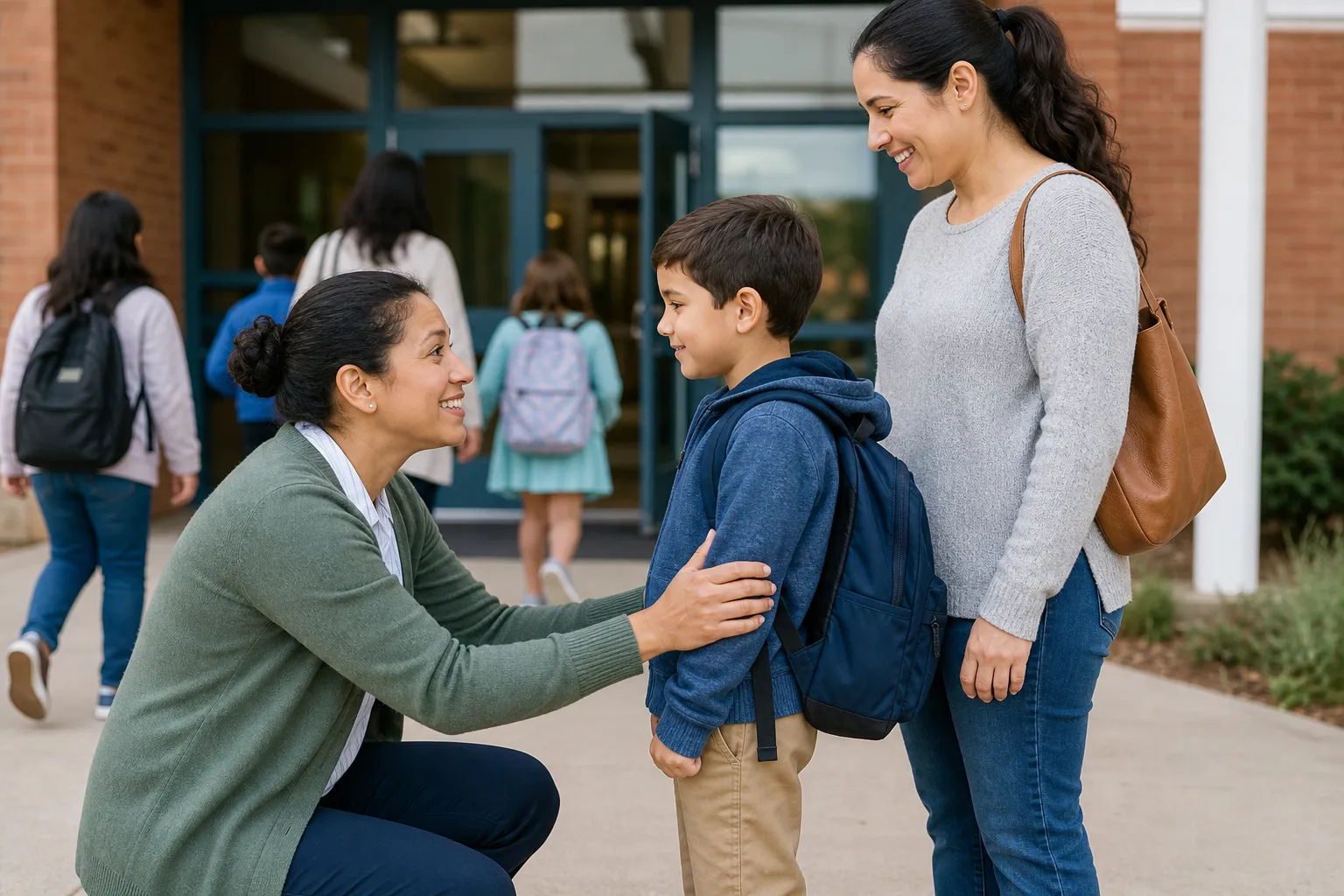
The school morning often begins before anyone reaches the school gate. It may include waking up, getting dressed, eating, finding belongings, leaving home, travelling, arriving, and separating from a trusted adult—all while time feels limited. A personalised morning routine social story can give a child and their family a shared, calm way to talk through that chain of events ahead of time. It is not a promise that every morning will be easy or identical. Instead, it can describe what is likely to happen, name a few honest possibilities, and make room for the child’s own preferences, questions, and feelings.
Why the morning can feel bigger than it looks
Adults may see getting ready for school as a familiar set of practical tasks. For a child, however, the morning can involve many quick changes: from sleep to being awake, from pajamas to daytime clothes, from home sounds to school sounds, from family time to classroom expectations, or from a preferred activity to a necessary task. Even when each part is manageable on its own, the combination can feel demanding.
Some autistic children, including children with autism spectrum disorder, may experience transitions, uncertainty, sensory differences, or changes in expected routines in ways that make the journey to school feel particularly intense. This does not mean that autistic children all experience school mornings alike, or that autism itself determines what a child needs. One child may want detailed information about the order of events; another may be most concerned about noise at the entrance, a changed pickup arrangement, or not knowing which adult will be in the classroom.
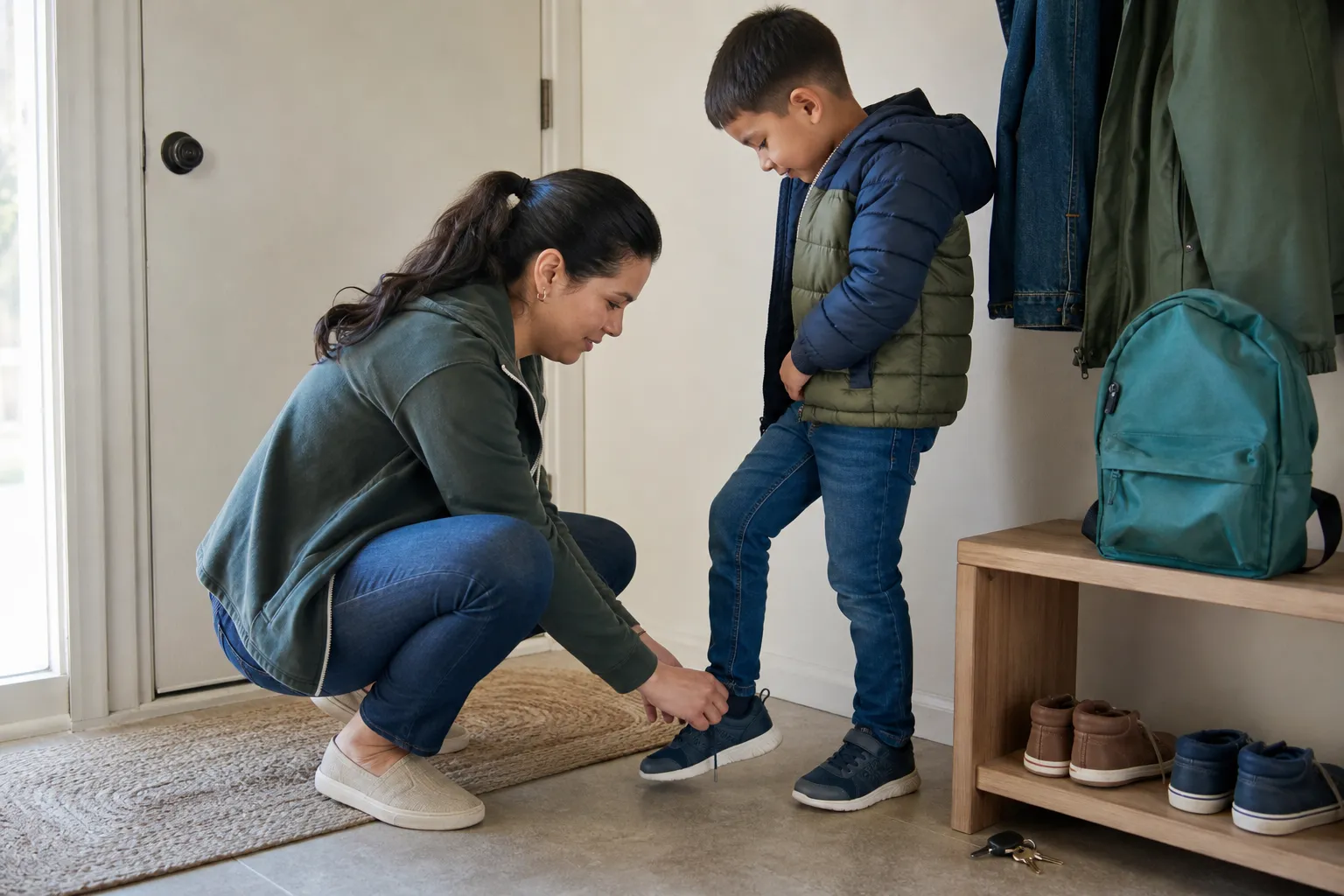
Anxiety can also make ordinary uncertainty feel urgent. A child may worry about being late, saying goodbye, meeting classmates, making a mistake, or something unexpected happening during the day. They might ask the same question repeatedly, seem reluctant to start a task, become quiet, or express distress in a more outward way. These responses can be communication about a difficult moment rather than deliberate noncompliance. The Centers for Disease Control and Prevention notes that children can experience anxiety in different ways and that persistent concerns can affect daily life; families can seek individualized guidance when worries are getting in the way of school or home life too often or too intensely for that child. സാമൂഹരും are not the same for every child, and a social story is not a diagnostic or treatment tool. It is one way to communicate predictably and respectfully about a situation.
What a morning routine social story is designed to do
A morning routine social story is a short, personalized explanation of a familiar upcoming situation: preparing for and going to school. It uses clear, truthful language to describe what usually happens, who may be involved, what may change, and what the child can do or communicate. The goal is understanding, not obedience. A well-matched story can help a family discuss the morning when nobody is already rushing out the door.
For an autism going to school social story, specificity can be more helpful than broad reassurance. “School will be fun” may not answer a child’s real question. Information such as “After breakfast, we usually put on shoes and go to the car” can be easier to connect to a lived experience. It can also acknowledge uncertainty honestly: the route may be busy, a sibling may be slower to get ready, or a different adult may meet the child at school. The story should only include possibilities that are genuinely relevant to that child’s life.
A social story can support routines and predictability by separating the stable parts of a morning from the variable parts. Stable parts might include waking, getting dressed, eating, leaving home, and arriving at school. Variable parts might include the weather, traffic, a substitute teacher, or whether the child feels ready quickly. Naming both can prevent a story from becoming a rigid script that feels inaccurate on a different day. It can also help adults notice which part of the routine needs clearer shared language rather than assuming the whole morning is the problem.
Choose details from the child’s actual morning
Begin with observation rather than a standard school template. Think through a typical school morning from the child’s point of view: How do they wake up? What happens first? Which people are usually present? What are the places, sounds, smells, textures, and waiting periods? How do they travel? Where does the goodbye happen? The answers may be different on different weekdays, so a story can focus on what is true most often while briefly naming meaningful alternatives.
Keep the scope narrow enough to be useful. A going to school social story might cover only the period from waking up to entering the classroom. Another might focus solely on leaving the house, travelling to school, or saying goodbye at the gate. When a child’s concern is concentrated in one part of the morning, a shorter story about that moment may feel more relevant than a long account of everything that happens before lunch.
Use language that reflects the child’s communication style and family wording. Some children may prefer concrete names for people and places. Others may prefer simple first-person phrasing, direct descriptions, or choices they can recognize. Avoid putting feelings into the child’s voice unless they have identified those feelings themselves. A story can say that people can have different feelings in the morning, and then invite the child to say, point, write, sign, or otherwise communicate what fits for them. If the child does not want to discuss feelings, the story can still focus on events and options.
Include honest possibilities, not demands or guarantees
A useful school morning social story describes rather than commands. It does not need to say that a child “must be calm,” “will enjoy school,” or “should not worry.” Those statements can feel invalidating and may not be true. Instead, it can explain what adults are likely to do, what the child may notice, and what choices may be available. For example, a family might truthfully include that there is usually time to sit quietly for a moment before leaving, that the child may tell an adult they need more information, or that a trusted adult may help identify the next step. These are possibilities only when they are genuinely available.
It can be helpful to acknowledge that feelings may change. A child might feel sleepy at wake-up time, comfortable during breakfast, worried near the door, relieved after arriving, or none of these things. Some children may feel anxious in their body without using the word “anxious.” Others may be primarily concerned with predictability, sounds, clothing, food, or the timing of transitions. A social story does not need to explain why a feeling occurs in order to treat it as real and worth listening to.
Use only promises that adults can keep. If a parent usually walks a child to the door but sometimes cannot, write about the usual plan and name the realistic alternative. If a child may arrive after the classroom has started, it is more honest to state that an adult will help them enter than to insist they will always arrive at exactly the same time. One short example sentence, not a complete social story, is: “Most mornings, Dad and I walk to the school entrance; sometimes Grandma takes me instead.” Another example is: “If I have a question about what happens next, I can ask or show someone that I need help.”
Create it together and revisit it without turning it into a test
Whenever possible, involve the child in deciding what the story says. They may correct an adult’s assumptions, choose the words that feel right, point out an important part of the journey, or say that a detail does not matter to them. A child may also prefer not to contribute at first. Adults can leave space for later feedback rather than treating participation as required. Collaboration helps make the account about the child’s real experience, not only adults’ hopes for a smoother morning.
Families may choose to talk through the story at a low-pressure time, such as a quiet afternoon or evening, rather than only when everyone is trying to leave. Repetition may be welcome for some children and unhelpful for others. Notice the child’s response: do they ask for it again, add information, look away, change the subject, or appear more distressed? Their response is useful feedback about timing, length, wording, and whether the topic should be narrowed.
The American Academy of Pediatrics describes family routines as potentially supportive because they can create connection and predictability. Predictability does not require every detail to be fixed, though. A family can keep a recognizable sequence while being open about ordinary changes. Reviewing a story after a difficult or unexpectedly successful morning can be a chance to update facts without blaming the child. Questions such as “Was anything different today?” or “What should we change so this sounds more like your morning?” can keep the story accurate.
Work with school in a respectful, practical way
A parent, carer, or educator can use the same core information to reduce mixed messages between home and school. This does not require a child to disclose private feelings or a diagnosis. A family might simply share the parts of the arrival routine that the child finds important, such as who usually greets them, where they enter, or what happens if the usual plan changes. Educators can offer factual information about arrival procedures and identify what is actually consistent versus what varies by day.
For a going to school social story autism families may find it useful to include school-based details only after checking them with the school. An inaccurate statement about a classroom, teacher, or entrance may increase uncertainty. If a staff member changes, an adult can revise the wording to say what remains true: the child arrives, an adult is available, and the day begins—even if the specific person is different.
A personalised story is not a replacement for listening to the child, responding to distress, or seeking additional support when needed. If anxiety is persistent, escalating, or significantly affecting attendance, sleep, family life, or the child’s ability to participate in daily activities, families can consider speaking with an appropriate qualified professional or the child’s healthcare team. That conversation can be tailored to the child and does not mean the child has done anything wrong. The most useful aim is not a perfectly smooth departure; it is a morning in which the child is informed, respected, and supported to communicate what helps.
Frequently asked questions
How long should a morning routine social story be?
There is no required length. It should be long enough to answer the child’s likely questions and short enough to stay meaningful. A story about one transition, such as leaving the house or arriving at the classroom, may be more useful than trying to explain the entire school day at once.
Should a social story say that the child will be brave or calm?
Usually, it is more respectful and accurate to avoid requiring a particular feeling or promising one. A child may feel calm, worried, excited, tired, or several things at once. Describe the situation, acknowledge that feelings can vary, and include real ways the child may communicate a question or need.
Can we use the same going to school social story when the routine changes?
Yes, if the central information is still true, but update details that no longer match the child’s experience. It can help to name ordinary alternatives in advance when they are genuinely possible. If a major change is coming, a separate, focused story may be clearer than repeatedly changing a general morning story.
Keep exploring
Related social stories
These guides cover situations with similar routines, sensory details or preparation needs.
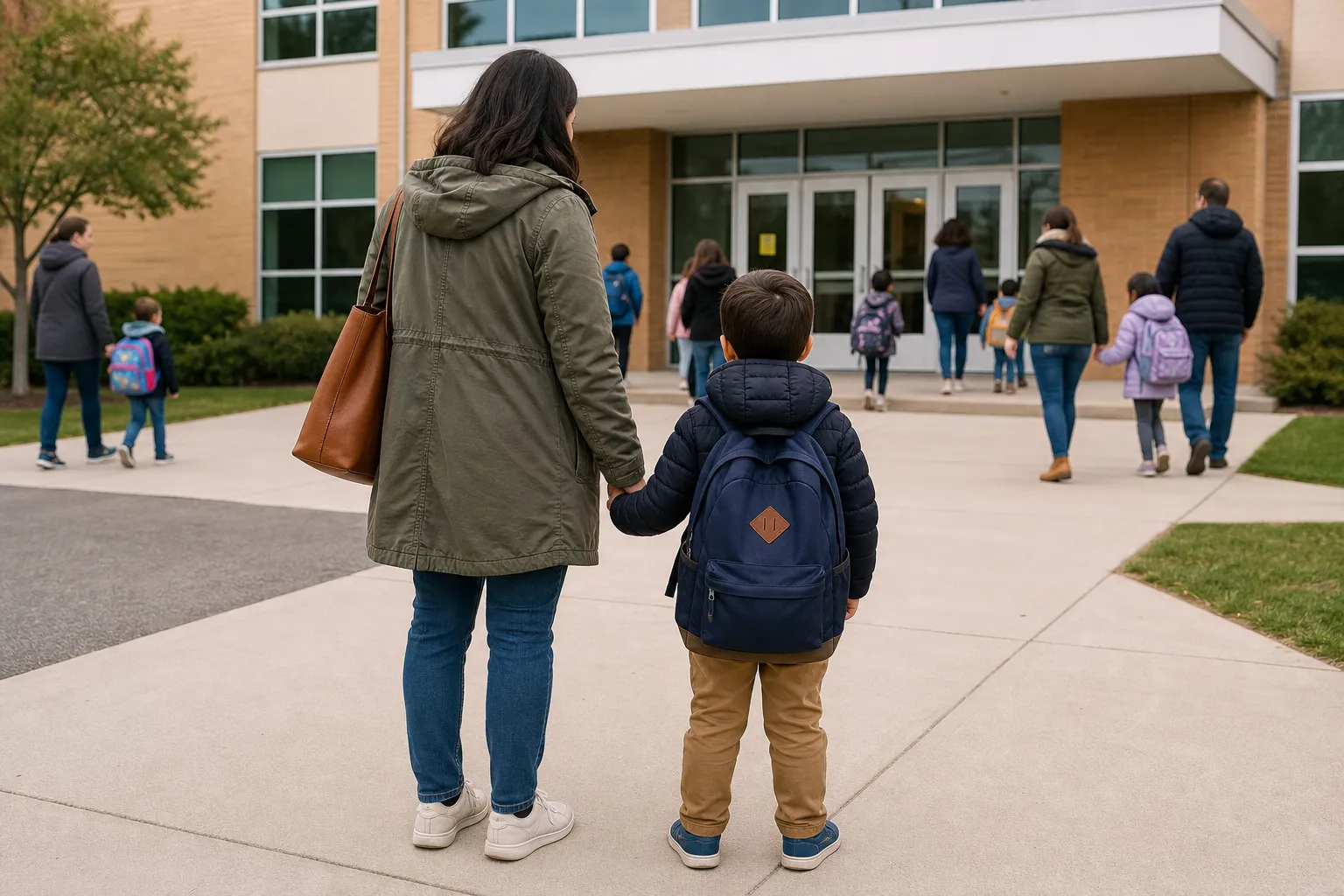
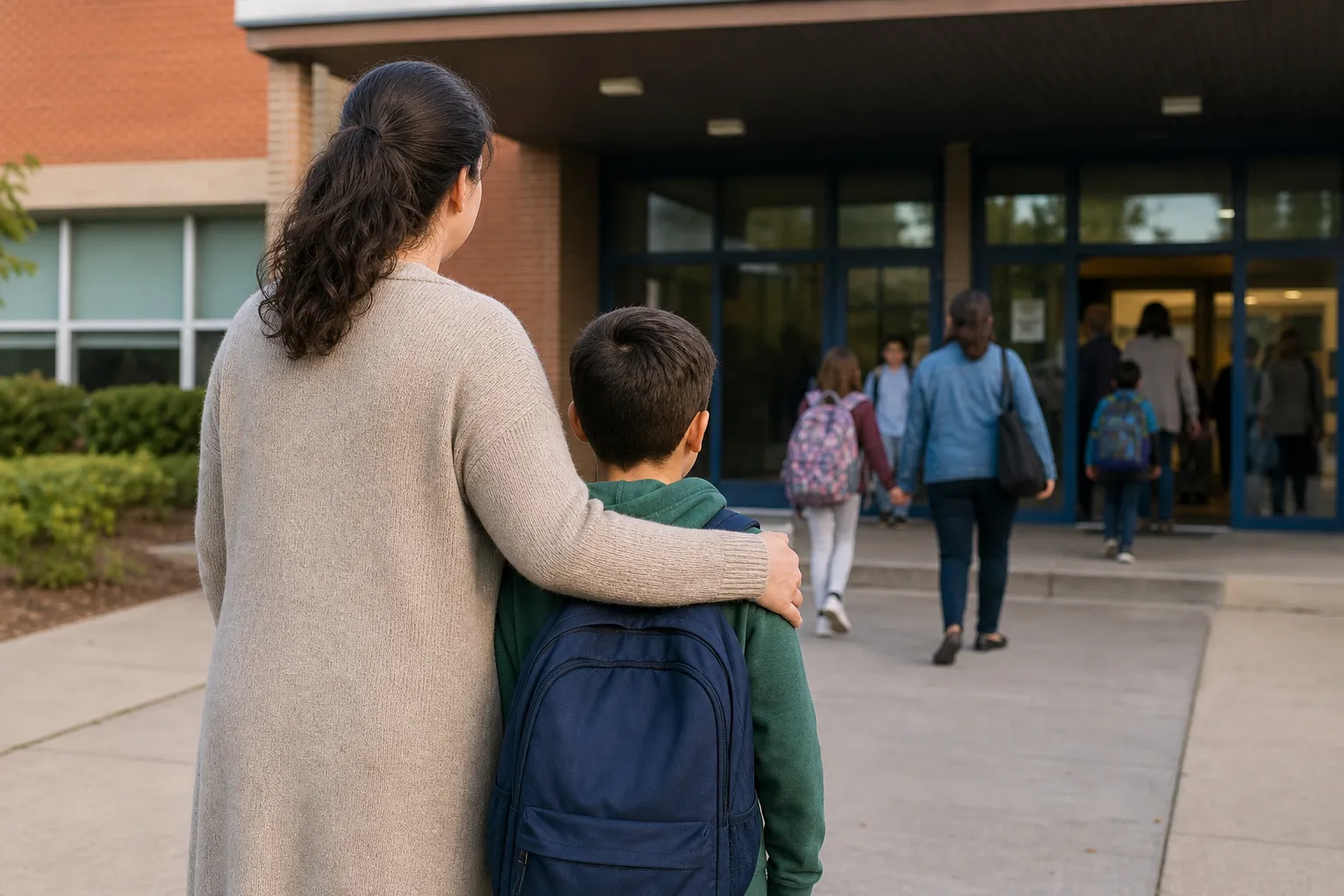
Learn more about writing a social story
Read what a social story is, follow the step-by-step writing guide, or browse more social story examples.
Sources
- Autism spectrum disorder — Centers for Disease Control and Prevention
- Anxiety and depression in children — Centers for Disease Control and Prevention
- The importance of family routines — American Academy of Pediatrics
