
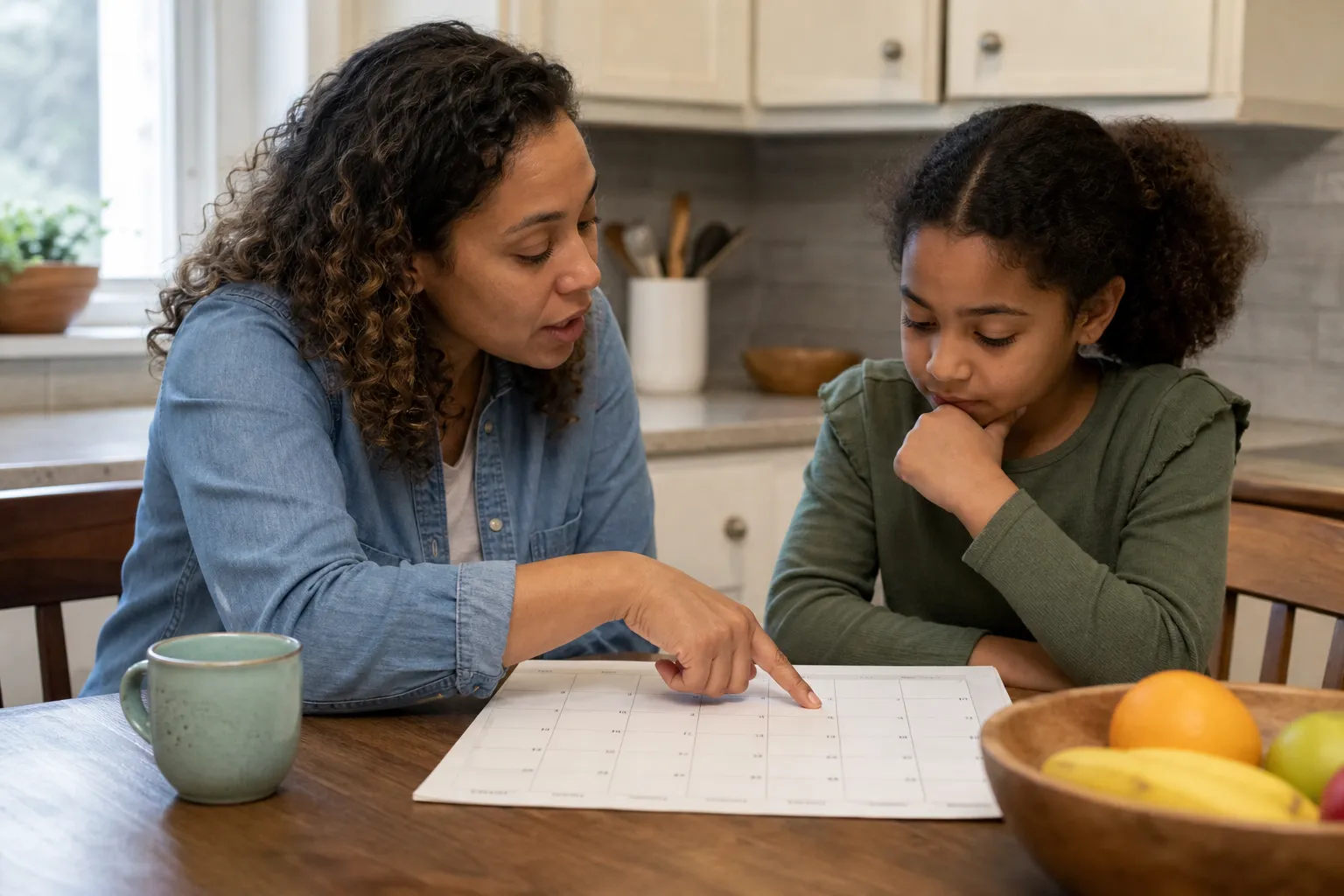
A routine rarely changes in only one place. A later school pickup can alter breakfast, who is at home, how a child gets to an activity, and what happens before bed. For a child who relies on familiar patterns—or who simply has not yet had time to picture the new sequence—those connected changes can feel much bigger than the calendar suggests. A personalised change in routine social story gives a family a quiet way to name what is changing, what is staying the same, and what may happen next. It is not a promise that the change will feel easy. It is a shared preparation tool that can make the unknown more concrete and leave room for the child’s own perspective.
Why a routine change can carry so much weight
Routines can do more than organize a day. They may help a child anticipate demands, understand when preferred activities happen, know who will be present, and conserve energy for learning, communicating, playing, or coping with sensory and social demands. The American Academy of Pediatrics describes family routines as meaningful patterns that can support connection and predictability. That does not mean every family needs a rigid timetable, or that every child responds to routine in the same way. It does mean that a change can affect a sense of orientation as well as logistics.
A routine change might be short-term, such as a substitute teacher, a parent working late, a holiday closure, a different bus, a doctor appointment, or visitors at home. It might also be ongoing, such as moving house, starting a new class, beginning a new care arrangement, or changing the order of evening tasks. Even a positive event can involve uncertainty: a birthday gathering may mean a different room, more people, altered meal timing, and a later bedtime.
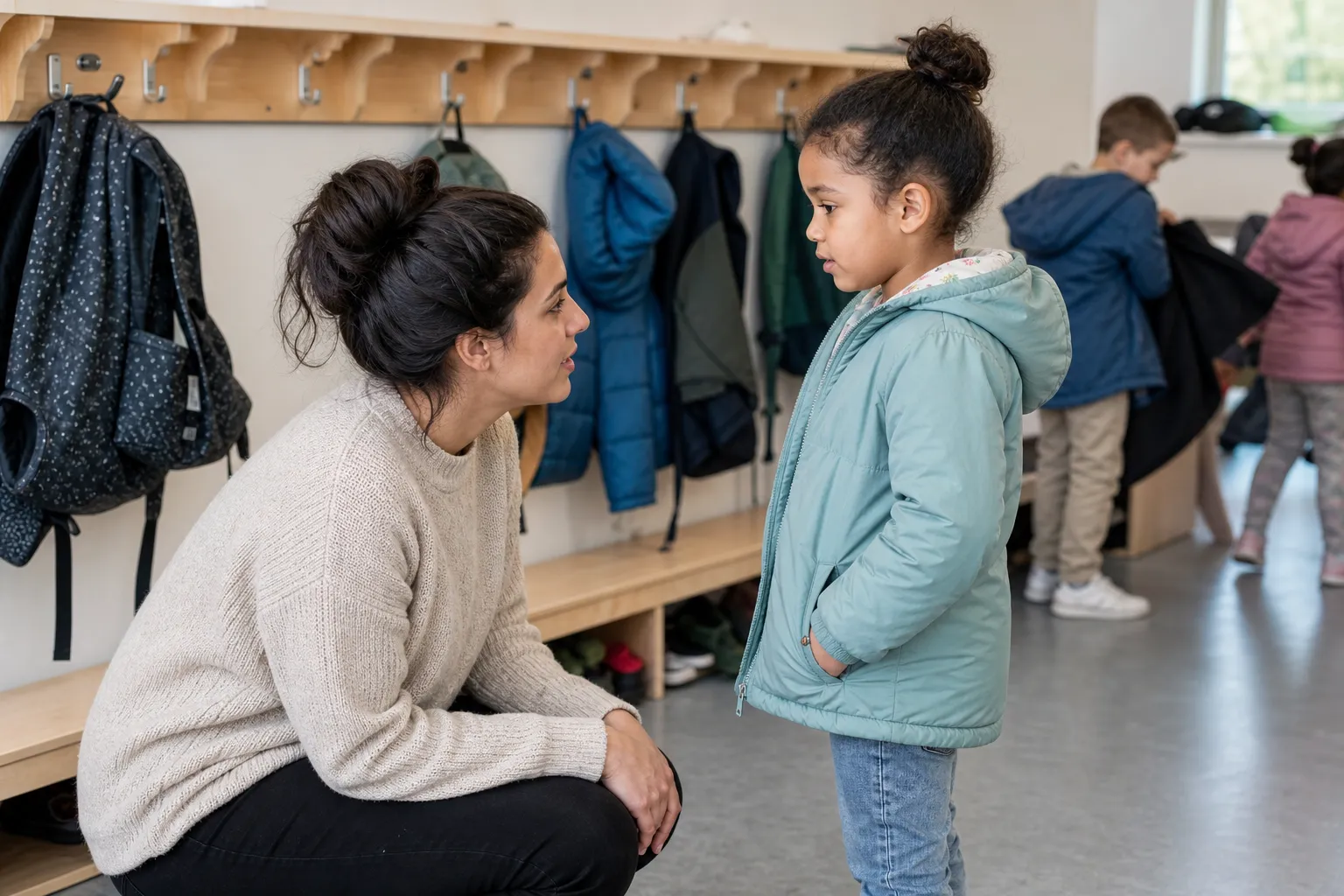
For some autistic children, predictability can be especially important. Autism spectrum disorder is a developmental difference with wide variation in communication, interests, sensory experiences, and support needs. A preference for sameness or difficulty shifting between activities may be part of one child’s experience, while another autistic child may welcome novelty in some settings. It is more useful to learn what this particular child notices and needs than to assume that autism makes every change distressing. A change in routine social story can be built around that individual knowledge.
Possible difficulties: transitions, uncertainty, and anxiety
Changes and transitions can ask a child to stop one activity, hold new information in mind, adjust expectations, and begin something unfamiliar. A child may be comfortable with the destination but find the in-between part difficult: waiting in a different place, leaving sooner than expected, riding with someone else, or not knowing exactly when an adult will arrive. They may ask the same question repeatedly, seek extra reassurance, become quieter, protest, appear irritable, or need more time before moving on. These responses can be communication, self-protection, or an attempt to gain clarity—not simply refusal or misbehavior.
Anxiety can also shape how a change is experienced. Anxiety is common in childhood and can look different from child to child. Some children may describe worries directly; others may report stomachaches or headaches, have trouble settling, avoid an activity, become tearful, or focus intensely on possible problems. These signs have many possible explanations and are not a diagnosis. The Centers for Disease Control and Prevention notes that children’s mental health concerns deserve thoughtful attention, particularly when worries persist or affect everyday life. Families can consider discussing ongoing or concerning changes with an appropriate qualified professional.
For an autistic child, anxiety and transition difficulty may overlap, but they are not interchangeable. A child might be worried about an unpredictable outcome, overloaded by a noisy new setting, disappointed by a lost expectation, or all three. Another child may be calm about a major event after receiving specific information. A useful routine change social story does not label a feeling as inevitable. Instead, it makes room for several honest possibilities: the child may feel interested, unsure, disappointed, relieved, worried, or more than one feeling at once.
What a personalised social story can do—and what it cannot
A personalised social story is a brief, respectful explanation of a situation written for one child. In this context, it can explain the upcoming routine change in plain, accurate language and connect it to the child’s real day. The aim is shared understanding, not compliance. It can help a family prepare together by reducing avoidable surprises, inviting questions, and showing that the child’s feelings and observations matter.
The strongest information is usually concrete and honest: what will be different, when it will happen if that is known, who is likely to be involved, where the child will go, what familiar parts will remain, and what adults know or do not yet know. If timing is uncertain, it is better to say so plainly than to create false certainty. A story can acknowledge that plans sometimes change again and identify the adult who can share updated information. It should not promise that nothing difficult will happen, that everyone will behave in a certain way, or that the child will feel calm.
For example: “On Thursday, Grandma may pick me up after school instead of Dad.” “I can ask which classroom door we will use.” These are examples only, not a complete social story. The exact wording, length, and details should reflect the child’s language, preferred communication style, and lived experience. Some children may want a very short explanation; others may want specific answers about people, places, timing, food, clothing, or the sequence of events. A child can also choose not to discuss the change at a particular moment.
Details worth exploring together before writing
Start with the change itself rather than with a general lesson about flexibility. A parent, carer, or educator might gather information from the people involved and then consider what the child already knows. Useful details can include the date or range of dates, the reason for the change in age-appropriate terms, the new order of events, travel arrangements, expected people and locations, and the point at which the usual routine returns. It may also help to identify stable anchors: a familiar breakfast, a regular goodbye, a known adult, a favorite after-school activity, or the same bedtime routine where possible.
The child’s prior experience is important evidence. They may have navigated a similar change successfully, or they may remember a previous disruption that was confusing. Ask open, non-leading questions when appropriate, such as what they think will be different, which part they want to know more about, or what they hope stays the same. Notice nonverbal communication too. A child’s silence, movement away, repeated questions, or detailed interest in one point can all suggest that more time or clearer information may be useful.
Concrete choices can be offered only when they are real choices. For instance, if both are genuinely possible, a child might choose whether to hear about the changed pickup plan before or after a snack, or whether to ask a trusted adult their questions privately or with a parent present. If there is no choice about attending school or leaving at a set time, the story can say that clearly and respectfully. Pretend choices can undermine trust, especially for a child who is trying to understand what will actually happen.
Writing with dignity, clarity, and flexibility
Use language that describes rather than judges. “The plan is different today” is more informative than calling a child difficult, stubborn, or overly sensitive. Name ordinary feelings without requiring a particular response. A child may want company, quiet, information, a break in conversation, or time to adjust; another may not. Avoid presenting coping strategies as obligations or guarantees. The story can describe what supportive adults may be available to do, such as answer questions or share updates, without claiming that a specific approach will prevent distress.
Keep the perspective collaborative. Adults can check whether names, places, and details are correct, and they can revise the story when the plan changes. This matters because a routine change social story autism resource should not treat the child as a passive recipient of instructions. A child may correct an adult’s assumptions, identify an overlooked worry, or point out a part of the day that is actually exciting. Their input can make the explanation more accurate and more respectful.
Read or discuss the personalised social story at a time when there is no immediate pressure to transition, if that timing works for the child. It may be revisited as the change approaches or after it has happened, but repetition is not automatically helpful for everyone. Some children prefer brief reminders, while others may become more worried if the topic is repeated too often. Follow the child’s cues and the family’s knowledge of what helps. Afterward, the family can reflect on what matched the plan, what differed, and what information would be useful next time.
Using the experience to build family knowledge, not a test of flexibility
The outcome of a changed routine is not a scorecard. If a child becomes distressed, that does not prove they failed to be flexible or that the social story failed. It may show that the change involved more uncertainty, sensory demand, fatigue, grief, or lost control than adults realized. If the day goes smoothly, that does not mean future changes will feel the same. Each transition has its own context.
Families and educators can use the experience to learn together. They may notice that advance notice was useful, that a particular unknown mattered most, that a child wanted fewer details, or that the return to the usual routine was the part needing explanation. These observations can guide future conversations without turning them into rules for every child. Consistency among adults can help as well: when home and school share only accurate, relevant details, the child is less likely to receive conflicting explanations.
A change in routine social story is most valuable when it protects trust. It tells the child that adults will try to explain meaningful changes, will not hide uncertainty behind cheerful reassurance, and will listen to what the child says about their own experience. For families navigating autism, routines-and-predictability, changes-and-transitions, or anxiety, that honest partnership can be more important than making any one day go perfectly.
Frequently asked questions
How far ahead should we discuss a change in routine social story?
There is no single best lead time. Some children benefit from knowing well ahead, while others find long anticipation stressful. Consider the child’s past responses, how certain the plan is, and whether there is enough time to answer questions. If details are not confirmed, say what is known and what is still being worked out.
Is a change in routine social story only for autistic children?
No. A personalised social story can be useful for any child who may benefit from a clear explanation of an upcoming change. An autism change in routine social story may include details that are particularly relevant to one autistic child, but it should never assume that all autistic children have the same needs or reactions.
What if the plan changes after we have explained it?
Update the child as soon as practical with simple, truthful information. Acknowledge that the earlier plan was different, explain the new part that is known, and be clear about any remaining uncertainty. Revising the explanation can model that adults will share changes rather than expecting the child to guess.
Keep exploring
Related social stories
These guides cover situations with similar routines, sensory details or preparation needs.



Learn more about writing a social story
Read what a social story is, follow the step-by-step writing guide, or browse more social story examples.
Sources
- Autism spectrum disorder — Centers for Disease Control and Prevention
- Anxiety and depression in children — Centers for Disease Control and Prevention
- The importance of family routines — American Academy of Pediatrics
