
An airport is not just a place to get through before a flight. It is a chain of unfamiliar spaces, waiting periods, rules, sounds, and changing expectations. A child or adult may be excited about the destination and still find parts of the journey hard to predict. An airplane social story can help a family, carer, or educator put the trip into a truthful, person-centered sequence before travel day. Rather than promising that flying will feel easy, it can name what may happen, what may change, and which choices may be available. This approach can be useful for people with autism, anxiety, sensory-experiences differences, or a strong need for familiar routines, while recognizing that no diagnosis or experience determines how any one person will respond.
Why an airplane social story can make travel more understandable
Air travel asks people to move through several transitions in a relatively short time: leaving home, arriving at the airport, checking in, waiting, going through security, finding a gate, boarding, sitting on the airplane, taking off, landing, and collecting belongings. Some trips also include a connection, a long walk between gates, a shuttle, a delay, or an unexpected gate change. For a person who prefers to know what comes next, the number of steps can matter as much as the flight itself.
paragraphs
A personalized social story is a short, factual explanation of a situation written for one person. It can describe the likely order of events, acknowledge that some details are uncertain, and include options that are genuinely possible for that traveler. Its purpose is not to make someone behave a particular way or to insist that they enjoy flying. Instead, it can create shared language for preparation: what the airport may be like, which parts are non-negotiable, who may be nearby, and what the person might choose or communicate during different moments of the trip.
Start with the traveler’s actual route, not a generic airport script
The most useful airport social story is built around the planned trip. Families can look at the airline itinerary and consider practical details such as the airport, terminal, arrival time, whether bags will be checked, the flight length, seating arrangement, and whether a connection is expected. If the traveler has flown before, it may help to discuss what they remember as comfortable, confusing, tiring, interesting, or difficult. Their perspective should guide what receives the most attention.
A truthful story distinguishes between things that are likely and things that can vary. For instance, the family may plan to arrive early, but the check-in line may be short or long. The gate printed on a boarding pass may change. The airplane may wait before takeoff, and a flight may be delayed. Naming these possibilities ahead of time can be more respectful than presenting travel as a perfectly fixed sequence. It also avoids setting up an expectation that every airport will look or work exactly the same.
Use language that fits the person’s communication style and age without talking down to them. Some people prefer direct details, including that security staff may ask travelers to place certain belongings in bins or that a seat belt is expected while seated. Others may benefit from a shorter description focused on the next transition. The story can identify familiar people who will travel with them and explain when the group may need to stay together, while leaving room for the traveler’s own questions and observations.
Airport steps that may need clear, honest preparation
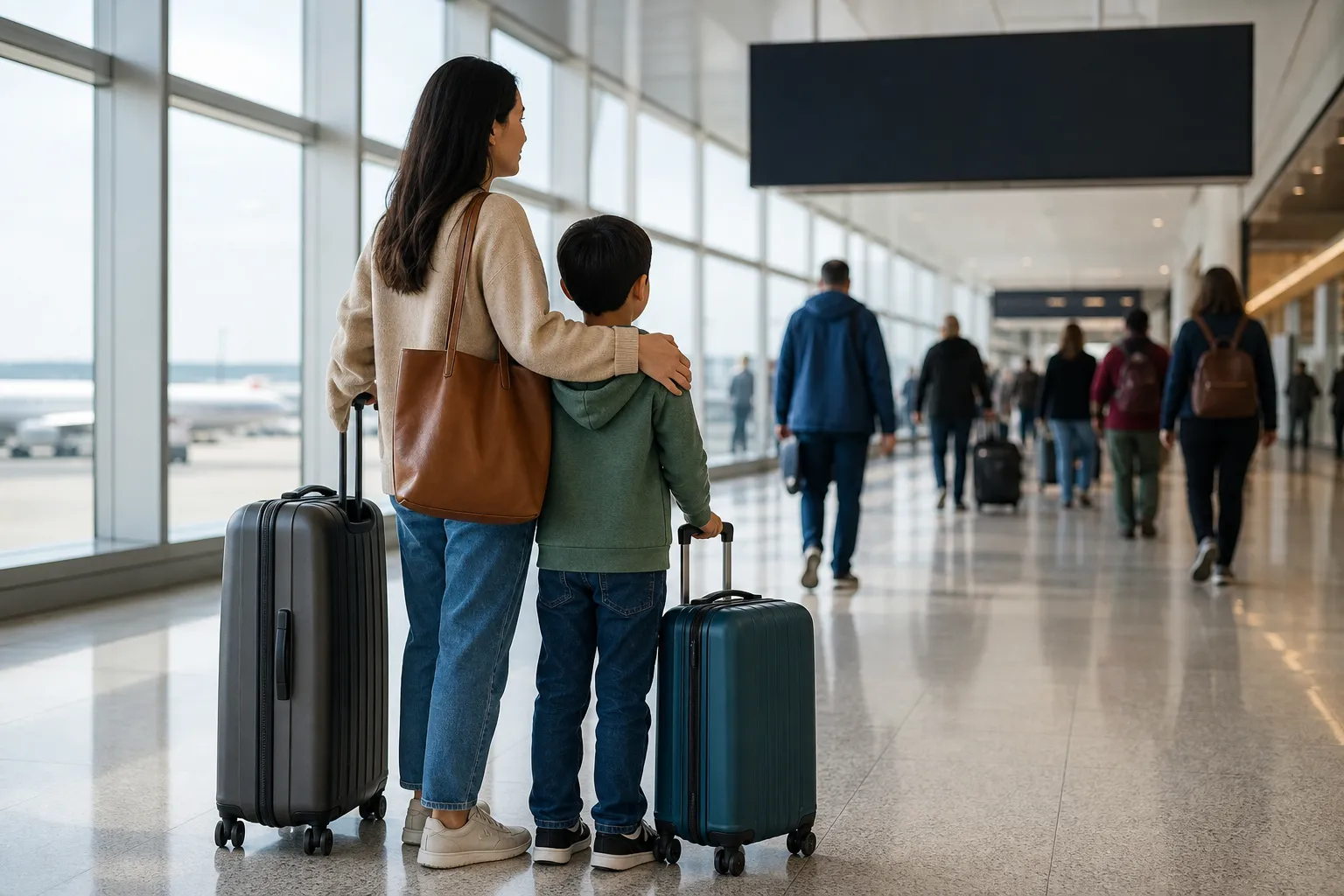
Arrival can begin with a busy curbside area, a parking garage, a shuttle, or a walk from public transportation. Inside, there may be bright signs, rolling suitcases, announcements, lines, and people moving in several directions. Check-in may happen at a counter, a bag-drop area, or another location depending on the airline and airport. A story can explain that adults may need to show travel documents and that checked bags may be taken away until the destination.
Security is often a major unknown because it includes rules, waiting, and interaction with unfamiliar staff. Procedures differ by airport and can change, so a social story should avoid claiming exactly what will happen. It can state that security staff help keep airport travel safer and may give instructions about belongings or screening. It can also say that a traveler can tell a trusted accompanying adult when they do not understand an instruction or when they need information repeated. This is more accurate than promising that security will be quick, quiet, or identical to a previous trip.
After security, there may be time to use a restroom, eat, move around, or wait near the gate, depending on timing and the airport. Boarding is commonly announced in groups, so some people board before others. On some flights, travelers walk through a jet bridge; on others, they may use stairs or a bus. The story can explain that the family will follow the airline staff’s directions and that boarding may involve another short line. These details make an airport social story useful even before anyone enters the airplane.
Flying, body sensations, and sensory experiences
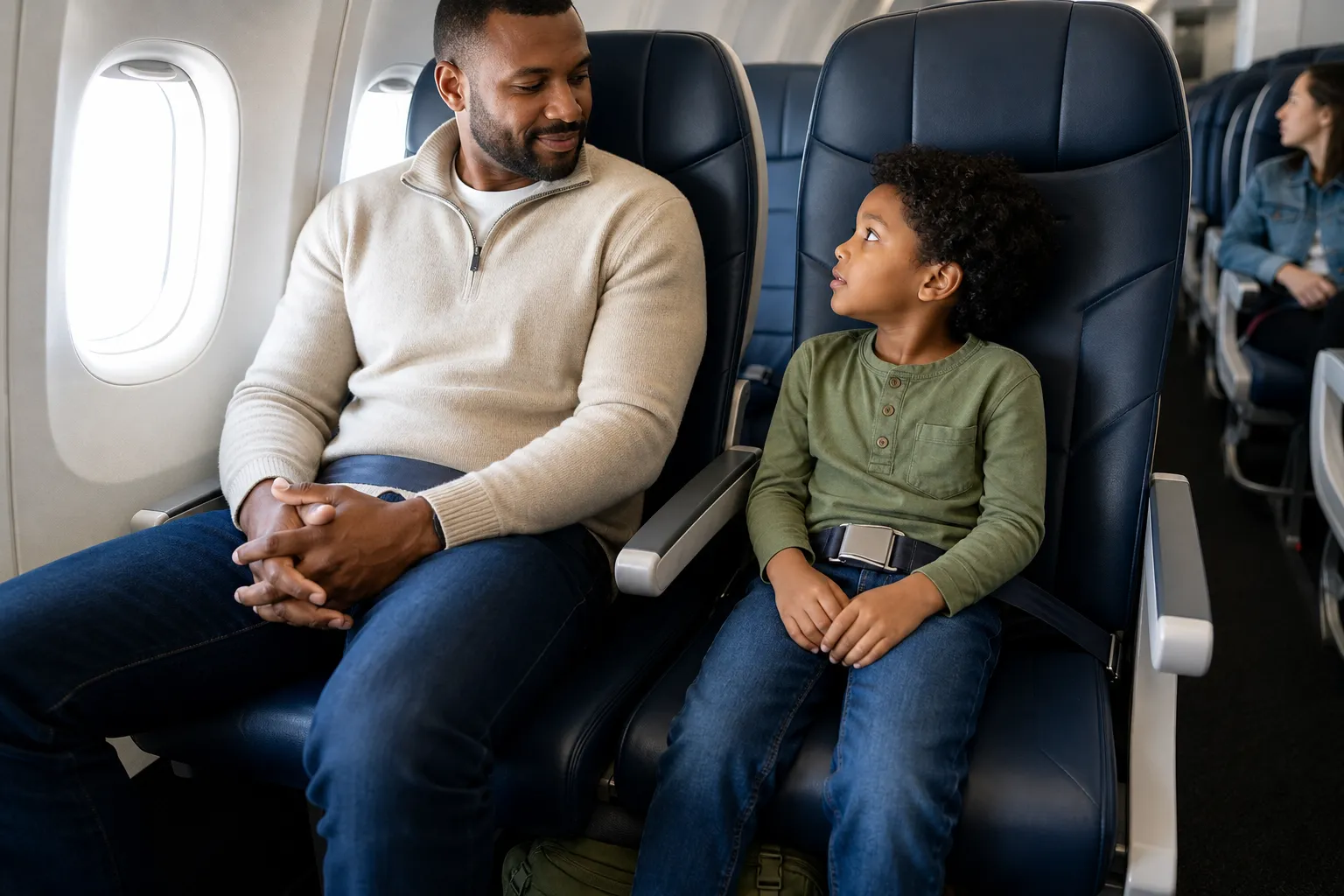
The airplane cabin can bring sensory experiences that are different from everyday travel. Possible features include engine noise, announcements, people talking, air movement, unfamiliar smells, close seating, bright or dim lighting, and limited space to move. A traveler may notice only some of these features, may enjoy some of them, or may find them uncomfortable. Sensory responses vary widely, including among people with autism, and they can also vary from one day or flight to another.
Takeoff and landing can create changes in sound, pressure, motion, and the feeling of the airplane moving quickly or climbing. Some people notice ear pressure or a stomach sensation; others notice very little. Turbulence may feel like bumps or shaking, and it can be unsettling even when travelers understand it is a common part of flying. A factual social story can say that the airplane crew may ask everyone to remain seated with seat belts fastened at certain times, including when the ride is bumpy. It should not promise that there will be no turbulence, no waiting, or no uncomfortable sensations.
Comfort can come from knowing that there are choices, not from being told that one response is correct. Depending on the family’s circumstances and airline rules, possibilities might include choosing whether to look out of the window, talk with a companion, rest, eat when food is available, or ask a trusted adult for help understanding an announcement. The story can also name that not every choice will be available in every moment, especially during boarding, takeoff, landing, or when the seat belt sign is on. This kind of clarity supports autonomy while remaining honest.
Including anxiety, uncertainty, and changes without minimizing them
For some travelers, anxiety may show up before the trip, during packing, while waiting at the gate, or when the airplane doors close. It may involve repeated questions, a need for reassurance, difficulty sleeping, physical tension, irritability, or a wish to avoid the trip. These experiences do not mean the person is being difficult, and they do not need to be assumed from a diagnosis. The Centers for Disease Control and Prevention notes that anxiety can affect children in different ways; a family who is concerned about a child’s ongoing anxiety can seek individualized guidance from an appropriate qualified professional.
A social story can make uncertainty visible without making it bigger than it is. It might cover the possibility of a delayed departure, a changed gate, a different seat from the one expected, a missed connection, or a period of waiting on the airplane. It can explain what is likely to stay the same: the traveler will have identified accompanying adults, airport and airline staff may provide instructions, and the group will work through the next available step. Avoid using the story as a guarantee that plans will go exactly as expected.
Travel can also interrupt family routines around meals, sleep, movement, privacy, and downtime. The American Academy of Pediatrics discusses the value of family routines, and that context can help families understand why a familiar traveler may seem less settled during a trip. A personalized story can identify routine changes in plain language, such as an early wake-up or eating at an unusual time. It can also recognize that recovery time after arrival may be needed, without treating that need as failure or making a prediction about how the person will cope.
Make preparation collaborative, flexible, and respectful
Create the social story with the traveler whenever possible. Invite them to say what they want to know about the airport, what details they do not need, and what they would like accompanying adults to understand. Some people may want a detailed route from home to destination; others may prefer a simple overview and the reassurance that they can ask questions as each step arrives. A story can be revisited over several days or used shortly before departure, according to the individual’s preference.
Keep statements specific, calm, and accurate. Avoid language that frames a natural response to noise, crowding, uncertainty, or fatigue as misbehavior. Also avoid demanding eye contact, quiet hands, a cheerful mood, or a particular emotional response. The goal is preparation and communication, not performance. For example, a story could include: “I may hear loud announcements at the airport, and I can tell my travel companion that the sound feels like a lot.” This is only an example; the wording should reflect the traveler’s own language and circumstances.
Before leaving, families may want to check current airline and airport information because baggage, security, boarding, and seating procedures can change. It can help to decide who will carry essential travel information, who will explain changes to the traveler, and how the group will communicate if someone needs a pause or has a question. These are planning conversations, not requirements. The strongest flying social story leaves room for real life: the trip may contain enjoyable moments, difficult moments, and ordinary waiting, and the traveler deserves clear information throughout.
Frequently asked questions
What is the difference between an airport social story and an airplane social story?
An airport social story focuses on the journey through the terminal, including arrival, check-in, security, gate waiting, and boarding. An airplane social story focuses more on the cabin, seat belts, takeoff, flight sensations, announcements, landing, and getting off the plane. Many families combine both because they are connected parts of one trip.
Should a flying social story mention delays or turbulence?
Usually, honest mention of possible changes can be helpful when it is written calmly and without alarming detail. A story can say that a gate, departure time, or route may change and that turbulence can feel bumpy. It can also explain that the group will listen for updated information and take the next step together. The amount of detail should match what the individual wants and can use.
Can this kind of preparation help a traveler with autism or anxiety?
It may help some people with autism or anxiety by making parts of the trip more predictable, creating opportunities for questions, and identifying possible choices. It is not a treatment and cannot guarantee a particular outcome. A personalized approach is important because sensory experiences, communication preferences, routines, and worries differ from person to person.
Keep exploring
Related social stories
These guides cover situations with similar routines, sensory details or preparation needs.
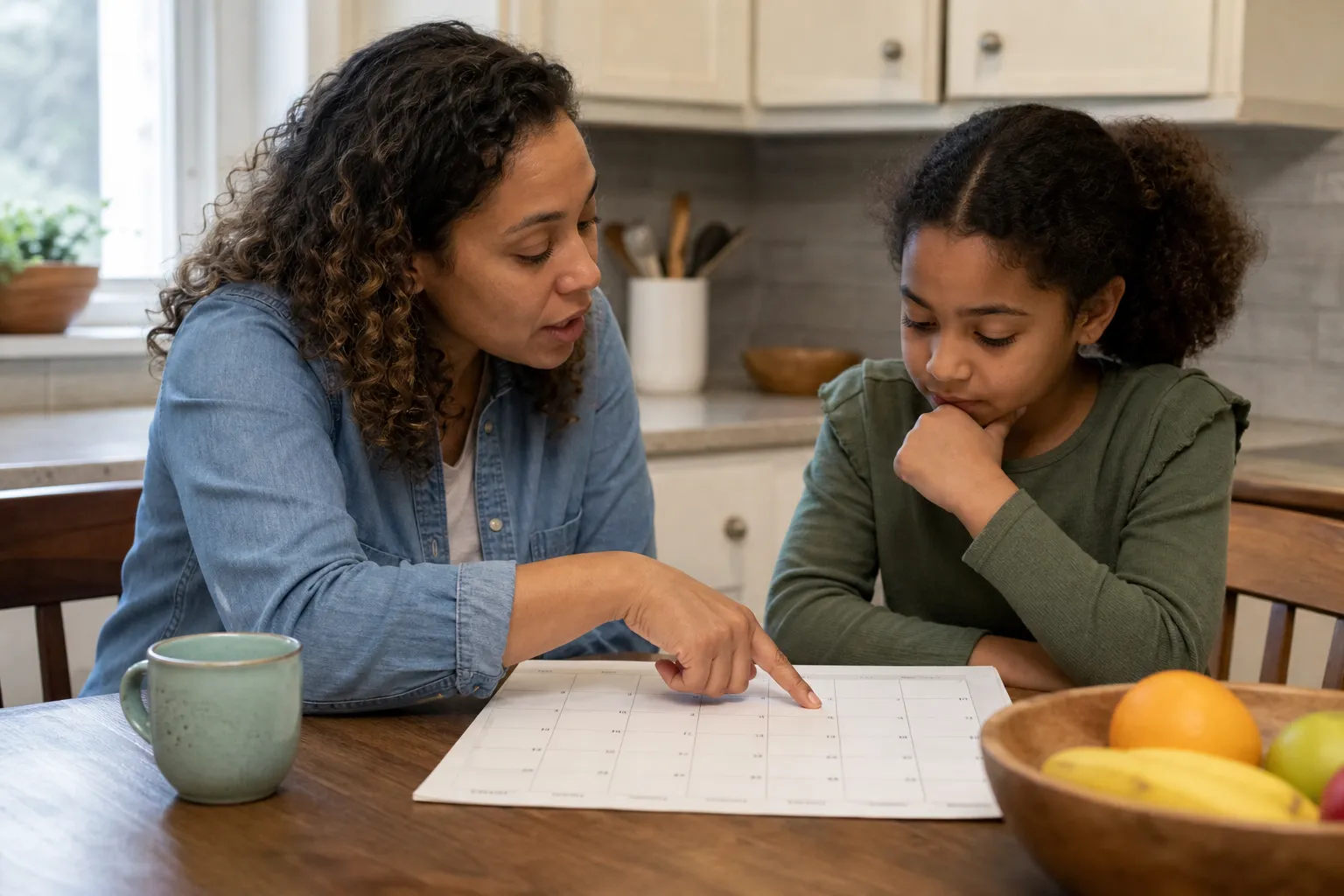
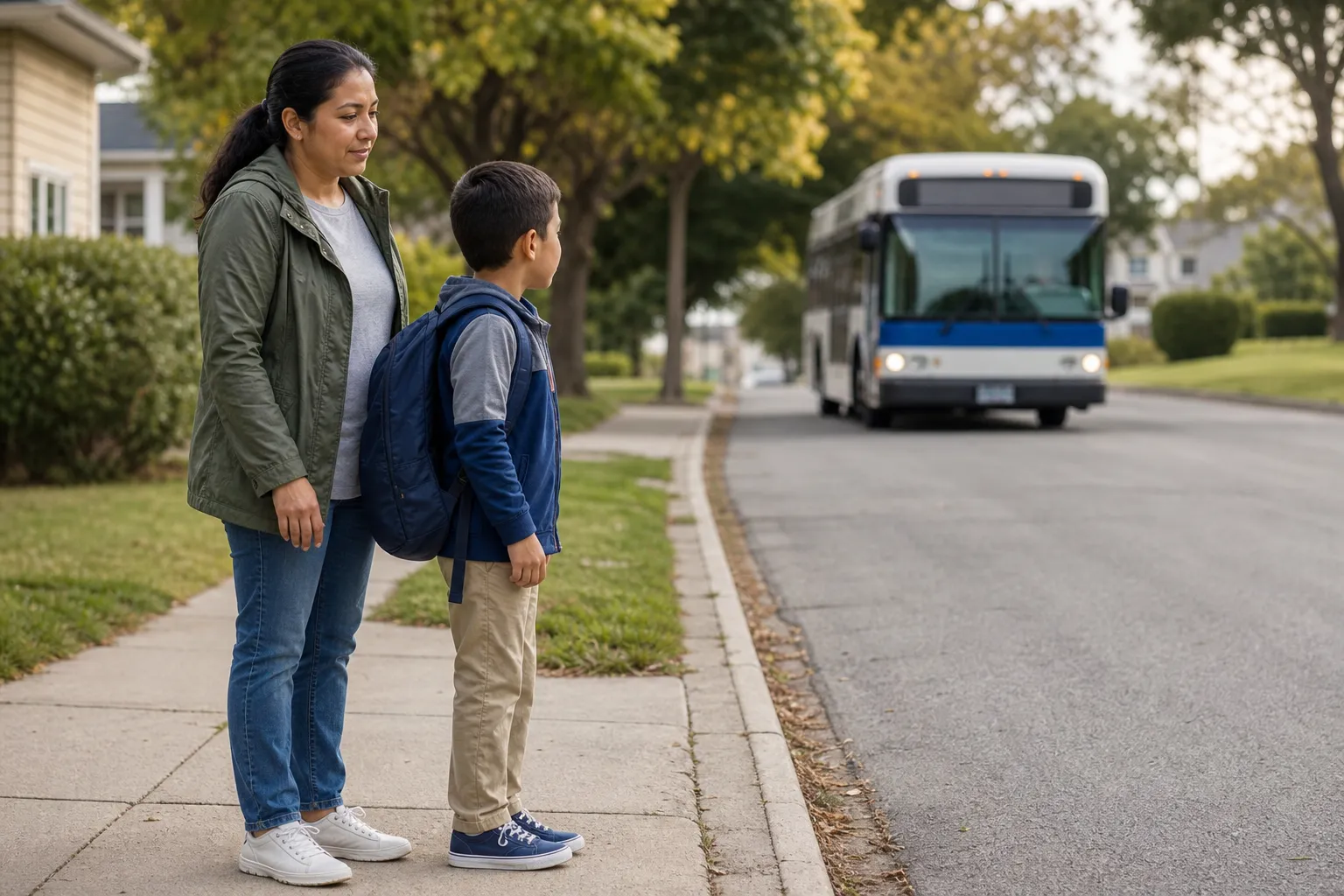
Learn more about writing a social story
Read what a social story is, follow the step-by-step writing guide, or browse more social story examples.
Sources
- Autism spectrum disorder — Centers for Disease Control and Prevention
- Anxiety and depression in children — Centers for Disease Control and Prevention
- The importance of family routines — American Academy of Pediatrics
