
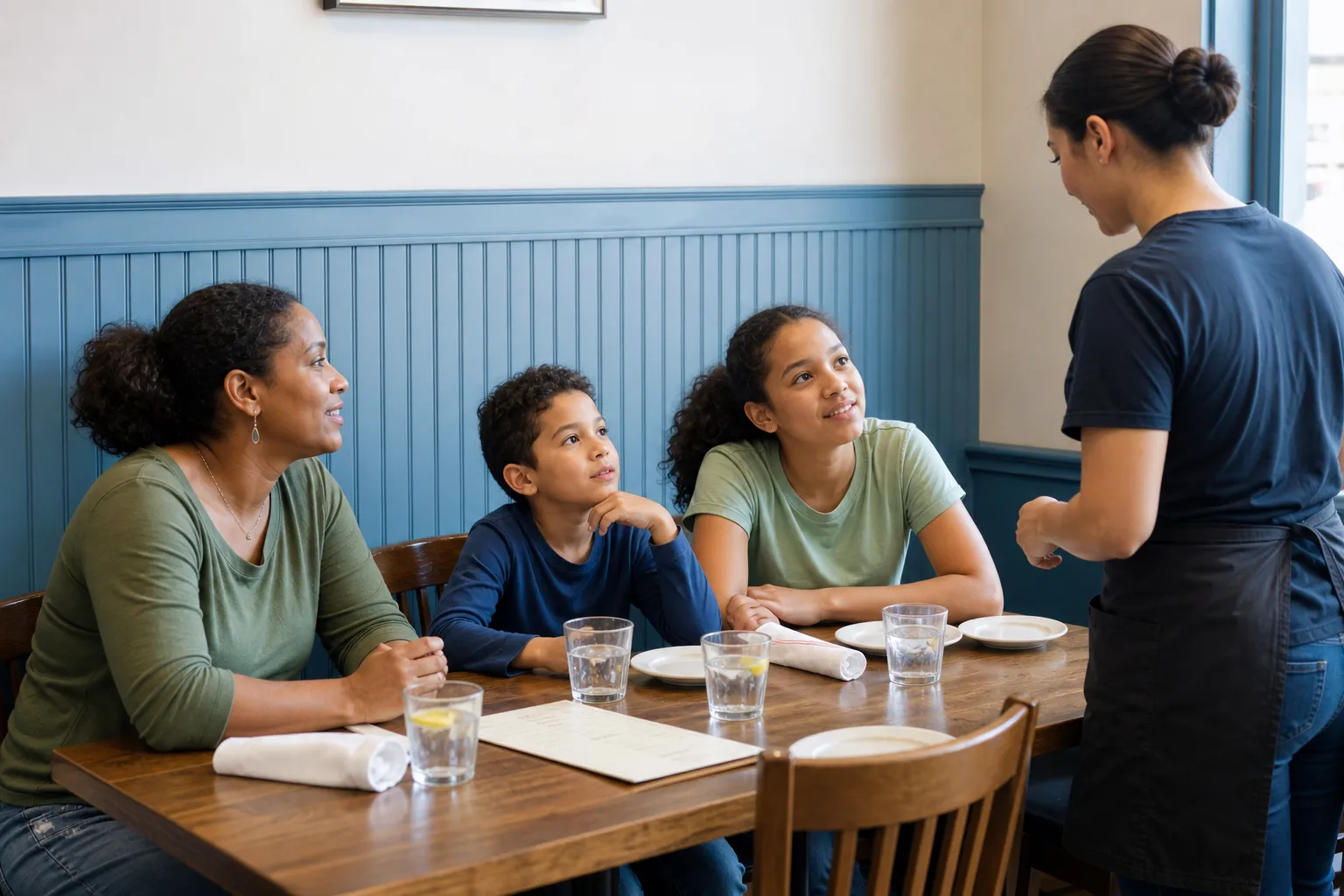
A restaurant meal is not one single event. It is a chain of small, often unpredictable moments: leaving home, entering a different room, finding a table, hearing other conversations, deciding what to eat, waiting, eating, paying, and leaving. For some children and young people, that chain is enjoyable or manageable; for others, particular links can feel uncertain, tiring, intense, or hard to communicate about. A personalised going to a restaurant social story can give a family a calm way to look at the likely sequence together before the outing. It is not a script for “perfect” restaurant behavior or a promise that the visit will go exactly as described. Instead, it can name what may happen, acknowledge real choices, and make room for a person’s own needs and preferences.
Why a restaurant visit can feel like a lot
Restaurants combine several everyday demands in one place. There may be travel, unfamiliar people, social expectations, smells from cooking, background music, clattering dishes, close tables, changing plans, and a wait with no precise end time. Even a familiar restaurant can be different from one visit to the next. A table may be busy, a favorite food may be unavailable, the room may be louder than expected, or the meal may take longer than usual.
For an autistic child or young person, experiences vary widely. Autism spectrum disorder is a developmental difference, not a single set of abilities, preferences, or challenges. Some autistic people may enjoy the clear purpose of going out for food, like looking at menus, or feel comfortable in a familiar venue. Others may find uncertainty, social interaction, or a high-input environment demanding. The same person may experience a restaurant differently depending on hunger, sleep, familiarity, the size of the group, the time of day, and what else has happened that day.
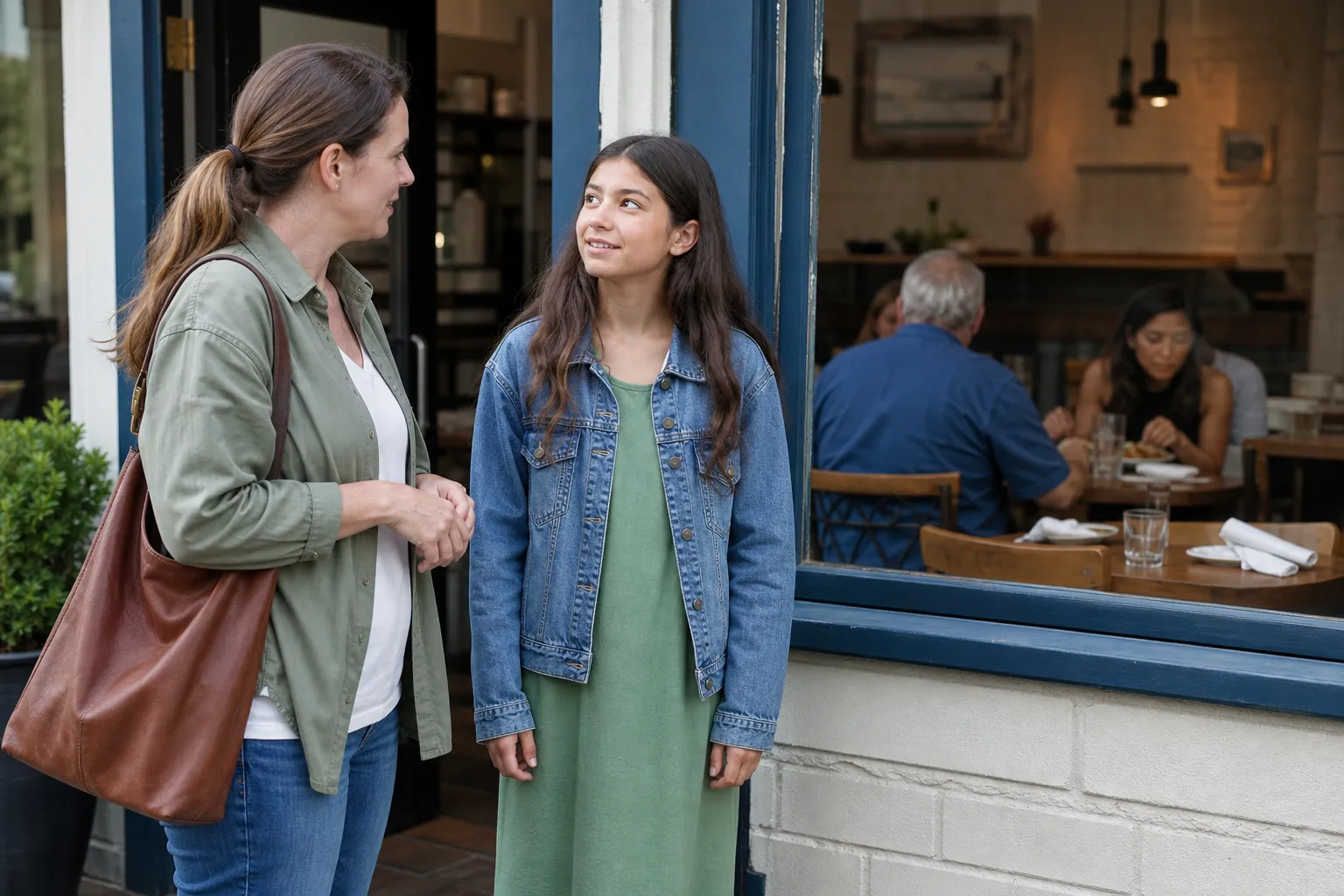
Sensory experiences can be a meaningful part of this. A person may notice sounds, smells, lighting, temperatures, textures, or proximity to other people more intensely, less intensely, or simply differently. A blender, hand dryer, crowded entryway, strong food smell, flickering light, sticky table, or music can be neutral for one person and uncomfortable for another. It is useful to describe these as possible experiences rather than assuming that every autistic person is sensitive to the same things or will respond in the same way. A restaurant social story can make the environment more knowable without minimizing a person’s reactions to it.
What a personalised restaurant social story is for
A social story for restaurant visits is a brief, individualized explanation of an upcoming situation. It can help a child or young person understand the purpose and likely flow of a meal out, put words to uncertain parts, and identify choices that may be available. The most useful version reflects the actual person, restaurant, and family plan rather than relying on a generic description of what someone “should” do.
The goal is preparation together, not compliance. A social story can communicate that the restaurant is a shared space with routines, while also recognizing that the person may need information, time, a break, a different seat, a shorter visit, or a way to communicate a concern. It can clarify that adults will make decisions about safety and practical arrangements, but that the child or young person’s comfort, observations, and communication matter.
Keep language concrete, respectful, and honest. Avoid statements that guarantee outcomes, such as saying the restaurant will be quiet or that food will arrive quickly. A more accurate approach is to explain that restaurants can be noisy and that waiting times can vary. Avoid framing natural self-regulation, limited speech, selective eating, movement, or distress as misbehavior. Instead, describe what the person might notice and what they and their trusted adults may be able to do next. For example, one short, individualized sentence might be: “If the room feels too loud for me, I can tell Dad or show him that I need a break.” This is an example, not a complete social story.
Include the real sequence, from arriving to leaving
A going to a restaurant social story often works best when it follows the outing in order. Start with the details the person is likely to care about: where the restaurant is, who may go, how they may travel there, and whether it is a planned meal, a celebration, or a stop during another activity. If the destination is familiar, say so; if it is new, it can be helpful to say that some parts will be new. There is no need to add details that do not matter to the individual.
Next, describe arrival in plain language. The group may enter, speak to a host, wait near the entrance, or go directly to a table. Some restaurants use a counter, a queue, a buzzer, or table service; a personalised story should reflect the venue’s usual arrangement. Mention that another family or group may be close by and that restaurant staff may speak to the group. Some people may answer questions themselves, while others may prefer a parent, carer, or educator to speak. Communication differences can affect how easily someone understands spoken questions, finds words in the moment, processes several instructions, or expresses a preference under pressure. The American Speech-Language-Hearing Association notes that communication differences can involve understanding, using, or socially sharing language in varied ways; they are not a measure of intelligence or interest.
Then cover ordering and eating without assuming one “right” way to participate. A person may look at the menu, ask someone to read choices aloud, choose a familiar item, decide later, or have another person communicate the order. They may want to ask a question about an ingredient or may not be ready to speak to staff. The story can explain what will probably happen after an order is placed: staff may repeat it, bring drinks first, bring food at different times, or return to ask a question. It can also state honestly that a requested item might not be available and that an adult may help consider another choice. An example sentence is: “Sometimes the food I choose is not available, and we can talk about what happens next.” This is an example, not a complete social story and should be adapted to the individual situation.
Address waiting for food without pretending it is easy
Autism waiting for food at a restaurant social story searches often reflect a very specific challenge: the period after ordering can be much harder than the meal itself. Waiting can involve hunger, uncertainty, changing sensory input, limited room to move, and no clear sense of how long the wait will last. A person may repeatedly ask when food is coming, become quiet, seek movement, find it difficult to stay at the table, or become increasingly distressed. These are possible responses to a difficult situation, not evidence of bad manners or a failure to try.
A personalised social story can name the waiting period directly. It may explain that kitchen staff prepare orders and that the group may not know the exact waiting time. It can distinguish between what is likely and what is uncertain: drinks or bread may arrive first in some restaurants, while food can take longer; sometimes food for one person arrives before food for another. It can also identify the adults who will be present and how the person can share information if waiting feels hard.
Families can think through honest possibilities before writing. Depending on the person and the restaurant, possible choices might include sitting at a quieter table if one is available, going outside briefly with a trusted adult, choosing a shorter visit, ordering before arriving when that is genuinely possible, or deciding not to stay if the situation becomes too difficult. These are options, not requirements, and their suitability depends on the person, the setting, and practical circumstances. The story does not need to insist that the person remain seated or suppress distress. It can focus on predictable information, communication, and a shared plan for responding to what happens.
Make room for sensory and communication differences
For some people, the main challenge is not the sequence but the setting. Sensory experiences at a restaurant can change quickly: the room may fill up, chairs may scrape, a child at another table may cry, a plate may break, or a strong smell may drift from the kitchen. Describe the particular features that are realistically likely at that restaurant. If the person has previously mentioned loud music, bathroom hand dryers, bright windows, or food smells, those observations can guide the wording. It is more respectful and useful to say that a sensation may feel uncomfortable than to label the person as overreacting.
Communication differences may become more noticeable when the environment is busy. Some children and young people may need extra time to process a server’s question, may communicate through gestures or other non-speaking methods, may echo language, may find open-ended questions difficult, or may have trouble expressing discomfort before it becomes intense. A social story can reduce pressure by explaining who is likely to ask questions and by identifying that a parent, carer, educator, or the person themselves may communicate the answer. It can also make clear that a person can communicate in the way that works for them.
A child’s temperament may also shape what feels manageable. The American Academy of Pediatrics describes temperament as a child’s individual pattern of responding to the world. Some children may be more cautious in new settings, more persistent about a preferred plan, or more affected by transitions. Temperament is not a problem to fix, and it does not explain every reaction. It can, however, help adults avoid comparing children and instead prepare for the individual child’s likely experience. A calm, specific social story can support that individualized approach.
Review, adapt, and use the outing as information
Writing is only one part of preparing. A family can review the personalised story at a low-pressure time, invite the child or young person to correct details, and talk through what they already know about the restaurant. Some people may prefer a few sentences; others may want more detail about the menu, route, staff, payment, or leaving. The right amount is the amount that helps the individual understand without creating extra demands.
After the visit, it can be useful to notice what actually happened without judging the outing as a success or failure. Perhaps the table location was comfortable but the waiting period was difficult. Perhaps ordering went smoothly, but an unexpected change in food presentation was upsetting. Perhaps the person enjoyed part of the meal and wanted to leave earlier than others. These observations can make the next version more accurate. A social story is allowed to change as a person grows, communicates new preferences, or visits different kinds of restaurants.
For educators, restaurant-related preparation may come up before a community outing, a life-skills activity, or a discussion prompted by a student. Coordinate with the family where appropriate and avoid assuming that a classroom expectation should transfer directly to a restaurant. For parents and carers, a story may be most helpful when it reflects the family’s actual decision-making: who can help, what may be flexible, and what might happen if the plan changes. This approach respects autonomy while recognizing that eating out can involve practical limits and shared responsibilities. A restaurant social story is a preparation tool, not a test of whether someone is ready to be in public.
Frequently asked questions
What should be in a going to a restaurant social story?
Include the details that are most relevant to the individual: where the group is going, who may be there, how arrival and seating usually work, how food is ordered, what waiting can be like, likely sensory features, how the person can communicate, and what may happen when it is time to leave. Use the actual restaurant routine when possible, and separate likely events from uncertain ones.
Can an autism going to a restaurant social story help with sensory discomfort?
It may help a person anticipate sensory experiences and communicate what they notice or need. It cannot make a noisy, bright, crowded, or strongly scented setting feel comfortable for everyone. A personalised story can honestly acknowledge that sounds, smells, lights, textures, and nearby people may feel different from expected and can include possible family choices if the setting becomes difficult.
How can a social story address waiting for food at a restaurant?
Name waiting as a real part of the visit rather than skipping over it. Explain that staff prepare food and that the exact wait may be unknown or may change. Include what the individual may notice while waiting, who can help, and realistic options the family might consider. Avoid promising that waiting will be short or requiring the person to respond in one particular way.
Keep exploring
Related social stories
These guides cover situations with similar routines, sensory details or preparation needs.
Learn more about writing a social story
Read what a social story is, follow the step-by-step writing guide, or browse more social story examples.
Sources
- Autism spectrum disorder — Centers for Disease Control and Prevention
- Communication disorders — American Speech-Language-Hearing Association
- Understanding your child's temperament — American Academy of Pediatrics
