
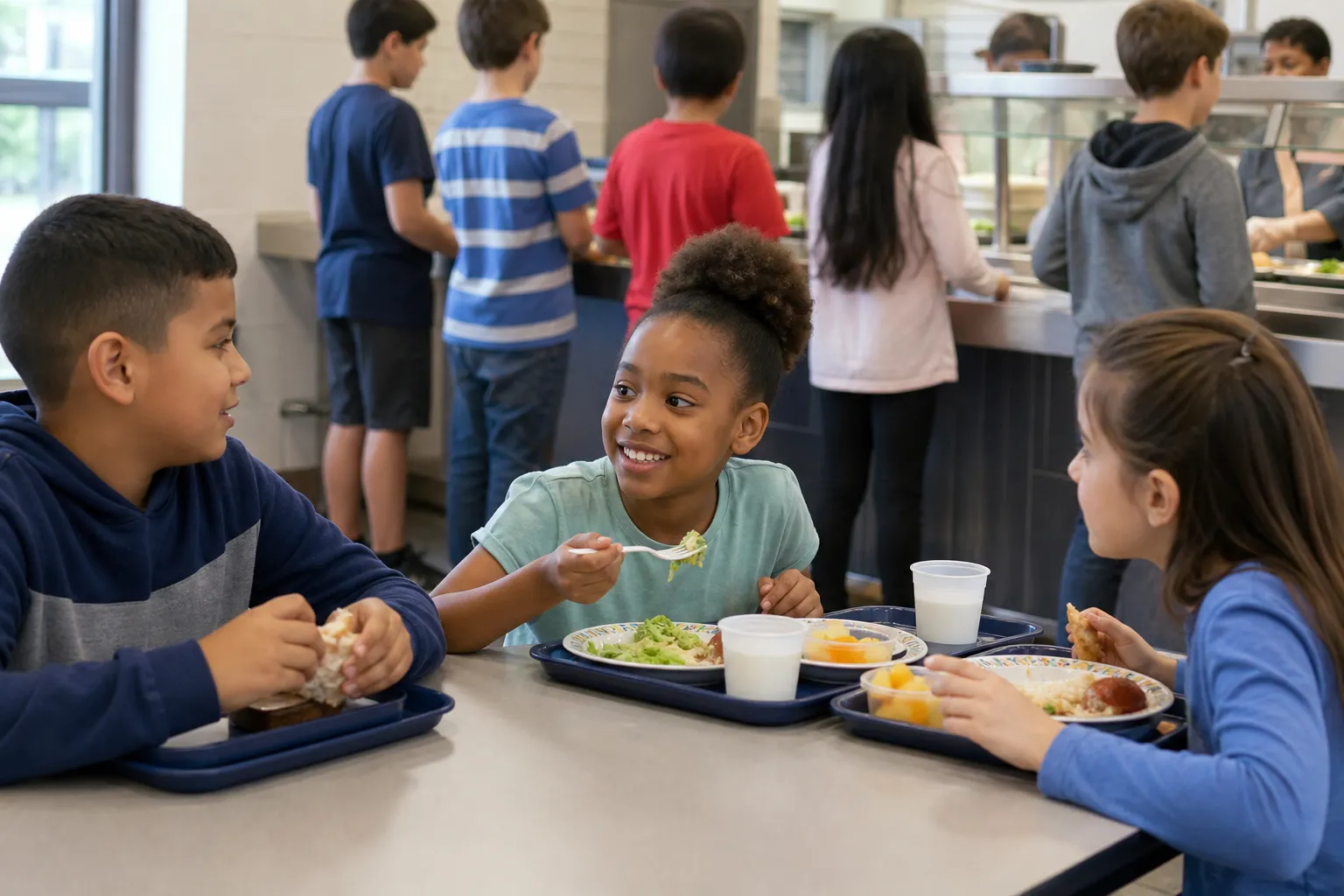
The lunch bell can change the rules of the school day in a few seconds. A child may move from a familiar classroom rhythm into a busy room with lines, food smells, conversation, tables, and several decisions to make at once. A personalized cafeteria social story can give a family a calm way to talk through those possible moments before they happen. Rather than promising that lunch will feel easy, it can describe what is likely, name choices that may be available, and make room for a child’s own preferences and experiences.
Why school lunch can need its own preparation
School lunch is more than eating. Depending on the school, it may involve ending a class activity, walking through hallways, finding or carrying a lunch, waiting in a cafeteria line, choosing a seat, opening food, managing waste, and returning to class or recess. The order can vary by day, grade, or school event. For some children, that amount of change and uncertainty is more noticeable at lunch than during a structured lesson.
A cafeteria social story is a short, individualized explanation of a specific situation. It can help a child and trusted adult explore the usual lunch routine in plain, respectful language. The goal is not to make a child act like other students or to require a particular social response. It is to reduce avoidable surprises by sharing information and discussing what the child may notice, do, communicate, or choose.
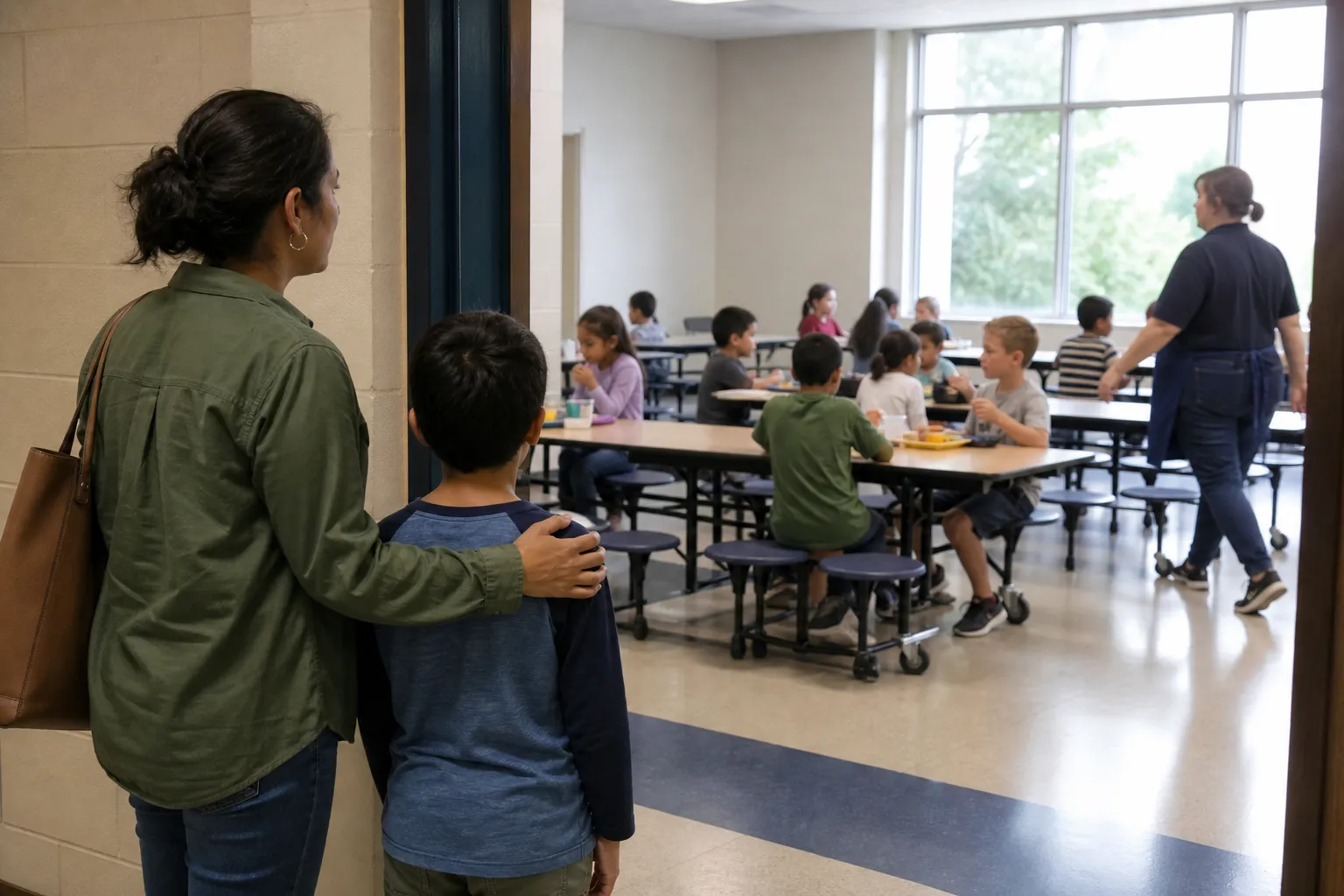
A useful school lunch social story stays truthful. If seating is sometimes assigned and sometimes open, it can say that. If a child may need to ask an adult before leaving the table, it can explain that as a school expectation without suggesting that every adult or every day will respond the same way. Honest wording supports trust, especially when routines change unexpectedly.
Autism and the many moving parts of lunch
Children with autism spectrum disorder have varied ways of experiencing social communication, routines, interests, and sensory input. Autism does not determine whether a child likes the cafeteria, wants company, eats a limited or broad range of foods, or needs help at lunch. Still, a lunch period may contain several changes at once, and some autistic children may find that combination tiring, confusing, or demanding.
For one child, the hardest point may be leaving a preferred classroom activity. Another may be unsure what happens after finishing food, whether it is acceptable to sit quietly, or how to join a table conversation. A child may prefer predictability around food, seating, timing, or who is nearby. These are possible experiences, not deficits to correct or assumptions to make about any autistic student.
An autism school lunch social story can focus on the child’s actual routine rather than a generic picture of cafeteria behavior. Families might include the route from the classroom, what the lunch line is like on most days, where the child usually sits, and what can happen when a familiar part of the routine is unavailable. They may also include a few real choices, such as bringing lunch from home when that is an established family option, selecting from available school items, sitting with an agreed group when seating is flexible, or telling a known adult that something is different. Those choices should reflect what the school and family genuinely allow.
Sensory experiences can change from day to day
A cafeteria can have overlapping sounds: chairs scraping, trays touching tables, many voices, announcements, doors, and cleanup activity. It can also have bright lighting, crowded movement, food odors, steam, textures, and temperatures. A child’s sensory experiences may make some of these inputs feel neutral, interesting, unpleasant, intense, or difficult to filter. The same space can feel different when it is fuller, louder, warmer, or less predictable than usual.
Food itself can be part of the experience. A child may have strong preferences about smell, texture, food items touching, packaging, temperature, or the time available to eat. These preferences are individual. A social story should not frame them as misbehavior, pickiness, or something the child must overcome. It can simply acknowledge that lunch includes sensations and that the child can communicate how the space and food are feeling.
When preparing a cafeteria social story, an adult can ask concrete, open questions: Which sounds do you notice first? Is the line, the table, or the room itself the busiest part? What is different on pizza day, assembly day, or a rainy-day indoor recess? The child might prefer to answer with words, gestures, drawings made during conversation, or by showing an adult around the relevant area. The adult can then use only the information that is meaningful to that child, while avoiding promises that the cafeteria will always be quiet or comfortable.
Communication differences and lunch-time expectations
Lunch often relies on fast, unspoken communication. Students may need to understand a staff direction from across the room, decide whether to join a conversation, recognize when a table is full, ask for help opening an item, or let someone know they are finished. Children with communication disorders may communicate, understand language, use speech, or participate in conversation in different ways. Communication differences are not a measure of intelligence, interest, politeness, or desire for connection.
A child may need extra time to process a question amid cafeteria noise, may use few spoken words in that setting, or may communicate more clearly with familiar people than with staff they do not know well. Another child may enjoy talking about a favorite topic but find rapid turn-taking difficult. Some children prefer quiet companionship over conversation. A school lunch social story can make these possibilities visible without treating them as social failures.
The story can identify people the child may encounter and the kinds of information they may need to share: a name, a food choice, a request for help, a question about where to sit, or a message that something has changed. It can also describe that classmates may be talking, eating, or doing both, and that there are different acceptable ways to participate when school expectations permit. Example sentence: “I can sit quietly while I eat.” Example sentence: “I can tell an adult when I need help.” These are examples of brief, child-centered wording, not a complete social story or a script every child should use.
What makes a personalized cafeteria social story useful
Personalization begins with observation and conversation, not with a standard template. A parent, carer, educator, and child can compare what each person believes happens at lunch with what actually happens in that school. It may help to clarify the sequence from the end-of-class signal through the next transition, including whether children wash hands, collect lunch, use a student number, wait in line, eat outdoors on some days, clean up, or go to recess. Only include details that are current and likely to be useful.
Use direct language that describes rather than judges. Statements such as “The cafeteria can be busy” or “Some days the menu is different” leave room for the child’s experience. Avoid language that labels a child as rude, difficult, overly sensitive, or unsuccessful for needing more information. Also avoid absolute claims such as “Everyone will be friendly,” “I will always get the same seat,” or “Lunch will be quiet.” A story is more credible when it recognizes variation and includes what the child can expect to do if a routine changes.
Choices can be presented as possibilities, not requirements. For example, if it is genuinely available, the story might note that the child can ask a designated adult a question, wait with their class, choose among offered meal items, bring a home lunch under school policy, or sit in a permitted location. It should not invent access to a quieter area, alternate lunch time, preferred seating, or adult assistance unless these have been discussed and are actually possible. A story is not a substitute for school communication about policies or individualized supports; it can help a family prepare for the arrangement that exists now.
Preparing together and keeping the story current
A collaborative process can be as valuable as the finished social story. A child may want to visit the cafeteria when it is empty, briefly observe it during a typical lunch period, talk with a familiar staff member, or simply discuss lunch at home. These are possibilities, not necessary steps. The child’s response can guide how much detail is useful. Some children want a clear sequence; others may only want to know about one concern, such as the lunch line or finding a seat.
Keep the focus narrow enough to be usable. A cafeteria social story may address a first day using the lunchroom, a new school menu system, a change in where a class eats, or a specific part of the period that has been difficult to predict. It does not need to explain every possible cafeteria event. Including too many unlikely contingencies can add information without increasing clarity.
Review the story after the child has experienced lunch, using curiosity rather than a pass-or-fail judgment. An adult might ask what matched the description, what was different, and what detail would be helpful next time. Lunch routines can shift because of schedules, weather, staffing, celebrations, or school events, so updates matter. The American Academy of Pediatrics’ discussion of temperament also reinforces a broader point: children differ in how they approach new situations. A personalized approach respects that variation rather than expecting one cafeteria experience to fit everyone.
Frequently asked questions
What should a cafeteria social story include?
Include the parts of lunch that are most relevant to the individual child: where lunch begins, the usual sequence, people they may see, sensory features they may notice, school expectations that are known, and real choices that may be available. Use current, concrete details and acknowledge when routines sometimes change. A story does not need to cover every possible event.
Is a school lunch social story only for autistic children?
No. A school lunch social story can be useful for any child who benefits from clearer information about an unfamiliar or changing routine. It may be especially relevant when an autistic child has identified concerns about transitions, predictability, sensory experiences, or communication at lunch. Its content should be based on the child, not on a label.
Can a social story make cafeteria noise or communication demands go away?
No. A personalized social story does not change the cafeteria environment, diagnose a need, or guarantee a particular outcome. It can support preparation by describing likely experiences and helping adults and children talk about what is true for that child. If a family is considering changes to routines or school arrangements, those conversations belong with the appropriate school staff.
Keep exploring
Related social stories
These guides cover situations with similar routines, sensory details or preparation needs.
Learn more about writing a social story
Read what a social story is, follow the step-by-step writing guide, or browse more social story examples.
Sources
- Autism spectrum disorder — Centers for Disease Control and Prevention
- Communication disorders — American Speech-Language-Hearing Association
- Understanding your child's temperament — American Academy of Pediatrics
