Preparing for flying starts with the whole route
For a child, flying is rarely only about sitting on an airplane. The day may include leaving home at a different time, carrying a bag, arriving at a large building, finding a desk, going through security, waiting at a gate and then stepping into a new, smaller space. An airport and airplane guide is most useful when it turns that long chain into a route the child can return to.
The exact order matters more than a generic explanation of air travel. A personalised narrative can include the airport, airline, likely departure time, people travelling together and what happens after landing. It does not need to cover every possible rule; it needs to make the child’s own journey easier to recognise.
Security, waiting and announcements can be explained plainly
Airport security may involve queues, trays, signs, a different kind of doorway or instructions from adults the child does not know. At the gate there may be waiting, changing information on screens and announcements over speakers. These parts can be described in calm, factual language, including what adults may do and where the child can stand or sit.
Noise, crowds, bright displays and changes of pace can make the airport demanding for children with sensory differences or anxiety. A story can name the support that is genuinely available: headphones, a familiar activity while waiting, a quieter place if the airport provides one, a chosen seat near a trusted adult or time to look at the next step again.
The plane has its own sounds and sensations
Boarding can mean another queue, a narrow walkway, a seat number and people putting bags away. Once seated, a child may notice announcements, the safety demonstration, engine noise, movement, changes in pressure or the feeling of takeoff. Some children want these details named ahead of time; others prefer a shorter explanation focused on the next stage.
The story can make room for either preference. It can say that the airplane may feel noisy or move, that the child can ask a trusted adult what is happening, and that there will be a landing and a next place to go. It should not promise a silent flight or a fixed timing when delays are possible.
A journey can still allow for choice and communication
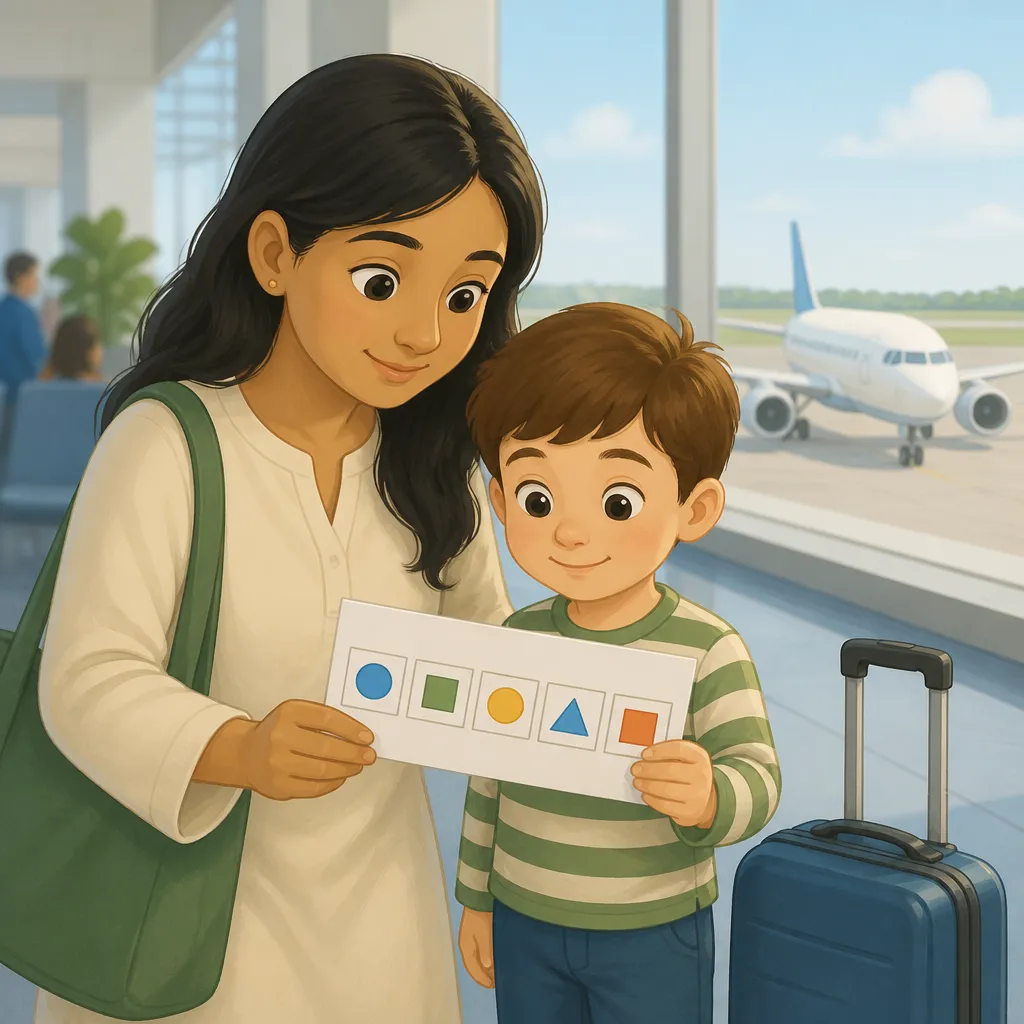
Children who communicate differently may want a simple way to ask for the toilet, a drink, a break from conversation or information about the next stage. A familiar card, device, gesture or adult can be included as part of the plan, rather than treated as an afterthought in a busy public setting.
After the journey, the child may remember one detail that mattered far more than anyone expected. Adding that observation to the next story can make a future flight, airport visit or other unfamiliar journey more accurately shaped around the child’s experience.
How it can help
Related support topics
Some families start from the situation; others start from the wider support need. These pages explore the same idea from that angle.
Turn this guide into a story
Create a story your child can recognise.
Bring the details that matter together in one personalised story: where your child is going, who may be there, what may happen, and which choices or support are genuinely available.
Join the waiting list