
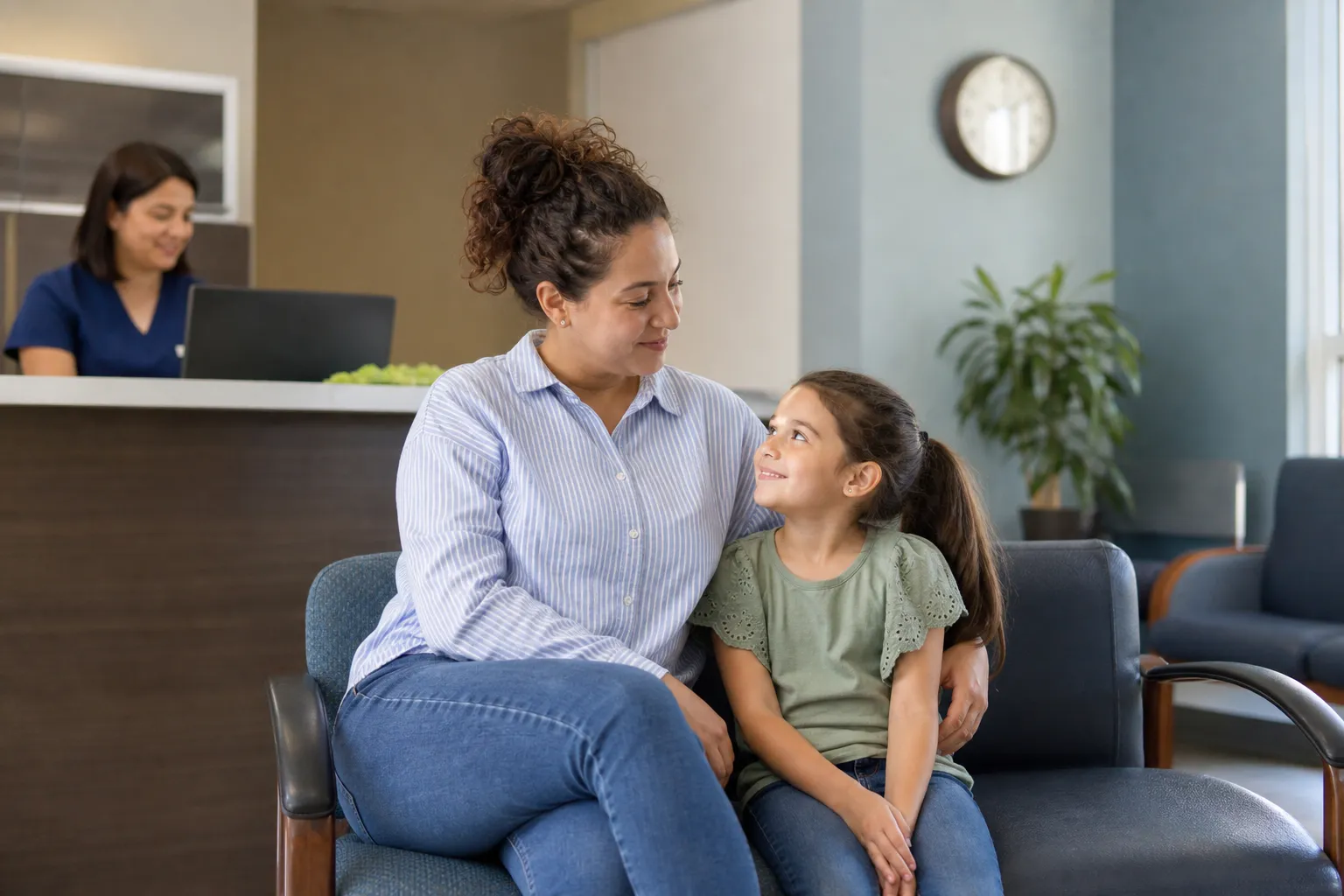
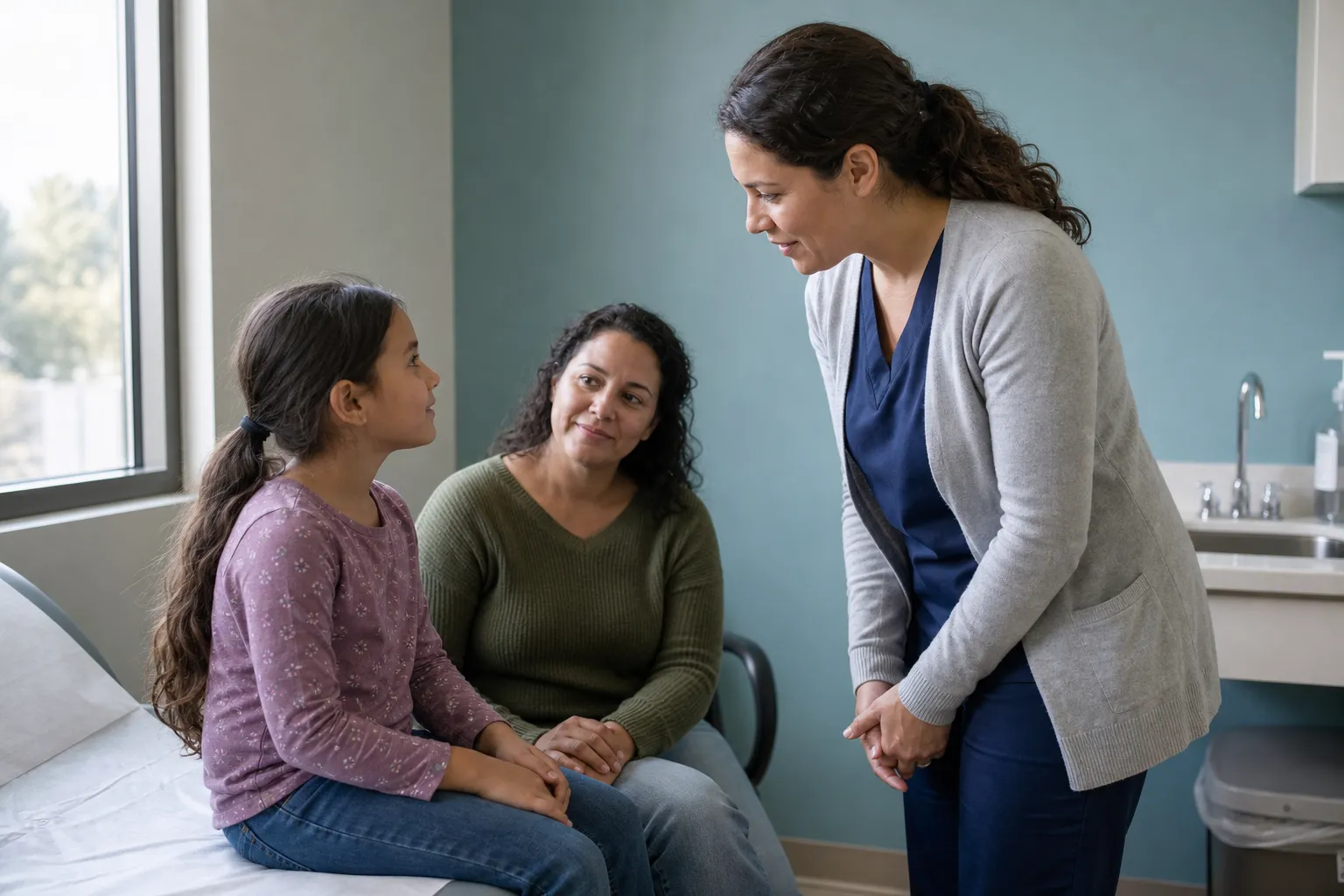
An eye appointment can involve an unusual kind of uncertainty: a child may be asked to look closely without touching, answer when something is blurry, sit still while someone comes near their face, and tolerate changes in light. None of those moments automatically mean a child is unwilling or unable to attend. They can simply be unfamiliar, hard to predict, or uncomfortable in a particular body on a particular day. An eye doctor social story can give a family a calm way to map out the likely visit, name what may happen, and leave room for honest choices and changing needs. This guide is for parents, carers, and educators who want to prepare together without promising that every appointment will look the same.
Start with the real appointment, not a generic script
The most useful eye doctor social story is usually built around one child’s likely appointment rather than around an idealized version of a clinic visit. Eye care offices vary. A child might see an optometrist for an eye examination, vision testing, glasses, or contact-lens-related care; some appointments involve an ophthalmologist, a medical eye doctor. The waiting room may be busy or quiet. The clinician may use different equipment, and the order of tests can change if a child needs a break, if results need checking again, or if the appointment runs late.
A personalised story can begin with dependable facts: where the office is, who may come along, whether there may be a reception desk, and what the family expects to happen first. It can also say plainly what is not known yet. For example, a parent might include that the clinician may ask questions, may check each eye separately, and may decide which tests are needed that day. This is more trustworthy than saying every test will happen or that everything will feel easy.
Keep the purpose practical rather than persuasive. The story is not a test of compliance, a promise of calm, or a way to make a child ignore discomfort. It is a shared preview. It can help a child identify questions, preferences, worries, and limits before arriving. A family can revise it after the appointment if the office, staff, or sequence turns out to be different next time.
What an eye appointment may include
A visit often starts with check-in and waiting, followed by questions about seeing, eye comfort, headaches, glasses, health history, or changes the family has noticed. Depending on the appointment and the child’s communication style, a parent or carer may share information while the child answers some questions, answers in another way, or prefers not to answer certain questions. Staff may measure height or use machines before the eye examination, though this is not part of every eye visit.
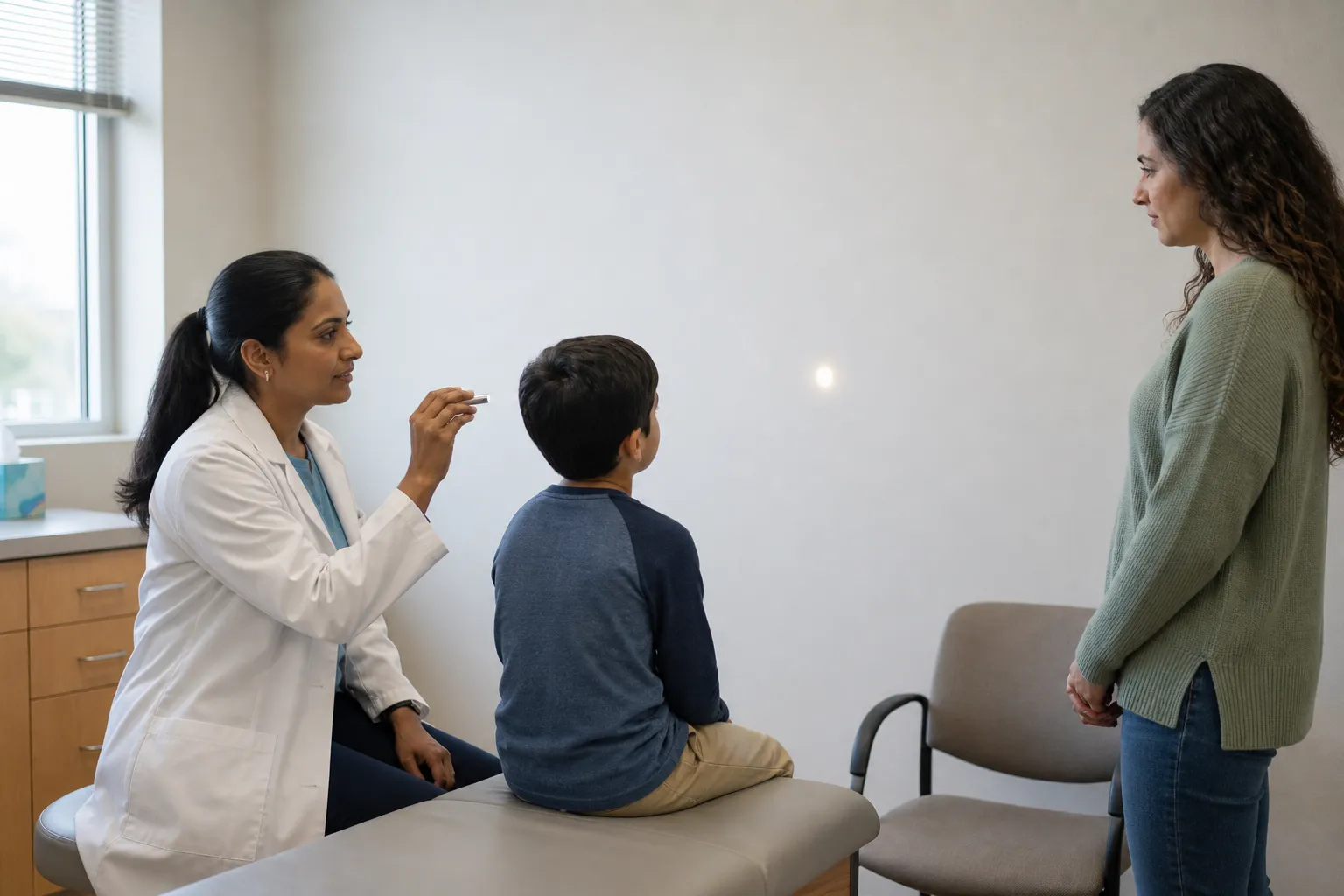
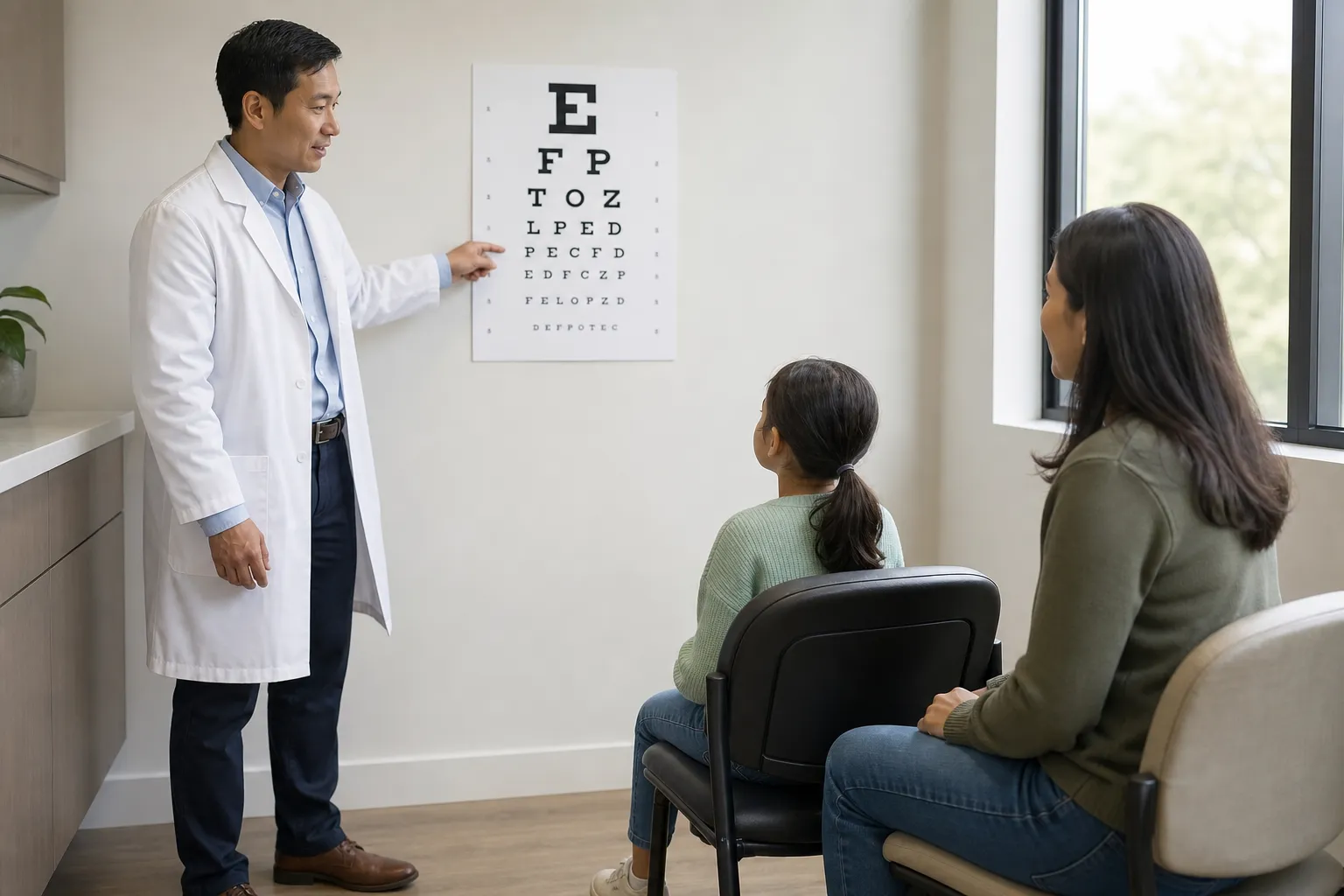
Vision testing may involve looking at letters, symbols, pictures, or shapes from a distance or up close. The child may be asked which image looks clearer through different lenses. A clinician may cover one eye at a time, ask the child to follow a moving target, shine a light toward the eyes, or look at the outside of the eyes from nearby. Some equipment is close to the face without touching it; other parts of an exam can involve brief contact around the eyelids or eyes, depending on clinical need and consent processes.
Some visits include eye drops that enlarge the pupils. Drops can sting briefly, affect near vision, and make light feel brighter for a while; whether they are used and what happens afterward are questions a family can ask the clinic in advance. Not every child needs drops at every visit. A clear story avoids presenting these possibilities as surprises while also avoiding certainty about procedures the clinician has not planned. One short example sentence might be: “The doctor may use a small light to look at my eyes, and I can tell an adult if I need a pause.”
Autism, predictability, and communication differences
Autism is a neurodevelopmental difference with wide variation in communication, interaction, interests, movement, routines, and sensory experiences. An autistic child may find an eye appointment straightforward, may find only particular moments difficult, or may have a different experience from another autistic child. It is important not to assume that autism explains every response or that a child’s needs are fixed from one visit to the next.
For some autistic children, uncertainty about what comes next can take more energy than the examination itself. A change in waiting time, a new clinician, unfamiliar wording, or an unexpected piece of equipment may matter. Others may want precise information about how a machine works, what it does, or how long a step may last. A personalised social story can make space for this by describing the sequence in ordinary, concrete language and by separating likely events from optional or unknown ones.
Communication during vision testing deserves particular care. A child may use speech, gestures, pointing, eye gaze, typing, an AAC system, or a trusted adult’s observations. A child might need extra processing time before choosing between lenses, or might not have words for the difference between ‘blurry,’ ‘bright,’ and ‘uncomfortable.’ Rather than framing this as failure, the story can normalize that the family and clinician are gathering information together. It can include the child’s own ways of saying ‘again,’ ‘I do not know,’ ‘too close,’ or ‘break,’ if those are meaningful for them.
Anxiety and the pressure to get it right
Anxiety can show up in many ways, including worry before an appointment, repeated questions, irritability, silence, physical tension, stomach discomfort, avoidance, or a strong need to leave. These experiences can also occur for reasons other than anxiety, so families do not need to label a child’s response in order to respond with curiosity and care. A child can be interested in the visit and anxious about it at the same time.
Eye examinations can create a particular kind of performance pressure. A child may worry about giving a ‘wrong’ answer when two lenses look similar, not recognizing a symbol, or disappointing an adult if they cannot finish a task. A helpful social story can clarify that the clinician is looking for information, not grades or perfect behavior. It can say that uncertain answers are still information and that it is acceptable to say when two choices look the same or when the child cannot tell.
The story can also distinguish what the child may have some choice about from what the clinic decides for safety or clinical reasons. Possible choices might include bringing a familiar person, asking a question at check-in, taking a moment between tests if the appointment allows, or telling staff about a concern. These are possibilities, not guarantees. Honest language protects trust: waiting may be longer than expected, a clinician may need to repeat a test, and a family may need to discuss options with the office rather than assume a particular arrangement will be available.
Sensory experiences can change the whole visit
Sensory experiences are individual, variable, and meaningful. At an optometrist appointment, possible sensory demands include bright lights, a darkened examination room, reflections in mirrors or lenses, air movement, close visual attention, unfamiliar smells, voices in a waiting area, chair textures, or the feeling of someone working near the face. A child may notice one of these strongly and barely register another. What felt manageable at a previous appointment may feel different when the child is tired, unwell, hungry, rushed, or already overloaded.
A personalised social story can name sensory features without making them sound dangerous or trivial. It may note that lights can be bright, a room may become dim, and some machines make sounds or sit close to the face. It can avoid assurances such as ‘it will not hurt’ when the family cannot know exactly how a sensation will feel to the child. Instead, it can describe observable details and invite the child to share what they expect might be hard, neutral, interesting, or okay.
Families may choose to contact the office before the visit to ask about the environment, the expected length, whether there is a quieter time of day, or which tests are likely. They may also choose to share relevant sensory information with staff on arrival. These options are not requirements, and a clinic may have limits on timing, space, or examination procedures. The goal is not to remove every sensation; it is to reduce avoidable surprises and help adults understand the child’s experience.
Build, use, and review a personalised social story together
Gather details from the clinic when possible, then write in language the child recognizes. Use the child’s name or first-person wording only if that feels right to them. Keep each idea specific: the place, the people, the likely steps, the uncertain parts, and the child’s communication options. Avoid language that demands a particular feeling, such as ‘I will be brave’ or ‘I will stay calm.’ A child’s temperament, including how they tend to react to novelty, intensity, and change, is individual rather than a behavior problem; the American Academy of Pediatrics explains temperament as a pattern of behavioral and emotional responses, not a diagnosis.
Read or discuss the story at a low-pressure time, rather than only in the car on the way to the office. Some children may want to revisit it often, edit the wording, ask highly detailed questions, or skip it entirely after one review. A parent, carer, or educator can notice what information seems useful and what creates more worry. If an upcoming visit has a known purpose, such as choosing glasses or checking a change in vision, include that purpose simply without predicting the result.
Afterward, review the visit as information for next time. Which part was different from the story? What helped the child communicate? Were there lights, words, or procedures worth explaining more clearly? Did the child like learning about equipment or prefer fewer details? A second short example sentence could be: “At my next visit, I may see some of the same things and some different things.” This review keeps the social story responsive to the child instead of treating it as a one-time solution. It also supports respectful collaboration among family, school, and eye-care staff while leaving clinical decisions to qualified professionals.
Frequently asked questions
What should an eye doctor social story say about eye drops?
Say only what is relevant and reasonably likely. It can explain that some eye appointments may include drops, that a clinician decides whether they are needed, and that the family can ask what to expect. Avoid promising that drops will not be used, will not sting, or will feel the same for every child. If drops are planned, the clinic can provide the most accurate guidance about the examination and after-effects.
Can an optometrist social story help if a child does not use spoken language?
Yes. A personalised social story can reflect the child’s own communication methods and the observations of people who know them well. It may identify how the child indicates uncertainty, discomfort, a need for more time, or a desire to stop. Vision testing may still require adaptation by the clinic, so it is useful to share communication information with the office rather than assuming one testing format will fit every child.
Should an educator send the social story to the eye doctor?
That depends on the family’s preferences and the child’s privacy. An educator may help a child review general appointment vocabulary or discuss anticipated routines with permission. A parent or carer can decide whether to share selected information with the clinic. The most useful details are usually concrete: communication preferences, sensory considerations, and what helps adults understand the child, rather than broad assumptions based on a diagnosis.
Keep exploring
Related social stories
These guides cover situations with similar routines, sensory details or preparation needs.

Learn more about writing a social story
Read what a social story is, follow the step-by-step writing guide, or browse more social story examples.
Sources
- Autism spectrum disorder — Centers for Disease Control and Prevention
- Anxiety and depression in children — Centers for Disease Control and Prevention
- Understanding your child's temperament — American Academy of Pediatrics
