
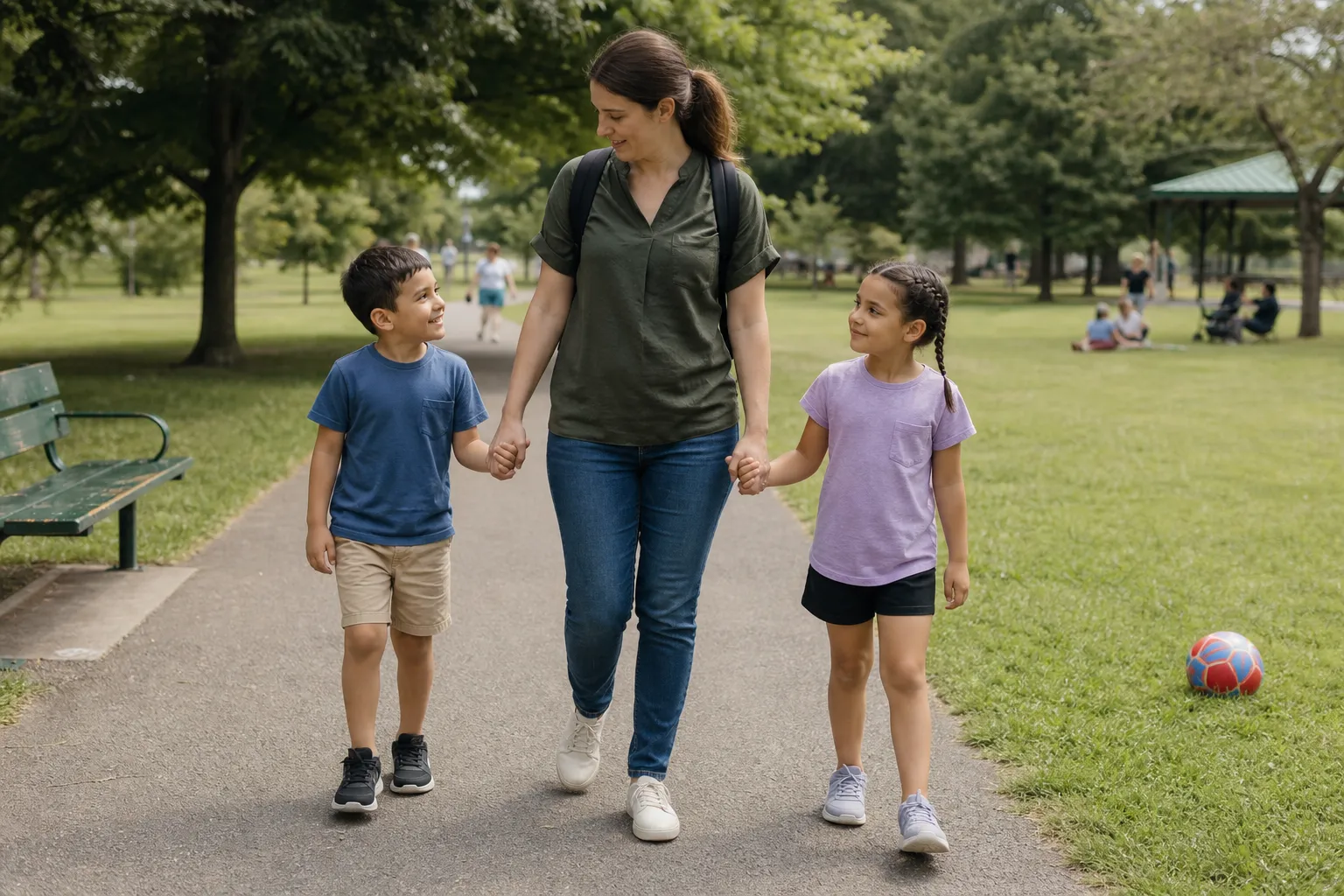
A park outing can look simple from the outside: arrive, play, and go home. In practice, it is a chain of small, changing moments. The gate may be busy, the swings may be occupied, a sibling may want something different, the weather may shift, or it may be time to leave just as play feels most engaging. A personalised going to the park social story can give a child and the adults around them a shared, respectful way to talk through those possibilities before the outing. It is not a promise that the visit will unfold in one exact way, and it is not meant to make a child behave in a particular manner. Instead, it can describe what may happen, name choices that may be available, and make room for the child’s own preferences and communication. This guide is for parents, carers, and educators creating a park social story for everyday life, including when autism, ADHD, or communication differences may shape a person’s experience.
Why a park can involve more than “just playing”
For many children, parks offer movement, outdoor space, interesting objects, chances to observe others, and opportunities to play in ways that feel enjoyable. A child may love climbing, collecting leaves, watching dogs pass, running on an open path, or returning to one familiar piece of equipment. Other children may prefer to sit nearby, move slowly around the edge of the space, or visit for only a short time. All of these can be valid ways to be at a park.
At the same time, a park is often an unpredictable public environment. It may have loud voices, sudden squeaks from swings, barking dogs, traffic sounds, bright sun, wet grass, crowded play equipment, unfamiliar children, or adults giving directions. The layout can be open, which can make boundaries less obvious than they are indoors. Equipment can be temporarily unavailable, another family may be using a preferred area, and a planned visit may change because of rain, heat, hunger, toileting needs, or an adult’s schedule.
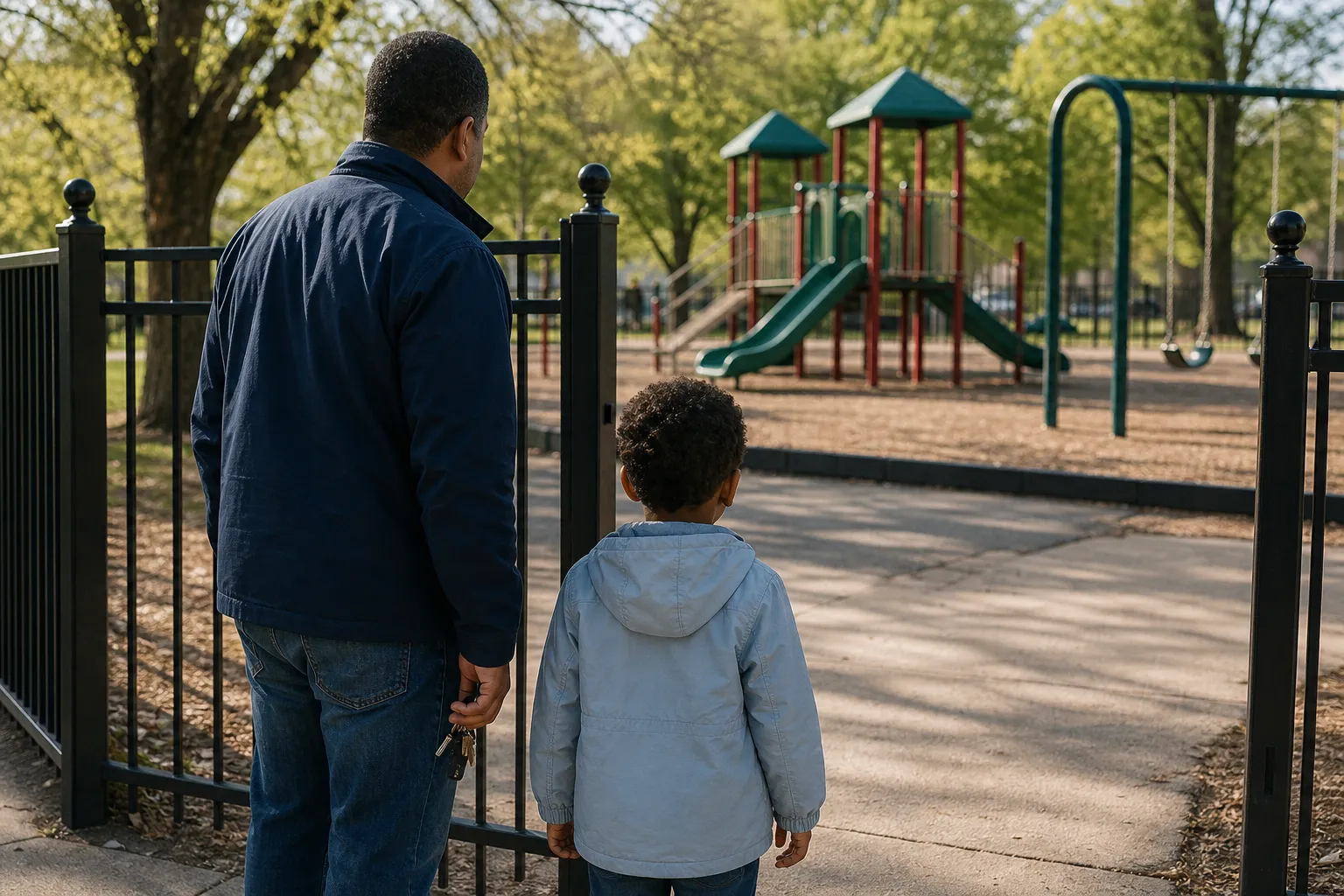
A going to the park social story can focus on this real-life uncertainty without presenting it as a problem to fix. It can explain that parks can be different on different days and that a child may have options when something does not match what they expected. For example, it might mention that some days there are many people and some days there are fewer people. It can also name what tends to stay the same, such as arriving with a trusted adult, remaining within an agreed area, or having a way to let someone know when the child wants help, a pause, or a change in plans.
What a personalised park social story can do
A social story is most useful when it is tailored to one person, one park or type of park, and one family, classroom, or care context. Generic wording may offer ideas, but it cannot know whether a child enjoys the slide, avoids sand, communicates without speech, needs time to shift activities, or is happiest watching from a bench before joining in. Personalisation allows the story to be accurate rather than overly cheerful or demanding.
The purpose is preparation together. It can introduce the sequence of a possible outing: getting ready, travelling, arriving, choosing what to do, responding to changes, taking a break if wanted, and leaving. It can also make adult roles clear. A child may benefit from knowing who will be with them, who may carry belongings, who can answer a question, and how an adult may communicate that it is time to move to another part of the visit. If siblings, classmates, or a group are involved, the story can acknowledge that people may want different things.
Good park stories use calm, concrete language and separate likely facts from possibilities. They do not say that the child will enjoy every activity, make friends, share immediately, or remain calm. They do not frame a child’s sensory response, movement, silence, excitement, or need for distance as wrong. A more honest approach is to state that feelings and needs can vary and that the adults are learning what helps. The child can contribute by choosing language, identifying places they like or avoid, and correcting details that do not sound right to them. This makes the story a collaborative resource rather than a set of rules imposed on them.
Possible experiences connected with autism, ADHD, and communication differences
Autism is a neurodevelopmental difference with wide variation between individuals. Some autistic children may find aspects of a park particularly intense or uncertain, while others may actively seek those same experiences. Possible considerations include sensitivity to sound, touch, light, smells, movement, or crowded spaces; a strong preference for a familiar route or activity; difficulty with an unexpected change; or a need for additional time to process language in a fast-moving setting. An autistic child may also be deeply focused on one activity, which can make a transition feel abrupt. None of these experiences applies to every autistic person, and a story should reflect the individual rather than autism as a stereotype.
Children with ADHD can have differences in attention, activity level, impulsivity, and self-management, although experiences vary greatly. At a park, a child may notice many interesting things at once, move rapidly between activities, find waiting difficult, or become absorbed in an exciting activity and not notice an adult’s first attempt to get their attention. A child may also enjoy the freedom and physical activity of the park. A personalised story can acknowledge the appealing parts of the outing while identifying practical moments that may need a shared plan, such as staying close in a car park, checking in before moving beyond an agreed area, or finding an adult when a need arises.
Communication differences may affect how a child understands, expresses, or responds to communication. A child may use speech, signs, gestures, writing, a communication system, facial expression, movement, or a combination of methods. In a noisy park, spoken language may be harder to hear or process. Some children may not answer a question quickly, may communicate distress indirectly, or may need adults to avoid assuming that silence means agreement. The story can use the child’s actual communication methods and can describe that they may communicate “help,” “more time,” “all done,” discomfort, or a preference in their own way. It is important to presume competence and give the child genuine opportunities to communicate, rather than treating communication as compliance.
Details worth deciding before you write
Start by defining the specific outing. Is this a nearby playground after school, a large public park on a weekend, a school trip, a visit with cousins, or a new park while travelling? The level of detail should fit the situation. A story for a familiar ten-minute visit may only need to cover arrival, play choices, and departure. A story for a large park may need to include parking, public toilets, paths, water features, food, queues, meeting points, and what happens if the group separates.
Use details you can honestly expect, and leave room for what cannot be guaranteed. You might include the usual route, who may come, the entrance that is often used, or the kind of equipment available. You can also say that the park may be busy, equipment may be wet, a favourite swing may be in use, or the visit may be shorter or longer than hoped. Avoid language that suggests adults can control other people, the weather, or a child’s emotions. A story is more trustworthy when it admits that plans sometimes change.
Consider what information helps this particular child feel oriented. This could include the names of adults, where toilets are usually located, whether there is a fence or an open boundary, where bags may be placed, whether food is planned, and how the group will decide it is time to leave. Only include information that is relevant and accurate. Too many details can become distracting, especially if the child is likely to focus on minor changes. Revising the story after a visit can be useful: an unexpected but manageable experience may reveal a detail that is worth adding, changing, or removing next time.
Including real choices, boundaries, and transitions
Choices work best when they are real, limited by the situation, and not presented as tests. Depending on the outing, a child may be able to choose between two areas of the park, decide whether to watch before joining an activity, ask to repeat a preferred activity, take a quieter route around a busy space, or tell an adult they would rather leave. At other times, an adult may need to make a decision because of safety, weather, time, or the needs of the group. A respectful social story can distinguish between those situations rather than implying that the child has control over everything.
Boundaries can be described plainly and without shame. A family may agree that a child stays where they can see or reach a trusted adult, waits with an adult near a road, or lets someone know before moving to a different area. The exact boundary should match the child, setting, and level of supervision; it is not a universal park rule. If a boundary has a safety purpose, it can be named as information rather than a threat. The story can also say what an adult will do, such as walking alongside the child, answering a question, or helping them find a place to pause.
Leaving is often the part of a park visit that needs the most thoughtful preparation. A child may be disappointed, tired, hungry, overstimulated, or still actively engaged when departure begins. The story can explain how the family or group usually signals that the visit is ending and what may happen next, such as walking to the car, travelling home, or moving on to another activity. It can also validate that a child may wish to stay longer while making clear that leaving can still be necessary. One short example sentence, not a complete social story, is: “I may feel disappointed when it is time to go, and I can let my adult know how I feel.”
Using, reviewing, and adapting the story over time
A park social story does not have to be read in one fixed way. Some children may want to discuss it well before an outing; others may prefer a brief review close to leaving; still others may engage more through conversation about a recent park visit. The child’s response matters. If they appear bored, correct the wording, focus on one part repeatedly, or do not want to revisit it, that information can guide how the story is changed or whether it is useful at that time.
After an outing, adults can reflect without turning the review into a performance assessment. Useful questions may include: Which part felt predictable? What was surprising? Was there a place the child liked? Did an adult miss or misunderstand a communication attempt? Did a transition take more time than expected? If the child communicates in a way that is not easily captured by questions, adults can also observe respectfully and invite input through the child’s preferred method. The goal is to understand the experience, not to judge whether the child “succeeded.”
Update the content as circumstances change. A new park, a new season, changing interests, altered mobility, different group arrangements, or a newly identified communication preference can all make earlier wording less relevant. Keep statements grounded in the child’s actual life. A second short example sentence, again only an example rather than a full story, is: “If the playground is crowded today, I might choose to watch, play in another area, or ask my adult about leaving.” By keeping the story flexible and truthful, families and educators can use it to support shared understanding before a familiar or unfamiliar park outing.
Frequently asked questions
What should a going to the park social story include?
Include the parts that are meaningful for the individual child: how they may get there, who may be present, what the park can be like, available activities, likely boundaries, communication options, possible changes, breaks, and leaving. Use only details that are accurate for the intended park or outing. It is often better to cover a few important moments clearly than to include every possible park activity.
Can an autism going to the park social story mention sensory discomfort?
Yes. A respectful story can acknowledge that a park may sometimes feel loud, bright, busy, windy, scratchy, or unpredictable for a particular autistic child. It can also acknowledge enjoyable sensory experiences, such as movement or outdoor sounds, if those are genuinely relevant. Describe the child’s individual experience without suggesting that all autistic people have the same sensory needs or reactions.
How can a park social story support a child with communication differences?
Use language that matches how the child understands and communicates. Name the people who can listen, allow for the child’s preferred ways of expressing a need or choice, and avoid assuming that quick spoken answers are the only communication. The story can also clarify that adults will pay attention when the child communicates that they need help, more time, space, food, a toilet, or a change in plan.
Keep exploring
Related social stories
These guides cover situations with similar routines, sensory details or preparation needs.

Learn more about writing a social story
Read what a social story is, follow the step-by-step writing guide, or browse more social story examples.
Sources
- Autism spectrum disorder — Centers for Disease Control and Prevention
- About ADHD — Centers for Disease Control and Prevention
- Communication disorders — American Speech-Language-Hearing Association
