
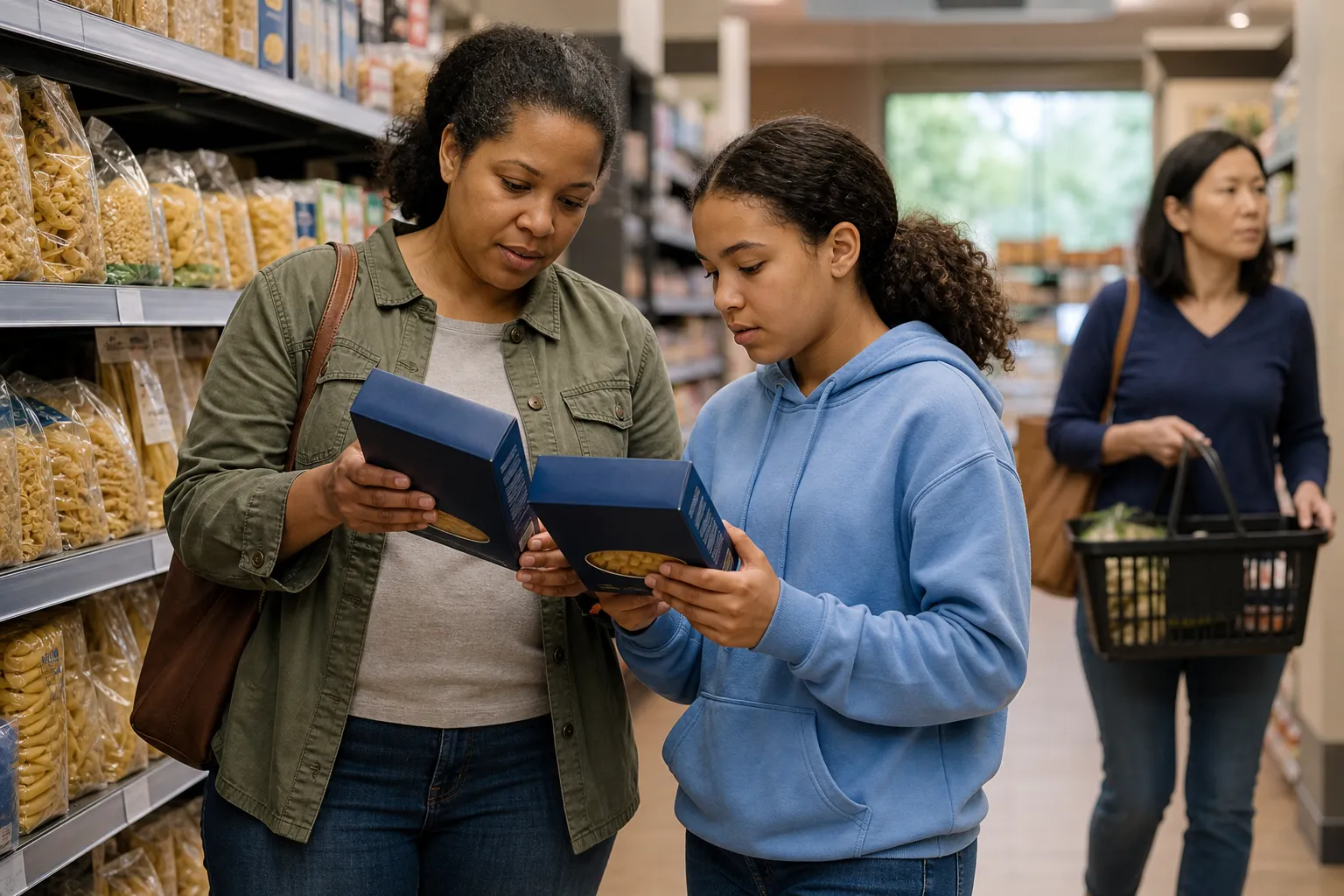
A grocery trip can look routine from the outside while asking for a great deal inside: moving through a busy shared space, handling changing plans, waiting, communicating needs, and noticing many sounds, smells, lights, and people at once. A personalized grocery store social story can turn that broad, uncertain experience into a family conversation about what may happen, what matters to the person, and what choices could be available. It is not meant to make someone enjoy supermarkets or behave in one particular way. It can help a child, teen, or adult anticipate a trip in language that is concrete, respectful, and specific to their own experience.
Why grocery stores can feel like a lot
Grocery stores combine many demands in a relatively small amount of time. There may be automatic doors, carts rolling over uneven flooring, checkout beeps, announcements, refrigerators humming, food smells, crowds, bright lights, and unfamiliar conversations. Stock may be moved, a favorite item may be unavailable, or a line may be longer than expected. Even a short trip can include several transitions: leaving home, entering the store, choosing items, waiting, paying, carrying bags, and returning home.
For some autistic people, the uncertainty and sensory intensity of a supermarket may take substantial energy. Autism is a developmental difference with wide variation among individuals; it does not mean every autistic person finds stores difficult or finds the same things difficult. One person may notice fluorescent lighting first, another may be concerned about an unexpected change in the route, and another may enjoy sorting products or helping locate ingredients. The CDC’s information on autism spectrum disorder describes the broad range of characteristics and support needs people can have.

People with ADHD may also experience a grocery trip differently depending on the day, setting, task, and supports around them. Attention may be pulled toward many competing sights and sounds, remembering a multi-step plan may be hard in the moment, or waiting in a line may feel especially long. ADHD is not a lack of effort, and these possibilities are not true for everyone with ADHD. The CDC’s overview of ADHD notes that patterns of inattention and/or hyperactivity-impulsivity can affect daily functioning in different ways for different people. A story can acknowledge these realities without framing the person as a problem to manage.
What a grocery store social story can do
A grocery store social story is a short, personalized explanation of a social situation, place, sequence, or expectation. It can describe what is likely to happen and leave room for what cannot be known in advance. Its value is often in reducing guesswork: the person can learn the names of parts of the trip, identify possible surprises, and talk through choices before they are already overloaded or rushed.
A useful story does not promise that the store will be quiet, that every item will be in stock, or that a trip will go exactly as planned. Honest wording makes it more trustworthy. It can say that the store may be busy, a checkout line may move slowly, or an adult may need to change the plan. It can also name what remains predictable, such as who will be going, the general purpose of the trip, or how the family usually knows it is time to leave.
The aim is understanding rather than compliance. A personalized story may help a family notice early signs that a trip is becoming too demanding, talk about communication preferences, and agree on realistic options. It can be read, discussed, changed, or set aside according to the person’s preference. Some people may find it helpful before every new store; others may only want to review a particular part, such as checkout. A story is one possible preparation method, not a test of readiness or a guarantee of a certain outcome.
Personalize the trip, rather than writing for an imaginary shopper
Begin with what the person already knows and experiences. Consider the specific store, the usual time of day, who typically goes, the purpose of the visit, and whether the trip is planned as a quick stop or a larger shop. The details that matter may be surprisingly individual. One person may want to know which entrance the family uses. Another may care most about whether they will choose fruit, push a cart, walk beside someone, or wait in the car with a trusted adult where that is safe and appropriate for the family.
It can be helpful to separate facts, possibilities, and choices. Facts are details that are usually stable: “We often enter through the front doors.” Possibilities are truthful uncertainties: “There may be people waiting near the checkout.” Choices should be concrete and real for that family, not rewards or disguised demands. Depending on the setting and the person, choices might include taking a shorter trip, shopping with one trusted person, choosing whether to help find an item, using words or another familiar way to communicate, taking a pause, or leaving some items for another day.
Temperament also matters. The American Academy of Pediatrics describes temperament as an individual’s characteristic style of responding to the world. A child who approaches new experiences cautiously may want more advance detail; a child who seeks activity may be interested in an active role; a child who becomes frustrated when plans change may value clear language about substitutions. These are possible patterns, not labels or fixed predictions. Avoid assuming that a diagnosis explains every response, or that siblings with the same diagnosis will need the same information.
Topics worth including in a supermarket social story
A focused supermarket social story often works best when it covers the parts of the trip that are most meaningful or uncertain to the individual. The opening can explain the purpose in plain language: buying food or household items. Then it can describe arrival, entering, moving around the aisles, selecting items, checkout, and leaving. Keep the sequence accurate for the family’s real routine. If the person will not use a cart, do not include one just because carts are common. If a caregiver sometimes makes an unplanned stop, say that this can happen rather than presenting a rigid route.
Sensory experiences deserve direct, neutral language. The story can mention that lights may be bright, the store may smell like food or cleaning products, and there may be music, beeping, talking, or carts making noise. It can name that these sensations can feel ordinary, unpleasant, distracting, interesting, or too intense, depending on the person and the day. This approach validates the experience without claiming that sensory differences belong only to autism or ADHD. Sensory experiences vary widely across people and contexts.
Include likely changes and a truthful response plan. An item may be sold out; a preferred checkout lane may be closed; another shopper may stand close by; or the adult may need to answer a question from a cashier. Rather than saying the person must cope calmly, describe what they may do and what the accompanying adult may do. For example: “If the line feels too long, I can tell Dad or show him my usual signal.” This is an example sentence, not a complete social story. It works only if that communication option is already familiar and genuinely available to the person.
Create it together and revise from real experience
Whenever possible, involve the person in deciding what the story says. Ask open, low-pressure questions such as what they want to know before going, which part feels easiest, which part takes the most energy, and what they would like an adult to understand. A person may answer with speech, writing, pointing, drawing, movement, or not want to answer at that time. Observations from past trips can also be useful, as long as they are treated as information rather than evidence of failure.
Use language that respects autonomy and avoids absolutes. “I might,” “sometimes,” “can,” and “may” leave room for changing capacity. Statements such as “I will not make noise” or “I have to stay happy” can be unrealistic and can make the story feel like a behavior contract. A more honest example is: “Sometimes we may leave before buying everything, and we can try again another time.” This is an example sentence, not a complete social story. The point is that leaving can be a practical adjustment, not a punishment.
After a trip, a brief review can keep the story accurate. The family might notice whether the store layout changed, whether a new part of the process was confusing, or whether an anticipated concern did not matter after all. Revise only when useful; constant correction can turn preparation into pressure. If grocery trips regularly create significant distress or are affecting daily life, families may choose to discuss their observations with a qualified professional who knows the person. This guide cannot identify a cause, diagnose autism or ADHD, or replace individualized advice.
Frequently asked questions
What should an autism grocery store social story include?
Include the details that are most relevant to the individual, not a generic list of autism traits. Many families cover the purpose of the trip, the usual sequence, sensory possibilities, expected changes, communication preferences, and realistic choices. A child may care about carts and checkout sounds, while another autistic child may mainly want to know who is going and when the trip will end.
Can a grocery store social story help someone with ADHD?
It may help by making a multi-step outing more concrete and by naming possible distractions, waiting, changes, or choices ahead of time. It is not an ADHD treatment and will not suit every person. A personalized approach can focus on the parts of a trip that the individual says are difficult, tiring, enjoyable, or easy to forget.
How long should a supermarket social story be?
There is no single right length. A short story about entering, choosing a few items, and checking out may be enough for one person. Another person may prefer more detail about a new store or an unfamiliar part of the trip. Include enough information to be useful, while avoiding unnecessary details that could make it harder to follow.
Keep exploring
Related social stories
These guides cover situations with similar routines, sensory details or preparation needs.
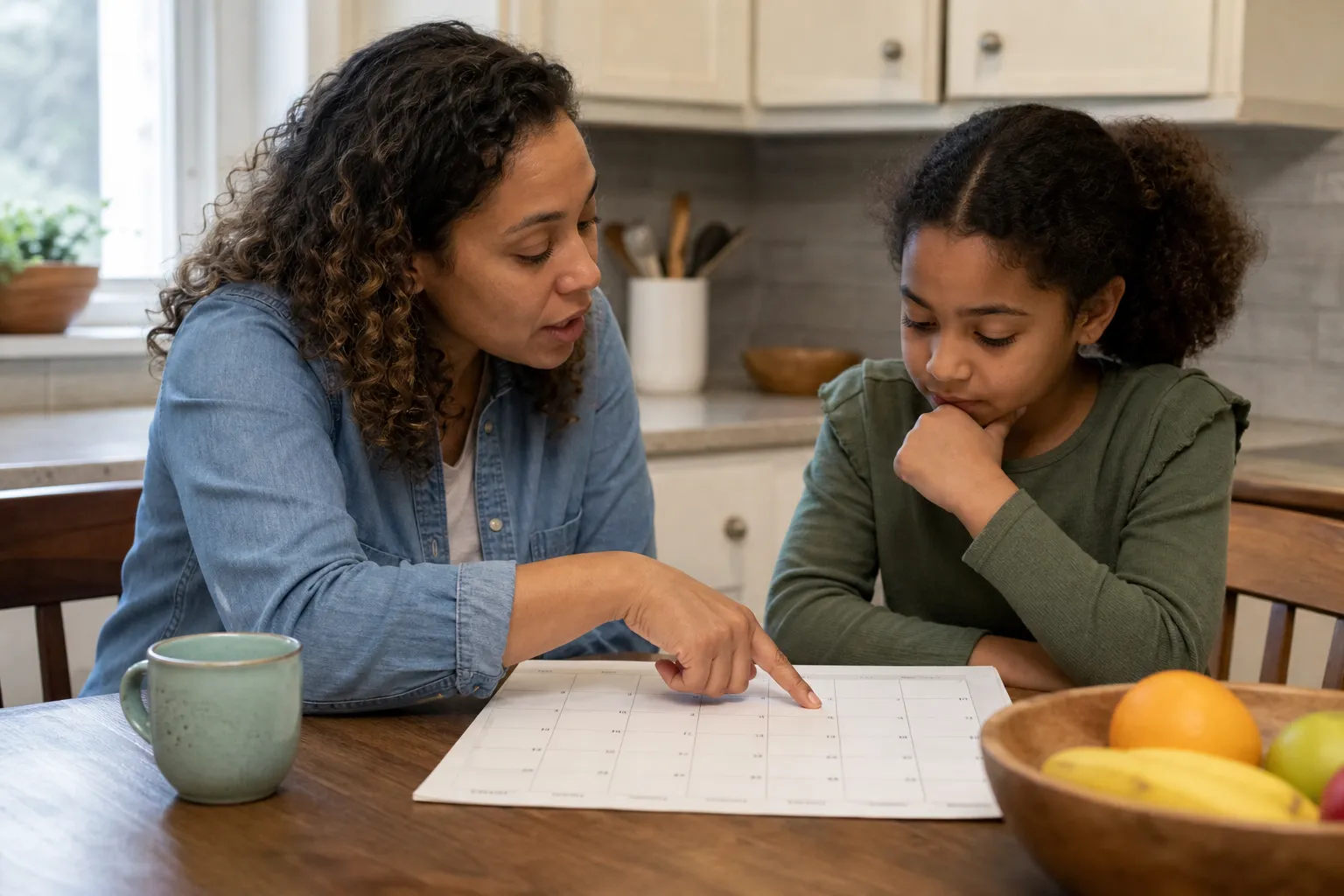



Learn more about writing a social story
Read what a social story is, follow the step-by-step writing guide, or browse more social story examples.
Sources
- Autism spectrum disorder — Centers for Disease Control and Prevention
- About ADHD — Centers for Disease Control and Prevention
- Understanding your child's temperament — American Academy of Pediatrics
