Preparing for a haircut at the salon
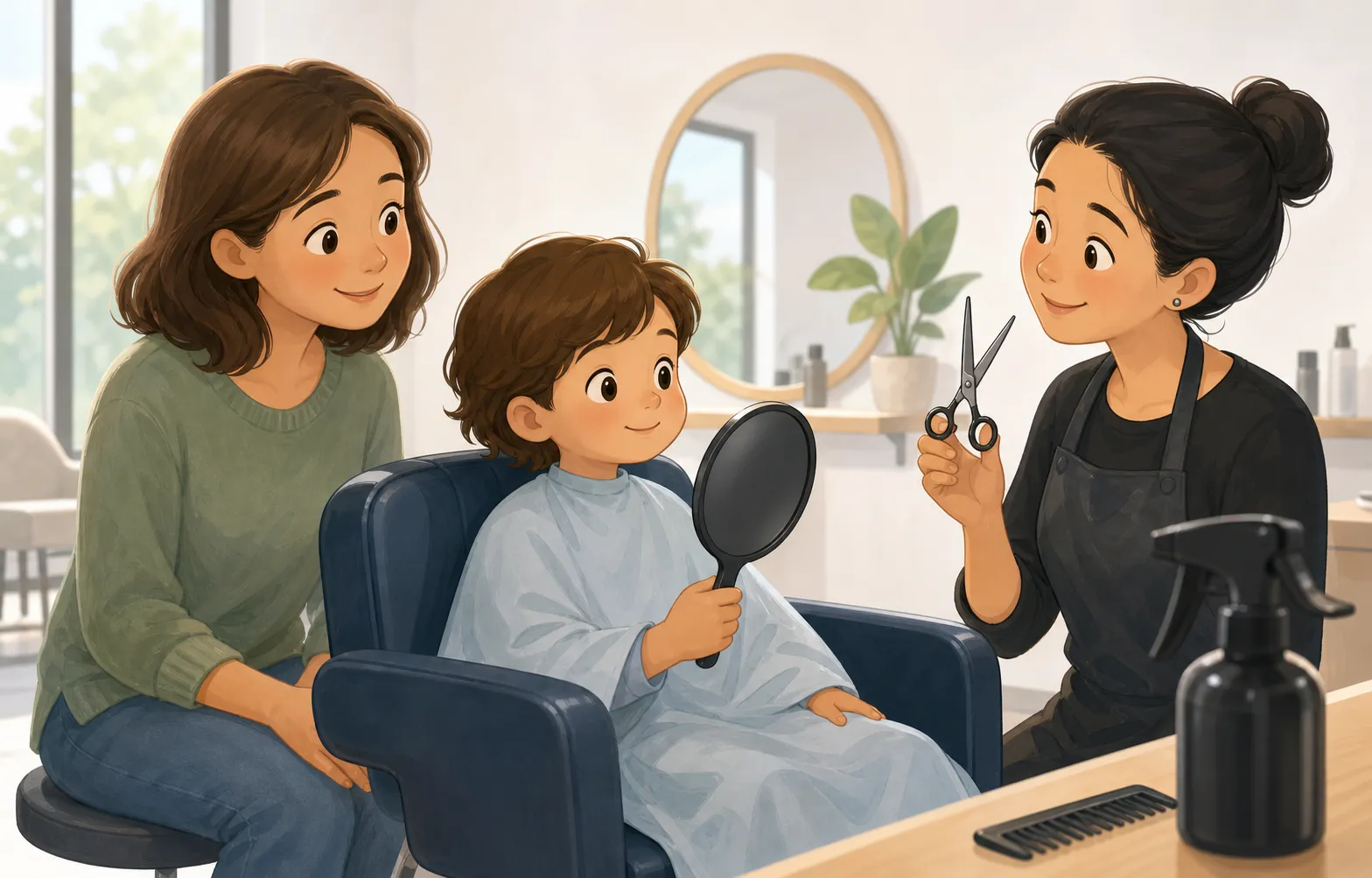
A haircut asks a child to sit in a different chair while someone they may not know works very close to their head and neck. There may be a mirror, a cape, new sounds and a feeling of not quite seeing what is happening behind them. Even a familiar salon can feel different from one visit to the next.
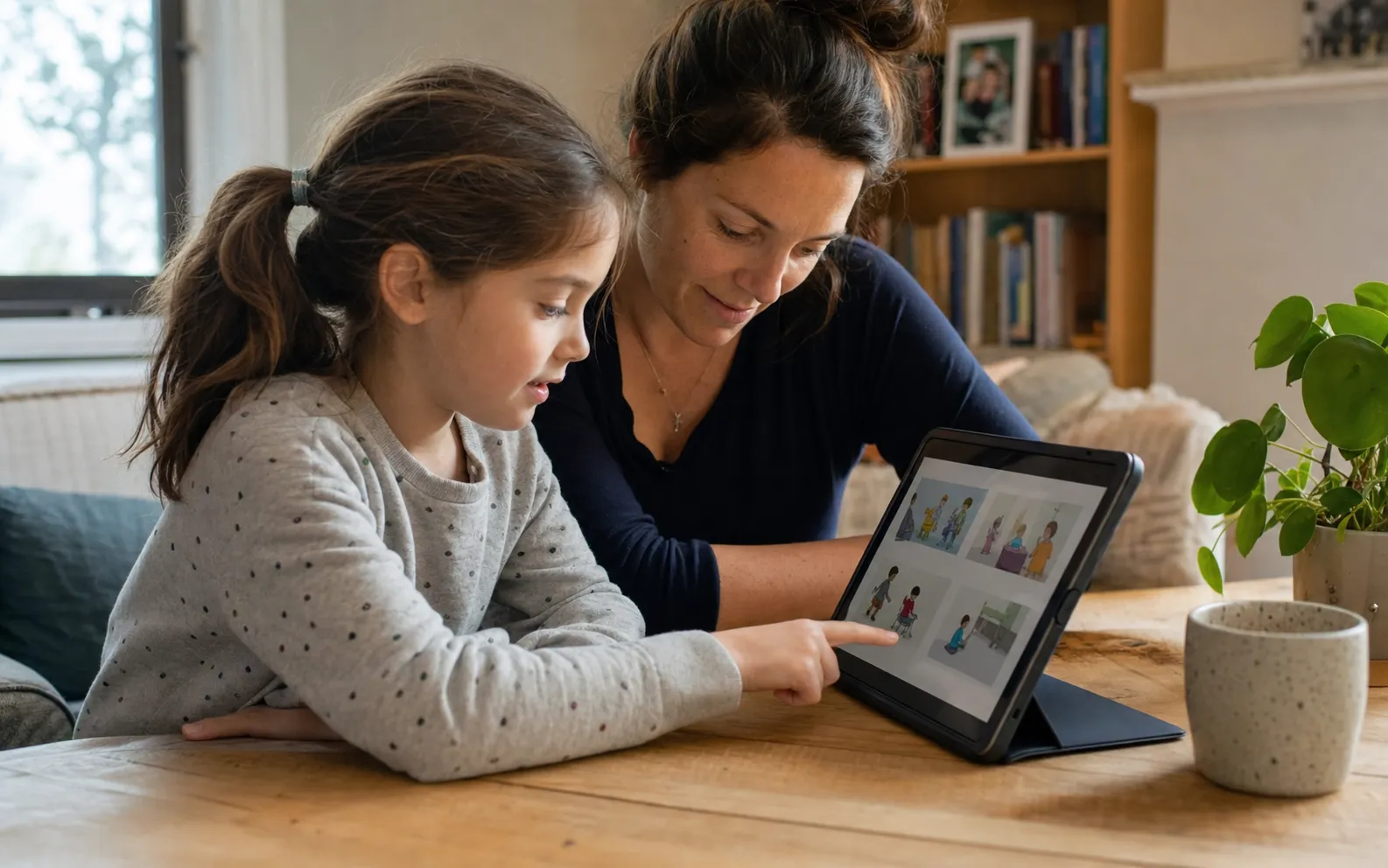
A personalised narrative can make the room, the hairdresser and the likely shape of the visit easier to recognise. It can help a child understand what may happen without promising that every step will feel comfortable.
The sensory experience may be the main event
The feel of a cape, hair falling on the skin, spray, a comb near the scalp or the sound and vibration of clippers can be intense or unfamiliar. For children with sensory differences, these details may matter far more than the finished haircut.
A story can name them in plain language and include choices that are actually possible: bringing headphones, asking for a quieter time, keeping a familiar item close, taking a pause or choosing between available tools. The aim is to make space for the child's response, not to teach them to ignore it.
The child needs a way to communicate what they need
A child who communicates differently may want a simple way to say that something is too close, too loud, uncomfortable or finished for now. They may communicate with words, a gesture, a card, a device or a trusted adult who understands their cues.
A social story can make that communication visible to everyone before the appointment. It can also explain that the child can ask what an item is, look at it first or request a change when there is a genuine alternative.
A familiar sequence can reduce the number of unknowns
For children who rely on familiar routines, knowing the order of arrival, waiting, sitting in the chair, cutting and leaving can be useful. For a child who experiences anxiety, it may also help to know who will stay nearby and what happens if the appointment needs a pause.
The plan may still change, and that can be stated honestly. A story can prepare a child for the fact that a different hairdresser, a short wait or a new tool may be part of the visit, while keeping the focus on available support and choice.
How it can help
Related support topics
Some families start from the situation; others start from the wider support need. These pages explore the same idea from that angle.
Turn this guide into a story
Create a story your child can recognise.
Bring the details that matter together in one personalised story: where your child is going, who may be there, what may happen, and which choices or support are genuinely available.
Join the waiting list