
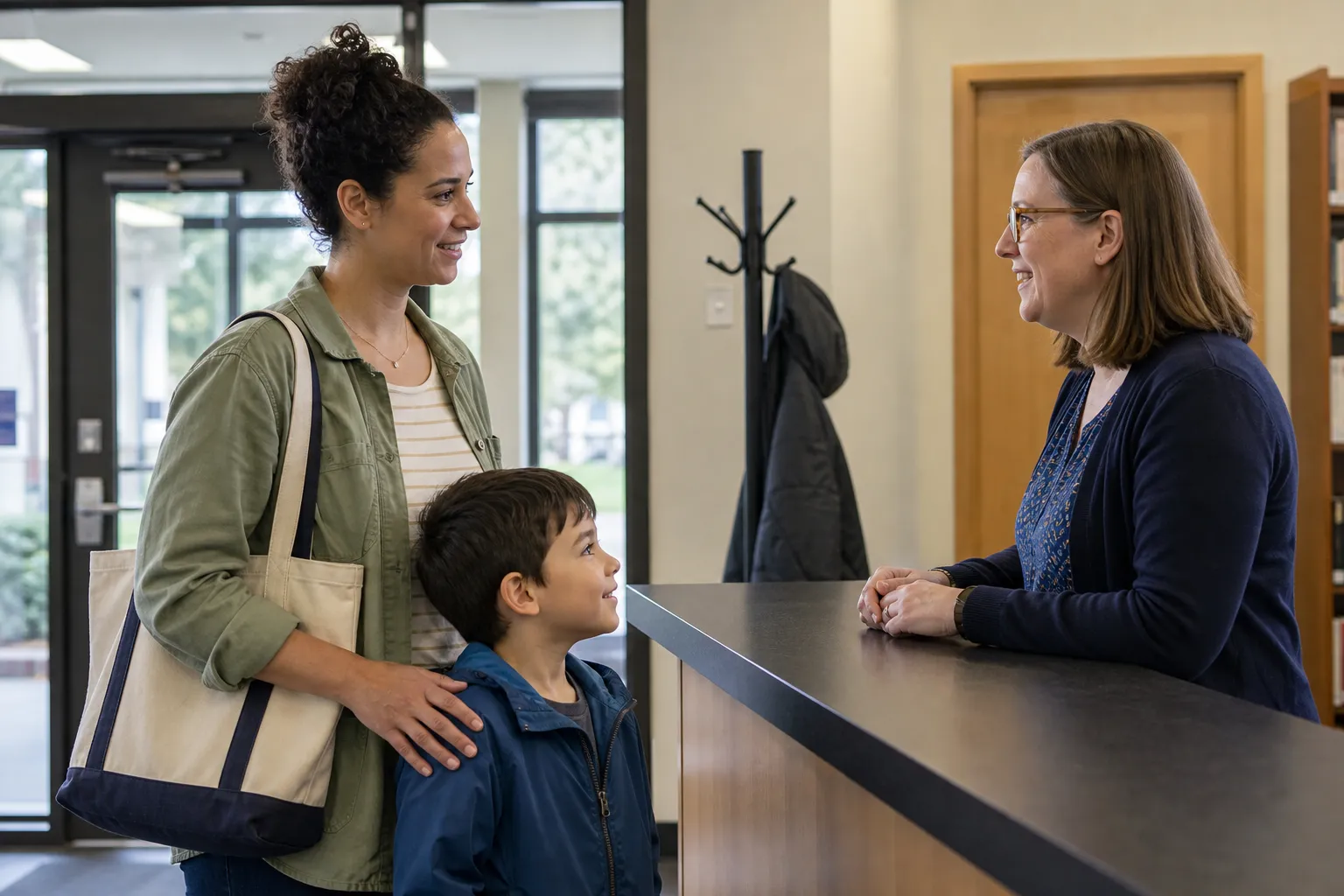
A library visit can hold several different kinds of uncertainty at once: arriving somewhere with unfamiliar expectations, navigating a shared public space, communicating with staff, waiting, choosing what to do, and leaving when the visit is over. For some families, it is a relaxed weekly routine; for others, it may be a new outing, a change to an established routine, or an experience that feels easier with advance information. A personalized library social story can be one way to talk through what may happen without promising that every visit will look the same. It is not a test of behavior or a script a person has to follow. Instead, it can give a child, teen, or adult a clearer picture of the setting, their choices, and the people who may be available to help. This guide focuses on a library social story for families, carers, and educators supporting people with autism spectrum disorder, communication differences, and a need for routines and predictability.
Why a library visit may need preparation
Libraries are shared community spaces, but they are not all identical. One branch may have a busy entrance, self-service checkout stations, public computers, a children’s area, an activity room, or several floors. Another may be small and quiet. Noise, crowd levels, lighting, available seating, parking, opening hours, and staff practices can change from one day to another. A useful social story for library visit preparation makes room for these differences instead of presenting the library as a single, fixed experience.
For some autistic people, unfamiliar social expectations or changes in routine may take extra energy to interpret. Autism spectrum disorder is a developmental condition with wide individual variation; it does not mean that every autistic person finds libraries difficult or prefers the same environment. One person may enjoy browsing and knowing where items belong, while another may find the number of choices, the uncertainty of waiting, or a surprise event harder to manage. A family can use a library social story to name what is known about the specific branch and what may vary.
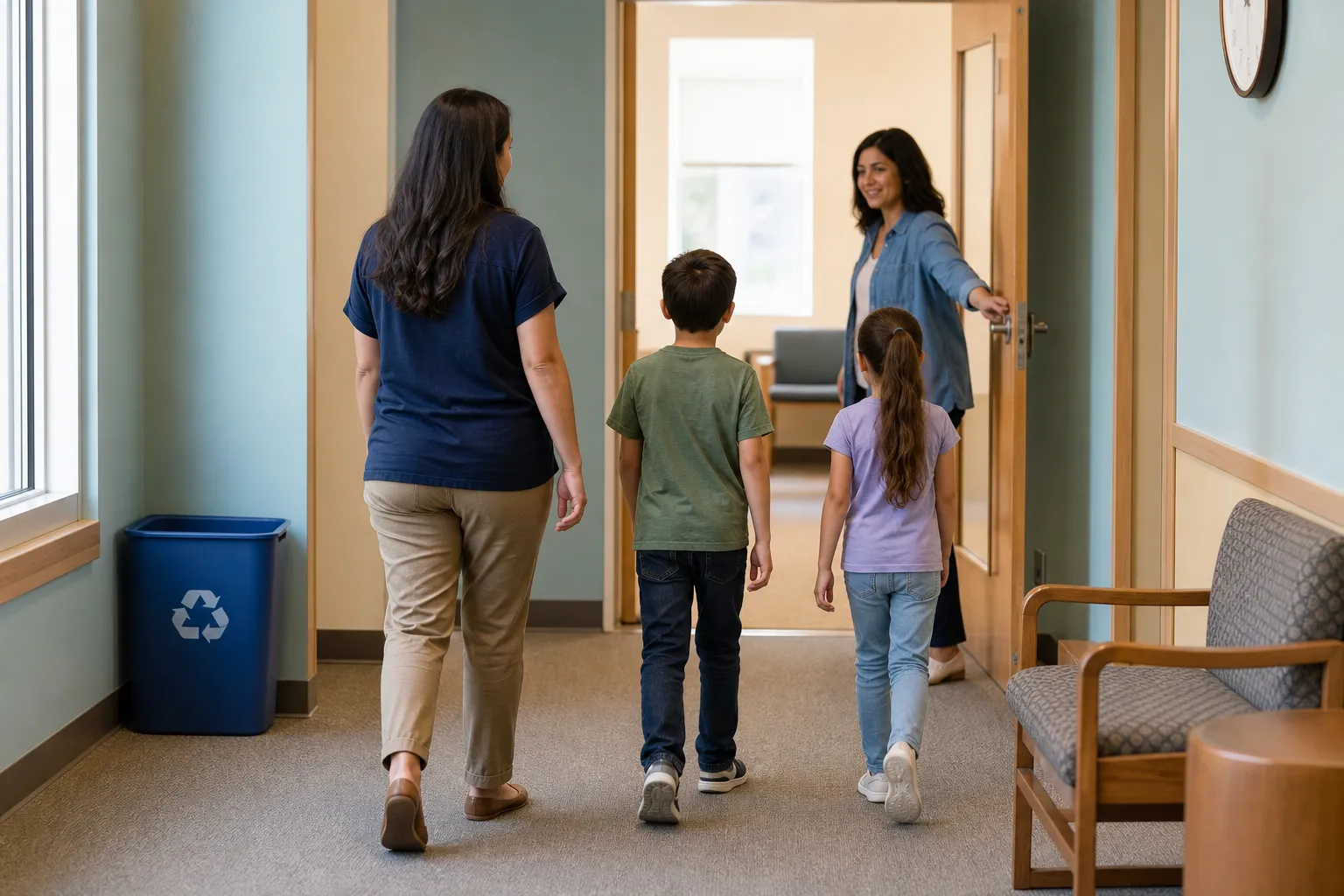
A visit can also involve communication differences. The American Speech-Language-Hearing Association describes communication disorders as differences or difficulties involving speech, language, hearing, voice, fluency, or social communication, among other areas. In practical terms, a visitor may communicate comfortably with speech, gesture, writing, pointing, a communication system, or a combination of methods. They may need more time to understand a question, decide between options, or respond to an unfamiliar staff member. These are individual communication needs, not signs of unwillingness or lack of understanding.
What a personalized library social story can do
A library social story is a short, individualized explanation of a particular visit. It can describe the sequence a family expects, the purpose of the outing, possible choices, and a few realistic changes. Its value is often in preparation: reading or discussing it together can make space for questions before anyone is in the busy moment. It can also help a carer or educator notice assumptions, such as expecting a child to know whether talking is allowed in every area or assuming a library event will always be quiet.
Keep the focus descriptive rather than corrective. Describe the location and likely events in clear, respectful language: arriving, entering, finding an area, asking for information if wanted, spending time there, and leaving. Include that library staff may be helping other people, that some visitors may be talking or moving around, and that activity spaces can be louder than other areas. Avoid claims such as “the library is always silent” or “I will always feel calm.” Honest preparation is more useful when it recognizes that feelings and surroundings can change.
A personalized story can state choices without turning them into demands. For example, a family might mention looking around, sitting for a short time, joining an activity, asking a staff member a question, or leaving after completing one planned part of the visit. An example sentence might be: “I may look at the children’s area or sit with my grown-up.” The best wording reflects the person’s language, interests, communication style, and actual local library rather than a generic expectation.
Build the story around the actual visit, not an ideal visit
Start with details that can be checked: the library’s name, how the family usually gets there, where they enter, who may come along, and the broad reason for the visit. If the visit is for a program, say that clearly and distinguish it from ordinary browsing. If the plan is simply to explore for ten minutes, that can be named too. A short first visit and a longer regular visit may need different stories because their goals and likely demands are different.
Then describe a flexible sequence. Many visits include arriving, going inside, noticing the desk or service area, choosing where to spend time, and leaving. However, people do not need to complete every step, and a person may communicate a wish to change the plan. Explain only procedures that are genuinely relevant. For instance, if the family expects to use a checkout desk, include that; if they do not know whether an item will be available, say that availability can vary. This makes the story credible rather than overly detailed.
Include concrete possibilities for change. A parking space may not be close. A room may be in use. A favorite area may have other visitors. A program may be canceled or full. Staff may ask a question, offer directions, or be busy with someone else. The story can frame these as ordinary parts of a public setting, not as a failure by the visitor. An example sentence might be: “Sometimes the library has more people than I expect.” Keep examples brief and adapt them only when they match the person’s experience.
Include communication in a respectful, practical way
A strong social story for library use does not assume that successful communication means speaking quickly, making eye contact, answering every question, or interacting with everyone. It can acknowledge how the individual commonly shares information and what they might want another person to know. A person may prefer to listen first, point to an area, use a familiar communication method, ask a companion to speak, or choose not to engage with staff beyond what is necessary. These can be described as valid possibilities.
Families may want to identify a few library moments where communication could arise: entering an event, asking where something is, responding when a staff member greets them, using a service desk, or deciding that it is time to leave. The story can make clear that staff members are people who may offer information, while also recognizing that not every interaction has to happen. If a visitor does not understand a question immediately, a pause, a different wording, or support from a trusted person may be useful possibilities.
This approach aligns with the broader context offered by the American Speech-Language-Hearing Association: communication differences are diverse and should not be reduced to one outward style. Write in the person’s own voice only if that is welcome and accurate. For some people, first-person wording feels direct and reassuring; for others, a third-person description or a conversation with a carer works better. The aim is shared understanding, not performing a particular kind of social interaction.
Support routines and predictability while leaving room for choice
Family routines can offer a dependable frame for everyday outings. The American Academy of Pediatrics notes that routines can support family functioning and connection, while real life still includes disruptions. A library visit may fit into an existing pattern, such as going after school, before another errand, or on a weekend morning. Naming that pattern can help a person anticipate what comes before and after the visit. At the same time, routines should not be presented as guarantees: traffic, opening times, weather, crowds, and family needs can alter the day.
A personalized library social story can distinguish between parts that are likely and parts that are optional. Likely parts might include traveling to the branch and entering the building. Optional parts might include staying for an event, looking in more than one area, using a particular service, or remaining for a longer time. This distinction can reduce the pressure to finish an imagined checklist. It also gives families a way to discuss what matters most about that day’s visit.
Consider revisiting the story after the outing. Rather than asking whether the person “did well,” a carer or educator might notice what was accurate, what was unexpected, and what information would be useful next time. Perhaps the entrance was easier to find than expected, the activity room was busier, or the visit ended earlier. Updating the story keeps it connected to the person’s real life. It also respects that preferences, communication, confidence, and routines may change over time.
Use the story collaboratively and keep expectations humane
Preparation works best when it is collaborative where possible. A parent, carer, educator, and the person visiting can decide which details belong in the story. Some people may care most about who will be there; others may want to know about the route, the activity, the departure plan, or what happens if the plan changes. Ask open questions in the communication form that works for the person, and accept that they may not want to discuss every detail.
The story should never be used to make someone tolerate distress, remain in a setting against their wishes, or meet a behavior standard. A library is a public place with its own local guidelines, but visitors’ needs and limits matter too. If an outing becomes difficult, changing the plan, taking a break, or leaving may be possible responses depending on the family and setting. A story can mention these realities without framing them as misbehavior.
For educators, a library social story can be particularly helpful when a class visit differs from a student’s usual family library routine. Be specific about the group context, the adults present, transitions, and what may happen if the class schedule changes. For families, it can be useful before a first visit, after a long gap, before a special event, or whenever a familiar branch has changed. The most effective version is usually the one that is short enough to revisit, accurate enough to trust, and personal enough to feel relevant.
Frequently asked questions
What should a library social story include?
Include the specific library, the likely purpose of the visit, who may attend, a simple and flexible sequence, likely communication moments, choices the person may have, and realistic changes such as crowds or a canceled activity. Use details that are true for that branch and that person. It does not need to cover every possible event.
Is a social story for library helpful only for autistic children?
No. A personalized social story for library preparation may be useful for people of different ages who benefit from clearer information about an unfamiliar outing, including people with communication differences or people who find changes in routine difficult. It should be adapted to the individual rather than based on a diagnosis alone.
How can we prepare if we do not know exactly what the library will be like that day?
Separate known details from variables. You may know the address, opening time, planned companion, and purpose of the visit, while crowd levels, available spaces, and staff interactions may vary. Naming uncertainty honestly can be more helpful than making promises. After the visit, revise details that did not match the experience.
Keep exploring
Related social stories
These guides cover situations with similar routines, sensory details or preparation needs.
Learn more about writing a social story
Read what a social story is, follow the step-by-step writing guide, or browse more social story examples.
Sources
- Autism spectrum disorder — Centers for Disease Control and Prevention
- Communication disorders — American Speech-Language-Hearing Association
- The importance of family routines — American Academy of Pediatrics
