

A movie theater is not just a place to watch a film. It is a sequence of shared, time-sensitive moments: arriving in a busy lobby, choosing food, waiting in line, finding seats in a dim room, hearing trailers, and leaving with many other people at once. For some children and teens, that sequence feels exciting; for others, the uncertainty or intensity may take more energy. A personalized movie theater social story can turn an unfamiliar outing into a conversation about what may happen, what choices may be available, and how the family can notice whether the visit is working for everyone.
Why a movie theater social story can be useful
A movie theater social story is a short, individualized explanation of a planned cinema visit. Its purpose is not to make a child behave in one particular way or to promise that the outing will be easy. Instead, it can make the experience more predictable by naming the likely steps, the parts that may be different from watching at home, and the choices a family may be able to make.
Movie theaters often involve rules and routines that are understood by regular visitors but are not always obvious. Tickets may be checked before entry. People may stand in a queue, buy snacks, talk quietly before the film begins, and become mostly silent once the movie starts. The room may become dark quickly, advertisements and trailers may play before the feature, and other audience members may laugh, cough, use a whisper, or enter after the film has started. A story can explain these possibilities in plain, concrete language.
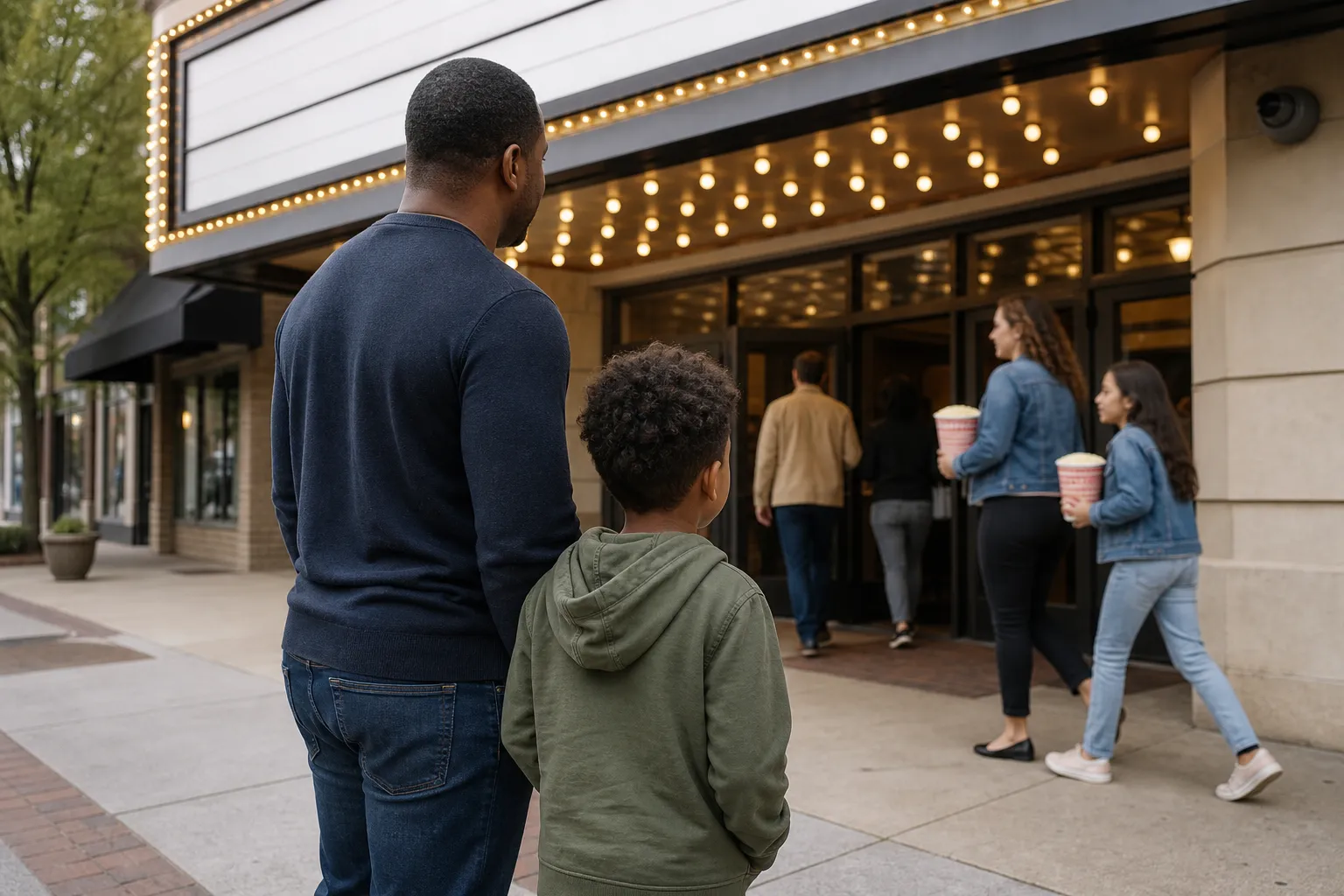
For a child or teen with autism, a new public setting may involve differences in sensory processing, communication, need for predictability, or comfort with transitions. These are individual experiences, not requirements of autism. Some autistic people enjoy the clear structure of a movie outing, special interests connected to films, or the chance to share an activity; others may find one or more parts of the visit demanding. A story can focus on the individual’s own past experiences and preferences rather than relying on assumptions about autism. The Centers for Disease Control and Prevention describes autism spectrum disorder as a developmental disability that can affect how people interact, communicate, learn, and behave, while emphasizing that autistic people have varied strengths and support needs. In everyday planning, that variation matters more than a generic checklist.
Map the real visit, from leaving home to getting back
The most helpful cinema social story usually follows the actual plan. Families can begin with details they know: which theater they expect to visit, who may come, whether tickets are being bought online or at the venue, the approximate start time, and how they expect to travel. If details are uncertain, the story can say so honestly. For example, it might note that the family will check the screen number after arriving rather than implying that every part of the day is fixed.
Include the transition points that can be easy to overlook. These may include parking or leaving public transportation, walking through the entrance, waiting for companions, using the restroom, showing tickets, deciding about concessions, locating the auditorium, choosing or finding seats, and leaving when the film ends. A person may also need to move through a lobby where other visitors are waiting, talking, or carrying food and drinks. Explaining the route and order can reduce the burden of guessing what comes next.
It is useful to distinguish a listed showtime from the time the main film may begin. Many theaters show advertisements and trailers first, but the amount of time can vary. Likewise, the feature’s length, credits, and the crowd at the exit can vary. State these as possibilities, not guarantees. A family can also discuss whether it is okay to arrive early, use the restroom before entering the auditorium, step into the lobby, or decide that a different showing may suit them better. Those options depend on the theater, the ticket terms, supervision needs, and the family’s circumstances.
Name sensory experiences without treating them as misbehavior
A cinema can involve intense sensory experiences. Sound may be loud or sudden, especially during trailers, action scenes, music, or audience reactions. The room can be very dark, while the screen may have bright flashes, rapid movement, or imagery that feels startling. There may be strong smells from popcorn or food, a sticky floor, close seating, air conditioning, or unexpected contact when people pass along a row. Some people notice these details strongly, while others barely notice them or enjoy them.
A personalized movie theater social story can describe the sensations a child or teen may encounter and connect them with realistic choices. The family might choose a quieter time of day, a particular seat location, a familiar theater, or a film with a known rating and content description. Some theaters offer sensory-friendly screenings, but their policies, lighting, sound levels, audience expectations, and availability differ by location. It is reasonable to check directly rather than assume that every sensory-friendly showing will fit a particular person’s needs.
The story can also allow for mixed feelings. A person might like the popcorn smell but dislike the loud trailers, or look forward to the film while worrying about the dark room. Planning is not about eliminating every sensation; it is about making space to recognize what may be enjoyable, uncomfortable, or uncertain. Example wording only: “The room may get dark, and the sound may feel big.” This is an example sentence, not a complete social story.
Consider anxiety, anticipation, and temperament
Anxiety can make an ordinary outing feel harder to predict or manage, particularly when there are crowds, time pressure, unfamiliar rules, or concern about what will happen if someone needs a break. Anxiety is not the same as being difficult, unwilling, or unprepared. A child or teen may ask many questions, seek reassurance, become quiet, want to leave early, or show excitement that is difficult to separate from worry. These responses can have many meanings, so caregivers can stay curious rather than assume a single cause.
The Centers for Disease Control and Prevention notes that anxiety can occur in children and that feelings and behavior can be affected by many factors. This guide cannot determine whether a child has anxiety or needs clinical support. It can, however, help families use a story to discuss a specific situation before it happens. The story may name uncertain moments, such as waiting for the movie to start or hearing an unexpected loud sound, and can make clear that feelings may change during the outing.
Temperament also shapes how a person approaches novelty, crowds, transitions, and stimulation. The American Academy of Pediatrics explains that temperament describes individual patterns in how children respond to the world; it is not a measure of good or bad behavior. One child may want detailed information well in advance, while another may prefer only a few key facts. One may be energized by going with friends, while another may feel more comfortable with a small, familiar group. A social story is more useful when its length, language, and detail match the individual rather than an adult’s idea of what preparation should look like.
Build in honest choices and flexible outcomes
Personalization means including choices that are genuinely possible, not presenting them as promises. Depending on the venue and family plan, choices may include selecting a showing, deciding whether to buy concessions, choosing from available seats, arriving early or closer to the start time, taking a restroom break before the film, or leaving the auditorium for the lobby. If an option is not available, it does not need to appear in the story. For instance, assigned seating, ticket exchange rules, school trip expectations, and adult supervision can limit what can change.
It can be especially helpful to describe what may happen if the experience becomes too much. A family may agree to pause in the lobby, check in with each other, move if seats are available, wait until the credits finish, or leave before the movie ends. None of these outcomes needs to be framed as failure. Sometimes a person learns that a particular film, theater, time, or group size was a good fit; sometimes they learn that a different plan would be more comfortable next time. Both are useful information.
Avoid writing a story that requires emotional certainty, such as saying someone will enjoy every part of the visit or will stay seated for the entire film. It is more accurate to state what the family intends to try and what may happen. Example wording only: “If I need to leave the room, I can go with my adult.” This is an example sentence, not a complete social story. The exact wording should reflect the person’s age, communication style, safety needs, and the arrangements actually available.
Review after the visit and update the next version
A movie theater social story can be a living preparation tool rather than a one-time script. After the visit, caregivers and educators can invite the child or teen to share what stood out. Questions might focus on concrete details: Which part felt easiest? Was any sound, smell, wait, or transition surprising? Did the seat location work? Was the film itself what they expected? What would they want to keep the same or change next time? A person may communicate these answers through conversation, behavior, drawing, gestures, or other familiar methods.
Keep the review respectful. The goal is not to judge whether the person completed the outing in the expected way. It is to gather information about their experience and make future participation more informed. If a visit ended early, that can still reveal useful details, such as whether the lobby felt manageable, whether trailers were more intense than expected, or whether the group size affected comfort.
For educators planning a class or group trip, individualized preparation may be more appropriate than one generic account of the cinema. Students may have different sensory experiences, interests, communication methods, access needs, and feelings about public outings. Families can often offer valuable insight about what has helped in prior community settings. A clear, personalized story can support shared planning while respecting that there is no single autistic experience, no single anxiety experience, and no single right way to attend a movie.
Frequently asked questions
What should a movie theater social story include?
Include the parts that are relevant to the actual outing: travel, arrival, tickets, queues, concessions, the auditorium, seating, trailers, the film, restroom plans, possible sensory experiences, and leaving. Use truthful details and name only choices that may really be available. A short story focused on one person’s likely experience is usually more useful than a long list of rules.
How can an autism movie theater social story address sensory experiences?
It can mention that the theater may be dark, loud, crowded, bright on screen, or full of food smells, while recognizing that reactions vary. It may also describe possible family choices, such as a selected showing time, a seat preference, checking the venue’s sensory-friendly screening information, taking a lobby break, or leaving early. Do not assume that every autistic person finds the same sensations difficult or wants the same plan.
Can a cinema social story help when a child is anxious about going?
It may help by making the sequence and unknowns more concrete: what happens first, what may be noisy, who will be there, and what the family might do if plans change. It cannot guarantee that anxiety will disappear or replace individualized guidance from a qualified professional when that guidance is needed. Keep the language calm and honest, and avoid requiring the child to feel excited, brave, or comfortable.
Keep exploring
Related social stories
These guides cover situations with similar routines, sensory details or preparation needs.


Learn more about writing a social story
Read what a social story is, follow the step-by-step writing guide, or browse more social story examples.
Sources
- Autism spectrum disorder — Centers for Disease Control and Prevention
- Anxiety and depression in children — Centers for Disease Control and Prevention
- Understanding your child's temperament — American Academy of Pediatrics
