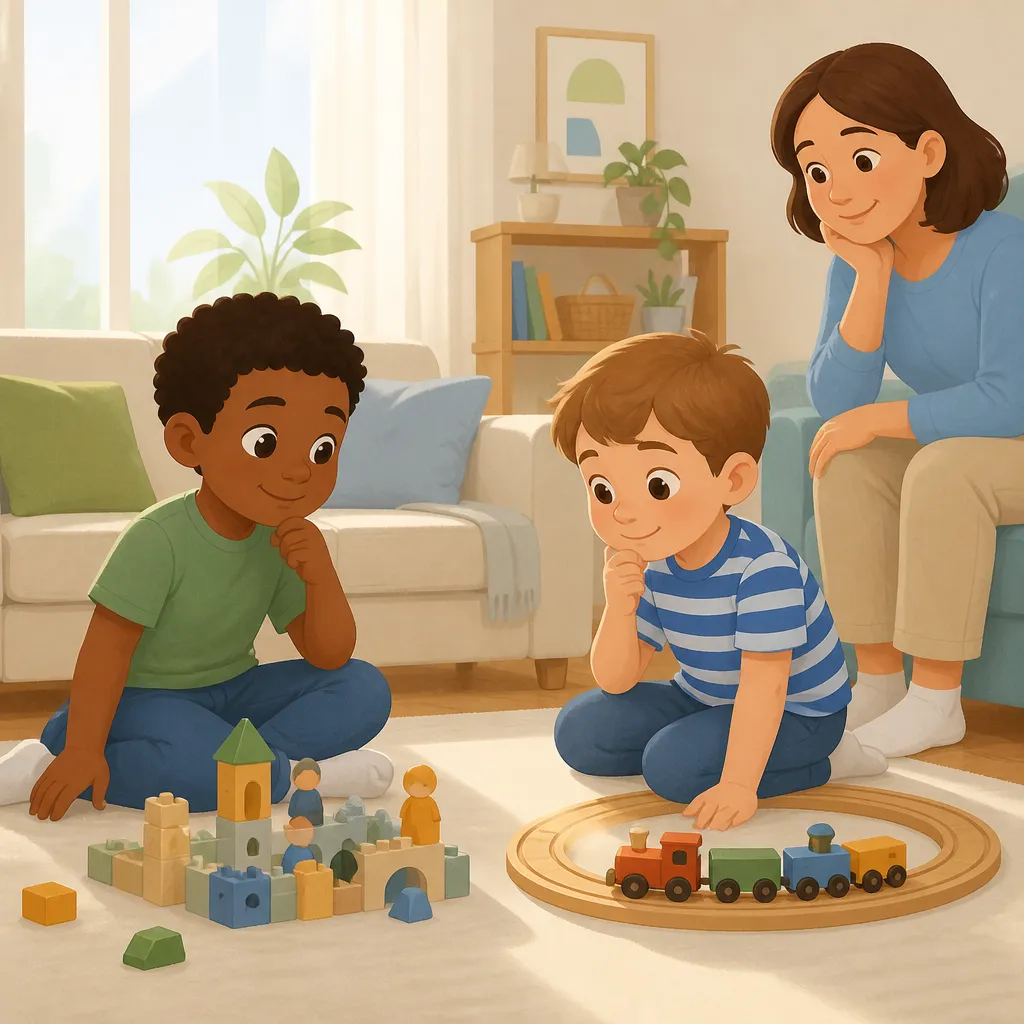
Making a playdate easier to picture
A playdate may look casual to adults while containing many small social decisions for a child: how to greet, what to do first, which toys are shared and what to do if the game changes. A personalised story can help make those expectations more visible.
A guide or personalised story does not have to make a playdate seem easy, or predict every moment perfectly. Its value is in giving the child and the adults around them a shared, calm place to look at the parts that matter before the situation is already happening.
Why the small details can carry a lot of weight
The child may be visiting a less familiar home, reading another child's pace, managing turn-taking or handling the uncertainty of not knowing what happens next in the visit.
This can be especially relevant for autistic children, children who communicate differently, children who experience anxiety and children who may need support with emotional regulation during shared play. Naming these possibilities in advance can help adults notice what needs adjusting, rather than assuming the child should simply manage the same experience in the same way as everyone else.
Turning the likely sequence into a shared picture
A personalised story can describe the setting, explain a few likely interaction points and show how the child can use their own communication style or ask an adult for support if something feels unclear.
For a playdate, the most useful version is usually built around the child's real route through the experience. It may describe arriving at the home, greeting people and seeing the space, choosing what to play, taking turns and asking questions, how the child can ask for a break, more space or help from an adult, and how the playdate may finish and how the child will know it is time to leave. These details work best when they are connected as part of one understandable experience, rather than presented as a set of rules the child has to follow.
Making room for the child's own communication and choices
A child may want to read the story more than once, ask a question, choose the order in which information is shared or use their own words, pictures, gestures or device to say what matters. Some children want every practical detail; others prefer a short version that only covers the next step. Both approaches can be valid when the story reflects the child rather than an adult's idea of how preparation should look.
It also helps to be precise about support. A pause, a familiar person, a quieter space, extra processing time or an early exit should only appear when it is a real option. That honesty makes the story more trustworthy and gives the child a clearer basis for deciding what they want to try.
Preparing together, then learning from the experience
Before the visit or activity, families, carers and educators can keep the preparation grounded by focusing on practical details: keep the story rooted in one real playdate rather than general social advice and name the adults who may be present and how the child can approach them. The aim is not to cover every possible outcome; it is to give the child the information and support that will be most useful in this particular version of the situation.
Afterwards, it is worth returning to the experience without treating it as a test. You might, for example, include that watching first or choosing one short activity can still count as taking part and after the visit, note which part of the interaction was easiest to understand and which part needs clearer framing next time. That conversation can make the next personalised story more accurate, while showing the child that their observations and preferences are part of the plan.
How it can help
Related support topics
Some families start from the situation; others start from the wider support need. These pages explore the same idea from that angle.
Turn this guide into a story
Create a story your child can recognise.
Bring the details that matter together in one personalised story: where your child is going, who may be there, what may happen, and which choices or support are genuinely available.
Join the waiting list