A sleepover has an evening, a night and a morning
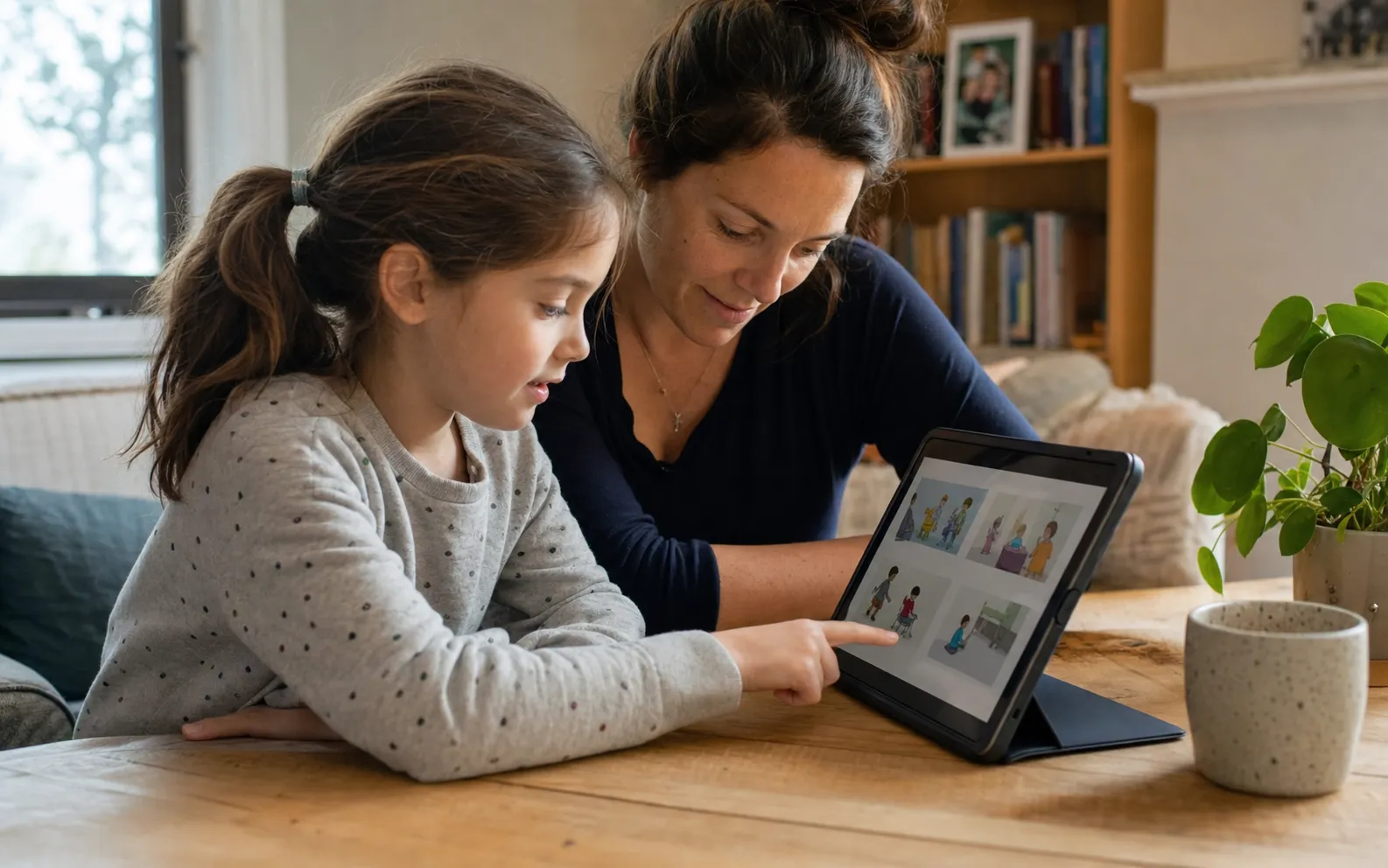
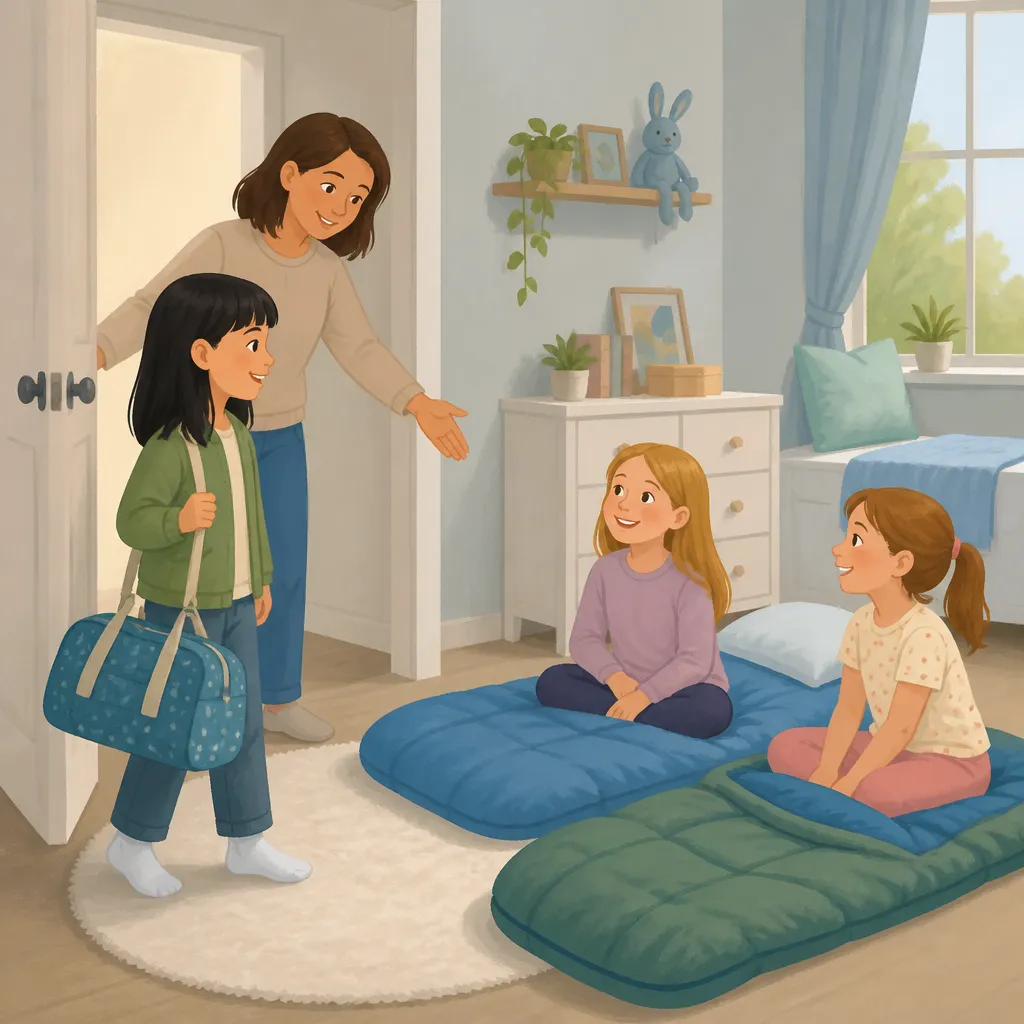
Sleeping away from home is not one moment. A child may be thinking about arriving at another house, where their bag will go, which games might happen, what food is available, when the room becomes quiet, where they will sleep and how they will get home the next day. A personalised story can make those parts easier to picture one at a time.
It can be helpful to begin with the child’s real plan: whose home it is, which adults will be there, whether other children are staying and how long the visit is expected to last. This turns a broad idea of a sleepover into a specific visit with known people and places.
Different routines do not need to be a surprise
Even a welcoming home may have a different order for dinner, washing, pyjamas, lights out or breakfast. For children who rely on routines, it can be reassuring to know which parts of their own evening can come with them, such as a comfort item, preferred pyjamas, a book, a communication device or a familiar way to settle.
The story can distinguish between what is known and what may vary. It might explain where the child will sleep, that other children may stay awake for different lengths of time, or that an adult can help if the room feels too busy. It should not imply that the child has to copy another family’s routine exactly.
Support at night should be easy to find
The most difficult questions may arrive after the games are over: what if the child cannot sleep, needs the toilet, misses home, wants more information or feels uncomfortable? A story can name the adult the child can go to and the way they can ask for help in their preferred form.
For a child who experiences anxiety, it can also be useful to state honestly whether a call home or an earlier pickup is possible. Having an agreed option does not mean the child has failed at the sleepover; it means the adults have planned with care for a night away from familiar surroundings.
The child decides what to carry forward
A first sleepover can provide useful information even if it is shorter than expected. The child may discover that they enjoyed the games but wanted a quieter sleep space, or that the morning felt easier than the arrival. These observations can guide the next visit more effectively than a general idea of success or failure.
Returning to the story afterwards gives the child a chance to add their own version of the evening. That makes future overnight preparation more personal, more accurate and more respectful of their choices.
How it can help
Related support topics
Some families start from the situation; others start from the wider support need. These pages explore the same idea from that angle.
Turn this guide into a story
Create a story your child can recognise.
Bring the details that matter together in one personalised story: where your child is going, who may be there, what may happen, and which choices or support are genuinely available.
Join the waiting list