
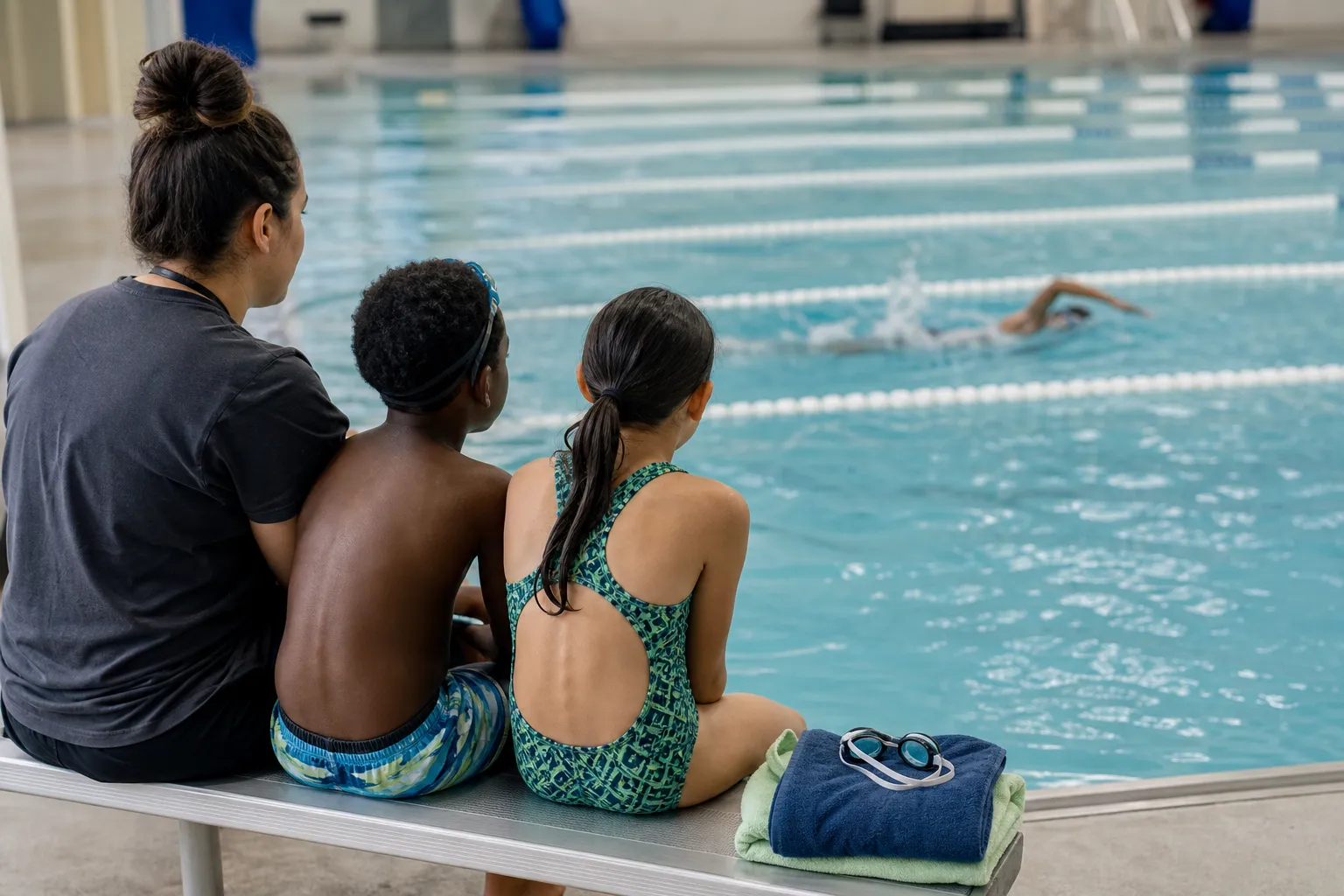
A swimming pool visit is rarely just one event. It can be a chain of transitions: getting ready, traveling, entering a building, changing clothes, waiting, hearing the pool, getting into the water, taking breaks, showering, and leaving. Any one part may be easy, hard, enjoyable, or unpredictable for a particular child. A personalized swimming social story can give a family a calm way to talk through that sequence before the day arrives. Rather than promising that the visit will feel a certain way, it can describe what may happen, name honest options, and leave room for the child’s own responses. This guide is for parents, carers, and educators planning a swimming social story, including an autism swimming pool social story or a pool social story for a child who has sensory experiences or anxiety around swimming.
Start with the actual pool visit, not an idealized version
A useful swimming social story is based on the pool the child is likely to visit and the kind of session they will actually attend. A quiet family swim, a busy public session, a school lesson, and a holiday-pool visit can have very different sounds, rules, waiting times, changing arrangements, and expectations. Specific, truthful details can make the event easier to picture. For example, families may want to include where they enter, whether shoes come off at a particular point, what the changing area is like, whether there is a reception desk, and how they will know it is time to leave.
It is also important to avoid making the pool sound universally fun or easy. A child may be excited about the water while disliking the changing room, may want to watch before getting in, or may decide that one part of the visit is enough for that day. A social story can recognize these possibilities without presenting them as failures. It can describe that people at the pool may splash, talk, blow whistles, wait in line, or move quickly, while also making clear that individual experiences vary.
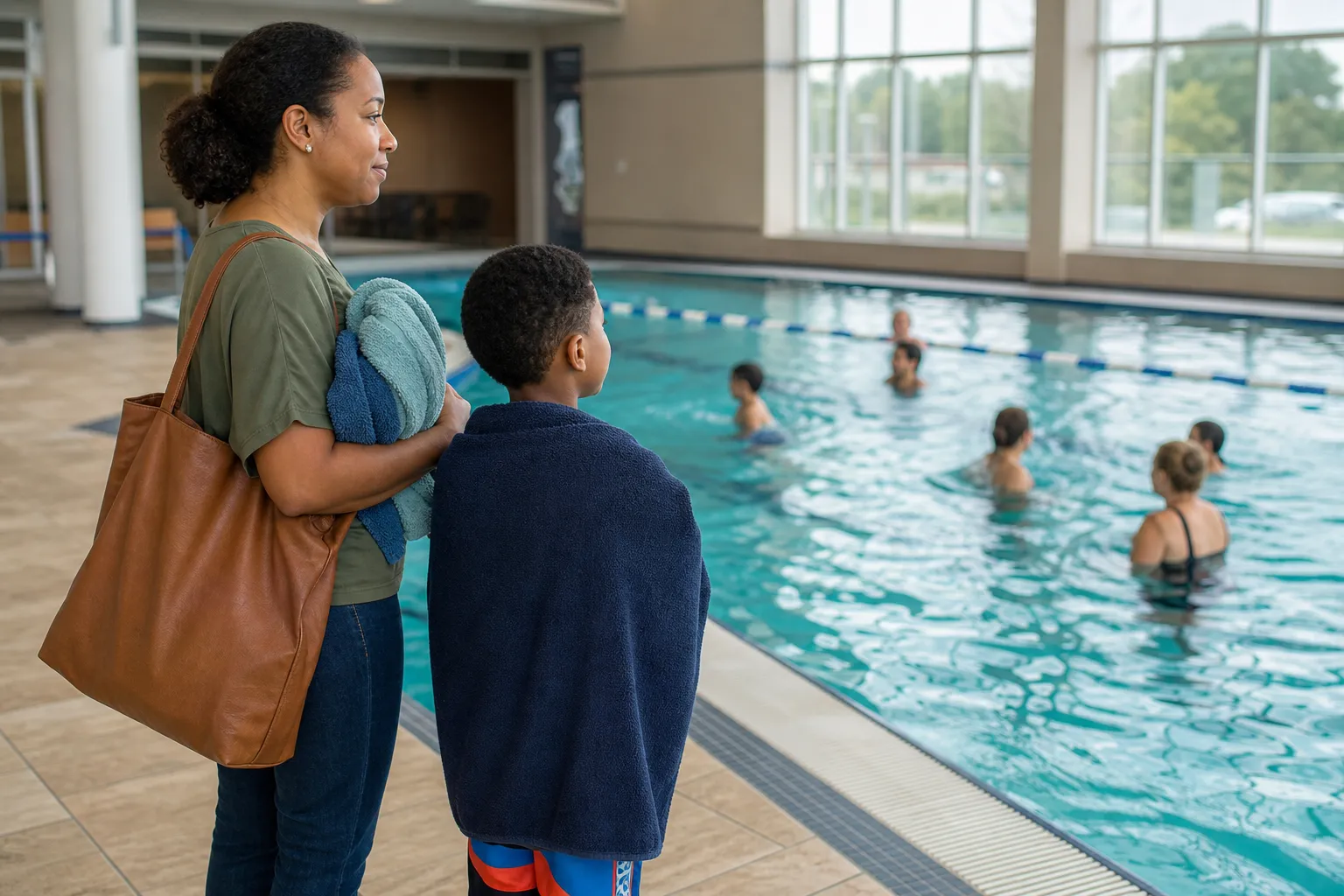
Before writing, a parent, carer, or educator can gather a few practical facts: the likely arrival time, the pool’s entry rules, the location of toilets, the expected length of the visit, and what adults will be nearby. If a fact is uncertain, it is more honest to say that plans can change than to state it as certain. Revising the story after a first visit can make it more meaningful for future trips.
Use autism-affirming language and individual knowledge
Autism is a natural form of neurodiversity, not a single set of pool behaviors. Some autistic children enjoy the movement, pressure, repetition, or predictability of water. Others may find parts of a pool environment demanding, or may have mixed feelings that change from day to day. The Centers for Disease Control and Prevention’s information on autism spectrum disorder describes differences in social communication and patterns of behavior or interests, while individual sensory preferences and support needs differ widely. A swimming social story should therefore be built around the child, not assumptions about autism.
For one child, the unfamiliarity of a new place may be the central issue. Another may already know the pool well but find waiting, transitions, group expectations, or sudden changes difficult. Some may prefer clear information about who will be present and what adults might say; others may care more about the order of events. The American Academy of Pediatrics’ discussion of temperament can be a useful reminder that children differ in how they approach novelty, intensity, activity, and change. These differences are information for planning, not something to correct.
A personalized autism swimming pool social story can use the words the child already uses for people, places, sensations, and actions. It may state that an adult will stay nearby, if that is genuinely planned, and it can name choices that are truly available. Honest possibilities might include looking at the pool from the side first, taking a break, sitting with an accompanying adult, or leaving earlier if the family decides that is appropriate. Do not include a choice unless adults can realistically honor it.
Make space for sensory experiences without treating them as misbehavior
Swimming pools can involve sensory experiences that are intense for some people and enjoyable for others. Possible features include echoing voices, whistles, music, bright reflections on water, chlorine smells, damp floors, water on the face, changing temperatures, crowded movement, and the feel of swimwear or towels. A child’s response may depend on the day, the pool, how busy it is, or what happened before arrival. Sensory experiences are not evidence that a child is being difficult, and a social story does not need to insist that every sensation will feel comfortable.
Instead, the story can plainly name what the child may notice. It can distinguish between a likely event and an unknown one: the room may be loud; the pool might be busier than expected; the water may feel cool at first. This kind of wording builds trust because it does not deny the child’s perception. If the child already has ways of communicating discomfort, uncertainty, interest, or a wish to pause, those can be reflected in the family’s planning conversation.
A pool social story can also describe transitions that affect sensory comfort, such as moving from a dry changing area to a wet poolside or from water to a shower. It may help to discuss which parts the child wants detailed and which parts they would rather keep brief. Some children value knowing exactly when swimwear is put on and changed out of; others may not want much discussion of that topic. Personalization includes respecting that preference.
Address anxiety with predictability, not pressure
Anxiety can show up in many ways around a pool: repeated questions, reluctance to leave home, needing more time at a doorway, becoming quiet, seeking reassurance, or wanting to know what happens next. These responses do not establish why a child feels anxious, and they are not unique to anxiety. The CDC’s information on anxiety and depression in children notes that anxiety can affect children in different ways and can interfere with daily activities for some. A social story is an educational preparation tool, not a diagnosis, treatment, or guarantee that anxiety will go away.
Predictable information may be useful when uncertainty is part of the challenge. The story can cover the beginning, middle, and end of the visit, including that adults may need to follow pool safety rules. It can avoid statements such as “I will not be scared” or “I will enjoy swimming,” because those sentences ask a child to feel a particular way. More reliable language describes actions and options: adults can explain what is happening, the child may take time before entering, and feelings can change during the visit.
Families can make the planning process collaborative by asking what the child most wants to know. The answer may be very practical: whether the water will be deep, whether familiar people will attend, how long the visit lasts, or what happens if the pool is crowded. If a child communicates in a non-speaking way, adults can still notice and include their established ways of expressing preference or discomfort. The goal is not compliance with a script; it is shared preparation and clearer expectations.
Choose a simple structure that supports conversation
A swimming pool social story is most useful when it has a clear purpose and a manageable amount of information. One version might focus only on arriving and using the changing room. Another might focus on a first swimming lesson, getting into the water, or what happens during a break. Trying to cover every possible event in one long story can make it harder to use, especially when the child’s main uncertainty is limited to one transition.
A practical structure often begins by identifying the setting and reason for the visit, then moves through the likely sequence in order. It can include factual sentences about what people generally do, perspective sentences that leave room for varied feelings, and cooperative sentences describing what accompanying adults intend to do. Keep the language concrete, use the child’s name or preferred self-reference, and separate what is likely from what is optional. A story about a lesson should not imply that the child controls the lesson schedule; a story about a family swim should not imply that a child must remain in the water for a fixed time if that is not actually the plan.
Review the draft with the child where possible. Check for details that are inaccurate, overly cheerful, too vague, or unintentionally demanding. A child may point out that the hand dryer is louder than the pool, that they do not use the main entrance, or that they care most about seeing a sibling. Those observations can make the story more respectful and usable. The story can be read, discussed, or referred to before the visit in a way that fits the family’s routine; it does not need to be used as a test of readiness.
Keep revising after real visits and changing circumstances
The first pool visit gives families information that cannot always be predicted in advance. Perhaps the changing room was calmer than expected, the session was much busier, the child enjoyed floating but not showers, or a staff instruction changed the plan. Updating the swimming social story communicates that the child’s experience matters and that plans can be adjusted when new information appears.
It can be helpful to separate what happened once from what will always happen. A particular lifeguard, a crowded locker area, or a closed lane may be temporary. Use language such as “sometimes,” “often,” or “on this visit” when it is more accurate than a firm promise. Similarly, do not claim that a child will become comfortable after a certain number of visits. Familiarity can be useful for some children, but responses remain individual.
If anxiety, sensory experiences, or access needs are making ordinary activities persistently difficult for a child or family, a social story may still be one part of preparation, but it is not the only source of support. Families can consider discussing concerns with an appropriate qualified professional or with the pool directly for factual information about its setting and policies. This keeps the story grounded in its role: a personalized, respectful way to prepare together for a real swimming pool experience.
Frequently asked questions
What should a swimming social story include?
Include only details that are relevant and reasonably likely: where the child is going, who may come along, the expected order of events, pool rules adults will follow, likely sensory features, and honest options for breaks or changes of plan. Personal details about the specific pool are usually more helpful than general statements about swimming.
Is an autism swimming pool social story only for autistic children?
No. A personalized social story can be useful for any child who benefits from knowing more about an unfamiliar or changing activity. When writing for an autistic child, avoid assuming that autism explains every preference or difficulty. Base the content on that child’s communication, experiences, interests, and the actual pool visit.
Can a social story stop pool anxiety?
It cannot promise to stop anxiety or make a child enjoy the visit. It may help some families create predictability, talk about uncertainties, and identify realistic choices before they go. If a child remains anxious, that does not mean the story was used incorrectly; the information may still help adults understand what needs more discussion or adjustment.
Keep exploring
Related social stories
These guides cover situations with similar routines, sensory details or preparation needs.


Learn more about writing a social story
Read what a social story is, follow the step-by-step writing guide, or browse more social story examples.
Sources
- Autism spectrum disorder — Centers for Disease Control and Prevention
- Anxiety and depression in children — Centers for Disease Control and Prevention
- Understanding your child's temperament — American Academy of Pediatrics
