
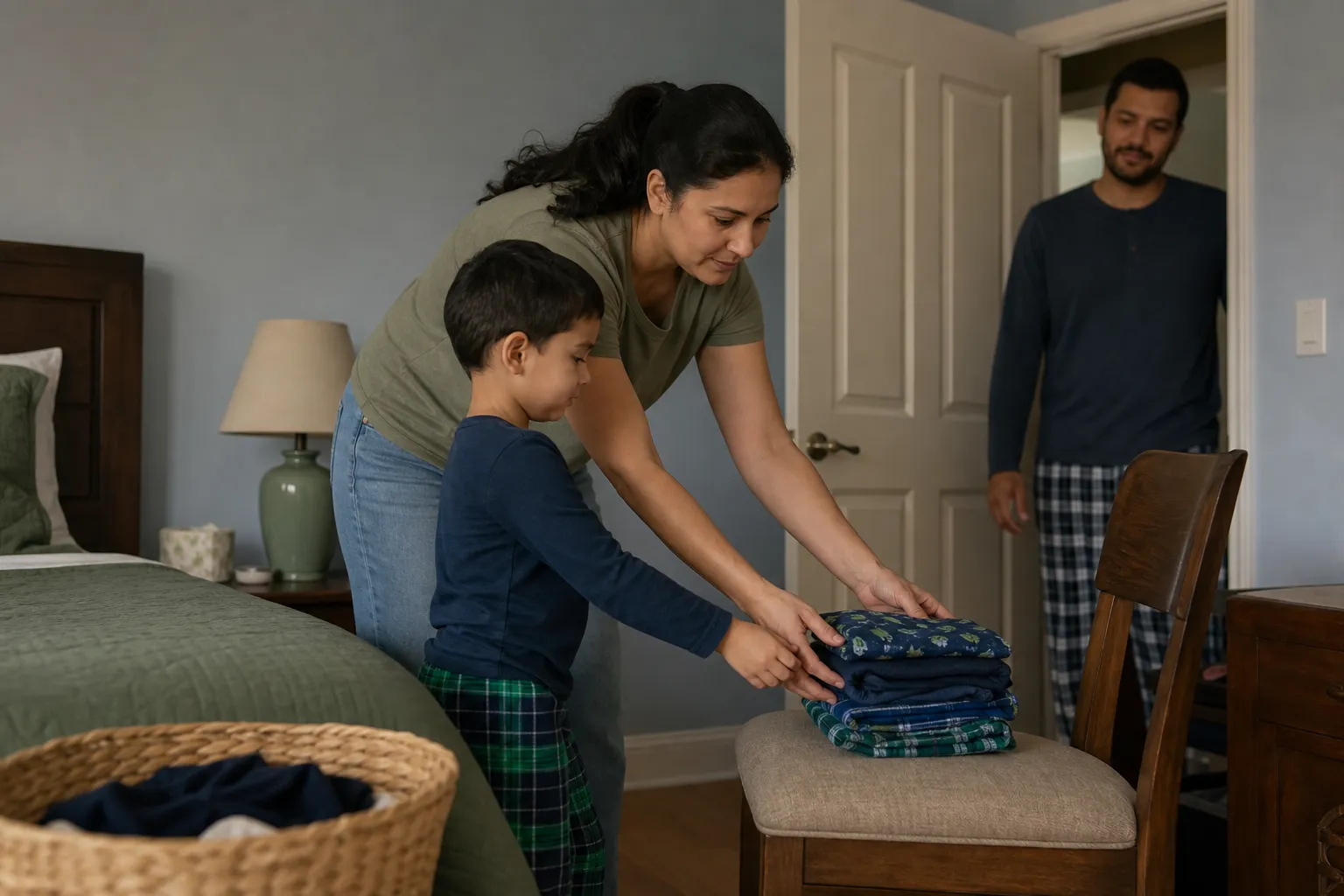
Bedtime is often described as the quiet end of the day, but it can be one of the day’s busiest transitions. A child may be moving away from play, conversation, preferred activities, light, company, or a sense of unfinished business—all while their energy and capacity for change may be low. A bedtime routine social story can give a family a calm way to describe what usually happens, what may feel hard, and how adults and children can prepare together. It is not a script that makes every evening go the same way. Instead, it can make expectations more understandable while leaving room for a child’s preferences, changing needs, and real-life disruptions.
Why bedtime can be a meaningful transition
A bedtime routine is more than a sequence of tasks such as washing, changing clothes, or getting into bed. It can involve a shift in sensory input, activity level, social connection, control, and expectations. Some children look forward to the familiar pattern; others may experience bedtime as an abrupt interruption or may have different needs from one evening to the next. Family routines can offer opportunities for connection and predictability, while still needing to be flexible enough for ordinary changes such as visitors, travel, illness, celebrations, or a late return home.
A bedtime routine social story is a short, personalised explanation of this transition. It can describe the family’s usual evening in concrete, respectful language and acknowledge that different feelings are possible. Rather than presenting bedtime as a test of compliance, the story can explain what is likely to happen, who may be involved, what choices may be available, and what can happen when the routine changes.

The goal is shared understanding, not perfect sleep or perfect behaviour. A child may still be alert, worried, chatty, disappointed, energetic, or not ready to separate at the expected time. Those responses communicate something about the moment; they are not evidence that the child is being difficult. A useful story can help adults approach the transition with curiosity and help the child know that their perspective has a place in family planning.
Possible bedtime experiences related to autism
Autism is a neurodevelopmental difference with wide variation between people. Some autistic children may value a familiar order of events and find unexpected changes especially demanding. At bedtime, a change as small as a different caregiver, a new sound outside, a missing usual item, altered lighting, or an event that runs late may make the transition feel less predictable. Other autistic children may not experience these things as major concerns. It is more helpful to notice the individual child’s patterns than to assume a particular bedtime experience because of a diagnosis.
Sensory experiences may also be relevant for some autistic children. A bathroom fan, toothbrush texture, pyjama seams, warmth, darkness, household noise, or the feeling of moving from an active room to a quiet one may be comfortable, neutral, unpleasant, or variable. Communication differences can matter too: a child may have trouble explaining that something feels different, may communicate it indirectly, or may need more time to process a request and respond. A personalised story can name observable parts of the evening without deciding what the child should feel about them.
For example, a story might say, “Sometimes the house sounds different at night, and I can tell an adult if a sound is bothering me.” This is an example of language that leaves space for the child’s experience rather than promising that bedtime will always feel calm. Families may choose to include the child’s own words for sensations, worries, comfort, privacy, or connection, if the child wants to share them.
Possible bedtime experiences related to ADHD
ADHD can involve differences in attention, activity, impulse control, and executive functioning, although experiences vary widely. For some children with ADHD, switching from a highly engaging activity to bedtime can be particularly difficult. They may become deeply absorbed in what they are doing, lose track of time, think of many ideas at once, seek more movement or conversation, or remember an important task just as the household is settling down. None of these possibilities mean a child does not care about the routine.
Remembering and organising several steps can also take considerable effort for some children. A child may know what usually happens but still find it hard to begin, continue, or return to a task after an interruption. Tiredness can further affect attention, flexibility, and emotional regulation. Adults may see delays or repeated requests as intentional resistance when the child is actually having trouble shifting gears, sequencing actions, or communicating what they need.
A bedtime routine social story can reduce the amount a child has to infer in the moment. It may describe the broad order of the evening, identify that adults can give reminders, and explain that a child can ask a question or share a concern. It should avoid implying that the child can simply choose concentration, calmness, or sleep. A respectful story focuses on the actions and relationships around bedtime, not on demanding a particular internal state.
What to include in a personalised bedtime routine social story
Begin with the family’s actual routine, not an idealised version. Think about the recurring parts of the evening: arriving home, finishing an activity, eating, washing, changing, spending time with family, using the bathroom, saying goodnight, or settling in a sleeping space. Not every household includes the same steps, and the order may differ across days. The story can use names or roles that feel natural to the child, such as Dad, Nana, my carer, or my teacher when the setting is residential or educational.
Include information that answers practical questions a child may have: what usually happens first, what happens next, who is available, where people will be, and what may change. If there are genuine choices, name them honestly. Possible choices might include which clean sleepwear to wear, whether to say goodnight in words or another familiar way, whether to have a brief conversation before separating, or which of two ordinary activities happens first. Do not present a choice if adults cannot reasonably honour it that night; false choices can make a routine feel less trustworthy.
It can also be helpful to describe exceptions. Some nights may be later than usual, another adult may help, a sibling may be noisy, or a family event may change the order. A story can state that changes sometimes happen and that an adult can explain the plan when possible. This does not eliminate disappointment, but it avoids the inaccurate message that every evening will be identical. When routines and predictability are important to a child, clear notice of what is known—and honesty about what is not known—can be more reassuring than overpromising consistency.
Creating the story with the child and using it thoughtfully
A personalised story is strongest when it reflects the child rather than being written only about them. Depending on their communication style and interest, a child may contribute words, point out steps that were missed, explain what they dislike about an adult’s phrasing, choose how they are referred to, or decide they do not want to participate. Parents, carers, and educators can also compare observations: perhaps the child manages one version of the routine comfortably at home but finds evenings harder after a demanding school day. Collaboration can reveal patterns without treating those patterns as fixed traits.
Use plain, non-judgmental wording. Describe what adults do as well as what the child may do. For instance, adults can explain changes, listen, and make space for questions; this prevents the story from placing all responsibility on the child. Avoid language that labels a child as naughty, lazy, dramatic, or noncompliant. Avoid promises such as “I will fall asleep quickly” or “I will never feel worried,” because sleep and feelings cannot be guaranteed.
The story can be revisited before bedtime at a time when the child is more available for conversation, rather than introduced only during a tense moment. Some families may prefer to talk through it after a calm evening and revise it together. Others may use it only around a new schedule, a change in caregivers, a holiday, or a return to school. If the story seems to increase pressure, frustration, or conflict, that is useful feedback: its language, detail, timing, or assumptions may need to change. The child’s comfort and voice matter more than completing the story in a particular format.
Keeping bedtime support realistic and relationship-centred
Family routines can be valuable because they create repeated opportunities for shared expectations and connection, as the American Academy of Pediatrics notes in its discussion of family routines. Yet a routine is not a measure of family success. Evening plans may need to change because of work, transport, siblings, appointments, cultural practices, shared living arrangements, or the simple unpredictability of everyday life. A flexible, truthful bedtime social story can recognise both the comfort of a usual pattern and the reality that people sometimes need to adapt.
It may help to notice what happens around difficult evenings without rushing to a conclusion. Consider whether the routine changed, whether the day was unusually demanding, whether the child had less time for connection, whether a sensory aspect was different, or whether the child is trying to communicate an unmet need. These observations can guide a more accurate story and a more respectful conversation. They are not a way to diagnose a child or assign blame.
If bedtime concerns are persistent, are causing significant distress, or raise questions about health, sleep, or safety, families can consider discussing their observations with an appropriate qualified professional. A social story is an informational and communication support, not a medical assessment or treatment. Its practical value comes from helping a family name the transition, make honest plans, and respond to the individual child in front of them.
Frequently asked questions
What is a bedtime routine social story?
A bedtime routine social story is a brief, personalised explanation of what typically happens in the evening. It can describe the usual order of events, people involved, possible choices, and what may happen when plans change. It is designed to support understanding and preparation, not to guarantee sleep or require a child to behave in one specific way.
Can an autism bedtime routine social story include sensory needs?
Yes, when those details are relevant to the individual child. A story might neutrally mention parts of bedtime that can feel different, such as noise, lighting, water, clothing, or separating from family. It should not assume that every autistic child has the same sensory experiences, and it should use the child’s own language and preferences where possible.
How often should we change a bedtime social story?
There is no fixed schedule. It can be updated when the household routine changes, when a child identifies inaccurate wording, or when a detail no longer fits. A story can also remain broad enough to cover ordinary variation. Revising it together can show that the child’s feedback is welcome and that family plans can evolve.
Keep exploring
Related social stories
These guides cover situations with similar routines, sensory details or preparation needs.




Learn more about writing a social story
Read what a social story is, follow the step-by-step writing guide, or browse more social story examples.
Sources
- Autism spectrum disorder — Centers for Disease Control and Prevention
- About ADHD — Centers for Disease Control and Prevention
- The importance of family routines — American Academy of Pediatrics
