
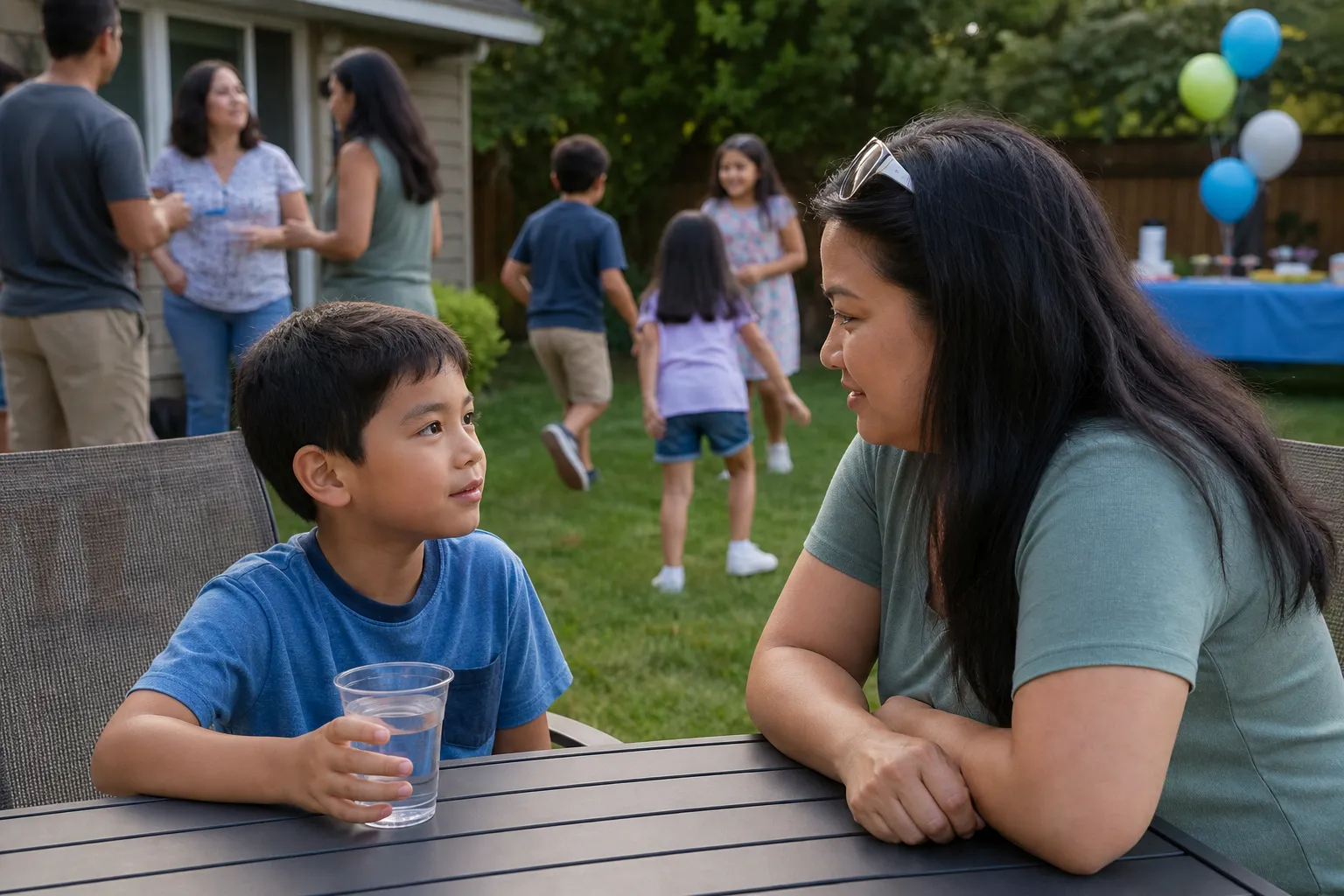
A birthday party can contain several different events packed into one small window: arriving somewhere unfamiliar or differently arranged, seeing people, waiting, eating, opening gifts, playing, singing, and leaving. Any one part may feel enjoyable, neutral, tiring, confusing, or too intense for a particular child. For an autistic child, the uncertainty between those moments can matter as much as the party itself. A personalized birthday party social story can help a family or educator talk through the likely flow of the day without assuming that the child will feel one particular way or need to participate in one particular way. The aim is not to make a child act like other guests. It is to make expectations more knowable, describe genuine choices, and create room for the child’s own experience.
Why birthday parties can be complicated, even when they are welcome
The phrase “birthday party” can sound simple to adults, but it may represent many changing social expectations. A child may not know who will be there, whether adults expect a greeting, how long games will last, where food will be served, what happens when a gift is opened, or when it is acceptable to leave. The plan may also shift in ways that are ordinary for a party: a guest arrives late, rain moves an activity indoors, music starts unexpectedly, or the birthday child becomes tired. A party social story can turn a broad, unpredictable event into a description of specific moments that are more relevant to one child.
For some autistic children, social information may take extra energy to notice or interpret in a busy group. That does not mean the child lacks interest in other people or does not understand friendships. They may prefer direct information over implied rules, need more time to respond, communicate excitement quietly, or choose to observe before joining. A useful social story can name these possibilities respectfully. It can explain what other people may do while also confirming that there can be more than one acceptable way for the child to take part.

A child’s temperament can shape party experiences too. The American Academy of Pediatrics notes that children differ in traits such as activity level, adaptability, intensity, and approach to new situations. These differences are not a measure of good behavior or parenting. A child who usually enjoys gatherings may still find one party difficult, while a child who often watches from the edge may have a wonderful time. Preparing for the actual event and the individual child is more useful than relying on labels or assumptions.
Sensory experiences may change what the party feels like
Sensory experiences are often central to party planning. Balloons popping, a room full of overlapping voices, birthday singing, clapping, party horns, scented foods, crowded tables, costume textures, bright decorations, and sticky hands can each be noticeable. For one child, these may be fun parts of a celebration. For another, one or several may be distracting, uncomfortable, painful, or exhausting. Sensory responses also can vary from day to day depending on sleep, hunger, illness, recent demands, and the setting.
A personalized autism birthday party social story can describe the sensory parts honestly rather than promising that the event will be quiet or easy. It may say that people might sing loudly, that the room could be crowded, or that some food smells may be strong. If the host or family has shared practical details, the story can identify where activities are likely to happen, whether the celebration is inside or outside, and which parts are expected to be louder. It should distinguish facts from uncertainty: a child deserves to know when the plan is known and when plans sometimes change.
Preparation can include discussing possible choices that are genuinely available. Depending on the family, venue, and host, those choices might include arriving after a busy beginning, standing farther from a speaker, spending time in a quieter nearby area, skipping a game, having familiar food before or after the event, or leaving before the final activity. These are possibilities, not requirements or universal solutions. The story should only include options that adults are truly prepared to honor. A choice that disappears in the moment can increase uncertainty rather than reduce it.
Anxiety, uncertainty, and the pressure to look happy
[Anxiety] can affect children in many ways, including worries about unfamiliar situations, physical discomfort, difficulty settling, repeated questions, avoidance, or a strong need to know what comes next. These signs can also have other explanations, and a party reaction alone cannot identify an anxiety condition. The Centers for Disease Control and Prevention describes anxiety and depression in children as concerns that can affect daily life and encourages caregivers to seek professional input when worries or mood changes are persistent or impairing. A social story is a planning and communication resource, not an assessment or treatment.
At a birthday party, pressure can come from expectations that are rarely said aloud. A child may think they must smile at every gift, hug every relative, play every game, eat cake, remain until the end, or seem excited in a recognizable way. Adults can reduce guesswork by explaining that people show feelings differently and by describing the specific expectations that really matter. It can also help to state that a child may be excited and overwhelmed at the same time, or may not know how they feel until later.
The social story can make uncertainty visible without trying to erase it. It might identify predictable steps, such as travel, arrival, activities, food, and departure, while acknowledging that timing can change. Include who the child can approach if they have a question or want to leave an activity, but avoid presenting that person as responsible for making every feeling disappear. Clear information and trusted connection may make a situation easier to approach; they do not guarantee a particular emotional outcome.
Building a personalized birthday party social story
The most effective birthday party social story is specific enough to be recognizable and flexible enough to remain accurate. Start with the purpose of this particular gathering: whether the child is attending another person’s party, celebrating their own birthday, meeting family at a restaurant, or having a small event at home. These situations can involve very different expectations. A story for the birthday child may need to cover attention from guests, gifts, and changes to their usual home space. A story for a guest may focus more on greeting, following the host’s plan, and saying goodbye.
Gather ordinary details from the host, venue, or family when possible. Useful facts can include the address, travel plan, approximate start and finish time, names of familiar attendees, the likely number of people, planned activities, food arrangements, gift customs, and the expected departure plan. Do not add traditions simply because they are common. Some families do not open gifts during the party, sing, serve cake, or organize games. Accuracy helps the child build trust in the story.
Use first-person or third-person wording according to what the child finds most comfortable. Keep sentences concrete and calm. Describe likely events before describing choices and support. For instance, explain that guests may be talking at the same time before mentioning that the child may choose how close to stand. Avoid commands such as “I will be good,” “I must have fun,” or “I will not get upset.” These statements can imply that natural reactions are failures. A better approach is to explain what may happen and what the child can do if they want something different, provided those options are real.
Including participation, consent, and emotional regulation
A party story can explain social customs without turning them into compulsory performance. Some guests may say hello, give a gift, sing, dance, join games, or thank the host. The child may participate in ways that fit them, including using their own communication style, watching, joining briefly, speaking through a familiar adult, or taking part in selected activities. If a family expects a particular action because of culture, safety, or the host’s setting, it is kinder to describe that expectation plainly and discuss any realistic alternatives beforehand.
[Emotional regulation] is not the same as staying calm at all times. It involves noticing and responding to changing feelings and body signals, often with help from others. At a party, a child may become more energetic, quieter, frustrated when a game changes, disappointed about food, or upset when it is time to leave. These responses can be meaningful information about the child’s experience. A social story can name early signs the child already recognizes, such as wanting less conversation or needing more space, without claiming that all children experience distress in the same way.
Adults can decide together how the child may communicate a need for a pause, clarification, food, water, movement, or departure. The details should fit the child’s communication preferences and the context. It can be helpful to clarify who will notice, who can make decisions about leaving, and whether the child may return after time away. These conversations are not a promise that hard feelings will never occur. They give adults a chance to respond consistently and show the child that participation does not require ignoring discomfort.
Reviewing the plan together and learning from the day
Read or discuss the social story at a pace that suits the child, perhaps more than once before the party and again on the day if wanted. Invite corrections. A child may point out a missing concern, ask a highly practical question, or reject an option that adults assumed would help. Their feedback can make the story more accurate. Some children may prefer a brief discussion; others may want detailed information. There is no single ideal format, length, or review schedule.
After the party, revisit the experience without treating it as a test. Ask concrete, low-pressure questions such as which part felt easiest, which part was surprising, and what the child would want known next time. A child may need time before discussing the event, and their account may differ from what adults observed. Both perspectives can be useful. Update the story for future gatherings rather than assuming one party predicts all parties.
For broader, non-diagnostic context, the Centers for Disease Control and Prevention’s information on [autism] explains that autistic people can have varied social-communication and sensory-related experiences. Its information on anxiety and depression in children offers guidance on when caregivers may wish to speak with a health professional about ongoing concerns. The American Academy of Pediatrics’ discussion of temperament can help adults frame differences in responsiveness and adaptability without blame. If worries about anxiety, distress, or daily functioning are persistent, intense, or affecting the child beyond a single event, a qualified clinician who knows the child can offer individualized guidance.
Frequently asked questions
What should an autism birthday party social story include?
Include only details that are relevant and reasonably likely: where the party is, who may be there, how the child will arrive and leave, common activities, food or gift customs, possible sensory experiences, and genuine choices for participating or taking a break. Mention what may change, too. The story does not need to cover every possible outcome.
Can a birthday party social story help if a child has anxiety?
It may help a child and adults talk through uncertainty, identify questions, and agree on honest options before the event. It cannot diagnose anxiety, prevent distress, or guarantee that a party will feel comfortable. If worries or distress are ongoing or interfere with everyday life, consider discussing them with an appropriate health professional.
Does a child need to join every party activity?
Not necessarily. Expectations differ by family, host, culture, venue, and safety needs. A personalized story can clarify which activities are optional, what alternatives are truly available, and how the child can communicate their preference. Participation can look different from one child to another.
Keep exploring
Related social stories
These guides cover situations with similar routines, sensory details or preparation needs.

Learn more about writing a social story
Read what a social story is, follow the step-by-step writing guide, or browse more social story examples.
Sources
- Autism spectrum disorder — Centers for Disease Control and Prevention
- Anxiety and depression in children — Centers for Disease Control and Prevention
- Understanding your child's temperament — American Academy of Pediatrics
