
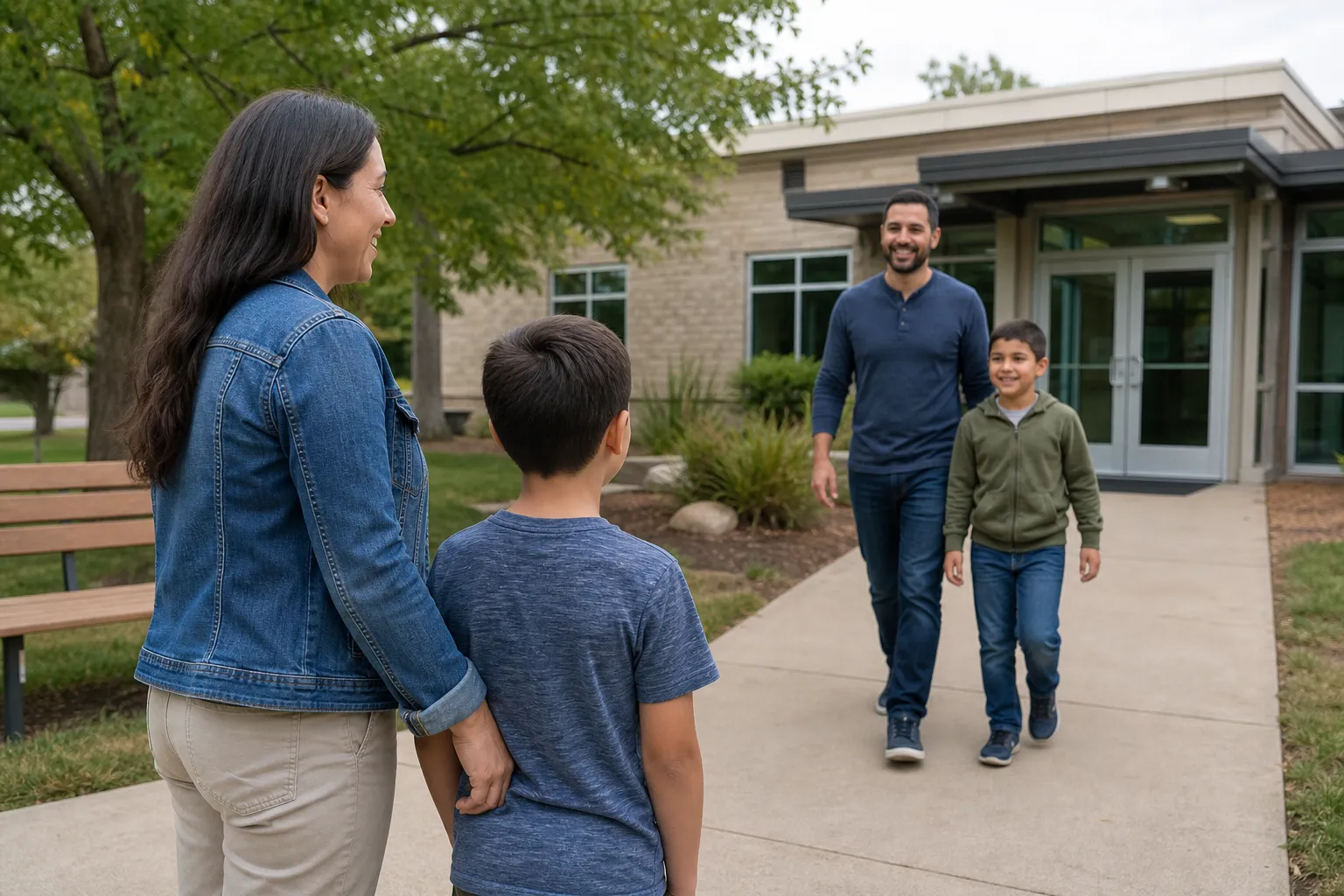
Meeting someone new is not one single task. It can involve noticing an unfamiliar person, deciding whether to approach, interpreting a greeting, finding words or another way to respond, managing uncertainty, and leaving when the interaction is over. For some children and adults, that sequence feels interesting; for others, it may feel tiring, confusing, private, or unpredictable. A meeting new people social story can give a family, carer, educator, and individual a calm way to talk through a specific upcoming situation without treating one social style as the only acceptable one. The purpose is preparation and shared understanding, not teaching someone to mask, perform friendship, or tolerate distress for other people’s comfort.
Why meeting new people can feel bigger than it looks
Everyday social activities can bring new people into a person’s space: a neighbor visits, a class starts, relatives gather, a club meets, or a child joins a play activity. Adults may see these as ordinary moments, but the details are often unknown to the person expected to take part. Who will be there? How long will it last? Will people ask questions? Is conversation expected? Can someone watch quietly? What happens if the person wants to leave? A personalized social story can make room for these questions before the event rather than assuming that a broad instruction such as “be friendly” is clear or comfortable.
The phrase “meeting people” can also hide different goals. Someone may want to say hello and then return to their activity. Someone else may want to learn a name, share an interest, play alongside another person, or have a longer conversation. Another person may prefer not to interact at all on a particular day. None of these possibilities automatically shows a lack of interest in others. A useful meeting people social story describes the actual context and allows for more than one valid level of participation.
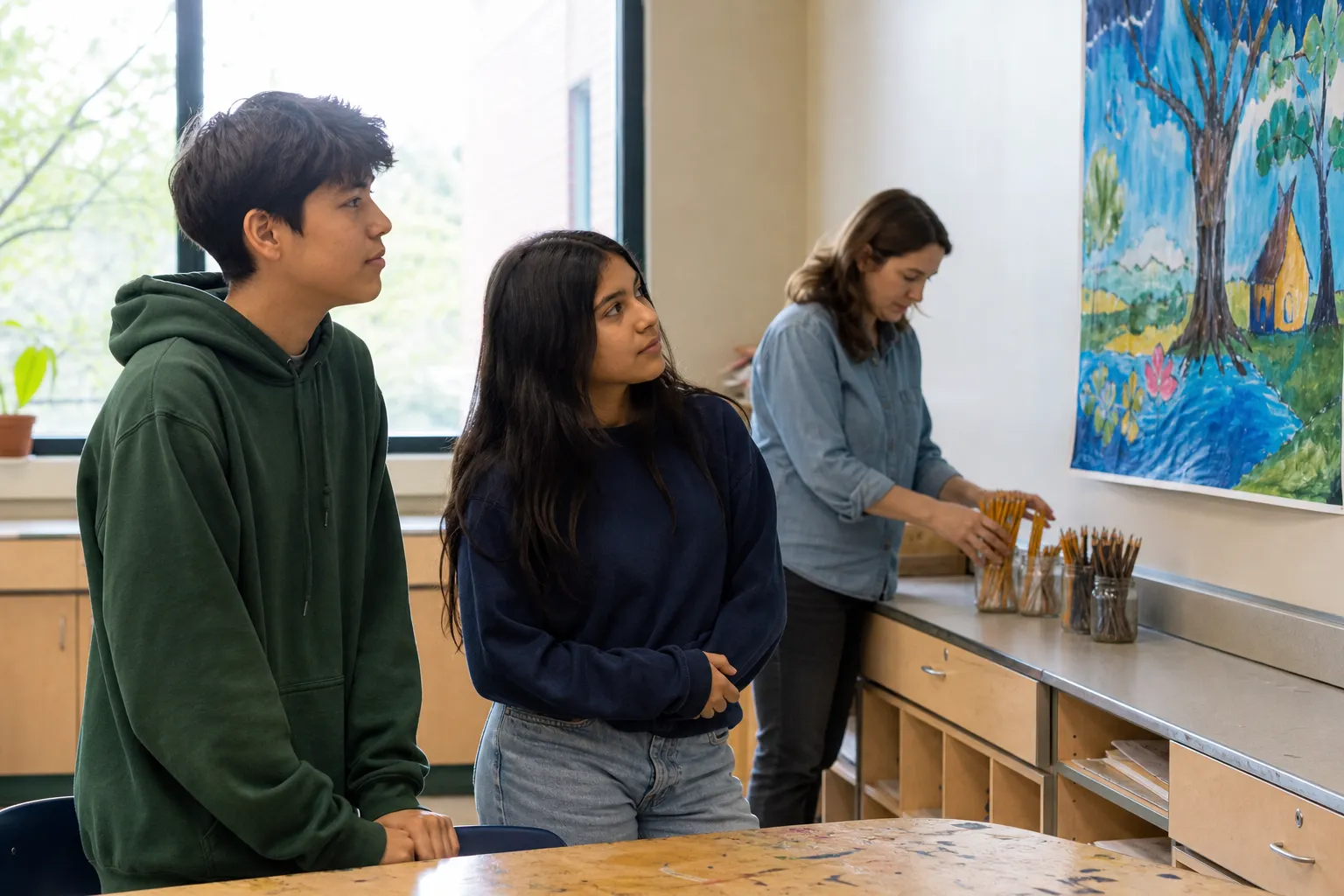
Preparation works best when it is grounded in what is true. Families can identify the place, the people who are likely to be present, the start and likely end of the activity, and the parts that remain uncertain. It can be honest to say that plans sometimes change, that not everyone responds in the same way, and that a new person may be busy or may not wish to talk. This helps avoid promising a smooth or friendly outcome that nobody can guarantee.
Possible autism-related experiences in unfamiliar social situations
Autism spectrum disorder is a broad neurodevelopmental variation, and autistic people have individual strengths, preferences, sensory experiences, communication styles, and support needs. It is not accurate to assume that every autistic person dislikes meeting people or has the same social goals. Some people may be eager to connect around a shared interest, while others may need time to observe before deciding whether interaction feels right. A social story can be personalized around the individual’s own experience rather than around stereotypes about autism.
For some autistic people, novelty can create a high amount of information to process at once. An unfamiliar face, a new voice, changing group dynamics, background noise, touch expectations, or an unclear turn-taking pattern may all require attention. It may be difficult to know when a greeting has ended, whether a question needs an answer immediately, or how much detail another person expects. This does not mean the person is being rude or uncooperative. It may mean that the social situation has many unstated rules, or that the person is using energy to process several things at the same time.
A meeting new people social story autism resource can name concrete options without implying that there is one correct social performance. Depending on the person and setting, possibilities might include looking toward someone, using a familiar greeting, waving, communicating through a preferred method, standing nearby while another person talks, or choosing not to begin a conversation. It can also acknowledge that eye contact, smiles, handshakes, and immediate verbal responses are not universal signs of respect or engagement. A family can decide which details genuinely fit the individual and omit those that do not.
Anxiety, uncertainty, and the right to take interactions at a personal pace
Anxiety can involve worries, physical feelings, avoidance, or a strong need for predictability, although only a qualified professional can assess or diagnose an anxiety condition. Meeting unfamiliar people may bring concerns about being judged, saying the wrong thing, being asked personal questions, or not knowing how to exit an interaction. These concerns may be especially intense before a new class, group activity, party, appointment, or family event. They are not necessarily visible to others.
A personalized social story can make uncertainty discussable. It might distinguish what is known from what is unknown: the event may begin at a particular time, while the exact conversation topics cannot be predicted. It can recognize that people have different reactions to new situations and that nervousness can occur alongside curiosity, excitement, irritation, or no strong feeling at all. Naming a range of possible feelings is often more respectful than declaring that someone will feel calm or happy.
Choices can be written in plain, realistic terms. A person may decide to arrive and observe first, stay close to a familiar person, take part for part of an activity, greet one person rather than a group, or leave when the planned event ends. These are possibilities, not requirements, and their suitability depends on the person, the setting, and family circumstances. A social story is not a promise that anxiety will disappear, nor is it a replacement for individualized health or mental-health support when that support is wanted or needed.
Communication differences: making room for more than one way to connect
Communication differences can affect how a person understands language, expresses ideas, follows conversation, uses speech, or responds under pressure. Communication is not limited to speaking quickly or making small talk. A person may use spoken words, pauses, gestures, facial expression, writing, sign, a communication system, or a combination of approaches. Their communication may change with fatigue, excitement, sensory load, familiarity, or the demands of a group.
New interactions often contain indirect language that can be difficult to interpret. A person may not know whether “How are you?” is a brief greeting or a request for detailed information. They may take extra time to answer, focus on a topic that matters to them, or not recognize that another person wants a turn. Conversely, they may understand much more than they can easily express in the moment. A thoughtful meeting new people social story can describe likely communication patterns in the specific setting without portraying the individual as a problem to be fixed.
It can also state boundaries around personal information and conversation. New people may ask a person’s name, interests, school, work, or family details, but the person does not have to answer every question. It can be useful to include that a pause is allowed, that a person may communicate in their usual way, and that adults can help clarify a situation when invited or needed. Example sentences that might be adapted are: “I can take time before I answer.” “I can say no thank you to a question.” These are examples, not a complete social story or a required script.
How families can personalize a social story together
A social story is most useful when it is about one identifiable situation rather than an abstract lesson about making friends. A family might focus on meeting a new teammate at a weekly activity, being introduced to a relative at home, or joining a new after-school group. Start with the person’s perspective: what do they already know, what do they want to know, what parts seem easy, and what parts feel unclear or unwanted? Their answers may be spoken, written, indicated, observed over time, or shared through a preferred communication method.
The content can separate facts, possibilities, and choices. Facts might include the location, familiar people attending, expected activity, and approximate timing. Possibilities might include other people introducing themselves, talking about the activity, playing separately, or changing the plan. Choices might include offering a greeting, responding later, asking a question, listening, moving to another part of the room, or ending a conversation. This structure avoids presenting guesses as certainties and avoids framing compliance as the goal.
Include social reciprocity without assigning all responsibility to the child or adult who is preparing. Other people may need reminders to wait, accept a nonverbal greeting, avoid touching without permission, respect a declined question, or understand that silence is not necessarily rejection. A social story can help carers and educators notice their own role in making an interaction less pressuring. It should not be used to demand eye contact, speech, physical contact, or participation beyond a person’s consent and capacity.
Using the story as a flexible preparation conversation
Some families may choose to revisit a social story before an event, while others may discuss it only once or return to selected details when plans change. The timing, format, and amount of repetition are individual choices. What matters is whether the material remains accurate, respectful, and relevant. If an event is no longer happening, a story can be changed; if a person’s preferences change, the options in it can change too. A personalized resource should be allowed to grow with the person rather than becoming a fixed rulebook.
After an event, a low-pressure review can help separate what happened from assumptions about success or failure. A person may have enjoyed watching, liked one conversation, disliked the noise, felt unsure what a question meant, or wanted more time. They may also have had no wish to discuss it immediately. These responses can guide future personalization. The aim is not to measure whether someone met an expected number of people, but to understand what made the experience workable, meaningful, difficult, or unimportant for them.
For educators and carers, this approach supports dignity. Meeting new people is an opportunity for connection, but connection cannot be forced and does not have to look conventional. A carefully tailored meeting people social story can help everyone share expectations, respect communication differences, and recognize consent and autonomy within ordinary social activities. It offers preparation for a particular moment while leaving room for real people to respond in real, unpredictable ways.
Frequently asked questions
What should a meeting new people social story include?
Include details that are true for the specific event: where it will happen, who is likely to be there, what the activity may involve, what is known or unknown, and choices the person may have. It can also explain that greetings, conversation, silence, and leaving are handled differently by different people. Avoid promises that everyone will be friendly or that the person will feel a particular way.
Is an autism meeting new people social story only for children?
No. A social story can be personalized for a child, teenager, or adult when it reflects that person’s communication style, preferences, and actual setting. Autism is diverse, so the content should not assume a shared experience or use goals that matter more to other people than to the individual.
Can a social story make anxiety about meeting people go away?
A social story may help a person and their supporters talk through an unfamiliar situation and reduce some uncertainty, but it cannot guarantee a feeling or outcome. Anxiety can have many causes and vary over time. If worries are persistent, distressing, or affecting daily life, families may choose to seek individualized guidance from an appropriate qualified professional.
Keep exploring
Related social stories
These guides cover situations with similar routines, sensory details or preparation needs.
Learn more about writing a social story
Read what a social story is, follow the step-by-step writing guide, or browse more social story examples.
Sources
- Autism spectrum disorder — Centers for Disease Control and Prevention
- Anxiety and depression in children — Centers for Disease Control and Prevention
- Communication disorders — American Speech-Language-Hearing Association
