
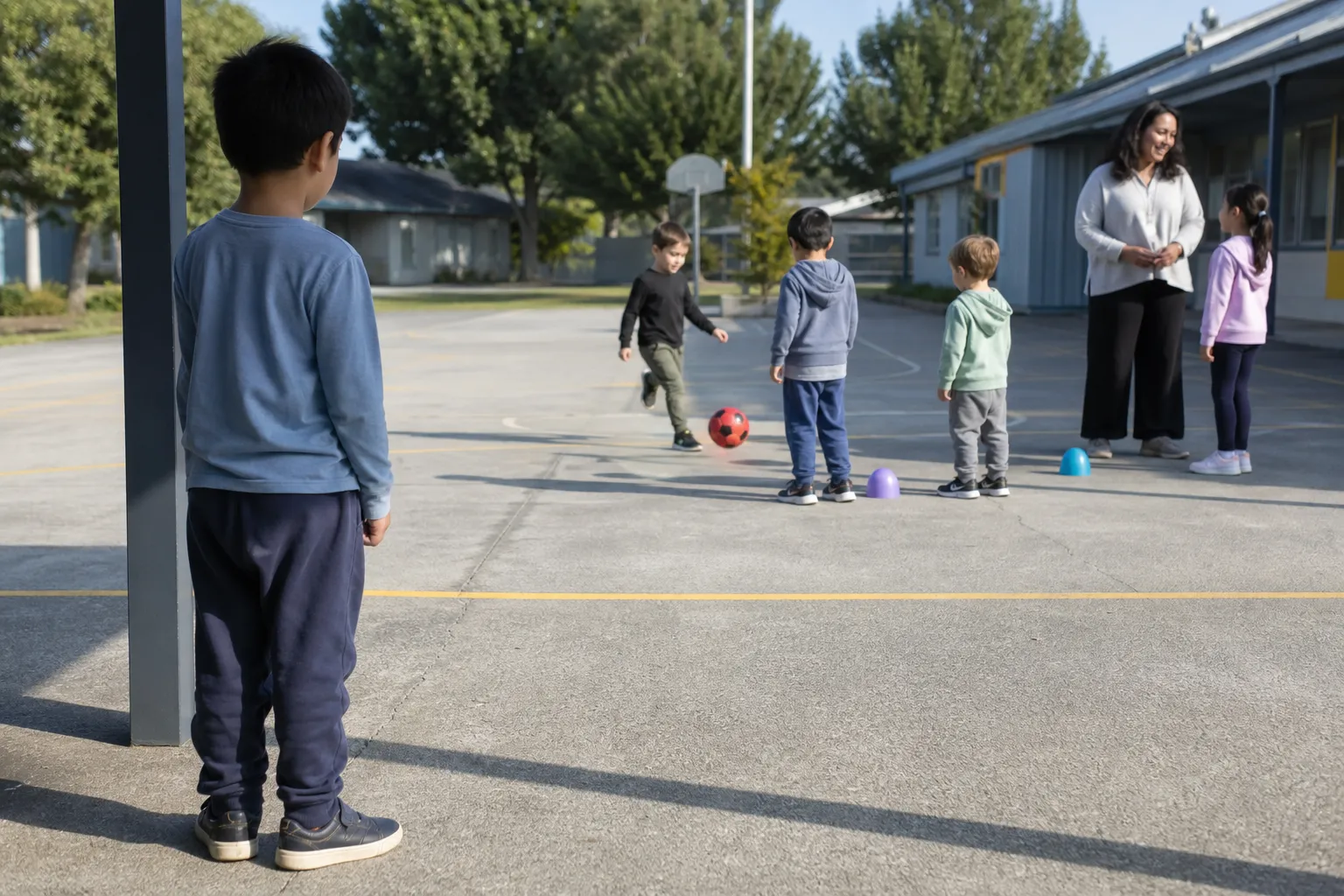
A game can change shape in seconds: the rules may be partly spoken, teams may already be formed, and a child may need to decide whether to watch, ask, wait, suggest something, or do something else. That is a lot of social information to process while other children are moving and expecting a quick response. A personalised playing with friends social story can make those hidden moments more visible without implying that there is one “right” way to play. It can help a child and supportive adult talk through possible choices before a busy playground, classroom free-choice period, party, park visit, or family gathering.
This guide is for creating a joining a game social story that respects a child’s communication style, sensory needs, interests, and right to choose. It does not diagnose autism, ADHD, or communication differences, and it is not medical advice. Children with these experiences are individuals: some may find joining games easy in certain settings and hard in others, while others may prefer parallel play, one-to-one activities, watching first, or spending time alone. The aim is not to make a child appear more social. It is to offer clear, truthful preparation for a situation they may want help navigating.
1. Joining is a transition, not a simple request
Adults sometimes summarize the skill as “just ask to play,” but joining a game often involves several separate tasks. A child may first need to notice that a game is happening, work out whether it is open to another player, identify who is involved, understand the basic aim, find a pause in the action, and decide what they would like to say or do. They may also need to cope with an answer they did not expect. Each part can be more or less difficult depending on noise, familiarity, energy, prior experiences, and the particular group.
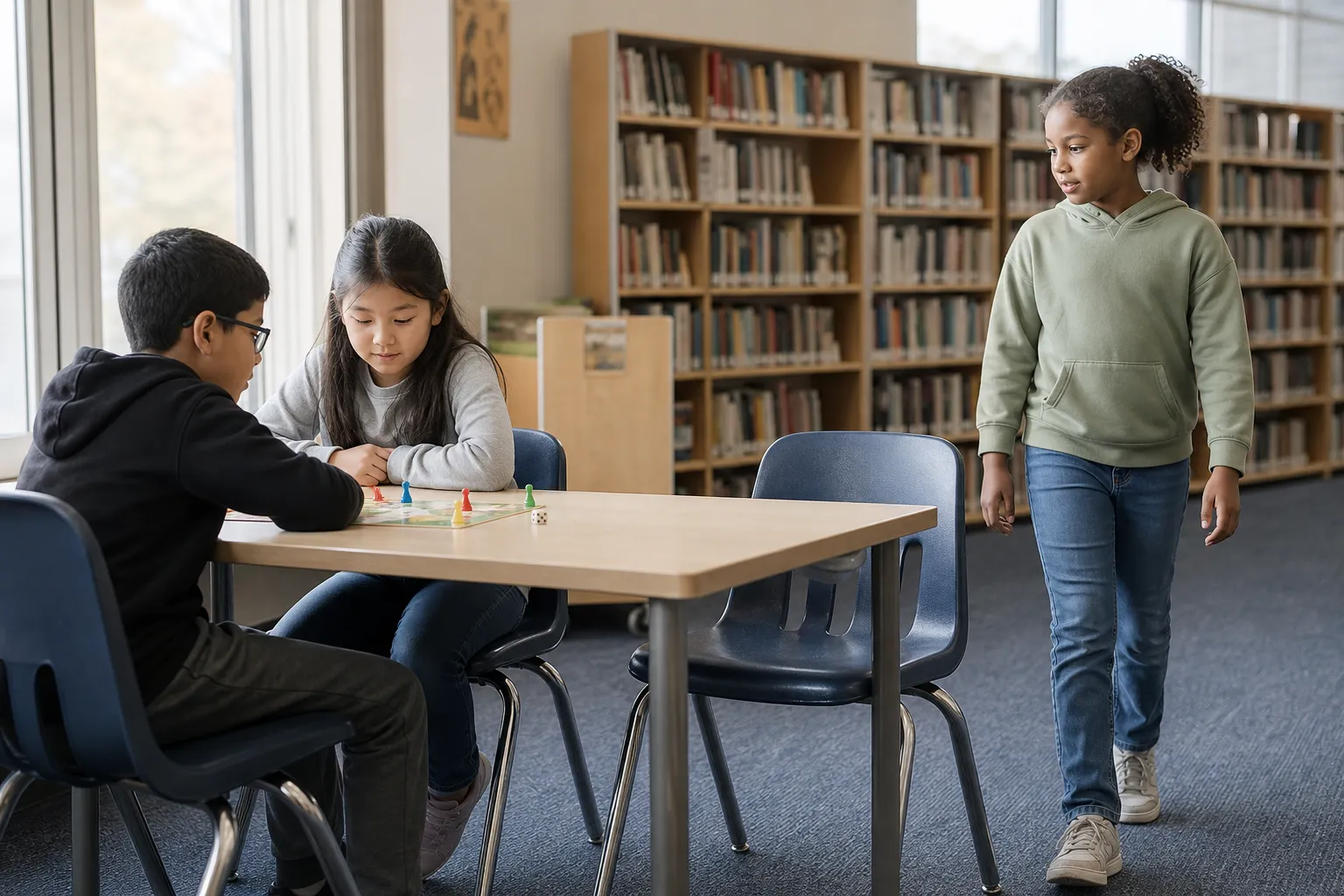
A useful joining a game social story treats entry as a shared situation rather than a test of manners. It can name what the child might see and hear: children running, a ball being passed, a group discussing rules, or classmates building something together. It can also distinguish between a game that may be easy to enter, such as an activity with open spaces, and a game that may need a pause or agreement before another person joins. This gives context to adults’ often vague advice to “wait for the right time.”
The story can be honest that other children may say yes, may need time to decide, may explain that the game has a limit, or may be absorbed and not answer right away. None of these outcomes proves that the child did something wrong or that the other children are unkind. A group can be unavailable in that moment, and a child can still have choices: watch briefly, try another group, ask an adult for information, invite someone to a different activity, or choose a solo activity. These are possibilities, not steps every child must use.
2. Possible experiences connected with autism, ADHD, and communication differences
For some autistic children, the fast-changing, unwritten parts of group play can be tiring or unclear. They may prefer knowing a game’s rules in advance, need longer to observe before participating, notice sensory details such as whistles or crowding, or feel uncertain when rules are changed mid-game. Some autistic children enjoy energetic group games and may be highly knowledgeable about a preferred activity; others may prefer predictable, cooperative, imaginative, or independent play. Autism is a spectrum, so a story should reflect the individual child’s actual experiences rather than assume a shared profile.
Some children with ADHD may be especially drawn to the excitement and movement of a game while also finding it difficult to pause, wait for a gap, remember several rules, shift from one activity to another, or manage frustration when a turn changes. Others may not experience these situations in those ways. CDC information about ADHD describes differences with attention, activity level, and impulsivity that can affect daily settings, but it does not mean a child is deliberately ignoring rules or does not care about friends. A story can neutrally acknowledge that a body or mind may feel ready to jump in, while a game may have its own timing.
Communication differences can affect how a child understands spoken directions, finds words quickly, interprets facial expressions or tone, speaks in a group, uses an AAC system, or responds under pressure. The American Speech-Language-Hearing Association notes that communication disorders can involve speech, language, hearing, or social communication; a child’s strengths and needs vary widely. A child might communicate interest by standing nearby, looking at the materials, signing, speaking, pointing, using their usual communication method, or asking an adult to help clarify what is happening. These are valid starting points when they work for that child and the setting. A personalised social story should use the communication forms the child actually uses, not require eye contact, spoken language, or a particular body posture.
3. What a personalised playing with friends social story can include
A social story works best when it is specific to one child and one likely setting. Rather than writing broadly about “making friends,” focus on a recognizable moment: arriving at recess when classmates are playing tag, walking into an after-school club where a board game has started, or seeing cousins play in the yard. Add only details that are likely to be true. Who might be there? Where could the child stand while deciding? What signals might show that it is a good moment to ask? What could make the environment feel busy or confusing?
Use descriptive language more often than directive language. Describe the game as it usually happens and name the child’s possible choices. Acknowledge their perspective: they may feel excited, unsure, disappointed, curious, rushed, or uninterested. Also acknowledge that feelings can change. The story can say that it is okay to need a moment, ask what the rules are, or decide not to join. This protects the child’s autonomy and makes the information more believable than a script that promises an easy outcome.
Keep the purpose practical. A playing with friends social story may cover how to find out whether a game is open, how to communicate interest, what to do while waiting, how to understand a response, and how to leave if play stops being enjoyable. It can also mention that friends may play differently from the child. For example, one group may enjoy loud competition while another prefers quiet building. Difference is not automatically a problem; sometimes it simply means the child may look for a better match or suggest a different activity.
4. Turning hidden social information into concrete, honest options
Children may benefit when adults replace broad phrases such as “be friendly” or “join nicely” with observable information. In a running game, a possible opening may be when players pause to choose teams, retrieve an object, or talk about the next round. In a tabletop game, it may be when a round ends or someone is explaining the rules. In pretend play, it may be when children are deciding what happens next. No cue works every time, and a story can state that the child may not be sure. Not being sure is a normal reason to observe or ask a question.
A short, personalized example sentence might be: “Can I play in the next round?” This is only one possible phrase, not a required script. A child might instead use their usual non-speaking communication, ask “What are you playing?”, or wait nearby for a moment. The most appropriate option will depend on the child, the group, and whether the game has a natural pause.
Include responses that are truthful, including less welcome ones. If others say yes, the child may choose to join, ask about rules, or decide the game is not for them after all. If others say “not yet,” do not respond, or say the game is full, the story can separate the answer from the child’s worth. It may be useful to describe choices such as checking back later, finding another activity, asking a familiar adult what is available, or inviting one person to do something else. An adult can help a child identify which choices are realistic in a particular environment, without insisting that the child must keep trying after a no.
5. Preparing together without rehearsing away the child’s voice
Families and educators can develop the story collaboratively by starting with observation and curiosity. Ask what the child likes about games, what parts are confusing, which people or places feel easier, and what has helped before. A child may want to join because they enjoy the activity, because they want company, because a particular friend is involved, or because they feel pressure to participate. Those reasons matter. A child who does not want to join a game may need support with another goal, such as finding a calm place, protecting a break, or explaining their preference.
Choose a small, realistic scope. A story about one playground game is often more useful than one that attempts to cover every friendship situation. Read or discuss it at a calm time, then revisit it after real experiences. The child can say what was accurate, what was missing, and what felt unhelpful. Updating the wording is not a failure; it is how the story stays connected to their changing experiences and growing knowledge.
Adults can also examine the setting rather than placing all responsibility on the child. Games may be hard to enter because rules are unclear, groups are large, time is short, children are highly competitive, or adults have not noticed who is on the edge of an activity. A personalised story can prepare a child for possibilities, but it cannot make a group consistently welcoming. Warm adult attention, clear information about activities, and respect for all communication styles can influence whether a child has meaningful opportunities to participate. These are contextual considerations, not promises or treatment claims.
6. Reviewing success in a broader way
Success does not have to mean that the child joined the game, stayed for its full length, or made a new friend immediately. A meaningful outcome might be noticing a game they liked, learning one rule, communicating interest, deciding the group was too busy, asking a question, trying for a few minutes, or leaving when they had had enough. It might also be choosing not to join and feeling understood. Looking at outcomes this way avoids turning social participation into compliance.
After an event, use specific, nonjudgmental questions: What did you notice? Was there a part you liked? Was anything confusing, too loud, too fast, or too close? Did the group answer you? Would you want to do something similar again? The child may answer with words, gestures, drawings, actions, or not wish to talk immediately. Give their response time and value it as information.
If repeated difficulties are causing distress or limiting participation that the child wants, families may choose to talk with people who know the child in the relevant setting, such as an educator or activity leader. The goal can be shared understanding of the situation, not changing the child’s identity. For general background, the Centers for Disease Control and Prevention provides information on autism spectrum disorder and ADHD, and the American Speech-Language-Hearing Association provides information on communication disorders. Those sources offer broad context; they cannot tell you what any one child experiences or needs.
Frequently asked questions
What is the purpose of a playing with friends social story?
Its purpose is to make a particular social situation easier to understand and discuss. A personalized story can describe what may happen when a child sees a game, wants to join, is unsure of the rules, receives an answer, or chooses another activity. It should not promise friendship, demand participation, or suggest that a child must communicate in one particular way.
How is an autism joining a game social story different from a general one?
The basic topic can be the same, but the details should reflect the individual child. For an autistic child, that might mean accurately naming a need for predictable rules, time to watch, interest-based play, or a busy sensory environment. It should not assume that every autistic child dislikes groups, avoids eye contact, or needs the same support. The child’s own preferences and experiences guide the content.
Can a joining a game social story include what to do if other children say no?
Yes. Honest preparation can reduce the pressure of treating one response as the only acceptable outcome. Explain that a group may be full, may need a pause, or may not respond quickly, and that this does not define the child. Include realistic options the child may have in that setting, while making clear they do not have to continue trying or stay in an activity that feels uncomfortable.
Keep exploring
Related social stories
These guides cover situations with similar routines, sensory details or preparation needs.
Learn more about writing a social story
Read what a social story is, follow the step-by-step writing guide, or browse more social story examples.
Sources
- Autism spectrum disorder — Centers for Disease Control and Prevention
- About ADHD — Centers for Disease Control and Prevention
- Communication disorders — American Speech-Language-Hearing Association
