
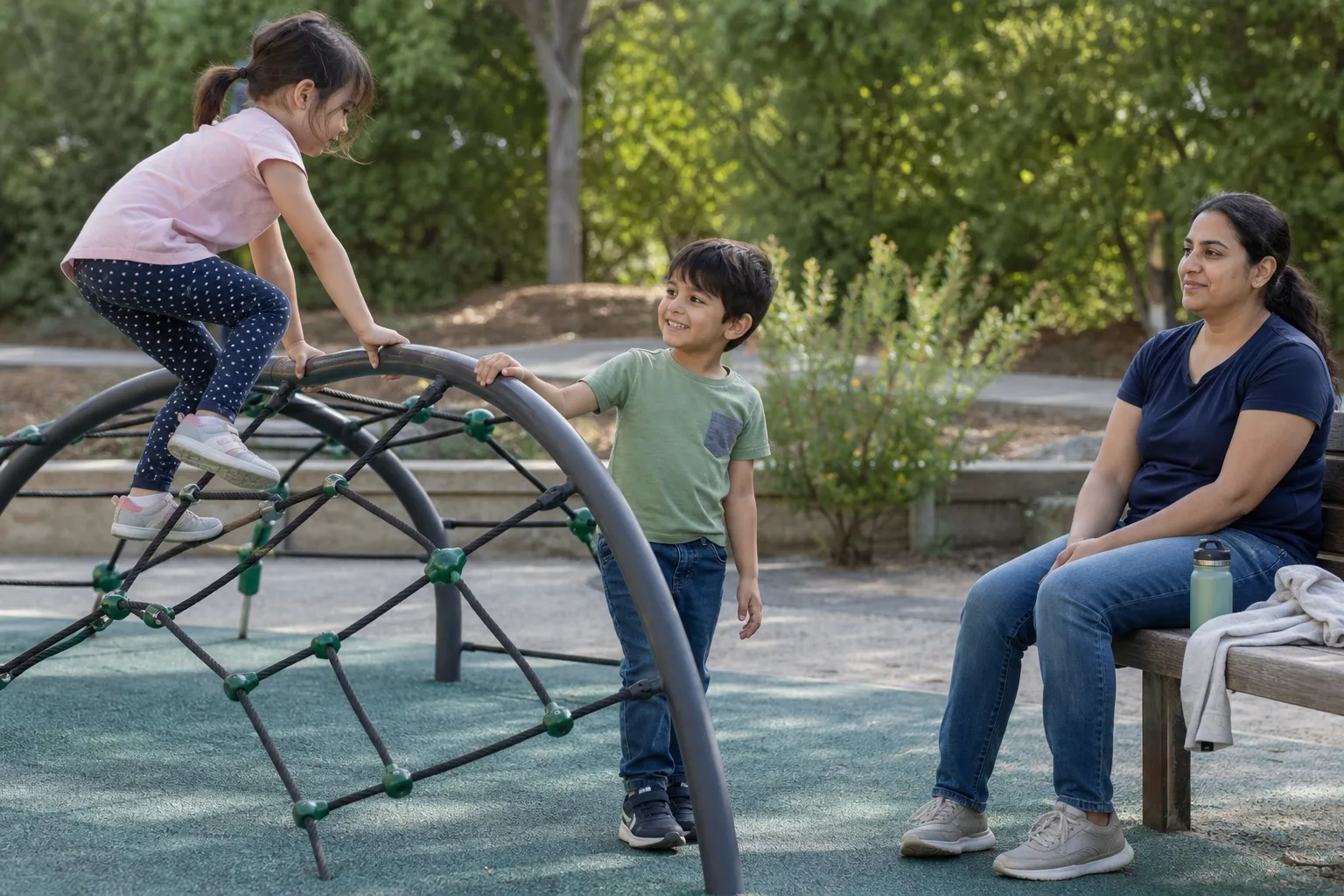
A playground is not just a set of swings and slides. It is a fast-changing social space where children may need to read movement, noise, turn-taking, spoken and unspoken expectations, and their own comfort level at the same time. A personalized playground social story can give a child and the adults around them a shared way to talk through what might happen there. It is not a script for “correct” play or a promise that every visit will go smoothly. Instead, it can describe choices, likely routines, and flexible responses in language that makes sense for one child. This guide is for parents, carers, and educators creating a social story for playground visits in everyday life.
Why playgrounds can feel socially complicated
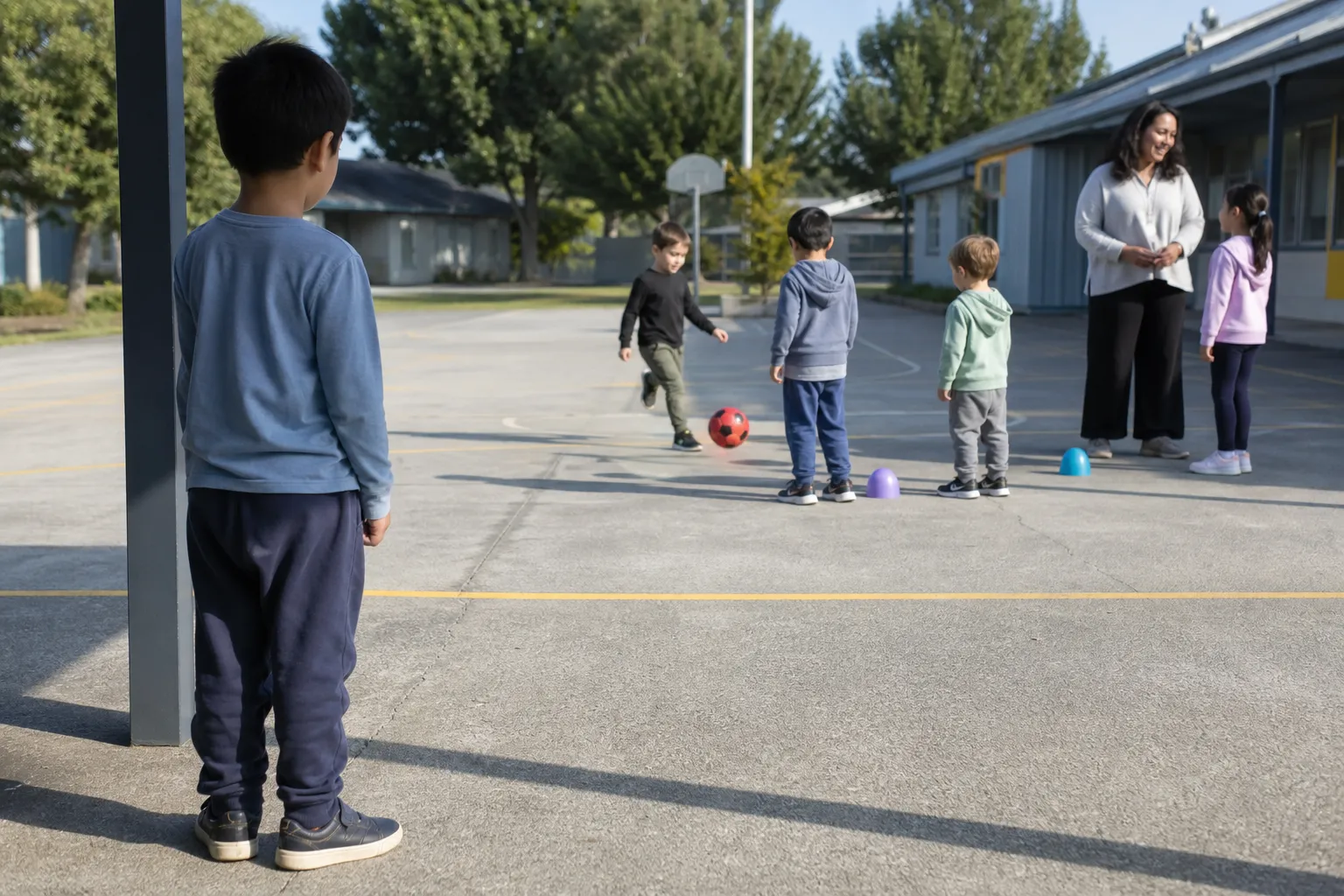
Playgrounds often have few clear rules compared with classrooms or organized activities. Children may arrive and leave at different times, invent games quickly, change the rules, wait unevenly for equipment, or play alongside one another without speaking. A child may enjoy the freedom of this setting, find it tiring, or feel differently depending on the day, the location, and who is there.
A playground social story can make the invisible parts of this environment more discussable. It might cover what the child may notice on arrival, where people commonly walk or wait, how equipment may be shared, what can happen when an area is busy, and who may be available if the child wants help. The point is not to teach a child to tolerate every situation or to make them interact in a particular way. It is to reduce surprises where possible and make room for the child’s own preferences.
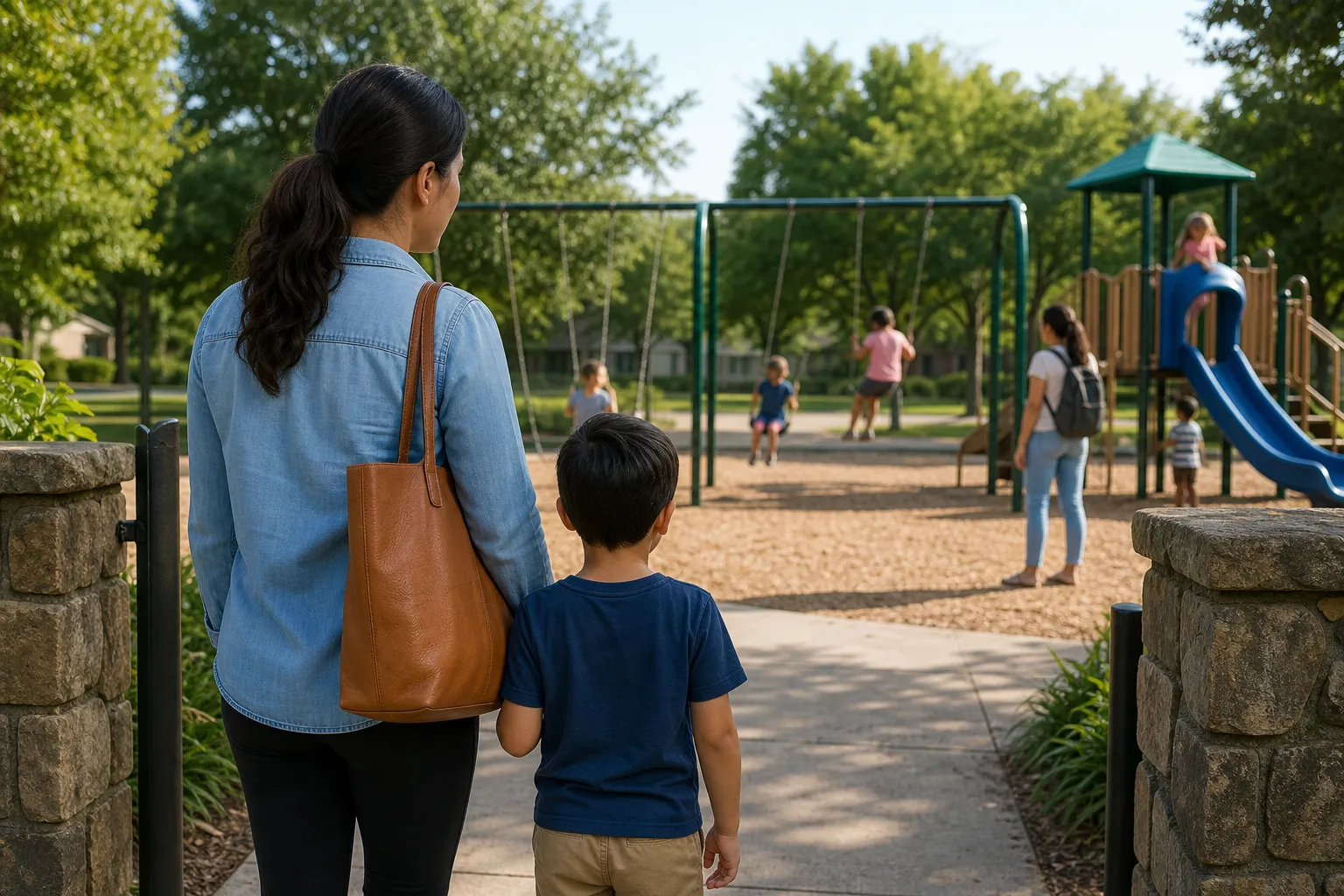
Personalization matters because “the playground” is not one experience. A small, quiet neighborhood play area and a crowded school recess can involve very different sounds, distances, expectations, and opportunities for privacy. A useful social story for playground preparation is specific about the setting: when the visit happens, which entrance is used, which adults may be nearby, what equipment is usually available, and which parts can change. It can also acknowledge honestly that other children’s actions are not fully predictable.
Possible playground experiences for autistic children
Autism is a spectrum, and autistic children have varied ways of sensing, communicating, moving, learning, and relating to others. The Centers for Disease Control and Prevention describes autism spectrum disorder as a developmental disability that can involve differences in social communication and interaction as well as restricted or repetitive behaviors or interests. That broad description cannot predict what any individual child will find easy, difficult, enjoyable, or important.
For some autistic children, a playground may be appealing because of movement, familiar routines, particular equipment, or the chance to play independently near others. For others, or at other times, loud voices, unexpected touch, crowding, rapidly moving children, bright sunlight, or a change in the usual plan may be uncomfortable or overwhelming. Some children may want detailed information about what will happen; others may be more concerned about a favorite activity being unavailable or a game ending abruptly.
Social expectations can also be unclear. A child may not immediately know whether a group is open to another player, whether a child is waiting for a turn, or what someone means by a gesture, joke, or vague invitation. This does not mean the child lacks interest in connection. They may prefer parallel play, a structured game, time with one familiar person, or time alone. A personalized social story can describe these as valid possibilities rather than presenting group play as the required goal. It can include the child’s actual ways of showing interest, declining, resting, or asking an adult to help explain what is happening.
Possible playground experiences for children with ADHD
ADHD can involve patterns of inattention, hyperactivity, and/or impulsivity, although children’s experiences and support needs vary. The CDC notes that ADHD symptoms may affect functioning in different settings. A playground can be a setting where a child feels energetic, inventive, and engaged, while its open space and fast pace may also make certain moments harder to manage.
A child with ADHD may move quickly from one activity to another, become deeply absorbed in an exciting game, act before noticing a queue or another child’s space, or find it hard to shift when it is time to leave. They may also miss part of a spoken instruction when many things are happening at once. None of these possibilities mean that a child is being deliberately difficult. The demands of a particular moment, fatigue, interest, hunger, noise, relationships, and prior experiences can all shape what happens.
A playground social story can name transitions and choices without framing the child as a problem to be fixed. It may explain that an adult could give a heads-up before leaving, that a preferred activity may need to end even when the child wants to continue, or that games sometimes pause when someone is hurt or equipment is being used unsafely. It can also describe what the child can do if they feel full of energy, disappointed, bored, or unsure what comes next. The details should reflect the child’s real environment and the approaches that feel respectful and workable for them.
Communication differences and the social side of play
Children with communication differences may understand, use, hear, process, or respond to communication in different ways. The American Speech-Language-Hearing Association provides context on communication disorders, but a label alone does not tell a family or educator how a particular child communicates. Some children use few spoken words; some communicate clearly but need more time to process; some communicate through gesture, movement, facial expression, sign, writing, or other established methods. A child may also communicate differently when excited, tired, or in a noisy place.
Playground interactions frequently depend on quick exchanges: “Can I have a turn?”, “Do you want to play?”, “That is my game,” or “Watch out.” A child may need time to interpret these messages, may not be understood by unfamiliar peers, or may not want to initiate conversation. They may also prefer direct language over implied expectations. A social story can use the child’s own communication methods and familiar wording to explain that people may communicate in different ways and that adults can help when messages get mixed up.
Rather than assuming a child must speak, make eye contact, join a game, or answer immediately, a personalized story can include options. It can describe watching first, playing nearby, communicating with a gesture or established method, asking a familiar adult to interpret, or choosing another activity. These are possibilities, not requirements. A child’s communication style deserves respect, and successful playground participation can look like many different things: active group play, a brief shared moment, independent exploration, or deciding not to play on a particular day.
Building a personalized playground social story together
Begin with the child’s actual playground experience rather than a generic list of rules. Families and educators can talk together about what the child likes, what they avoid, what has gone well, and what moments have been confusing or frustrating. If the child wishes to contribute, their observations are especially valuable. They may care about a detail adults have overlooked, such as a noisy gate, a particular climbing structure, the feeling of sand on shoes, or not knowing when a familiar friend will arrive.
A focused story often follows the real sequence of a visit: getting ready, arriving, entering the area, choosing what to do, noticing other people, taking breaks or changing activities, and leaving. Within that sequence, include only information that is likely to be useful. A child may benefit from knowing that equipment can be busy, that adults may set boundaries for safety, that another child may say no to a game, or that plans can change because of weather, crowds, maintenance, or time. Clear, concrete language is generally more useful than broad statements such as “be good” or “play nicely.”
Make space for agency and uncertainty. The story can identify choices the child genuinely has, such as whether to watch before joining, which available area to try, whether to stay near a trusted person, or how to communicate that they want a pause. It should not state that a choice exists if it does not. Likewise, it should not promise that a playground will be quiet, that every child will be friendly, or that a favorite piece of equipment will be open. Honest preparation helps preserve trust when reality differs from the plan.
Using the story as a conversation, then revising it
A social story for playground preparation is most useful when it remains connected to real life. A family or educator might look at it before a planned visit, after an unfamiliar playground experience, or when a transition such as school recess is approaching. There is no single right frequency. Some children may want to revisit familiar details; others may prefer a brief conversation or may not want to engage with the story at all. Their response is useful information, not a failure.
After a visit, adults can notice and discuss what matched the child’s expectations and what did not. The aim is not to quiz the child on rules or judge their behavior. It may be more helpful to ask what they enjoyed, what was confusing, where they felt comfortable, and what they would want others to know next time. An adult can also reflect on environmental factors, including whether the space was more crowded than usual, whether communication from adults was clear, and whether the child had meaningful choices.
Revise the social story when circumstances change or when the child’s preferences become clearer. A child may grow more interested in peer play, decide they prefer solitary play, find a previously difficult activity enjoyable, or need different information for a new playground. A flexible story respects that development. It supports shared preparation between child and adult without treating neurodivergent ways of playing, communicating, moving, or regulating as defects that need to be erased.
Frequently asked questions
What should a playground social story include?
Include details that are true for the child’s specific setting: how they get there, who may be present, activities or equipment they may encounter, what busy periods can be like, possible ways to join or watch play, how the child can communicate needs, and what leaving may involve. Include genuine choices and likely changes. Avoid promises about other children’s behavior or statements that require the child to socialize in one particular way.
Is an autism playground social story only for children who have trouble at recess or in parks?
No. An autism playground social story may be useful for a child who is excited about playgrounds, new to a setting, preparing for a change, or simply interested in knowing what to expect. It can also be unnecessary for some children. Autism is not a uniform experience, so the value of a story depends on the individual child, the environment, and the purpose of the visit.
Can one playground social story work for home, school, and community parks?
Sometimes a short shared section may apply across settings, such as the idea that plans and crowds can change. However, school recess, a community park, and a home playground often have different adults, routines, boundaries, noise levels, and social expectations. Separate or adapted versions may be more honest and useful when those differences matter to the child.
Keep exploring
Related social stories
These guides cover situations with similar routines, sensory details or preparation needs.
Learn more about writing a social story
Read what a social story is, follow the step-by-step writing guide, or browse more social story examples.
Sources
- Autism spectrum disorder — Centers for Disease Control and Prevention
- About ADHD — Centers for Disease Control and Prevention
- Communication disorders — American Speech-Language-Hearing Association
