
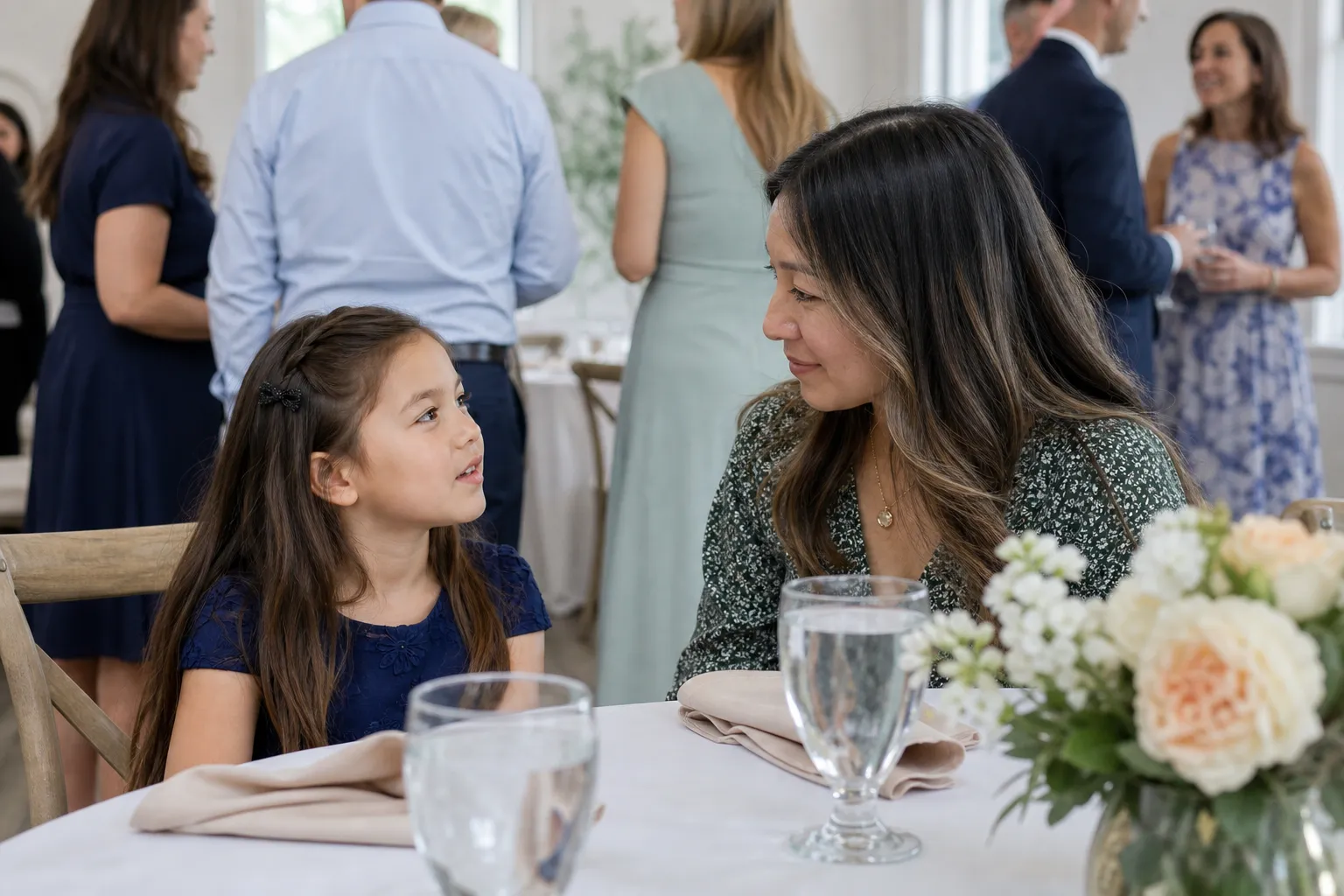
A wedding can be joyful without being predictable. For a child, the same event may include unfamiliar clothes, waiting, grown-ups who are emotional, sudden applause, strong smells, many conversations, and a room that changes from quiet ceremony to busy celebration. A personalized wedding social story can give a family a shared, honest way to talk through those possibilities before the day. It does not need to promise that the event will feel easy, or suggest that one response is the right response. Its purpose is to describe what this particular wedding may be like, name available choices, and make room for the child’s own perspective.
Why a wedding may feel different from other family gatherings
A wedding often has an unusual structure: people arrive, wait, attend a ceremony, congratulate the couple, eat, listen to speeches, and perhaps dance or leave. Some weddings are brief and informal; others last most of a day, involve travel, or include several locations. Adults may be concentrating on timings and traditions, so routines can shift. Explaining the actual plan, rather than relying on the word “wedding,” can make the event more understandable.
For some autistic children, unfamiliar social expectations or unclear changes in routine may take substantial energy. Autism spectrum disorder is a developmental difference with wide individual variation; it does not tell a parent or educator exactly what a child will enjoy, notice, or find difficult. One child may be excited by seeing relatives and interested in the ceremony, while another may prefer limited interaction or may want detailed information about what happens next. Both responses can be valid.
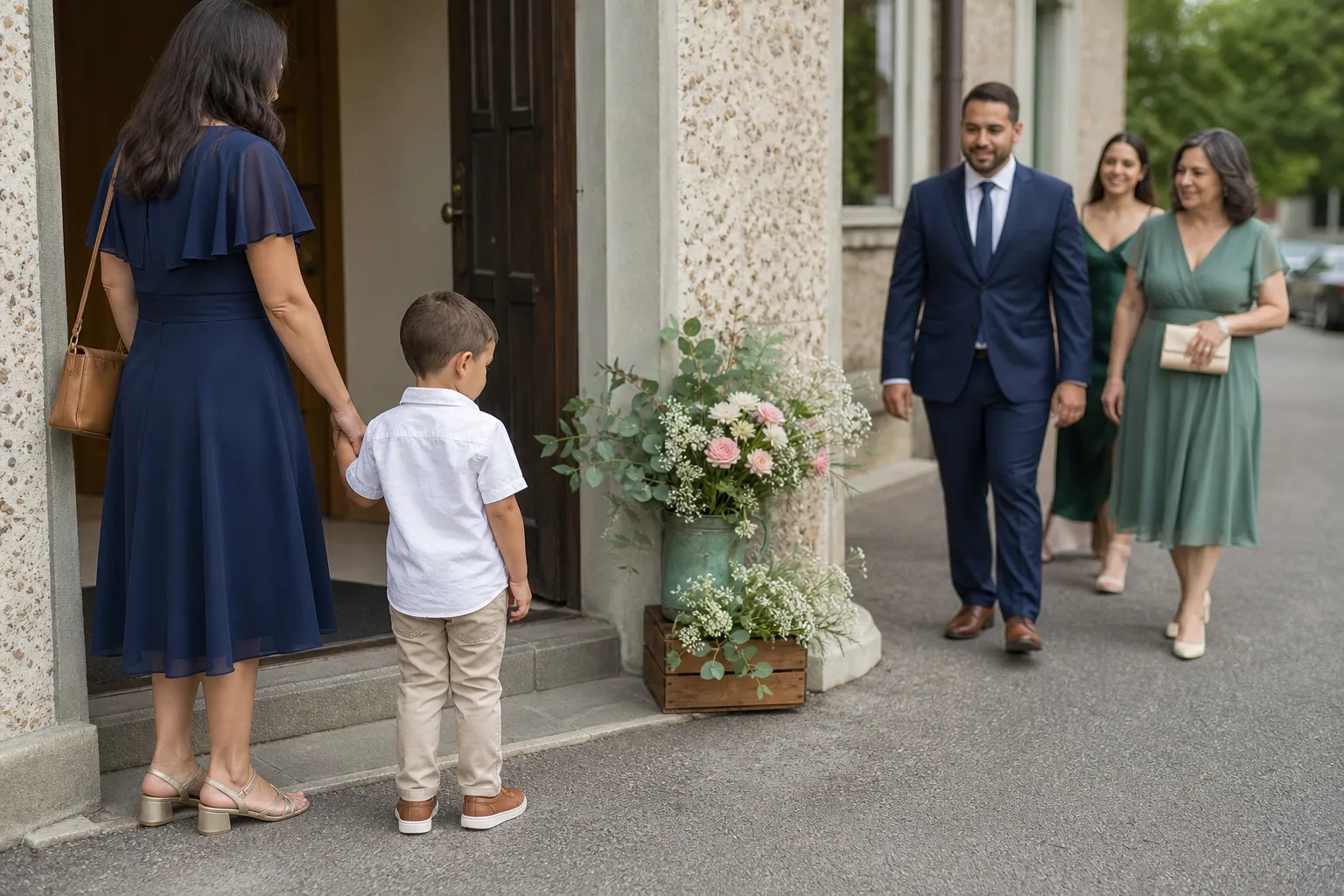
A wedding social story is most useful when it is built around this child and this event. It can distinguish between parts that are certain, such as the venue address or who will travel together, and parts that may change, such as how long photographs take or whether the music is loud. That honesty matters. A child does not have to be reassured that every part will be fun in order to be prepared for it. The story can also make clear that attending every moment may be possible, but is not the only imaginable outcome if the family’s plans allow choices.
Sensory experiences to describe plainly, without assuming distress
Weddings can bring concentrated sensory experiences. Possible examples include formal clothing textures, perfume or flowers, food smells, camera flashes, crowded entryways, clapping, microphones, music, chair scraping, and a busy dance floor. The intensity may differ greatly between a small ceremony in a backyard and a reception in a large hall. Sensory experiences are personal: an element that is pleasant, neutral, or exciting for one child may be uncomfortable or overwhelming for another.
A personalized social story can identify the sensory features the child is likely to encounter and separate known facts from unknowns. A family might learn whether there will be amplified music, outdoor heat, candles, a buffet, confetti, or a quiet side room, then include only information that is relevant. It can also acknowledge uncertainty: the room may become noisier after dinner, and the timing of speeches may move. This is more useful than saying that the wedding will definitely be calm.
The story can name concrete, realistic possibilities available at that particular event. For example, a child may possibly sit at the end of a row, spend time with a familiar adult outside the main room, arrive only for the ceremony, wear an agreed outfit, or leave before dancing—if those are genuine family choices. It should not present a choice that is unavailable or imply that the child must tolerate a sensation to make the day successful. Sharing observations about what has helped or not helped at past gatherings can help adults plan together while respecting the child’s communication style.
Anxiety, uncertainty, and the pressure of a “special day”
Anticipation can be a major part of an event. A child may have anxiety about not knowing where to sit, meeting relatives, making a mistake during a quiet ceremony, being asked to pose for photographs, or seeing adults cry. Others may be eager for the event but still become anxious as plans change. Anxiety is not simply unwillingness or misbehavior; it can show up differently across children, including through repeated questions, withdrawal, irritability, physical discomfort, or a strong need for information. These signs are not proof of an anxiety condition, and a parent can consider context and the child’s usual temperament when interpreting them.
The Centers for Disease Control and Prevention notes that anxiety and depression in children can affect how children feel and function, while the American Academy of Pediatrics emphasizes that temperament describes individual patterns rather than a child choosing to be difficult. In a wedding context, that perspective supports curiosity: What part feels uncertain? What information would be useful? What part of the plan may need another conversation? A social story is an educational preparation tool, not an assessment or a substitute for professional care when a family has concerns about persistent anxiety.
Avoid making the story a list of commands about manners. Instead, it can explain why some customs happen and what may be optional. It may say that guests often watch quietly while the couple speaks, that people may clap when the ceremony ends, and that a familiar adult can help the child decide what to do next if the family has agreed on that role. One short example sentence for a personalized story is: “If the room feels busy, I may tell Dad, point to the door, or go with Aunt Maya to the lobby.” The exact wording, communication options, and people named should reflect the child’s real life.
What to include in a personalized wedding social story
Start with the child’s practical questions. Who is getting married? Why is the child invited? Which parts will the child attend? Where will the family go first? Who will be there that the child knows? How will travel work? What is likely to happen when they arrive? A simple sequence can reduce guesswork without turning the account into a rigid promise. Include meaningful details such as the ceremony location, whether food is served, who the child can find, and the expected leaving plan, if known.
Use direct language and short, accurate sentences. Explain unfamiliar words that matter, such as ceremony, vows, reception, toast, photographer, or first dance. Describe behavior as a social pattern rather than a rule the child must perform: many guests may stand when asked, listen during vows, or congratulate the couple afterward. If participation is optional, say so clearly. If a particular expectation is non-optional for a brief period, families can describe it honestly and explain what happens immediately afterward.
Include the child’s preferences and communication. Some children may want photographs, conversation prompts, and a role such as carrying flowers; others may not want attention or a role. Some may communicate needs with speech, gestures, typing, signs, movement, or by staying close to a trusted person. A story can state how adults will notice or respond to that communication only when the adults have agreed they can do so. It should not promise that every adult guest will understand immediately, but it can identify the familiar people responsible for the child during the event.
Preparing together in the days before the wedding
A story can be revisited at a pace that suits the child: once well ahead of the wedding, again after a new detail is confirmed, or shortly before leaving. Invite correction rather than treating the story as a test. The child may notice a missing concern, want more detail about one part, or be uninterested in information an adult expected them to need. Updating the account models that plans can change and that questions are welcome.
Where feasible, families may gather accurate details from the couple or venue. Useful facts can include the ceremony and meal times, whether the event is indoors or outdoors, the likely size of the gathering, the route between spaces, food arrangements, and whether there is a lower-traffic place to spend time. It can be considerate to ask the couple early and briefly rather than assume accommodations. The couple’s own needs and wishes are part of the planning context, too.
Adults can also agree privately on what flexibility actually exists. Is attending only one portion a possibility? Who can leave a room with the child if needed? Is it acceptable to skip a photo, a greeting line, or dancing? What transport options are realistic? Clear adult communication reduces the chance that the child hears conflicting instructions on the day. A second short example sentence is: “We may watch the ceremony, eat lunch, and then decide together whether to stay for the music.” Use this only if it truthfully reflects the plan.
On the day: measure success by participation that is sustainable
A successful wedding experience does not require a child to appear calm, socialize in a particular way, stay until the end, or enjoy every tradition. The child may participate fully, participate briefly, observe from a distance, need a change of location, or leave early. Their response can change over the course of the day. Keeping expectations flexible can protect both the child’s dignity and the family’s ability to respond to what is happening rather than to an idealized plan.
Use the social story as a reference point, not a contract. If the ceremony begins late, an unexpected relative arrives, or the music is different from expected, adults can state the change plainly and connect it to the parts that remain true: who is with the child, what happens next as far as anyone knows, and what choices remain. If a child seems distressed, their communication and immediate wellbeing matter more than completing a planned wedding routine.
Afterward, a brief, nonjudgmental conversation can make future events easier to understand. A parent, carer, or educator might ask what the child liked, what was surprising, what they would want explained next time, and whether any stated choices felt real. This reflection is not about grading behavior. It helps refine future social stories for parties, ceremonies, family meals, or other social activities, based on the child’s lived experience rather than assumptions about autism, sensory experiences, or anxiety.
Frequently asked questions
What is a wedding social story?
A wedding social story is a short, personalized explanation of a specific wedding and the choices a child may have during it. It can cover the people, places, sequence, unfamiliar customs, likely sensory experiences, and plans that are genuinely available. It is not a script for perfect behavior and cannot guarantee that the event will feel comfortable.
How is an autism going to a wedding social story different from a general wedding guide?
A general guide describes typical wedding customs. A personalized version for an autistic child focuses on the individual child’s questions, communication, preferences, sensory experiences, and actual event details. It avoids assuming that all autistic people have the same needs. The most useful details may be the room layout, clothing expectations, familiar adults, noise changes, waiting periods, or a realistic leaving plan.
Should a going to a wedding social story say that the child will stay calm?
No. Promising a feeling or outcome can make the story less trustworthy. It is more honest to describe what may happen and what the family can do if plans change or the child wants a different level of participation. The story can validate that weddings may bring excitement, uncertainty, discomfort, or mixed feelings.
Keep exploring
Related social stories
These guides cover situations with similar routines, sensory details or preparation needs.
Learn more about writing a social story
Read what a social story is, follow the step-by-step writing guide, or browse more social story examples.
Sources
- Autism spectrum disorder — Centers for Disease Control and Prevention
- Anxiety and depression in children — Centers for Disease Control and Prevention
- Understanding your child's temperament — American Academy of Pediatrics
