
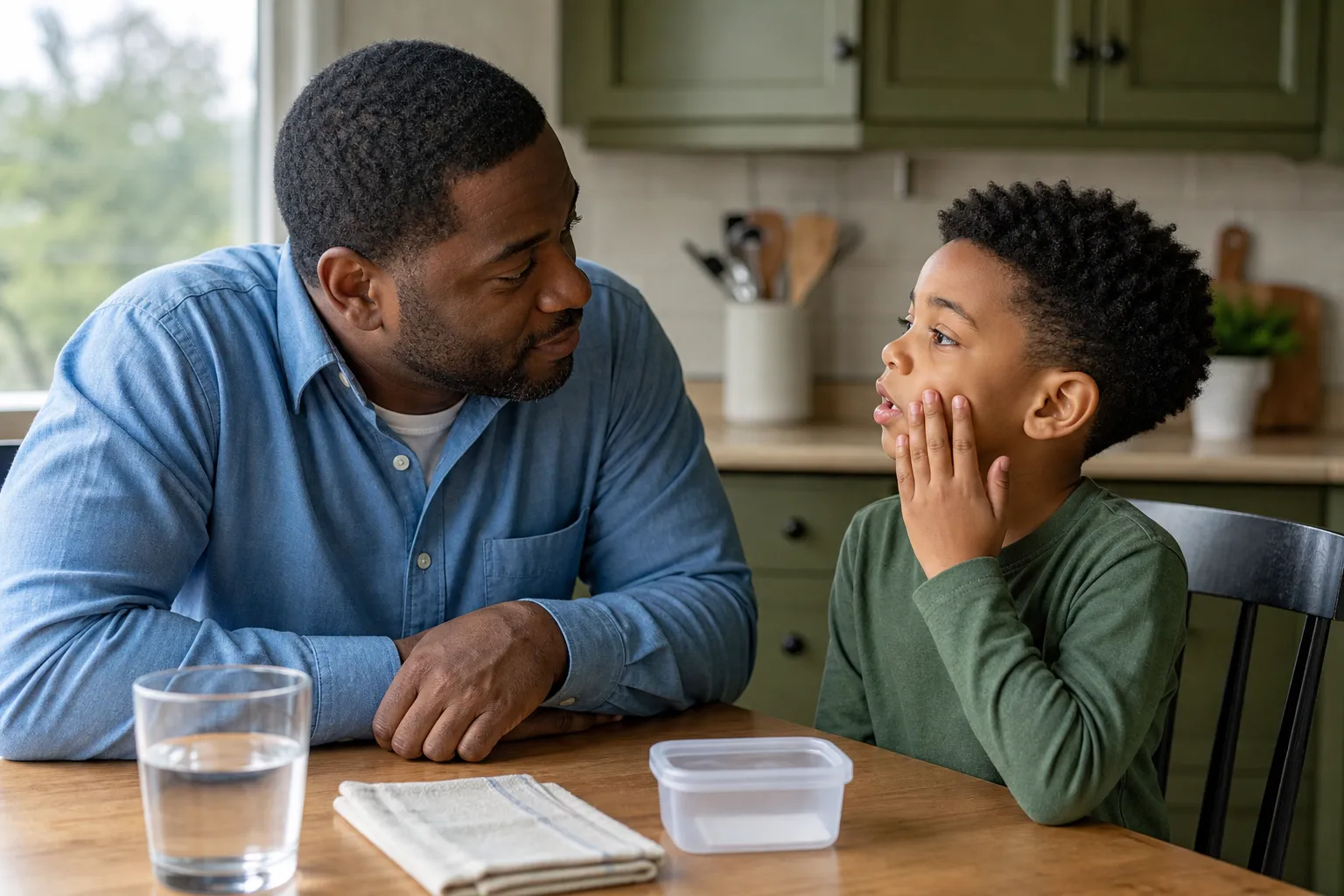
A loose tooth can be a small physical event with a surprisingly large social footprint. It may change how eating feels, what a child sees in the mirror, what adults talk about, and what might happen at bedtime. For some children, especially some autistic children, the hardest part is not the tooth itself but the uncertainty around timing, sensations, routines, and other people’s expectations. A personalised losing a tooth social story can give a family a calm, honest way to talk through the possibilities together without assuming that every child will feel worried, excited, or ready for the same traditions.
Why a losing tooth can feel bigger than it looks
Children lose baby teeth in many different ways. A tooth may wiggle for days or weeks, come out while eating, be noticed after waking up, or need attention from a dental professional. The timing can be hard to predict. Even when adults see this as an ordinary part of growing, a child may experience it as an unexpected change in their body and daily life.
A loose tooth can bring up several practical unknowns: whether it will hurt, whether there will be blood, where the tooth will go, whether talking or eating will feel different, and whether people will make comments. A child may also be concerned about the gap, afraid the tooth will come out at school, or frustrated that a familiar sensation in their mouth has changed. Other children may feel proud, curious, or eager to tell someone. These reactions can change from day to day.
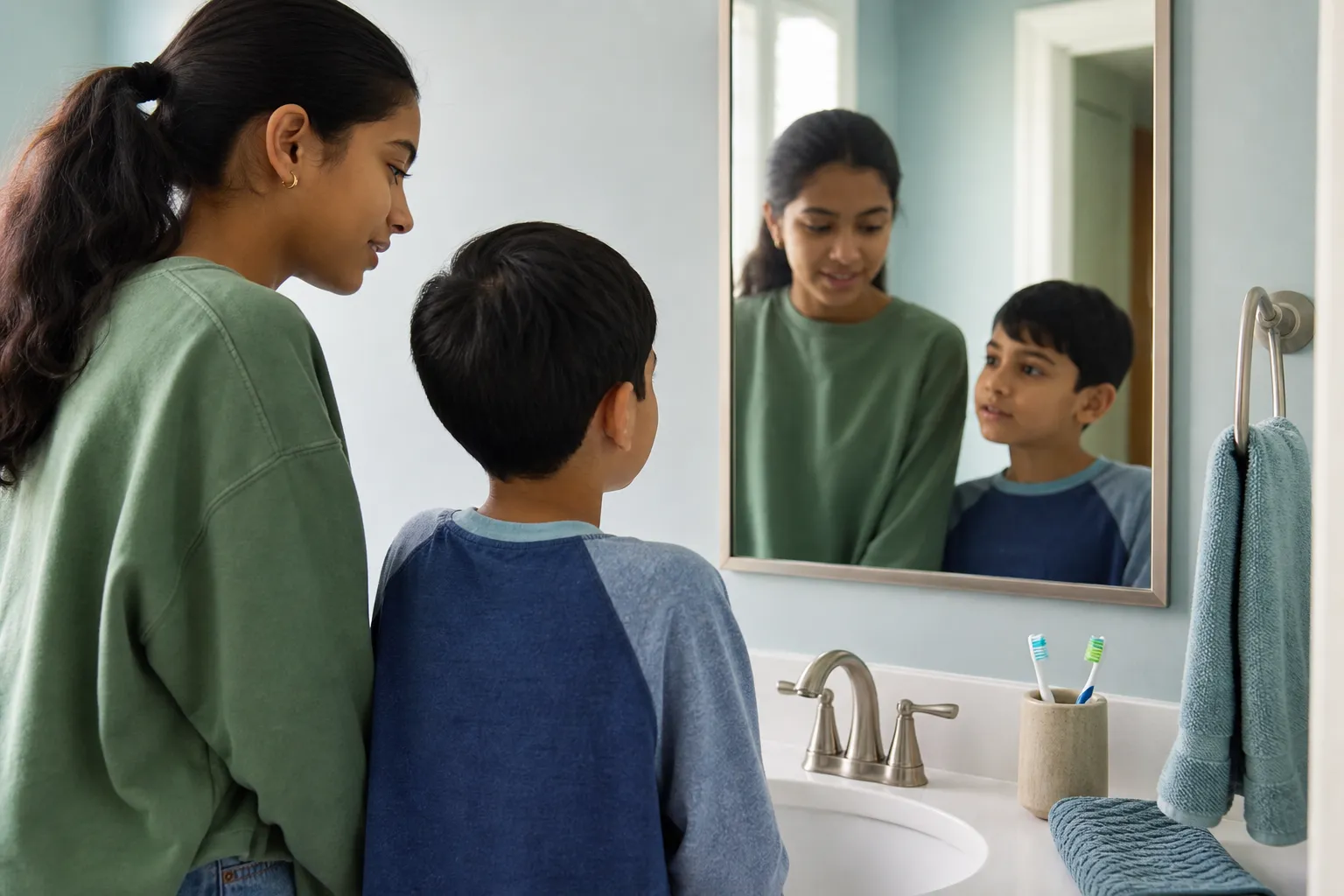
An autism losing a tooth social story is not based on the idea that autistic children react in one particular way. Autism is a broad neurodevelopmental difference, and individual sensory preferences, communication styles, prior experiences, and interests all matter. The same is true for children who are not autistic. A useful story starts with one child’s own questions and experience rather than a list of assumed difficulties.
Relevant challenges: anxiety and changes and transitions
A loose tooth may connect with anxiety because it creates uncertainty. A child might repeatedly check the tooth, ask when it will fall out, avoid certain foods, or seek reassurance about what comes next. These actions do not automatically mean a child has an anxiety condition. Worry is a common human response to an unfamiliar or unpredictable event. The Centers for Disease Control and Prevention notes that anxiety in children can involve fears and worries that affect daily life; a family or educator can focus on the child’s actual level of distress and the situations that seem hardest, rather than trying to label every concern.
The event can also involve changes and transitions. A child’s body is changing, a familiar tooth is no longer present, and routines may temporarily shift. There may be a new bedtime conversation, a different plan for storing the tooth, or a dental appointment. Children who value predictability may find the waiting period especially demanding because there is no exact date for the tooth to come out. For some, the transition is brief; for others, it may remain important after the tooth is gone because of the new feeling in the mouth or the attention from others.
A personalised social story can name uncertainty honestly instead of promising a particular outcome. It can distinguish what is known from what is not known: the tooth is loose now; it may come out soon or later; an adult can listen if the child has a question; and the family has choices about what happens afterward. This approach can reduce pressure to perform excitement or bravery. It also leaves room for a child to say that they do not want to discuss the tooth at a particular moment.
What a personalised losing a tooth social story can include
A losing a tooth social story is most useful when it is specific to the child’s real circumstances. It can use plain, concrete language and a respectful tone. Rather than describing a general sequence as if it will happen exactly the same way for everyone, it can explain likely possibilities. A family may include the child’s name, the place where the tooth is currently loose, people the child knows, and words the child already uses for teeth, blood, dentists, or the Tooth Fairy.
Relevant facts may include that baby teeth can become loose as permanent teeth develop, that a loose tooth may feel different when eating or brushing, and that there can sometimes be a small amount of blood when it comes out. The story can state that adults may have different plans depending on where the tooth comes out and how the child feels. If a dental visit is already planned, it can identify the known details without making claims about procedures or sensations that have not been discussed with the child’s dental team.
It can also make room for communication in the form that works for that child. A child might talk, point, write, gesture, use a familiar communication method, or show an adult the tooth. A concise example sentence, not a complete story, is: “I can tell an adult when my tooth feels different.” Another example is: “It is okay if I have mixed feelings about losing my tooth.” These examples are optional wording ideas, not rules a child is expected to repeat or believe.
Talking honestly about the Tooth Fairy and other family choices
A tooth fairy social story can be helpful when the Tooth Fairy is part of a family’s tradition, but it does not need to present a tradition as a fact or an obligation. Families hold many different beliefs and practices. Some celebrate with the Tooth Fairy, some place the tooth in a keepsake container, some exchange a small amount of money, some write a note, some do nothing special, and some use a cultural or family tradition that is meaningful to them. A child may be delighted by one option, neutral about it, or uncomfortable with the idea of someone entering their room while they sleep.
Honesty can be especially important for a child who takes language literally, has a strong need for accurate information, or is anxious about unexpected nighttime events. A personalised story can simply explain the household plan. For example, a family might say that an adult will take care of the tooth while the child sleeps, or that the child will decide where the tooth is kept. If a child asks direct questions about a tradition, caregivers can respond in a way that fits their family’s values and the child’s need for clarity.
The story can also reduce social pressure around rewards. Losing a tooth does not have to lead to a particular gift, amount of money, photo, announcement, or classroom sharing. A child can be offered possibilities without being required to choose quickly. This is useful when the tooth falls out in a busy place or at a time when the child needs rest more than celebration.
Preparing together without turning preparation into pressure
Preparation can begin with listening. A parent, carer, or educator might notice what the child raises first: pain, blood, swallowing the tooth, the gap, the Tooth Fairy, classmates, brushing, or when it will happen. The child may have no questions at all, and that is also information. A story can be revised when a new concern appears rather than being treated as a fixed script that the child must follow.
Families can decide which ordinary details are useful to mention. Possibilities include who the child can tell, whether they would prefer quiet or company when the tooth comes out, where an adult might keep the tooth, and whether the child wants other people to know. If the tooth might come out during school or another regular activity, an educator can learn the family’s preferred approach to communication and privacy. Some children may want acknowledgement; others may not want attention drawn to the event.
The American Academy of Pediatrics discusses the value of family routines in helping children know what to expect. A loose tooth may temporarily interrupt a routine, particularly eating, brushing, or bedtime. A personalised story can connect the event to familiar parts of the day while staying flexible about the unknown timing. It can say what usually happens at home after a tooth is noticed, while making clear that plans can change. This gives structure without falsely guaranteeing control.
After the tooth comes out: reflection, flexibility, and further questions
The period after a tooth comes out may be as important as the lead-up. A child may want to look at the tooth repeatedly, talk about the gap, avoid touching the space, or move on immediately. Eating and brushing can feel different for a while. A child may also find that the event was easier or harder than expected. A family can update the story’s language after the experience so it reflects what actually happened rather than preserving an inaccurate prediction.
It may help to separate emotional support from assumptions about behavior. Repeated questions can be a way of seeking predictability, while silence can mean many things, including comfort, processing, fatigue, or not wanting to discuss the topic. Calmly making space for the child’s preferred communication and pace can support anxiety around the change. No child needs to be praised for accepting a body change in a particular way.
If a child has pain, bleeding that worries the family, a tooth injury, or other dental concerns, a parent or carer can contact a dental professional for individual guidance. This guide does not diagnose anxiety or dental conditions, and a social story does not replace dental care. Its role is to support clear communication, honest expectations, and family planning around an everyday transition.
Frequently asked questions
What makes a losing a tooth social story different from a general explanation about teeth?
A general explanation describes what often happens. A personalised losing a tooth social story centers the child’s own situation: what is known, what may happen, who is involved, which choices are available, and what the child can do if they have a question or uncomfortable feeling. It avoids assuming that the child is scared, excited, autistic, or interested in the Tooth Fairy.
Can a losing a tooth social story help an autistic child who is anxious?
It may help some autistic children by making language more concrete and by acknowledging uncertainty without exaggerating it. It can be particularly relevant when anxiety is connected to waiting, changed sensations, bedtime routines, or unexpected attention. It is not a treatment for anxiety and does not guarantee that the child will feel calm; its purpose is shared understanding and preparation.
Do we need to include the Tooth Fairy?
No. Include a tooth fairy social story only if that tradition is relevant to the family and child. A story can instead describe another honest plan, such as keeping the tooth, giving it to an adult, or having no special ritual. If the tradition is included, clear language about what the family plans to do can be more supportive than leaving important details vague.
Keep exploring
Related social stories
These guides cover situations with similar routines, sensory details or preparation needs.




Learn more about writing a social story
Read what a social story is, follow the step-by-step writing guide, or browse more social story examples.
Sources
- Anxiety and depression in children — Centers for Disease Control and Prevention
- The importance of family routines — American Academy of Pediatrics
