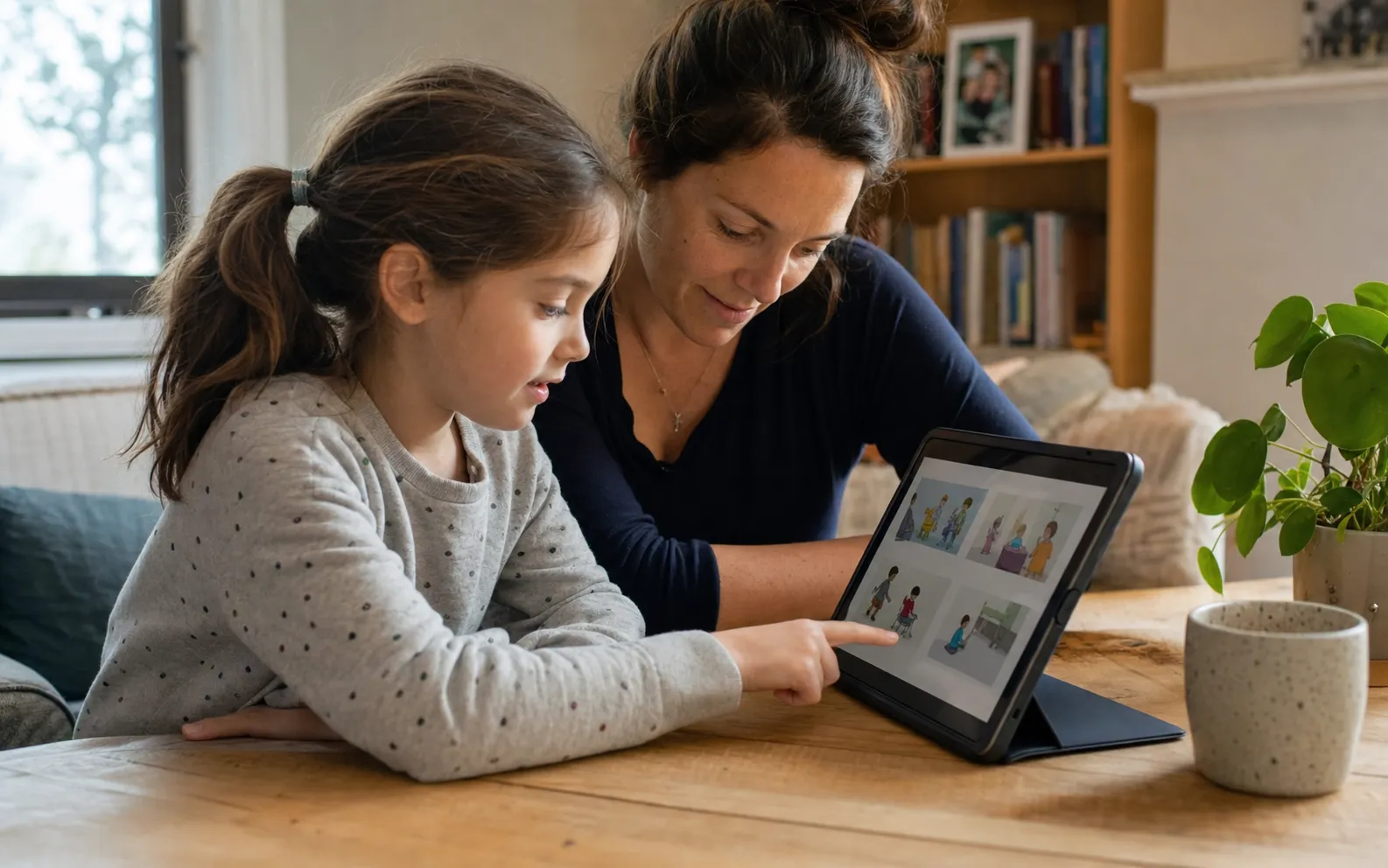
The room before the appointment
A clinic room can be full of clues before anyone says a word: a chair that rolls, a bed covered in paper, a new person in a white coat and objects whose purpose is not yet clear. For a child, waiting to find out what those things mean can be a big part of the appointment.
A personalised narrative can turn some of those clues into familiar information. It can introduce the people and place, explain the first likely steps and be honest about anything that is not known yet. The goal is not to persuade a child to feel calm; it is to give them something clear to return to.
Body, senses and personal space matter
A waiting room may be bright or busy, and an examination can involve unfamiliar sounds, equipment, touch or clothing. For children with sensory differences, these details may shape the experience as much as the appointment itself.
The story can describe what may happen in clear, neutral language and include support that will genuinely be available. This might mean waiting somewhere quieter, asking before touch, bringing a familiar item or taking a pause. It should never imply that discomfort needs to be ignored.
Questions and communication deserve time
A child who communicates differently may want to know how they can ask a question, say that something feels wrong or show that they need more time. They may use spoken words, a gesture, a device, pictures or help from a trusted adult.
A social story can make those options explicit before the visit. It can also help adults remember to speak directly to the child, to explain each step and to leave space for the child to respond in their own way.
Preparation can make room for feelings and change
For a child who experiences anxiety, uncertainty about an appointment can start well before the day itself. Knowing the likely order of events, where a parent or carer will be and what happens after the visit can make the unknown parts easier to discuss.
Appointments do not always follow an exact plan. A story can acknowledge that there may be waiting or a change in the plan, and that strong feelings are valid. Naming available support can be more helpful than expecting a child to manage the experience alone.
How it can help
Related support topics
Some families start from the situation; others start from the wider support need. These pages explore the same idea from that angle.
Turn this guide into a story
Create a story your child can recognise.
Bring the details that matter together in one personalised story: where your child is going, who may be there, what may happen, and which choices or support are genuinely available.
Join the waiting list