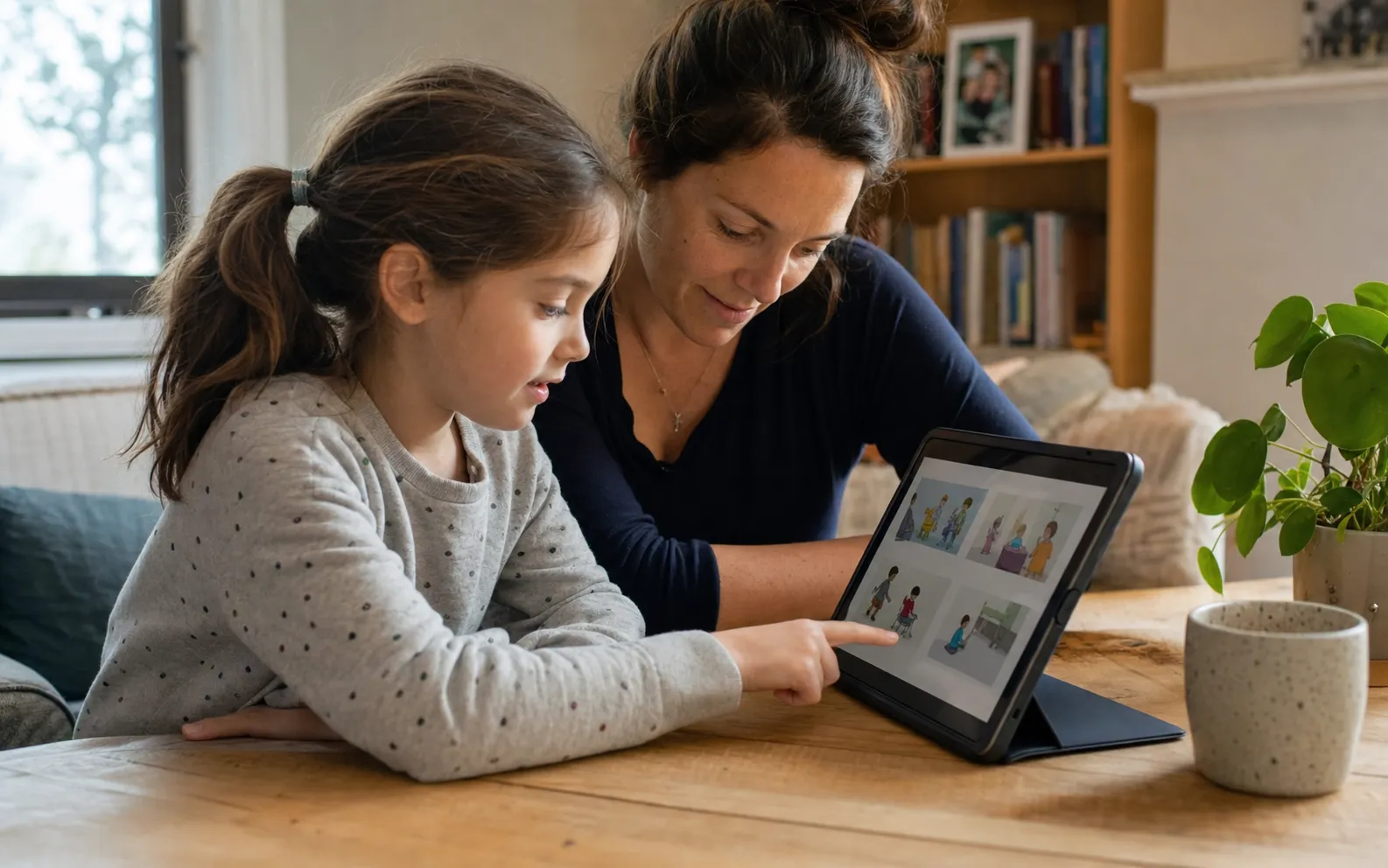
A place that has not happened yet
An invitation can tell an adult where to be and when to arrive, but it may leave a child with a picture that has many blank spaces. What is the building like? Who will be there? Where do people go first, and how will the child know when something is about to begin?
A personalised narrative can begin filling in those blank spaces with useful information. It can describe the journey, the entrance and the first likely step, while leaving room for the fact that a real event will not always unfold exactly as planned.
Sensory and social demands can arrive together
A venue may have crowds, music, lighting, new smells, queues or movement in every direction. For children with sensory differences, one of these elements may be more important than the activity adults are focused on.
There can also be social questions: who will be there, how to find a familiar person, whether there is a place to sit, and how to communicate a need for help. A story can name these details without suggesting there is one right way to join in.
A plan can be useful even when it stays flexible
For a child who experiences anxiety, having a picture of the beginning, middle and end can make a new event feel less unbounded. For children who rely on familiar routines, it can also help to know which parts of the usual day will stay the same around the outing.
The story can be honest that there may be a change in the plan, such as traffic, a different entrance or a revised timetable. It can include what the child can do in that moment: ask a trusted adult, look again at the plan, wait somewhere quieter or take a break.
Preparation should protect choice
The point of preparation is not to make every child take part in every element. A child may want to watch first, stay close to someone they know, join for a short time or leave earlier. These can all be meaningful ways of experiencing an event.
A story can be updated after the outing with the details the child noticed. This makes it a record of the child's own experience, rather than a generic script for what they should have done.
How it can help
Related support topics
Some families start from the situation; others start from the wider support need. These pages explore the same idea from that angle.
Turn this guide into a story
Create a story your child can recognise.
Bring the details that matter together in one personalised story: where your child is going, who may be there, what may happen, and which choices or support are genuinely available.
Join the waiting list