
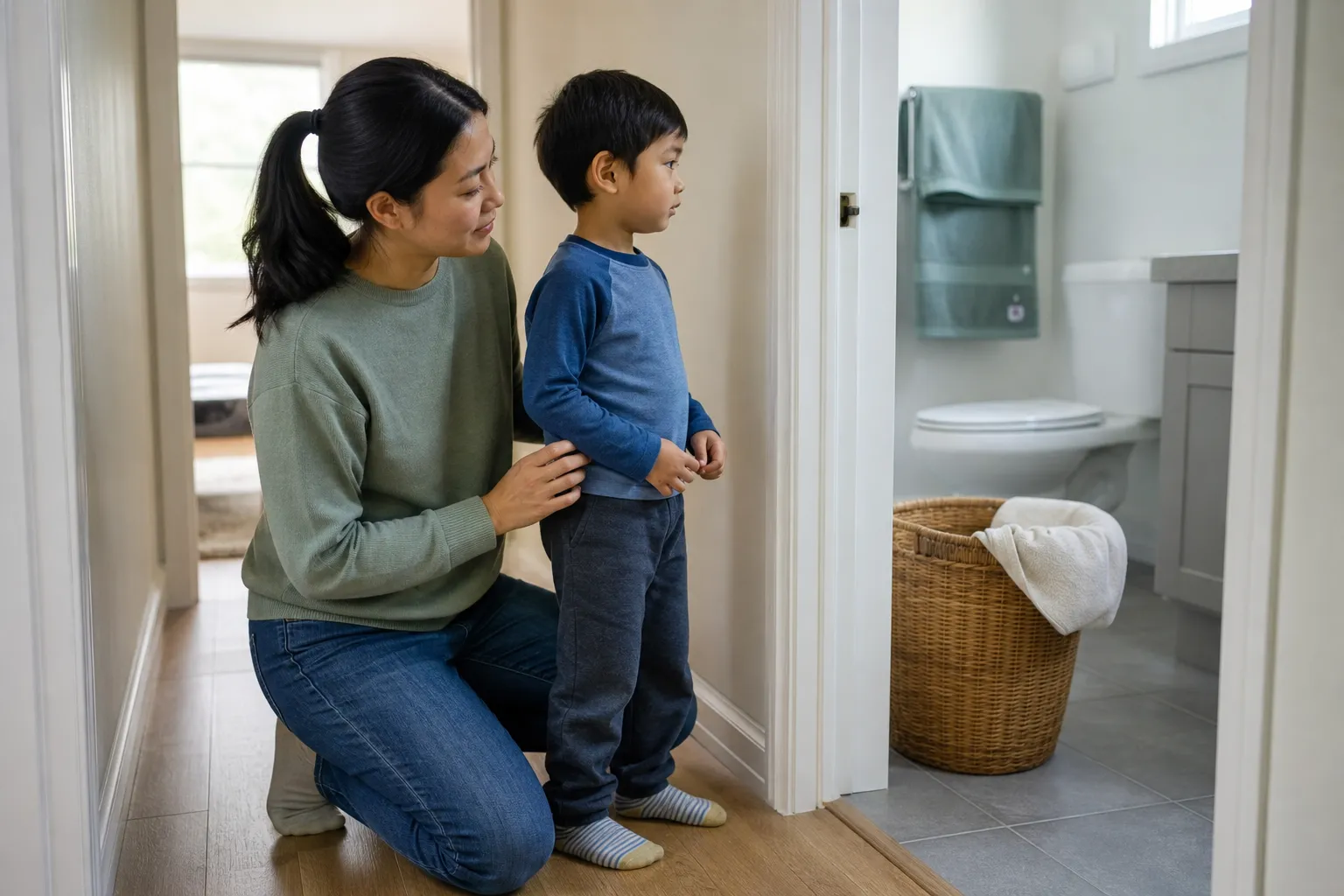
Toilet learning is often treated as a simple milestone, but it is really a series of ordinary, changing events: noticing a body signal, pausing an activity, finding a toilet, managing clothing, using the toilet, cleaning up, and returning to what comes next. A potty training social story can make those events less mysterious by describing what may happen in a calm, truthful, child-specific way. It is not a test of readiness, a promise of a particular outcome, or a substitute for healthcare guidance. Instead, it can be one way for a family or educator to talk through a routine before it happens.
For some children, especially those with autism, communication differences, or a strong need for routines and predictability, toilet learning may involve extra uncertainty. The challenge may not be the toilet itself. It may be unfamiliar language, a hard-to-read body sensation, an interruption to play, a noisy bathroom, or a different setup away from home. A personalised toilet social story can help adults and children prepare together by naming choices, likely changes, and what support is available without suggesting that every child will have the same experience.
What a potty training social story can do
A potty training social story is a short, personalised explanation of a toilet-related situation. It may focus on learning at home, trying a different bathroom, responding to a body signal, or visiting a public toilet. Its purpose is to make expectations more understandable, not to persuade a child to ignore discomfort or perform on demand. The most useful version reflects the child’s real environment, language, routines, and preferences.
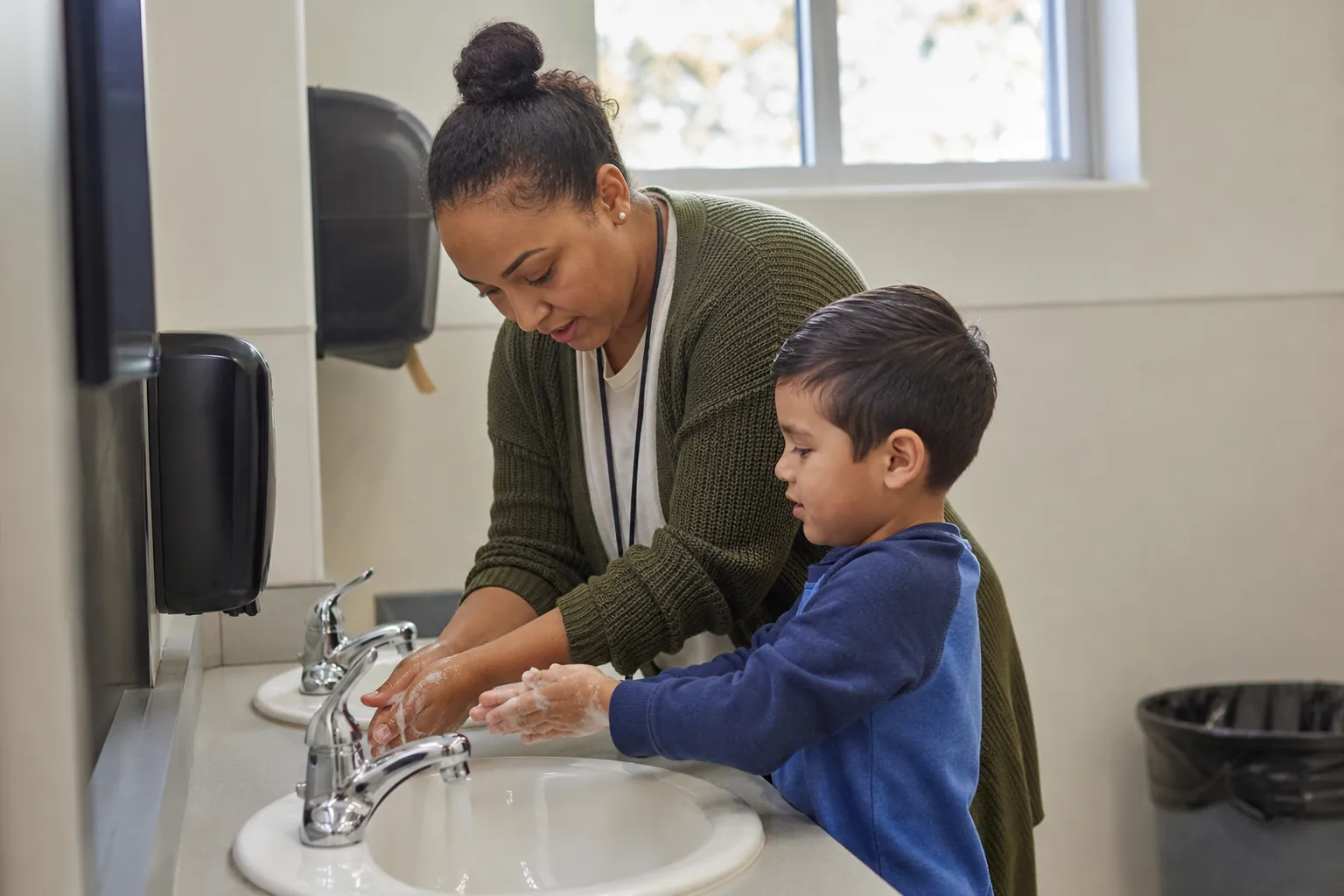
Rather than presenting toilet learning as a single success-or-failure event, a story can break it into manageable parts. A child may benefit from knowing where the bathroom is, which adults may be nearby, what happens to clothing, whether the toilet might make a sound, and what usually happens afterward. It can also acknowledge that sometimes a child may not need to go, may want to stop, or may need help. Honest language matters because children can notice when a description does not match reality.
Personalisation is more important than making a story long or polished. A family might choose to use the words the child already uses for their body, toilet, urine, or bowel movements. They might describe a potty, a toilet, or both, depending on what is actually available. They can include only steps that apply in that setting and avoid adding expectations that are not part of the family’s approach. An example sentence, not a complete story, could be: “I can tell an adult when I want to try the bathroom.”
Toilet learning can involve many kinds of uncertainty
Children develop toilet-related awareness and independence in different ways and on different timelines. Some may notice body signals clearly but find transitions difficult. Others may be comfortable sitting on a toilet yet have trouble recognising the signal early enough. A child may use the toilet comfortably in one location and find another location unsettling. These are individual experiences, not evidence of effort, character, or a child’s willingness to cooperate.
The routine includes more than bodily functions. It can involve stopping a preferred activity, navigating a room, handling fasteners, balancing on a seat, wiping, flushing, washing hands, and tolerating changes in sound or smell. A child may also be learning the words needed to ask for a bathroom, decline a try, request privacy, or ask for help. For some families, a story is most helpful when it focuses on one of these smaller moments rather than the whole routine at once.
A social story can describe uncertainty plainly. For example, it may say that a child can sit and then decide they are finished, or that an adult can help if clothing gets stuck. It can mention that accidents can happen during learning without framing them as bad behaviour. This kind of language gives a child information while protecting dignity. It also helps adults use consistent, non-shaming words when discussing a sensitive topic.
Autism, sensory differences, and changing bathroom environments
Autism is a neurodevelopmental difference associated with varied communication, social interaction, interests, and patterns of behaviour. The Centers for Disease Control and Prevention notes that autistic people can have a wide range of strengths and support needs. No single toilet-learning experience applies to all autistic children. Some autistic children may find the predictability of a repeated bathroom routine reassuring, while others may find a new routine, bodily sensation, or sensory feature difficult to anticipate.
A bathroom can contain sensory surprises. A flush may be loud, a hand dryer may start suddenly, a fan may hum, lighting may look different, and a public bathroom may have unfamiliar smells or echoes. Some children may not be bothered by these details; others may be very aware of them. A personalised toilet social story can state what is likely in a particular bathroom and avoid claiming that it will feel fine. It can also explain choices that may be available, such as asking an adult to flush, leaving before a hand dryer starts, using paper towels if they are present, or trying another bathroom if one is available.
The story can make room for agency. It might identify who the child can tell if a sound feels too loud, where an adult may wait, or what happens if the usual bathroom is occupied. At home, the description can be highly specific. Away from home, it is often better to describe possibilities because public bathrooms vary. A public toilet social story can say that there may be several stalls, sinks, other people, and unexpected noises, while also explaining the familiar parts of the routine that remain the same.
Communication differences and shared language
Communication differences can affect how easily a child understands spoken instructions, finds words quickly, interprets indirect language, or communicates a bodily need in the moment. The American Speech-Language-Hearing Association describes communication disorders as differences that can involve speech, language, hearing, or social communication. This does not mean a child cannot participate in toilet learning; it means adults may need to notice how that child best receives and expresses information.
A toilet social story can reduce the amount of language a child has to process during a busy moment. Clear, concrete wording may be easier than vague phrases such as “be a big kid” or “try harder.” Families may choose direct language such as “bathroom,” “toilet,” “pee,” “poop,” “help,” “finished,” or the terms that are respectful and familiar in their household. A story can also clarify what a child can communicate: needing the toilet, wanting an adult nearby, needing help with clothing, or saying they are all done.
It can be useful for adults who share care to agree on the same basic words and responses. That may include parents, carers, early childhood educators, and other trusted family members. Consistency does not require every adult to say exactly the same thing. It means the child is less likely to receive conflicting information about where to go, who can help, or what happens after they communicate a need. An example sentence, not a complete story, could be: “If I need help, I can use my words, signs, or another way I communicate.”
Routines and predictability: preparing together without making promises
Family routines can offer children a dependable framework for everyday tasks. The American Academy of Pediatrics highlights that routines can support connection, consistency, and development in family life. For toilet learning, predictability may come from knowing when bathroom opportunities are usually offered, who is available, what the sequence often looks like, and how an adult will respond if plans change. A social story can help a family talk about these patterns before a time-sensitive moment occurs.
The story does not need to lock a child into a rigid schedule. It can distinguish between what is usually true and what may vary. For instance, it might explain that the home bathroom is usually quiet, while a bathroom at school, a shop, or a park may be busier. It can say that an adult may wait nearby, but privacy arrangements can differ by place and by the child’s needs. It can also explain that toilets sometimes are occupied, out of order, or different in size and style. Specific but flexible wording helps prevent a child from feeling misled.
A family may choose a short focus for the first version: arriving in the bathroom, sitting briefly, asking for help, or using a toilet outside the home. Reviewing it at a calm time may be more useful than introducing it only when urgency is high. Adults can listen for what the child wants added, corrected, or removed. If a child’s routines change, the story can change too. It is a shared preparation tool, not a rulebook or a measure of progress.
Creating an honest, child-specific story for home, school, and public toilets
Start with a single real situation. A home-focused potty training social story may describe the bathroom the child uses most often. A school version may explain the route to the bathroom, which adult can help, and what privacy looks like there. A public toilet social story can focus on a particular upcoming outing or on broad, accurate possibilities. Keeping settings separate can be less confusing than combining every possible bathroom into one account.
Use first-person or third-person wording according to what the child finds easiest to understand. Include facts the child is likely to encounter, such as clothing being lowered, sitting or standing if those are relevant options, toilet paper being available, washing hands, and returning to an activity. Do not state that the child will use the toilet, will feel comfortable, or will be able to complete every step independently. Instead, describe available choices: they may try, pause, ask for help, or finish and leave. Include safety and privacy facts that are true for the child, such as which trusted adults may assist.
Review the story for accuracy before using it. Ask whether it reflects the child’s communication style, sensory experiences, cultural language, and actual bathroom arrangements. Avoid rewards, consequences, or promises that are not reliable. If toileting involves ongoing pain, constipation, sudden changes in bowel or bladder habits, or concerns about wellbeing, a social story cannot assess the cause; a parent or carer may wish to seek appropriate guidance from a qualified health professional. The story can still support communication and predictability alongside that process.
Frequently asked questions
What should a potty training social story include?
Include only details that are true for the child and setting: where the bathroom is, who may help, the words the family uses, likely steps, and what may happen if the child does not need to go. For a public toilet social story, mention realistic possibilities such as stalls, other people, flushing sounds, or hand dryers. Keep the language concrete, respectful, and flexible rather than promising a result.
Can a toilet social story help an autistic child use public bathrooms?
It may help an autistic child prepare for unfamiliar parts of a public bathroom by making likely events more predictable. For example, it can explain that a bathroom may be noisy or busy and identify a trusted adult the child can communicate with. It cannot guarantee comfort or toilet use, and each autistic child’s sensory, communication, and routine needs will differ.
When is the best time to read a toilet learning social story?
Many families find that reviewing it during a calm, unhurried time lets the child ask questions or point out inaccurate details. It may also be revisited before a known change, such as a trip, a new childcare setting, or a visit to a venue with public toilets. The useful timing depends on the individual child and the situation.
Keep exploring
Related social stories
These guides cover situations with similar routines, sensory details or preparation needs.


Learn more about writing a social story
Read what a social story is, follow the step-by-step writing guide, or browse more social story examples.
Sources
- Autism spectrum disorder — Centers for Disease Control and Prevention
- Communication disorders — American Speech-Language-Hearing Association
- The importance of family routines — American Academy of Pediatrics
