
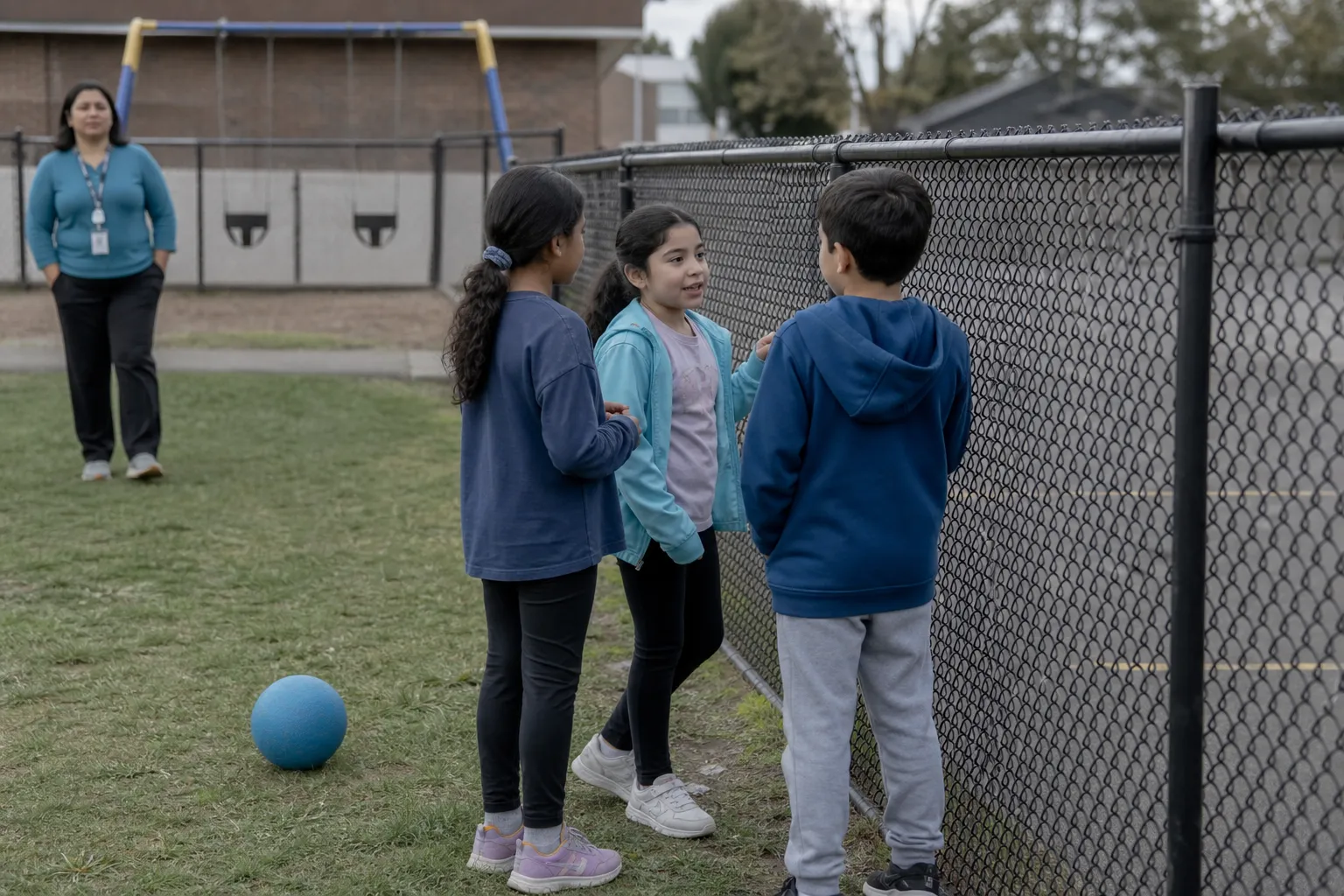
Recess is often described as a break, but it can be one of the school day’s most socially and sensorily demanding transitions. The rules may shift from day to day, adults may be supervising from a distance, games can change quickly, and there may be many reasonable ways to spend the time. A recess social story can help a child and the adults around them talk through what recess may be like without implying that there is one “right” way to play, make friends, communicate, or take a break. The most useful version is personal: it reflects the child’s actual school setting, their preferences, the choices genuinely available, and the language that feels respectful and familiar to them. This guide offers ideas for families, carers, and educators preparing a school recess social story in a way that can be relevant to autism, ADHD, and communication differences while avoiding assumptions about any individual child.
Why recess can feel different from the rest of the school day
Recess may have less visible structure than classroom time. A child may need to stop one activity, line up or walk outside, decide where to go, navigate a busy space, respond to peers, and later return to learning. Even when a school has predictable routines, weather, staffing, playground availability, games, and peer groups can change. For some children, that flexibility feels freeing. For others, it can require substantial effort to process what is happening and choose what to do next.
A personalized recess social story does not need to present recess as a problem to solve. It can simply make the setting more knowable. It may name the parts of the routine that are usually stable, such as where the class goes, which adults are outside, the boundaries of the play area, and what happens when recess ends. It can also acknowledge uncertainty honestly: a favorite game may not be happening, an area may be occupied, or a child may feel like doing something different on a particular day.
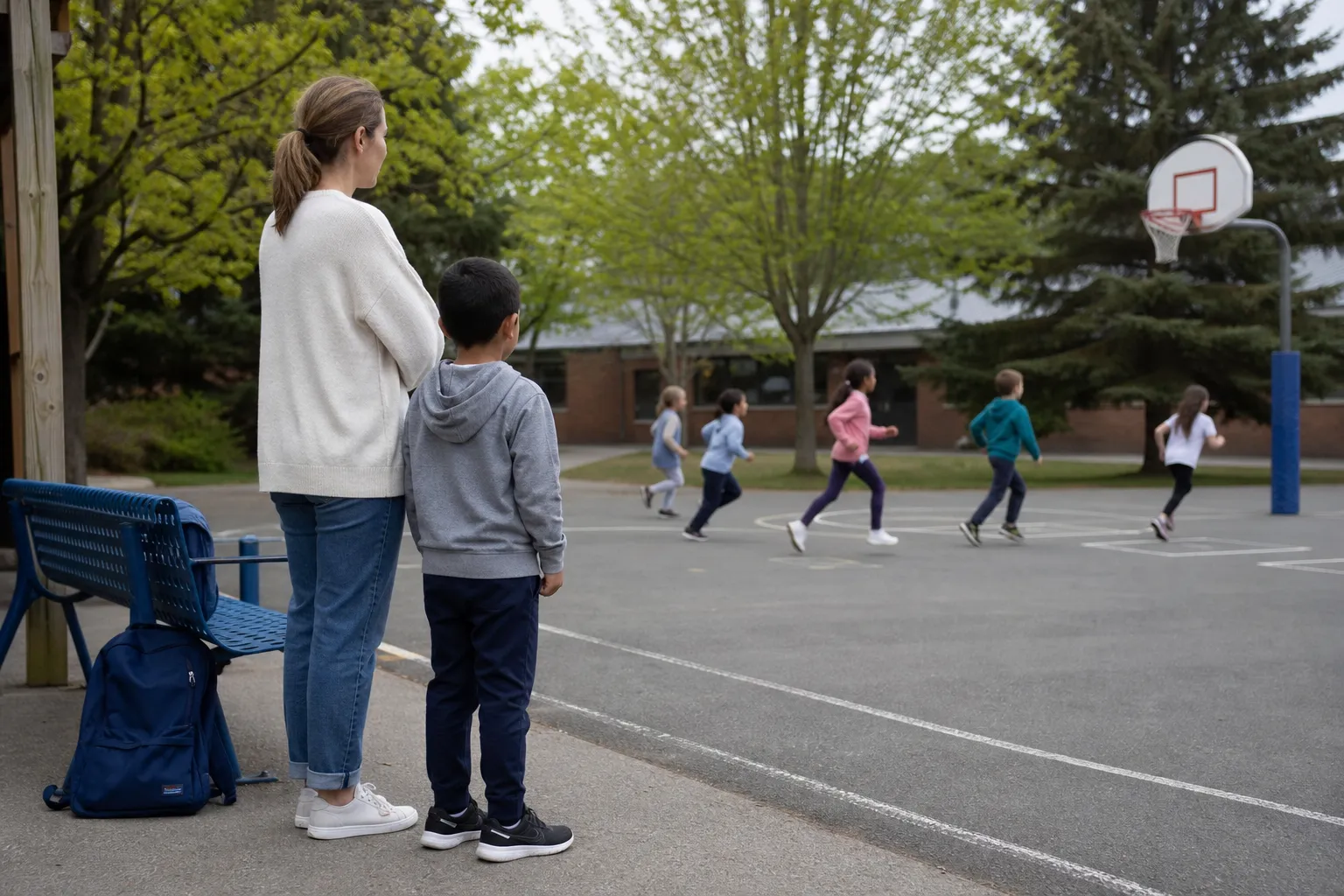
A helpful approach is to separate facts, possibilities, and preferences. Facts are details the child can generally count on, such as “Our class goes outside after lunch when the weather is suitable.” Possibilities are true options, not promises: a child might walk, watch a game, talk with someone, play alone, join an activity, or ask an adult a question if those are genuinely permitted. Preferences belong to the child: they may enjoy active games on some days and quiet space on others. This distinction keeps the social story trustworthy rather than overly cheerful or controlling.
Possible recess experiences related to autism, ADHD, and communication differences
Children are individuals, so a diagnosis or support topic does not predict a particular recess experience. Still, some aspects of recess can be relevant for some autistic children. The Centers for Disease Control and Prevention describes autism spectrum disorder as a developmental disability that can involve differences in social communication and interaction as well as restricted or repetitive behaviors or interests. In a recess context, an autistic child might find crowd noise, unexpected touch, fast-changing games, unclear group expectations, or a change in routine difficult to process. Another autistic child may look forward to recess, especially when it includes movement, a preferred interest, familiar peers, or time without academic demands.
For some children with ADHD, the transition into and out of recess can be as significant as recess itself. The CDC notes that ADHD involves persistent patterns of inattention and/or hyperactivity-impulsivity that can affect functioning. A child may have a lot of energy, become deeply engaged in an activity and not notice a signal, act before fully understanding a game’s rules, or find waiting for a turn especially frustrating. These are possible experiences, not signs of bad intent or a reason to assume a child cannot participate successfully. A social story can describe the actual transition routine and make room for the possibility that the child may need to pause, check what is happening, or seek information from a familiar adult.
Communication differences may also shape how a child experiences peer play. The American Speech-Language-Hearing Association explains that communication disorders can affect hearing, language, and/or speech. At recess, spoken instructions may be brief, indirect, noisy, or mixed with gestures and movement. A child may understand a game but have difficulty entering it, may communicate more slowly, may use fewer words, may communicate in a style peers do not immediately recognize, or may prefer not to talk while playing. A respectful social story avoids treating these differences as deficits to correct. Instead, it can recognize that people communicate in different ways and that the child can use the communication approaches that are available and comfortable for them.
What a personalized recess social story can include
A recess social story works best when it is based on direct knowledge of the child’s school rather than a generic playground script. Families and school staff can compare notes before writing: What does the child’s recess actually look like? Is it outdoors every day, or are there indoor options? Are there separate areas for different grades? What are the real rules about walking, running, playground equipment, snacks, bathrooms, and asking to go inside? Which adults are commonly present, and how does the end-of-recess signal work? Details should be checked with the school so the information remains accurate.
The story can begin with a plain description of the routine and setting. It may then name a few choices the child truly has. For example, if the school allows it, it could explain that a child may spend time near a familiar adult, play a game, use open play equipment, walk in an approved area, or watch before deciding whether to join. It should not promise that a certain friend will be there, that an adult will always be immediately available, or that a chosen space will always be quiet. Honest language protects trust and helps a child prepare for ordinary variation.
It can also cover social situations without demanding a particular performance. Rather than telling a child that they must join peers, share every item, or answer every question, the story can describe possible ways interactions happen. It may note that some games have rules set by the group, that children can ask what a game is called or whether there is room, and that they can choose another activity if joining does not work out. One short example sentence might be: “I might say, ‘Can I watch first?’” This is an example of a possible phrase, not a required script or a complete social story. Keep any language aligned with how the child naturally communicates, including gestures, signs, speech, pauses, or other established methods of communication when applicable.
Preparing together before the school day
Preparation is most useful when it is collaborative rather than something done to the child. A parent, carer, educator, and child can talk about prior recess experiences in a calm moment. Questions might include: What parts feel good or easy? What parts take a lot of energy? Is there a place the child likes to be? Are there times they prefer company, movement, observation, or space? What helps them know a game’s boundaries? A child may answer with words, behavior, drawings, choices, or other familiar forms of communication. They do not have to provide a detailed explanation for their preferences to be respected.
A school visit or a brief walk through the recess area, when feasible and welcomed, may give adults more accurate information for the story. The goal is not to rehearse compliance. It is to notice practical details: where classes line up, how far away the adults are, what the surface and noise are like, what happens in rain, and where a child can go if they need to ask a question. If the child already knows the setting, a conversation after a typical recess may be more useful than a visit. The story can be revised as the child’s interests, access, and school routines change.
Adults can make the language specific and nonjudgmental. Avoid statements such as “I will be good at recess,” “I must make friends,” or “I should not get upset.” These phrases can turn an uncertain situation into a test of behavior and may leave little room for real feelings. More grounded language can recognize that recess may feel exciting, tiring, confusing, fun, or different on different days. Another brief example sentence is: “If I am unsure about a game, I can look for an adult in the recess area.” This applies only if that is an actual, agreed-upon option at the school.
Building in realistic choices and responses to change
The strongest recess social story includes only choices that exist in the child’s setting. If a child may choose among several approved activities, the story can name them. If recess has a fixed assignment or limited areas, it should say so plainly. If children are expected to ask before leaving a space, that belongs in the story. Accuracy matters more than offering a long menu of idealized options. A child can be prepared for a smaller range of choices when those choices are clear, dignified, and real.
It is also useful to include common changes without framing them as failures. Recess may be indoors because of weather. A preferred piece of equipment may be unavailable. A peer may want to play something else. The class may come in early. The child may feel ready to join a group one day and prefer independent activity another day. A social story can explain that adults may give directions to keep everyone safe and that it is okay to need clarification about a direction. It can name an available adult or school process for situations such as a disagreement, injury, lost item, or uncertainty about the rules, as long as the information is verified.
For some children, a story may be most useful when it includes the return to class. The end of recess can require stopping a preferred activity, moving through a noisy line, and shifting attention to the next task. Describing the actual end signal, line-up location, and first classroom step may reduce surprises. This is not a guarantee that transitions will always feel easy. It is a way to give the child information ahead of time and allow adults to notice where the routine may need clearer communication or a different conversation.
Using the story respectfully and reviewing what it teaches
A social story is a communication and preparation resource, not a measure of a child’s willingness, maturity, or social skill. It should never be used to pressure a child to tolerate distress, conceal discomfort, play in a particular way, or accept unkind treatment from peers. A child may still have a difficult recess after reviewing a well-written story. That outcome does not mean they failed or that the story was ineffective; it may reveal that the environment, timing, expectations, or available choices need further discussion.
Reviewing the story can be brief and optional. Some children may want to revisit it before a new school term, after a routine change, or before an unfamiliar playground event. Others may prefer to talk instead. Adults can watch for whether the story remains factually correct and whether it reflects the child’s current interests. Updating a detail such as a new supervision area or indoor-recess routine is often more valuable than repeatedly presenting the same text.
Families and educators can also use what they learn to communicate with each other. A parent might share that the child enjoys observing a game before participating; an educator might clarify how children can ask about joining. These conversations should focus on access and understanding, not on making the child appear more typical. For careful, non-diagnostic background, families can consult the CDC information on autism spectrum disorder and ADHD and the American Speech-Language-Hearing Association information on communication disorders. Individual needs, strengths, and school procedures remain more informative than any broad description of a condition.
Frequently asked questions
What is a recess social story?
A recess social story is a short, personalized explanation of what recess may be like for one child in their own school. It can describe the routine, setting, genuine choices, possible changes, and ways to get information or support. It is not a behavior contract, a promise that recess will go smoothly, or a script requiring the child to socialize in a certain way.
Can an autism recess social story also be useful for a child with ADHD or communication differences?
It may be, if it is individualized. Many relevant recess experiences overlap, including unpredictable transitions, fast-moving peer games, noise, and unclear expectations. However, autism, ADHD, and communication differences do not affect every child in the same way. The story should be based on the child’s own experiences and the school’s actual routines rather than on diagnostic assumptions.
Should a school recess social story tell a child exactly what to say to peers?
Usually, it is more respectful to describe possible communication choices than to require exact wording. A child may use spoken words, gestures, signs, pauses, observation, or another familiar approach. If an example phrase is included, present it as one option and only when it fits the child’s communication style and the real situation. The child does not need to initiate or continue peer interaction to have a valid recess experience.
Keep exploring
Related social stories
These guides cover situations with similar routines, sensory details or preparation needs.

Learn more about writing a social story
Read what a social story is, follow the step-by-step writing guide, or browse more social story examples.
Sources
- Autism spectrum disorder — Centers for Disease Control and Prevention
- About ADHD — Centers for Disease Control and Prevention
- Communication disorders — American Speech-Language-Hearing Association
