
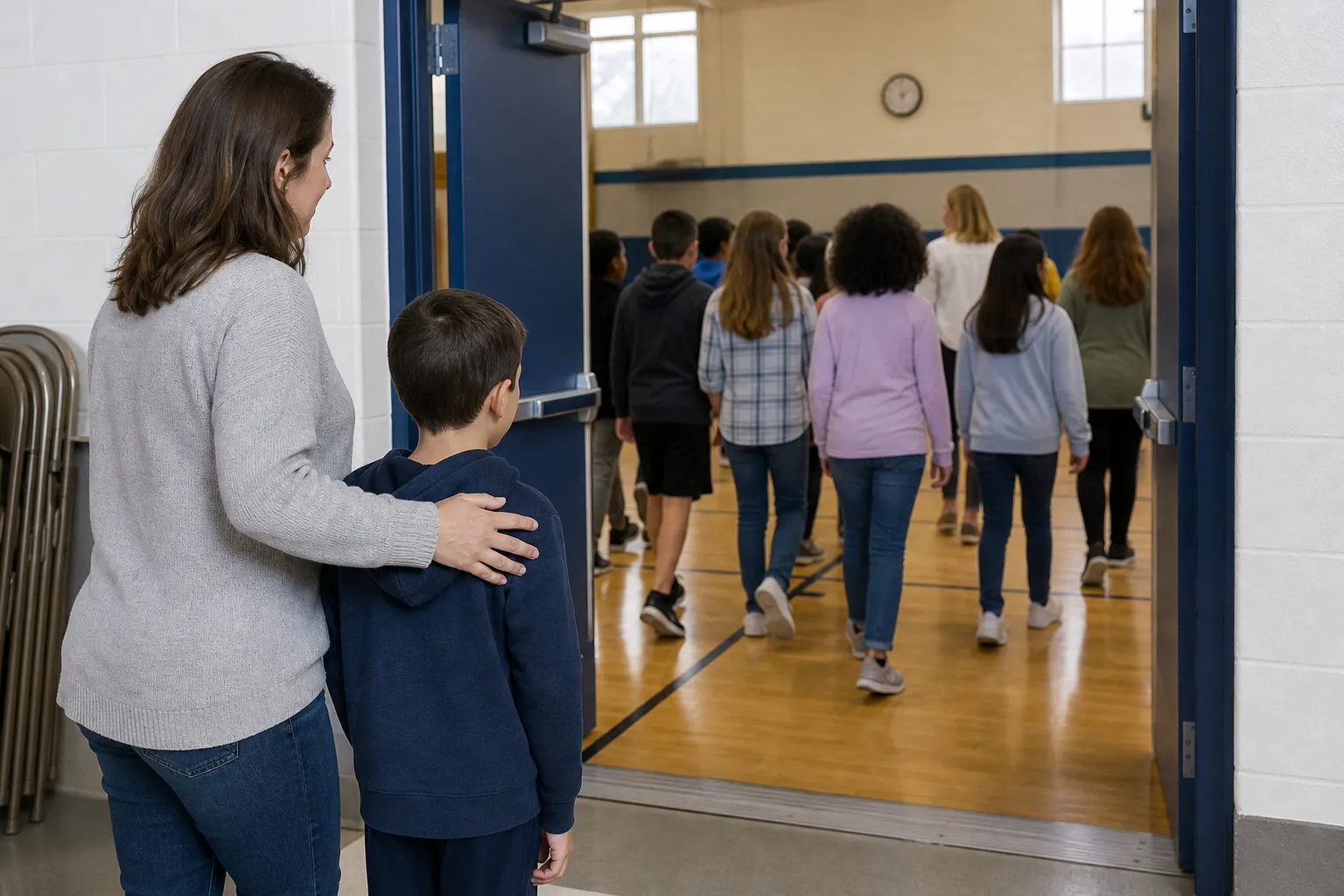
An assembly can turn a familiar school space into something temporarily different: a gym becomes an audience, a hallway becomes a line, and ordinary sounds are replaced by many voices, music, applause, or an announcement over a microphone. That change can be interesting, meaningful, tiring, uncomfortable, or uncertain depending on the child and the day. An assembly social story can give a family and school-aged child a shared, honest way to talk through what may happen before the event—not to promise that the experience will feel easy, but to reduce avoidable surprises and make room for the child’s perspective.
Why a school assembly can feel bigger than it looks
A school assembly is often described as a simple part of the school day, but it combines several demands at once. Children may be asked to stop their usual activity, follow a group to another location, wait with many peers, sit close to others, listen for an unknown amount of time, and respond to expectations that may be spoken only once. The event may include a performance, student recognition, school news, a guest speaker, songs, videos, or a change in the usual routine. Details can vary from one assembly to the next.
For some children, the hardest part is not the assembly content. It may be the transition away from class, uncertainty about where to sit, not knowing whether they will be called on, or wondering how long the event will last. Others may enjoy parts of the event while still finding other parts demanding. A child can be proud of classmates, interested in a performance, or pleased to be included and also feel overloaded, worried, or ready to leave.
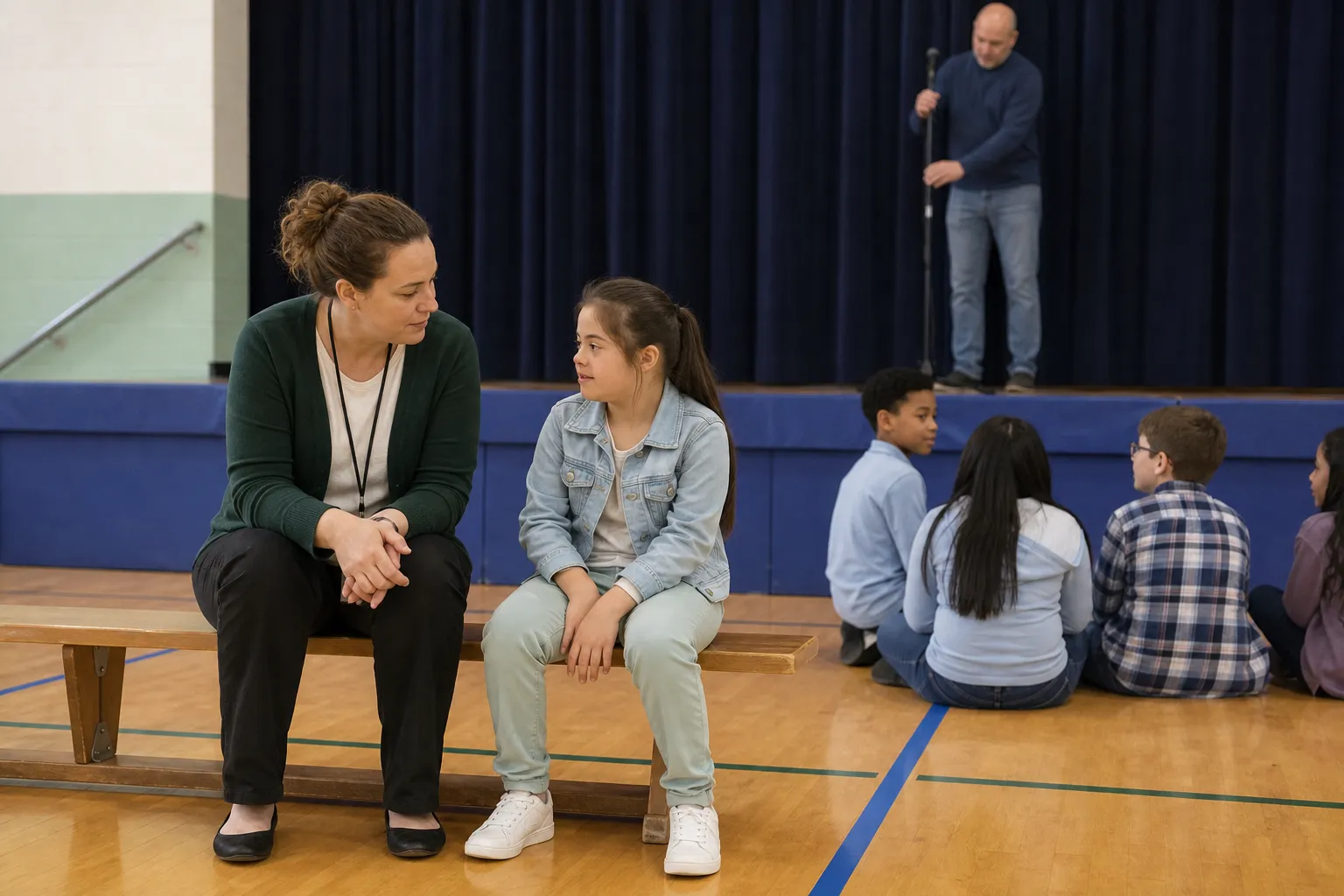
An assembly social story is a personalized, factual explanation of this particular school situation. It can name the likely sequence, clarify what is known and what is not known, and recognize that the child may have different feelings or body responses. Rather than framing the child as needing to behave a certain way, it can help adults understand what the event asks of the child and help the child anticipate realistic choices that may be available. The goal is preparation together, not compliance or a promise of a particular outcome.
Possible experiences related to autism, sensory experiences, and anxiety
Children with autism may process social information, changes, communication, and sensory input in individual ways. The Centers for Disease Control and Prevention describes autism as a spectrum, meaning support needs and experiences differ widely. For one autistic child, an assembly may be enjoyable because it has a clear purpose or a chance to watch a performance. For another, the less predictable parts—such as a changed timetable, crowded seating, applause, or unclear expectations—may take extra energy. Neither response is more correct.
Sensory experiences can matter even when an event seems ordinary to adults. A microphone may sound unexpectedly sharp, clapping can arrive suddenly from many directions, and a large room can amplify echoes. Bright stage lights, a warm crowded space, movement in nearby rows, unfamiliar smells, or the feeling of sitting shoulder to shoulder may also be noticeable. Sensory responses are not identical from child to child or from day to day. A child may notice one element intensely, several elements at once, or none of the elements adults expect.
Anxiety can add a layer of anticipation before the assembly begins. A child may worry about getting separated from their class, being seen by many people, making a noise at the wrong moment, not knowing a song, or being asked to participate. The Centers for Disease Control and Prevention notes that anxiety can affect children, while individual signs and needs vary. Some children may ask many questions, become quiet, seek reassurance, resist a transition, or describe physical discomfort; these reactions do not reveal a single cause on their own. A calm conversation can focus on what the child notices and what information would make the event less uncertain.
What to include in a personalized assembly social story
A useful school assembly social story stays specific to the child’s school and the planned event. Begin with concrete facts: where the assembly will happen, which class activity may come before it, how the group may travel there, who is likely to be nearby, and what type of event it is. If adults do not know an answer, it is more honest to say that the detail is not known yet than to fill in a reassuring guess. For example: “The assembly may have music and clapping.” This is an example sentence, not a complete social story.
Describe the flow in small, recognizable parts without implying that every assembly follows the same pattern. A child may arrive, find a place with their class, watch or listen, wait during transitions, and return to class when the event ends. Include likely features such as adults speaking, student presentations, a flag ceremony, singing, a video, applause, or a guest visitor only when they are genuinely possible for that assembly. It can also be useful to explain that some people may be quiet while others clap or sing, and that audience behavior can change during the event.
Make space for internal experiences without labeling them as wrong. A personalized social story might name that the room could feel loud, busy, exciting, boring, confusing, warm, or too long. It can state that feelings can change during an assembly. It can also distinguish facts from possibilities: a child may know their teacher will be present, while it may be unknown exactly how long a speaker talks. This combination respects the child’s need for accurate information and avoids making promises adults cannot keep.
Turning preparation into a family-and-school conversation
Preparation can begin with curiosity rather than assumptions. A parent, carer, or educator might ask what the child remembers about past assemblies, what they liked, what felt difficult, and what they want to know beforehand. A child may communicate an answer in words, gestures, choices, behavior, or after having time to think. Their answer may be different after each assembly, especially when the event, their energy, or their sensory experiences differ.
Adults can compare the child’s questions with information from school. Relevant details may include the location, approximate timing, whether there will be performances or amplified sound, whether the child’s class has a role, and who can answer questions on the day. This is not about eliminating every unknown. It is about separating information that can be checked from uncertainty that needs to be acknowledged. If plans change, adults can update the description plainly: the assembly has moved, a speaker has been added, or the timing is no longer certain.
A child’s temperament may also shape what preparation feels helpful. The American Academy of Pediatrics explains that children can differ in traits such as adaptability, intensity, and approach to new situations. These differences are not a measure of effort, maturity, or willingness. One child may want details well in advance; another may prefer a short explanation closer to the event. A personalized social story can reflect the child’s own language, preferred amount of information, and past experience rather than following a fixed script.
Including honest choices without making assumptions
It is helpful to include only choices that adults have confirmed are actually possible at that school. An assembly social story should not tell a child they can leave, sit elsewhere, skip an activity, or use an item unless that option has been discussed and is genuinely available. False reassurance can make a child feel less prepared if the situation unfolds differently. Families can ask the school what choices or responses may be possible and then describe those choices accurately.
Possible options, where agreed, may involve telling a known adult that the room feels too loud or that the child is worried, taking a moment in a designated place, arriving by a different route, standing rather than sitting, participating in part of an activity, or returning to class with an adult. These are examples of possibilities, not recommendations or expectations. What is appropriate depends on the child, the event, school practices, and the people available that day.
The story can also name choices the child already uses in everyday school life, provided they are real choices. For example: “I can tell my teacher that I have a question about the assembly.” This is an example sentence, not a complete social story. A child does not need to be able to explain every feeling in order to deserve support. Adults can pay attention to communication in its many forms and revisit the plan after the event, when the child may be better able to describe what worked, what was difficult, and what they would want changed next time.
Using the story as a living record, not a test
Reading or discussing a school assembly social story before the event does not guarantee a particular reaction. A child may still be surprised, anxious, sensory-seeking, sensory-avoidant, excited, tired, or disengaged. That does not mean the preparation failed. The value may be that the child had clearer information, adults had a better understanding of possible pressure points, and everyone has language for talking about the experience afterward.
After an assembly, a brief review can make the next version more accurate. Families and educators can consider what matched the description, what differed, which moments required the most energy, and what the child enjoyed or wanted others to notice. Avoid treating this review as a scorecard for behavior. The child’s experience is useful information, including when it does not fit adult expectations.
Over time, a personalized social story can change with the child and the school calendar. A weekly gathering, an awards event, a holiday performance, and an emergency announcement may each need different information. Keeping the focus on autism, sensory experiences, and anxiety only when those topics are relevant helps avoid overinterpreting ordinary preferences or reactions. The most respectful version is concise enough to be usable, detailed enough to be honest, and shaped by the child’s own knowledge of their school day.
Frequently asked questions
What makes an assembly social story different from a general school social story?
An assembly social story focuses on one event and its specific demands: the location, group movement, audience expectations, possible sounds, likely activities, and return to class. A general school description may be too broad to answer the questions a child has about this particular assembly.
Should a social story say that the child will be okay at the assembly?
It is usually more accurate to avoid promises about feelings or outcomes. The story can acknowledge that an assembly may feel enjoyable, tiring, loud, uncertain, or different than expected. It can also describe confirmed information and real choices available to the child.
How often should families update a school assembly social story?
Update it whenever meaningful details change, such as the venue, purpose, class role, schedule, sound level, or available adult support. A short review after an assembly can identify details worth keeping or revising for a future event.
Keep exploring
Related social stories
These guides cover situations with similar routines, sensory details or preparation needs.
Learn more about writing a social story
Read what a social story is, follow the step-by-step writing guide, or browse more social story examples.
Sources
- Autism spectrum disorder — Centers for Disease Control and Prevention
- Anxiety and depression in children — Centers for Disease Control and Prevention
- Understanding your child's temperament — American Academy of Pediatrics
