
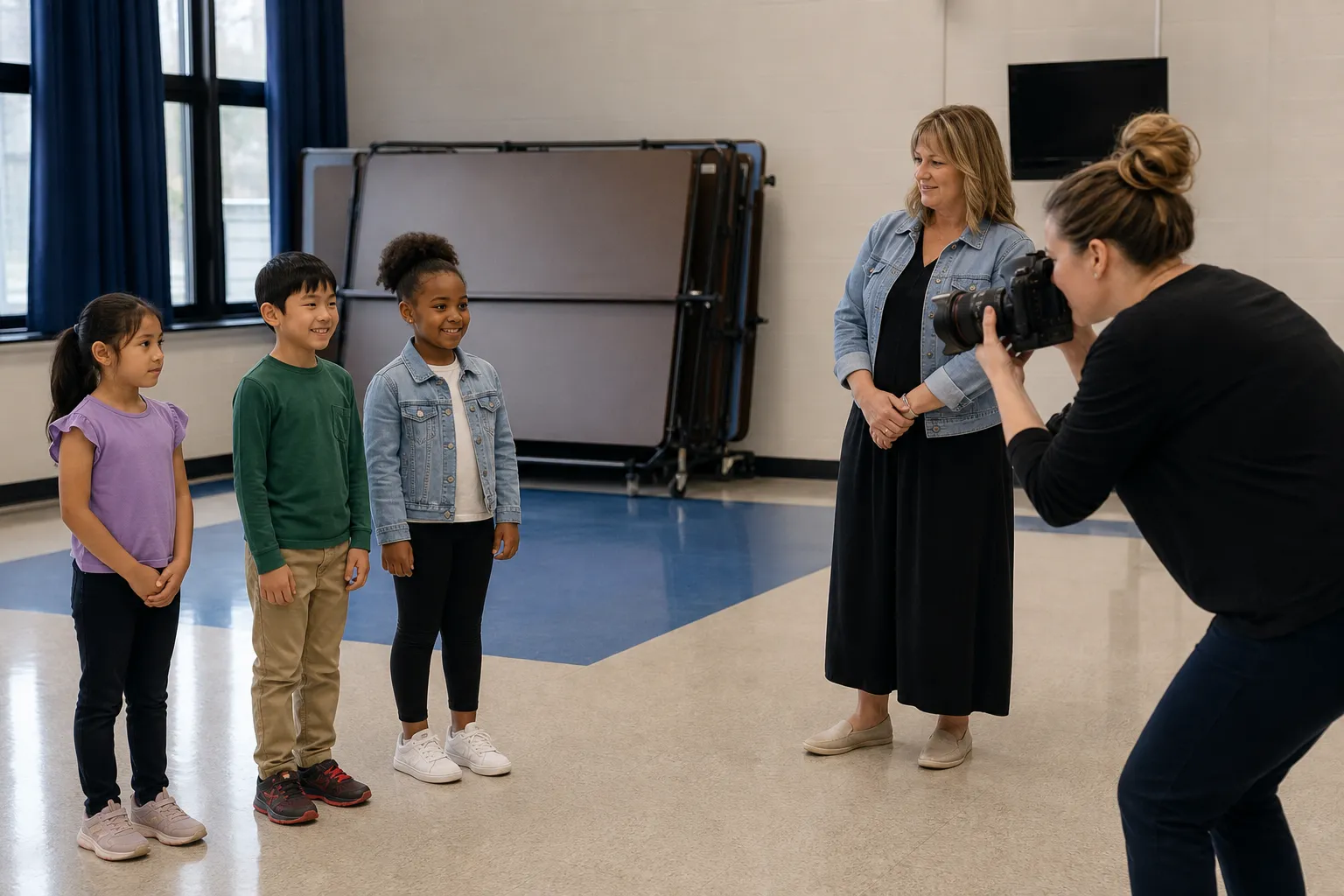
School picture day can be a very small event on the school calendar and still feel unusually big to a child. The routine may change without much warning: a class is called from its usual work, students wait in a different area, an unfamiliar adult gives quick directions, and a camera may flash. For some children, the difficult part is not having a photo taken. It may be the uncertainty, the sensory intensity, the pressure to move quickly, or not knowing what expression or pose is expected. A personalized picture day social story can give a family, carer, educator, and student a shared way to talk through the likely sequence without promising that every detail will go exactly as planned. This guide focuses on honest preparation for individual students, including some autistic students and children who experience anxiety or sensory differences.
Why picture day may feel different from an ordinary school routine
Picture day often asks children to shift between several expectations in a short period of time. They may need to leave class, stand in line, enter a room or corner arranged for photos, listen to a photographer they do not know, and return to class. Even when the process lasts only a few minutes, the lead-up can involve waiting, noise, comments about clothing, and classmates reacting in different ways. A child may be comfortable with familiar classroom routines yet find this combination demanding.
A useful picture day social story does not frame a child’s response as a problem to fix. Instead, it names what may happen and makes room for a range of responses. It can say that some parts of the day may be easy, boring, exciting, awkward, or hard to predict. That approach matters because children do not all experience school events in the same way, including children in the same family or classroom.
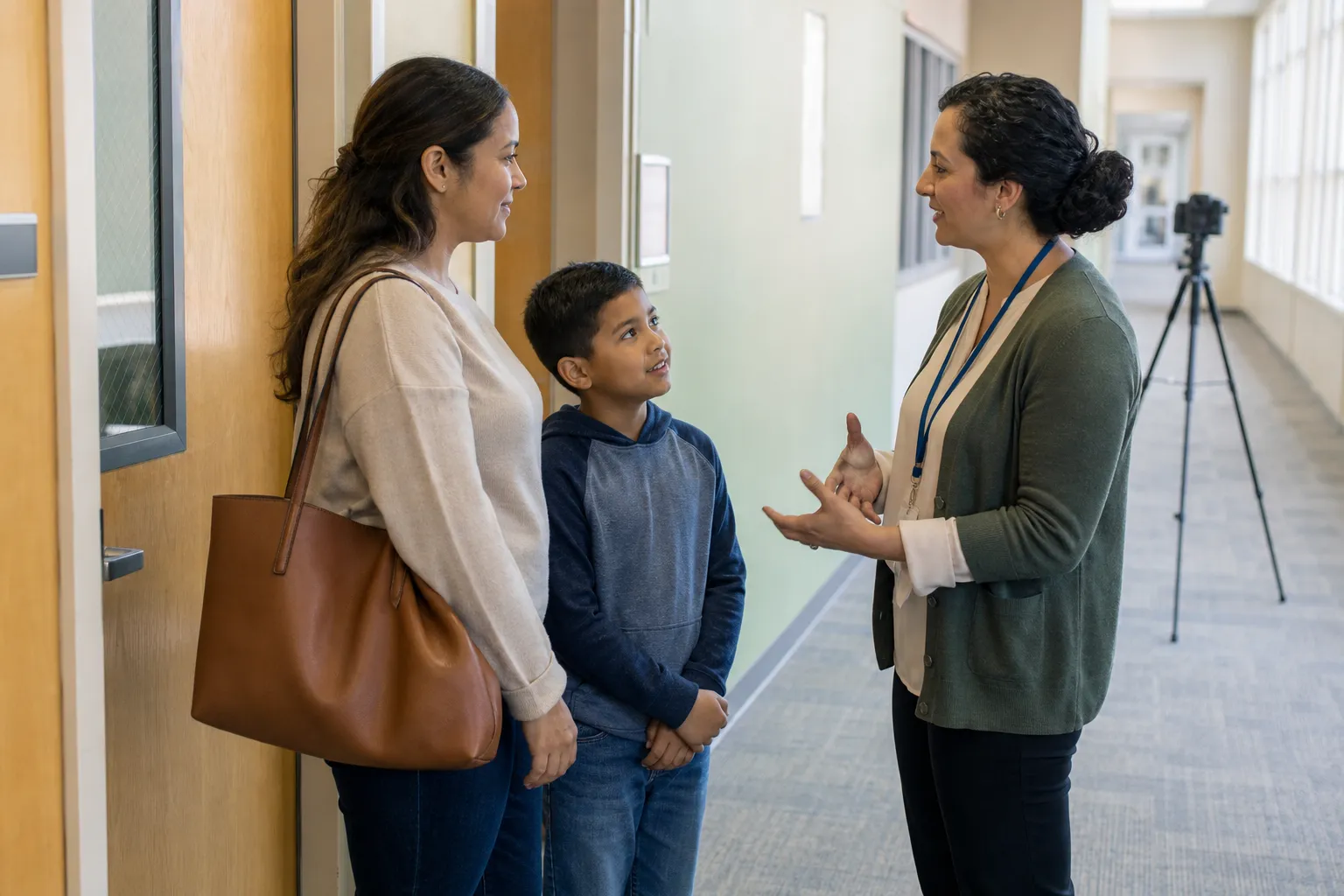
It can also prevent accidental surprises. For example, a story may explain that a school photo is usually taken one student at a time, that the photographer may ask for a person to look toward the camera, and that the class may have to wait before or after its turn. These are descriptions of possible events, not demands that a child enjoy them, smile, make eye contact, or hold still in one particular way. A photo day plan is more realistic when it distinguishes what is likely from what is unknown.
Autism and the value of making the sequence understandable
Some children with autism spectrum disorder may prefer predictable routines, clear information, or extra time to understand a change in expectations. These are possible experiences, not traits shared by every autistic child. The Centers for Disease Control and Prevention describes autism spectrum disorder as a developmental disability that can involve differences in social communication, interaction, and restricted or repetitive behaviors or interests; support needs and strengths vary widely from person to person.
On picture day, uncertainty can include practical questions that adults may overlook: Where will the photo happen? Will there be a backdrop? Who will be in the room? Can classmates watch? Will a teacher come along? What happens after the camera takes the picture? A personalized school picture day social story can answer the questions the particular child is most likely to ask. If the family does not know an answer, the story can say so plainly rather than filling in details that may be wrong.
It may be helpful to build the story around the child’s actual school, class routine, and preferred language. One student may want a simple chronological account. Another may care most about the waiting area, clothing, the photographer’s directions, or returning to a familiar activity. Family members and school staff can compare notes about what has happened on previous picture days, while recognizing that a prior experience does not predict every future response. The goal is shared understanding, not making the child perform a particular version of participation.
Anxiety: reducing uncertainty without making promises
Children can feel anxious about a school photo for many reasons. They may worry about being watched, getting a direction wrong, looking different from classmates, separating from their class briefly, or not knowing when their turn will happen. The Centers for Disease Control and Prevention notes that children’s anxiety can show up in different ways and can affect everyday functioning. Feeling worried before an unfamiliar or high-pressure school event does not by itself identify an anxiety condition.
A picture day social story can acknowledge worries without arguing them away. It might identify that a person can have questions before picture day and that adults can listen to questions. It can separate a likely event from an uncertain one: the class may be called for photos, while the exact waiting time may change. This kind of wording is often more trustworthy than assuring a child that nothing will be difficult or that the photo will be finished immediately.
Temperament can shape how a child approaches novelty as well. The American Academy of Pediatrics explains that children have individual temperament patterns, such as different levels of adaptability, intensity, and comfort with new situations. A child who takes longer to warm up may appreciate discussing picture day well before the morning it occurs; another may prefer a brief overview. Neither approach is inherently better. Personalizing the amount, timing, and detail of the conversation can be as important as personalizing the sequence itself.
Sensory experiences that may be relevant on photo day
A school photo setup can include sensory experiences that are neutral for one child and intense for another. Possible examples include a camera flash, bright lights, a busy hallway, nearby children talking, an unfamiliar room, close adult proximity, a backdrop, or the feeling of formal or less familiar clothing. Some students may notice none of these; others may notice one element strongly. Sensory preferences and sensitivities can also change with fatigue, hunger, noise levels, or how the rest of the day has gone.
A school photo social story can name the sensory details that are actually likely at that school. If flash photography is expected, it can state that a camera may make a brief bright light. If staff are unsure whether a flash will be used, it can say that the family is checking or that the setup may be different. Honest language helps a child prepare without treating a possible sensory reaction as misbehavior or assuming that the same response will happen every time.
Families may find it useful to ask practical questions in advance, such as whether photos are taken in the classroom, hallway, gym, or another space; whether a flash is normally used; whether classes line up; and whether there is a separate individual-photo time. Those questions are not requests for a particular outcome. They simply provide information that can make a personalized story more accurate. If the child has known preferences around clothing, noise, brightness, or personal space, those can be discussed as preferences rather than rules that the child must overcome.
How to shape a personalized picture day social story together
The most useful story is usually short enough to revisit and specific enough to feel familiar. Start with facts the family and school can confirm: the date, the usual part of the day, where students are likely to go, whether individual and class photos are planned, and what normally happens afterward. Then add the child’s own priorities. A child may want to know who will walk with the class, whether a sibling is photographed at another time, or whether they can wear a familiar item of clothing if school expectations allow.
Use calm, literal wording and avoid turning preferences into obligations. A story can describe the photographer’s possible requests without implying that every student must smile, look directly at the lens, enjoy the flash, or feel ready on command. It can mention that adults may give short directions and that a child can communicate a question, a concern, or a need for information in ways that are typical for them. It can also state that plans sometimes change, such as when classes are called in a different order or photography runs late.
Example wording only, not a complete social story: “My class may go to a different room for school photos.” “The camera may flash, and then I may go back to class.” These sentences can be changed to match the student’s language and the school’s confirmed details. A family may choose to talk through the story more than once, or only when the child wants to discuss it. Repetition is a possible way to build familiarity, not a requirement.
Making room for choice, communication, and an imperfect outcome
Picture day is often treated as though there is one successful outcome: a polished photograph with a particular expression. For a child, family, or educator, success may instead mean understanding the plan, being treated respectfully, having a chance to communicate, or getting through an altered routine with support from familiar adults. A photograph may capture a smile, a neutral expression, movement, uncertainty, or none of the above. It does not measure cooperation, family effort, or a child’s feelings about school.
Concrete choices can be discussed when they are genuinely available. Depending on school practice, a family might ask whether the child will be told the approximate photo time, whether they can see the location beforehand, whether a familiar staff member is likely to be nearby, or what happens if a student is absent or declines at that moment. The answer may be yes, no, or uncertain. Including only confirmed possibilities in the story protects trust and avoids implying that the school has promised something it cannot provide.
After picture day, adults can learn from the child’s perspective with open questions rather than assumptions. They might ask which part felt expected, surprising, comfortable, or difficult, and whether anything would be useful to know next time. This reflection can inform future planning for school events. It can also remind adults that participation is individual: a strategy that was useful for one autistic child, one anxious child, or one child with sensory sensitivities may not be useful for another.
Frequently asked questions
What should a picture day social story include?
Include confirmed details that matter to the individual student: when picture day is expected, where photos may happen, how the class may get there, possible waiting, who may take the photo, whether a flash may be used, and what may happen afterward. Add the child’s likely questions and use honest wording for details that are still unknown.
Can an autism school picture day social story mention that a child does not want to smile?
Yes. A personalized story can avoid presenting smiling, eye contact, or a particular pose as a requirement. It can describe that a photographer may invite a student to face the camera or make an expression, while leaving room for the child’s natural response and the school’s actual process.
When should families talk about school picture day?
The timing depends on the child. Some children may prefer advance notice and repeated discussion, while others may find too much lead time increases worry. A parent, carer, or educator can use what they know about the child’s temperament, past reactions to routine changes, and desire for information to choose an appropriate time.
Keep exploring
Related social stories
These guides cover situations with similar routines, sensory details or preparation needs.
Learn more about writing a social story
Read what a social story is, follow the step-by-step writing guide, or browse more social story examples.
Sources
- Autism spectrum disorder — Centers for Disease Control and Prevention
- Anxiety and depression in children — Centers for Disease Control and Prevention
- Understanding your child's temperament — American Academy of Pediatrics
