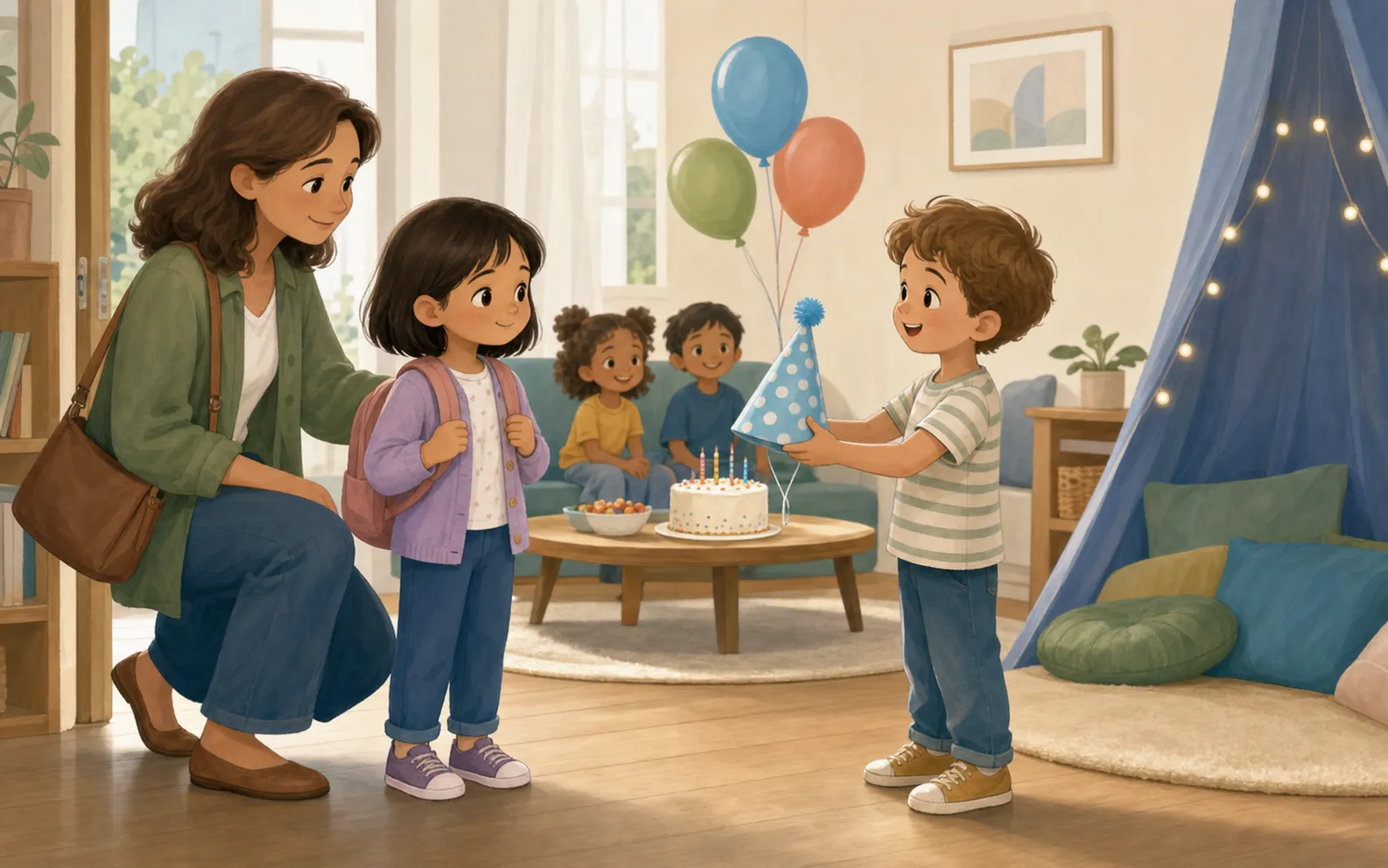
Preparing for a birthday party before the doorbell
Before the doorbell rings, a birthday party can exist mostly as a bundle of questions. Will the room be loud? Will there be people the child knows? Does everyone have to play the same game, sing near the cake or stay until the end?
A personalised narrative can turn the party from a vague, busy idea into a more concrete gathering. It can explain the likely flow and show that there are different ways to take part, without turning the afternoon into a fixed script.
Noise, food and social attention can feel intense
Music, voices, balloons, party food, games and singing can make a celebration feel busy in several ways at once. For children with sensory differences, a detail such as noise, smell, texture or crowded movement may be more significant than the party activity itself.
Social attention can also feel demanding. A child may want to watch a game before joining, stay close to a familiar person or spend time away from the loudest part of the room. A story can make these options feel expected rather than exceptional.
Social expectations do not need to stay hidden
Some autistic children may have questions about invitations, presents, turn-taking, singing or how to respond when someone offers food. These are understandable questions in a situation where other children may seem to know the unwritten rules already.
A child who communicates differently may also benefit from knowing how to ask for a break, say no thank you, find the host or let an adult know they are ready to go. The story can use the child's own preferred language or communication method.
Choice matters more than perfect participation
For a child who experiences anxiety, knowing the beginning, middle and end of the party can reduce some of the uncertainty. For children with ADHD, it can be useful to name waiting, changing games and the possibility of taking a short reset.
A social story can support emotional regulation by describing where help, space and a trusted adult may be available. It should not suggest that a successful party means staying until the end or joining every part.
How it can help
Related support topics
Some families start from the situation; others start from the wider support need. These pages explore the same idea from that angle.
Turn this guide into a story
Create a story your child can recognise.
Bring the details that matter together in one personalised story: where your child is going, who may be there, what may happen, and which choices or support are genuinely available.
Join the waiting list