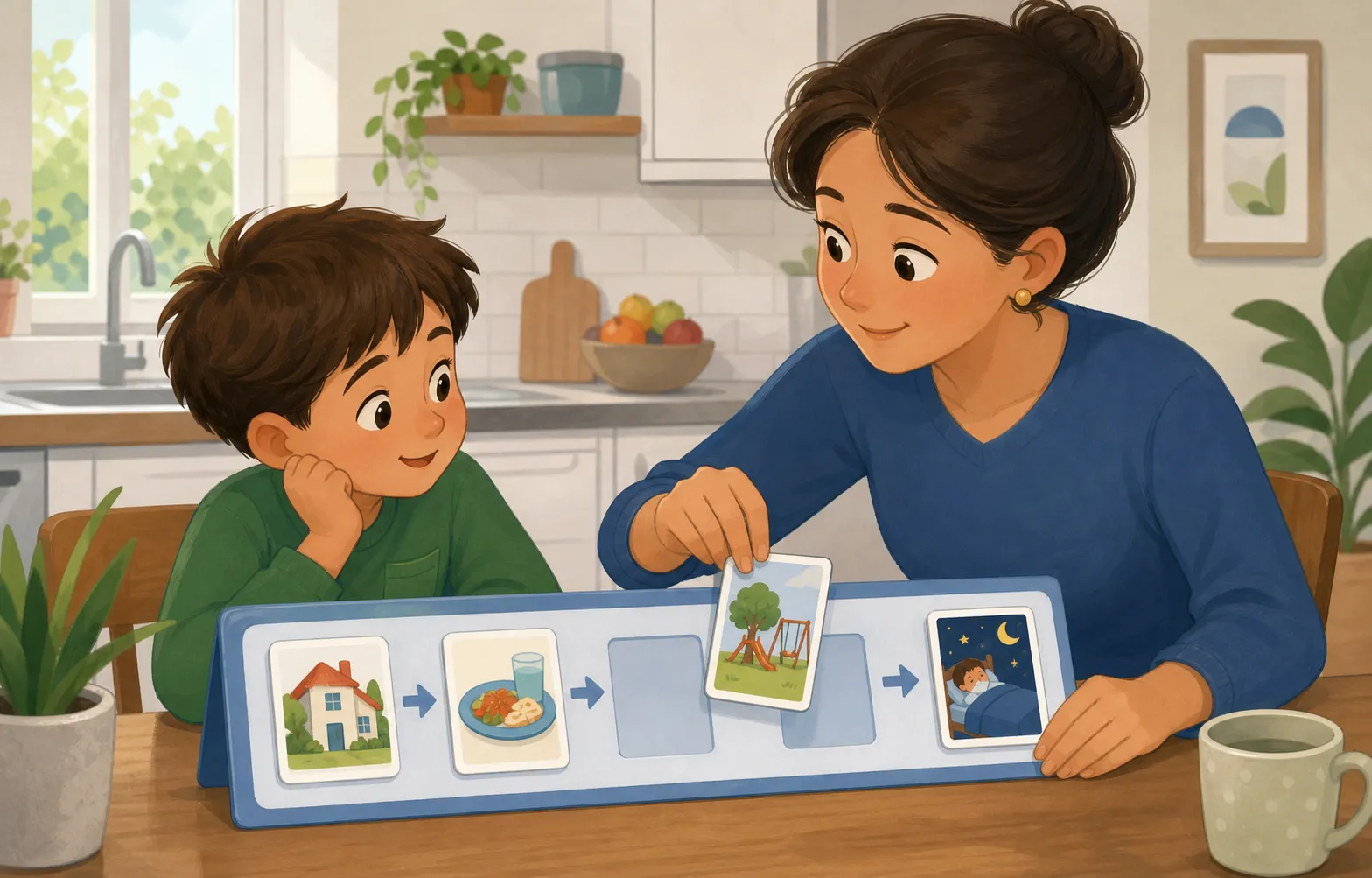
Preparing for a change in routine
Sometimes a day changes in one small place and then feels different all the way through. A different person at pickup, a new route home, an appointment after school or a plan moving to another day can alter the order a child was expecting to follow.
A personalised narrative can put a clear marker around that turning point. It can name what is changing, when it begins and what will stay the same, giving the child something concrete to return to when the new plan is difficult to hold in mind.
Familiar routines can carry important information
For children who rely on familiar routines, a usual sequence may help the day feel understandable and settled. When one piece changes, they may need time to work out what happens before it, what happens after it and whether the rest of the routine still applies.
A story can show the new shape of the day in clear language. It can include practical details such as who will be involved, where the change happens and how the child will know the next step, without suggesting that the child should immediately be comfortable with it.
The unknown parts can be more difficult than the change itself
For a child who experiences anxiety, uncertainty about why something is changing or what it means can take up a lot of space. Some autistic children may also find a different expectation, person or order of events hard to read when everyone else seems to have adjusted already.
A social story can be honest about what is known and what is not yet known. It can explain who can answer questions and what support is available if the child needs more time, a familiar object, a pause or another way to look at the plan.
Children can be part of the preparation
A child may want to ask what has changed, suggest what would make the day easier or choose when to read the story again. A child who communicates differently may need their preferred way of communicating to be part of that conversation from the beginning.
Strong feelings about a change are not a failure to cope. A story can support emotional regulation by making the change and the available support more visible, then be updated once the child has experienced the new routine for themselves.
How it can help
Related support topics
Some families start from the situation; others start from the wider support need. These pages explore the same idea from that angle.
Turn this guide into a story
Create a story your child can recognise.
Bring the details that matter together in one personalised story: where your child is going, who may be there, what may happen, and which choices or support are genuinely available.
Join the waiting list