Preparing for the first day of school
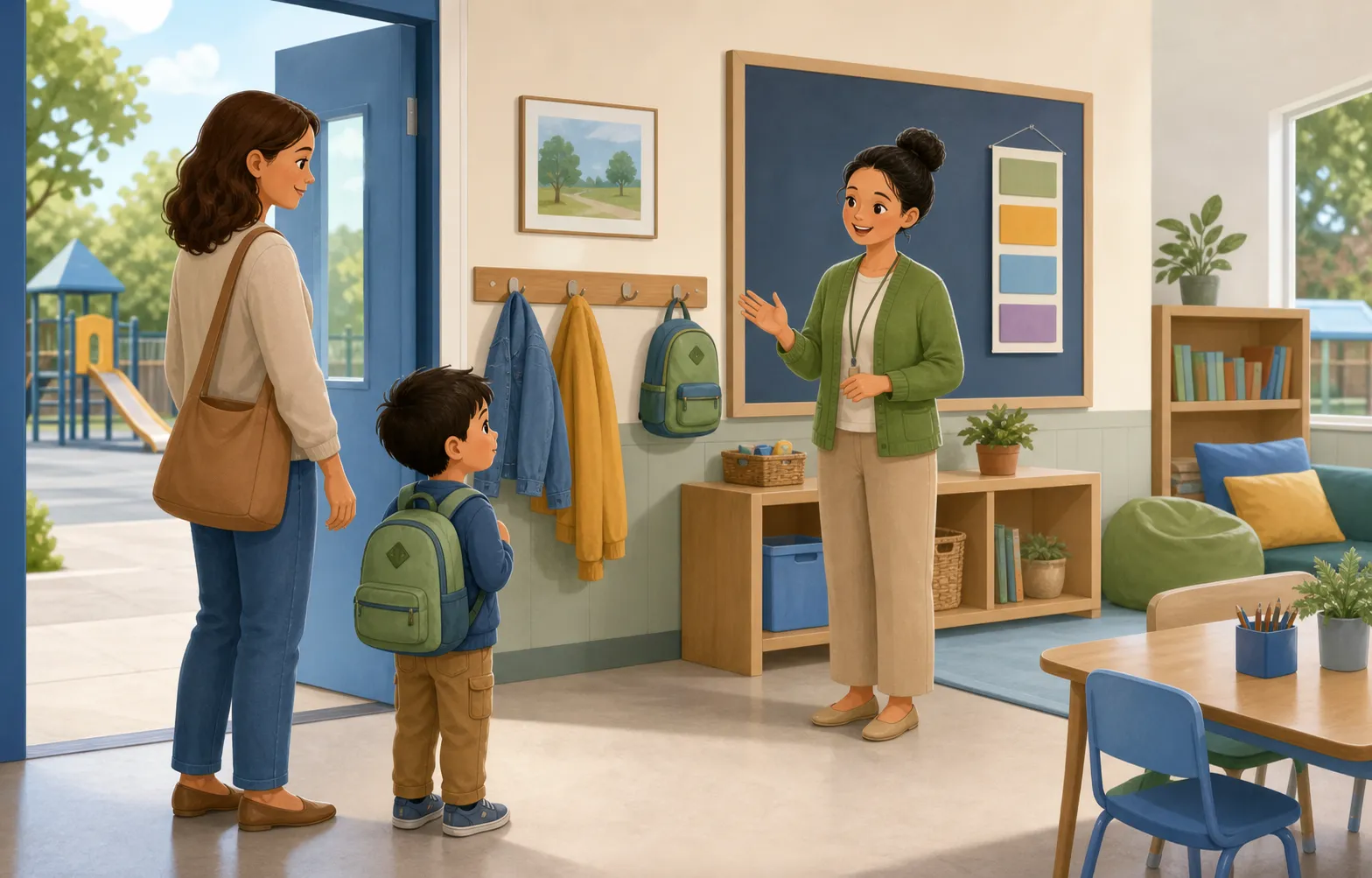
The first school doorway can lead to a lot more than a classroom. On the other side may be new voices, a different coat hook, a lunch room, a playground and a day with a rhythm the child has not learned yet. Looking forward to school and needing to know more about it can happen at the same time.
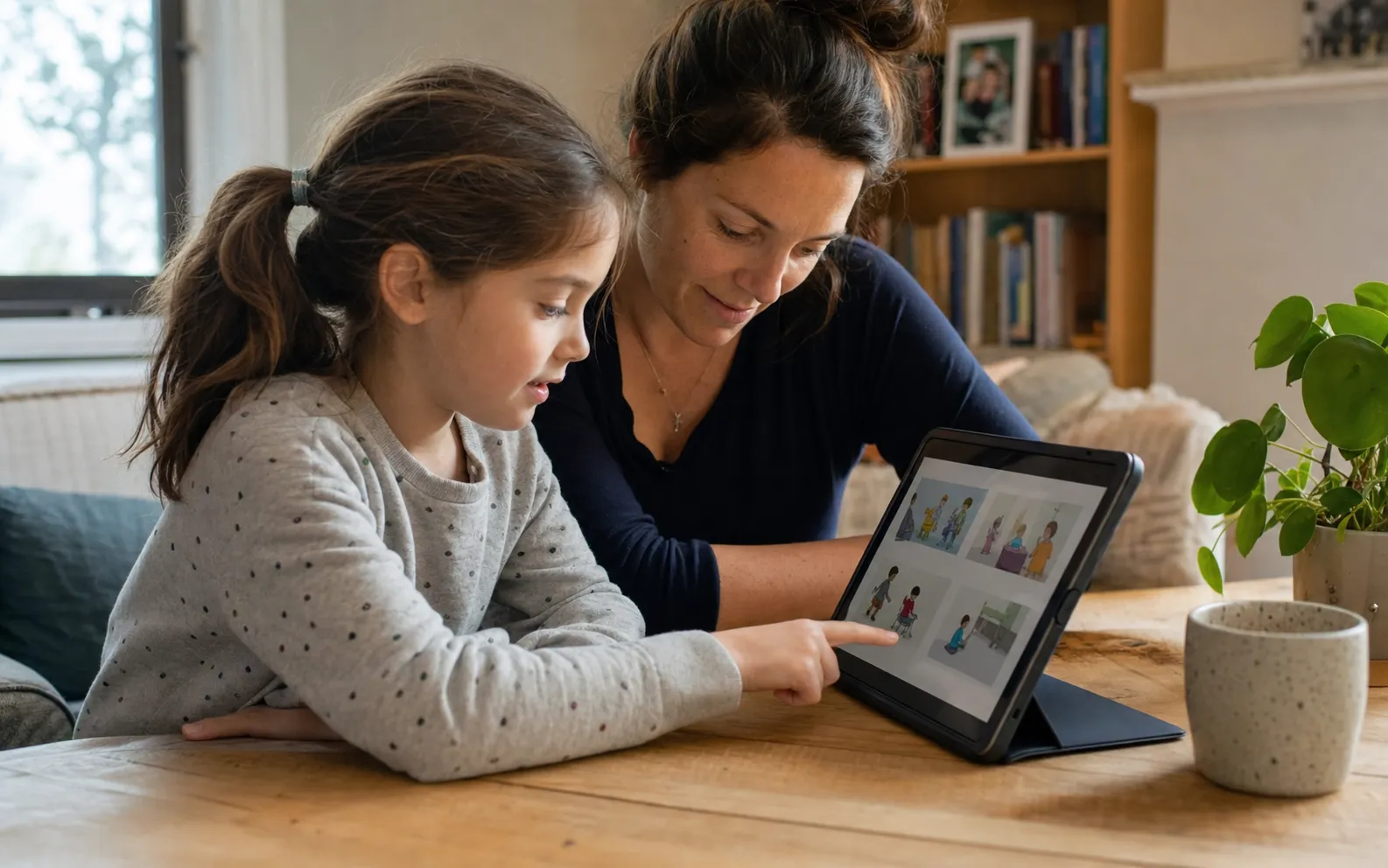
A personalised narrative can make the first days easier to picture before they arrive. It can introduce the entrance, classroom, teacher, lunch space and collection time as real places and people, without assuming that every detail will feel easy or exciting.
The shape of the day can matter as much as the classroom
For children who rely on familiar routines, a new school day can feel like a large change before lessons even begin. They may want to know what happens after arriving, when adults change, where breaks happen and which parts of the day will be the same each time.
A story can describe the likely sequence in a simple, honest way. It can point out what is known and what may vary, and it can include a familiar anchor in the day, such as a person, a place, an object or a predictable activity.
Social details are often invisible until they happen
Some autistic children may find it especially demanding when the social rules of a new class are unclear. They may be wondering where to sit, how to join an activity, when it is okay to ask for help or what a teacher means by a phrase everyone else seems to understand.
A child who communicates differently may also need a clear way to show they have not understood, want a break or need to use their preferred communication method. A story can help make those choices and supportive adults visible before the first day.
There can be space for the child's own pace
Classrooms can bring competing sounds, movement, instructions and transitions. For some children with ADHD, or for children with sensory differences, it may take extra energy to hold onto the important details while so much is happening.
A social story can include realistic support: a quiet place, a visual reminder, extra time to look around, a trusted adult or a way to step out briefly. It prepares for the experience without making demands about behaviour or emotional regulation.
How it can help
Related support topics
Some families start from the situation; others start from the wider support need. These pages explore the same idea from that angle.
Turn this guide into a story
Create a story your child can recognise.
Bring the details that matter together in one personalised story: where your child is going, who may be there, what may happen, and which choices or support are genuinely available.
Join the waiting list