Before the first hoofbeat
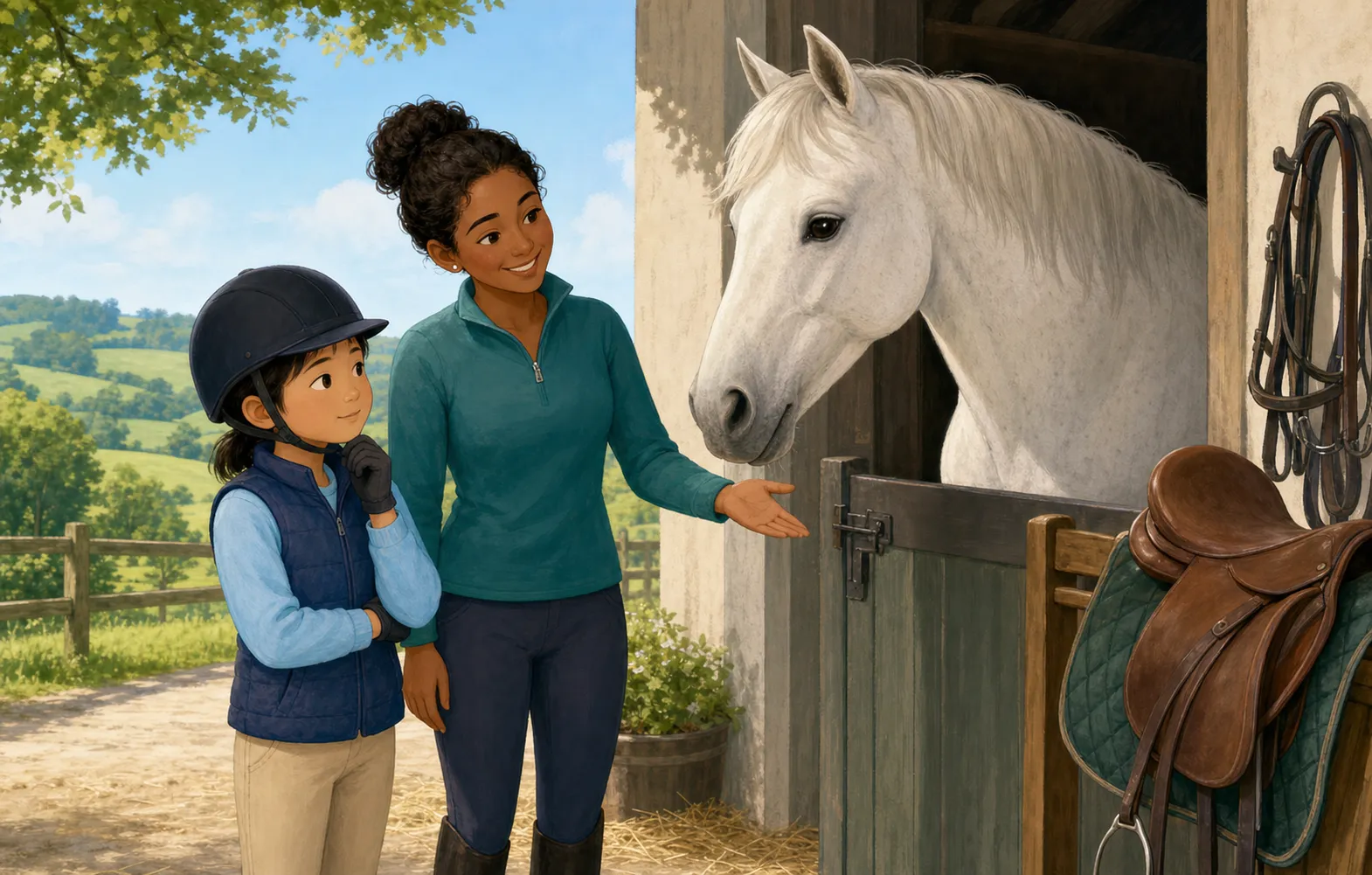
Before a child ever climbs into a saddle, there may be a stable gate, a new smell in the air and a horse that seems much bigger up close than in a picture. The first visit can feel like stepping into a world with its own sounds, people and rules. Interest in horses and uncertainty about being near one can exist together.
Every child notices a different first detail. It might be the horse's size, the busy movement around the yard or the question of what they will be asked to do. For children who rely on familiar routines, leaving home for a stable and following a new order of events can be an important part of that experience. A personalised narrative can make room for those thoughts without deciding how the child should feel.
A large, living animal can feel hard to predict
Horses move, breathe, make sounds and react to what is happening around them. For a child who has mostly seen animals from a distance, being near one can bring up questions that are not always easy to put into words. The horse may turn its head, step sideways, flick its tail or make a sudden noise. Even ordinary movement can feel significant when the animal is much bigger than the child.
For a child who experiences anxiety, not knowing how close the horse will be or what it might do next can add to the uncertainty. A story can help give meaning to those moments from the child's perspective. It can name that horses are living animals with their own movement and sounds, that adults are there to help people stay at a comfortable distance, and that it is okay to notice before choosing whether to move closer.
Sensory details can shape the whole experience
The stable environment may feel very different from home or school. There can be strong smells, straw or uneven ground underfoot, the feel of a helmet around the head, the texture of a horse's coat and the sounds of hooves, voices or equipment. For some children, one of these details may stand out more than the riding itself.
Children with sensory differences may benefit from having these features named in a calm, matter-of-fact way. The aim is not to describe them as good or bad, but to make room for the child's own response. For a child who communicates differently, the story can also make clear how they can indicate that they want more space, need an adult's help or are ready to stop. A story can include things that may help, such as stepping outside, standing further away, bringing a familiar item or asking for a pause.
Making room for questions, support and choice
Some autistic children may find it difficult when the social and practical rules of a new activity are not obvious. For some children with ADHD, the stable can also contain many competing things to notice at once. A story can put those questions into words: where to stand, when to speak, whether touching the horse is optional, what waiting may look like and who can help. It can make clear that watching first, asking for more information or taking part in one small part are all valid choices.
The most helpful story does not try to predict every part of a riding lesson. It can acknowledge that there may be a change in the plan, for example because of the weather, the horse available that day or the order of the lesson. It can also name support with emotional regulation when the setting feels intense, and be updated after a visit with what the child noticed and would like to understand differently next time.
How it can help
Related support topics
Some families start from the situation; others start from the wider support need. These pages explore the same idea from that angle.
Turn this guide into a story
Create a story your child can recognise.
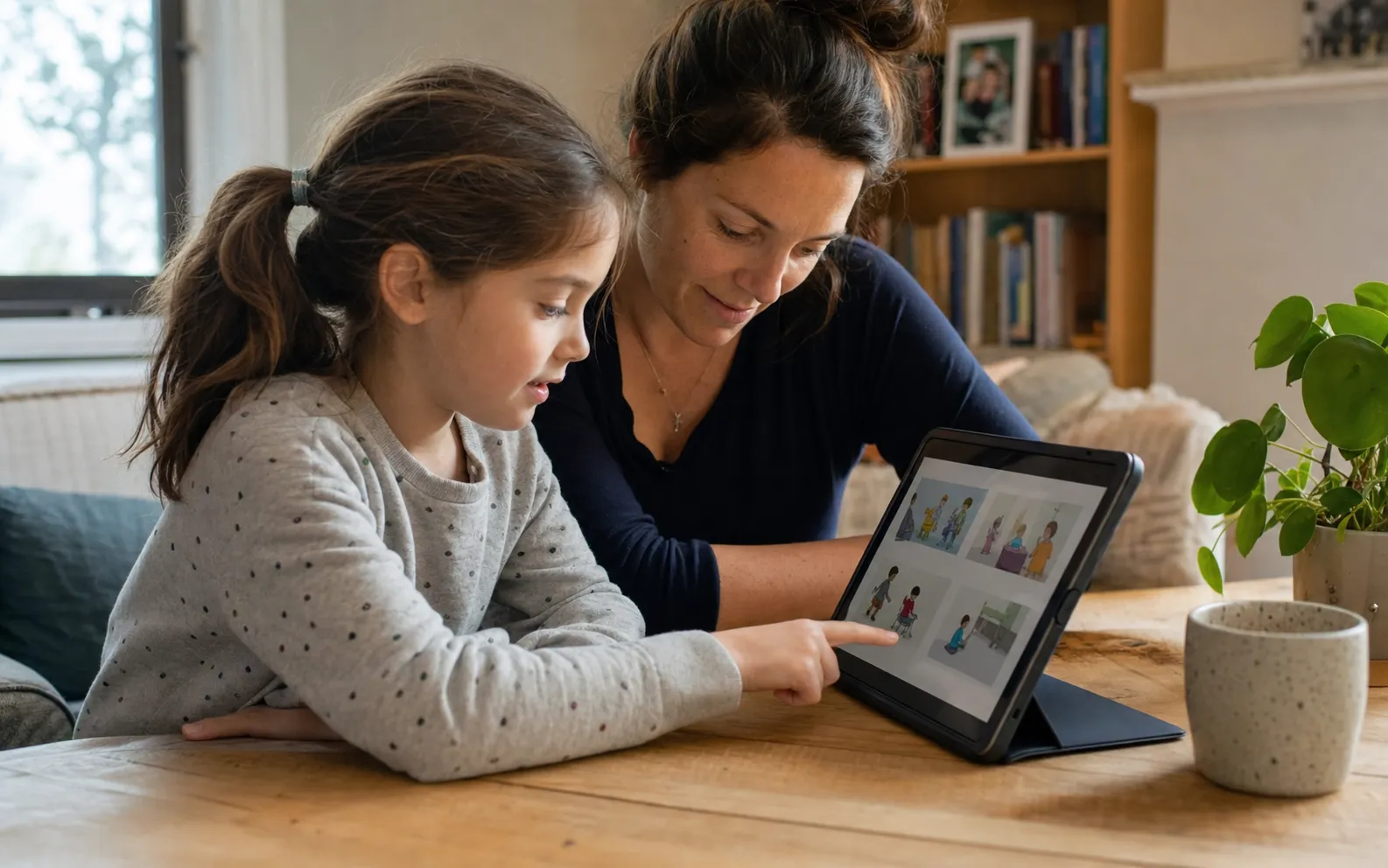
Bring the details that matter together in one personalised story: where your child is going, who may be there, what may happen, and which choices or support are genuinely available.
Join the waiting list